Bonus Letter Sample For Job Application In Maryland
Description
Get your form ready online
Our built-in tools help you complete, sign, share, and store your documents in one place.
Make edits, fill in missing information, and update formatting in US Legal Forms—just like you would in MS Word.
Download a copy, print it, send it by email, or mail it via USPS—whatever works best for your next step.
Sign and collect signatures with our SignNow integration. Send to multiple recipients, set reminders, and more. Go Premium to unlock E-Sign.
If this form requires notarization, complete it online through a secure video call—no need to meet a notary in person or wait for an appointment.
We protect your documents and personal data by following strict security and privacy standards.

Make edits, fill in missing information, and update formatting in US Legal Forms—just like you would in MS Word.

Download a copy, print it, send it by email, or mail it via USPS—whatever works best for your next step.

Sign and collect signatures with our SignNow integration. Send to multiple recipients, set reminders, and more. Go Premium to unlock E-Sign.

If this form requires notarization, complete it online through a secure video call—no need to meet a notary in person or wait for an appointment.

We protect your documents and personal data by following strict security and privacy standards.
Looking for another form?
Form popularity
FAQ
When writing a retention bonus letter, make sure you keep it short and simple. Start by showing that you value the employee, before moving into the details of what the retention bonus is. Offer a way for the employee to express interest in the offer, so that you can move forward with them signing the agreement.
Bonus letters are double consonants found at the end of the word. There are only four consonants that are consistently doubled: f, l, s, and z. These letters are doubled when they directly follow a vowel in a closed syllable. In other words, these letters are 'stuck' to the short vowel.
A retention bonus means you matter, and they want you there. Take it for the compliment that it is. And after signing, you definitely can ask what it's for from whoever delivered it to you. They may not disclose every detail, especially if they are a public company prepping for sale.
How to write a bonus request letter Draft the structure of your letter. State why you're requesting the bonus. Provide evidence for why you're requesting the bonus. Invite the supervisor to discuss the bonus with you further. Proofread your letter before you deliver it.
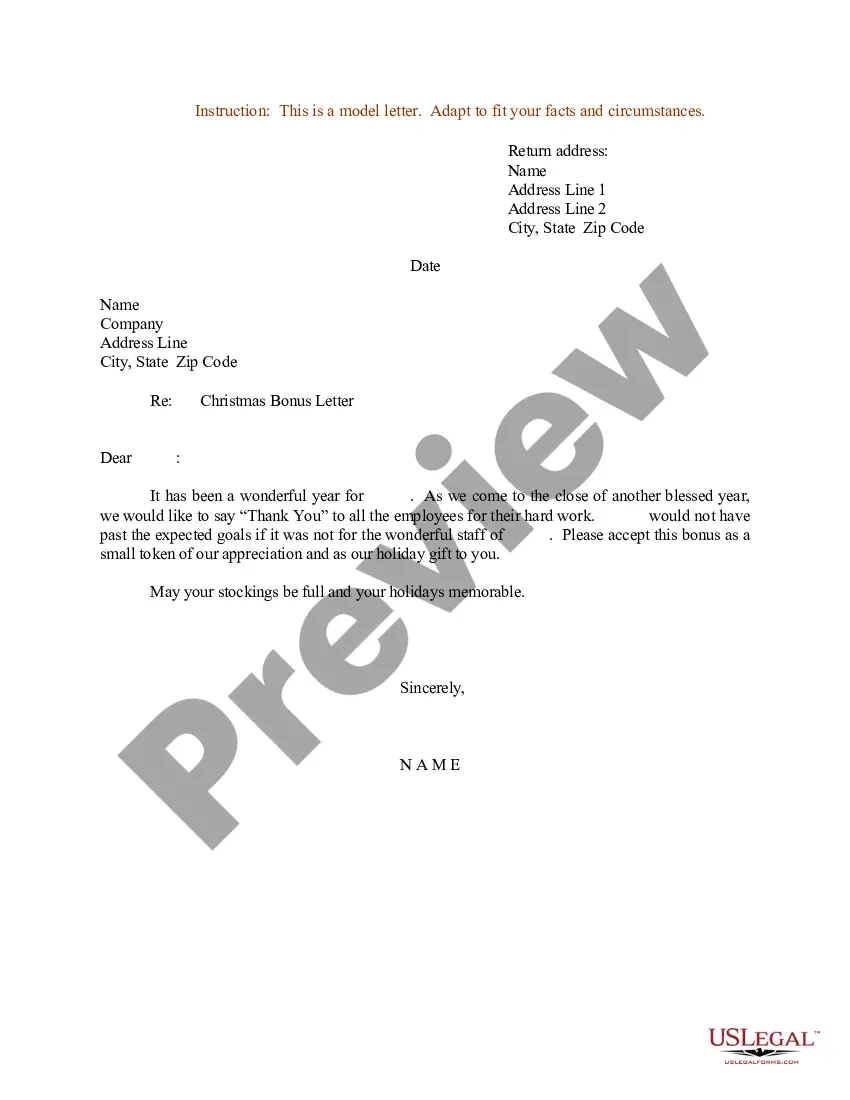
Dear Employee Name, We are pleased to present you with your year award in the amount of $__. This bonus award reflects your excellent performance, the contributions you made and the goals achieved on behalf of Company Name during the past year.
Here are some steps to follow when negotiating your sign-on bonus: Understand your skill set and the value you can offer a company. Provide logical reasons for a higher sign-on bonus. Understand the long-term effects of a sign-on bonus. Understand the amount for which you're willing to settle.
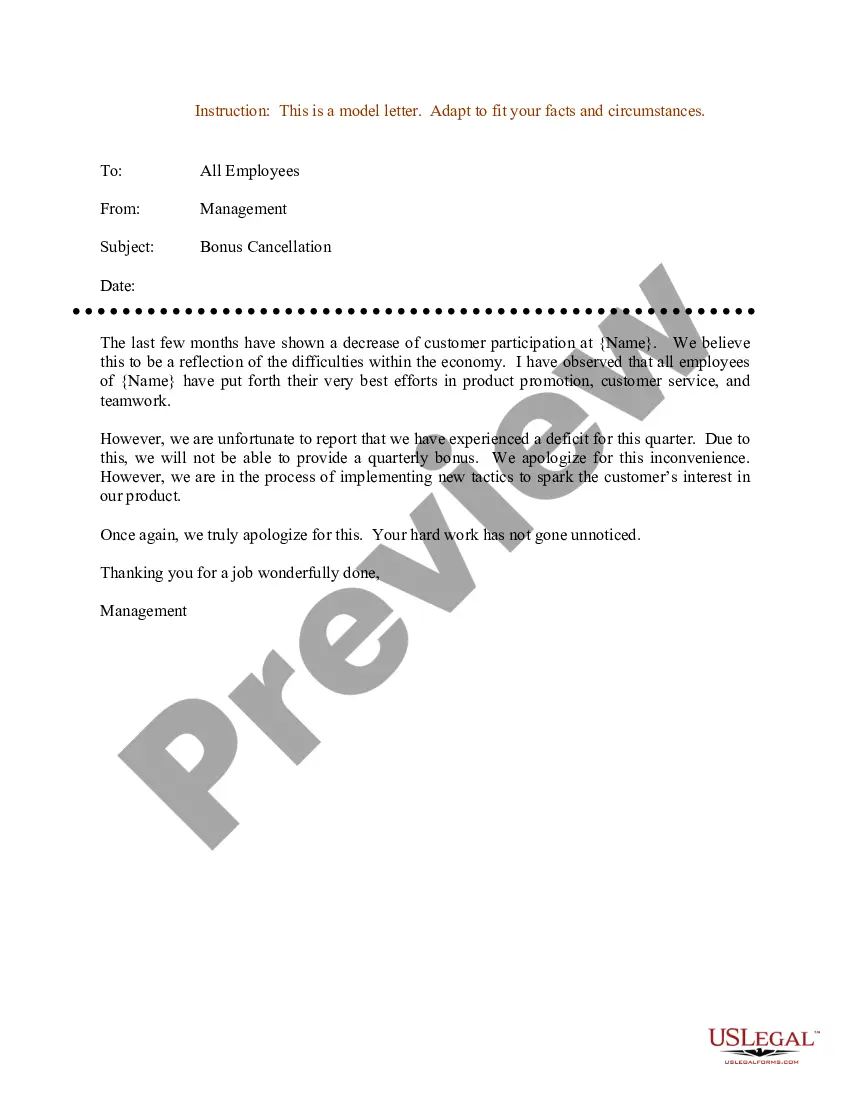
Be honest and don't lie and say bonuses are coming back. Tell them what your needs are and communicate with upper management to see what can be improved to ensure they potentially can get these back. Basically if you believe in what you're doing, then keep doing it and others will too.
Bonus Amount: State the exact amount of the bonus being awarded. For instance, “You will receive a performance bonus of $5,000.” Rationale for Award: Provide a brief explanation of why the bonus is being awarded. This could include a summary of the employee's achievements and their impact on the organization.
Bonus letters are double consonants found at the end of the word. There are only four consonants that are consistently doubled: f, l, s, and z. These letters are doubled when they directly follow a vowel in a closed syllable. In other words, these letters are 'stuck' to the short vowel.
How to write a bonus request letter Draft the structure of your letter. State why you're requesting the bonus. Provide evidence for why you're requesting the bonus. Invite the supervisor to discuss the bonus with you further. Proofread your letter before you deliver it.

