Sample Offer Letter With Bonus In Maricopa
Description
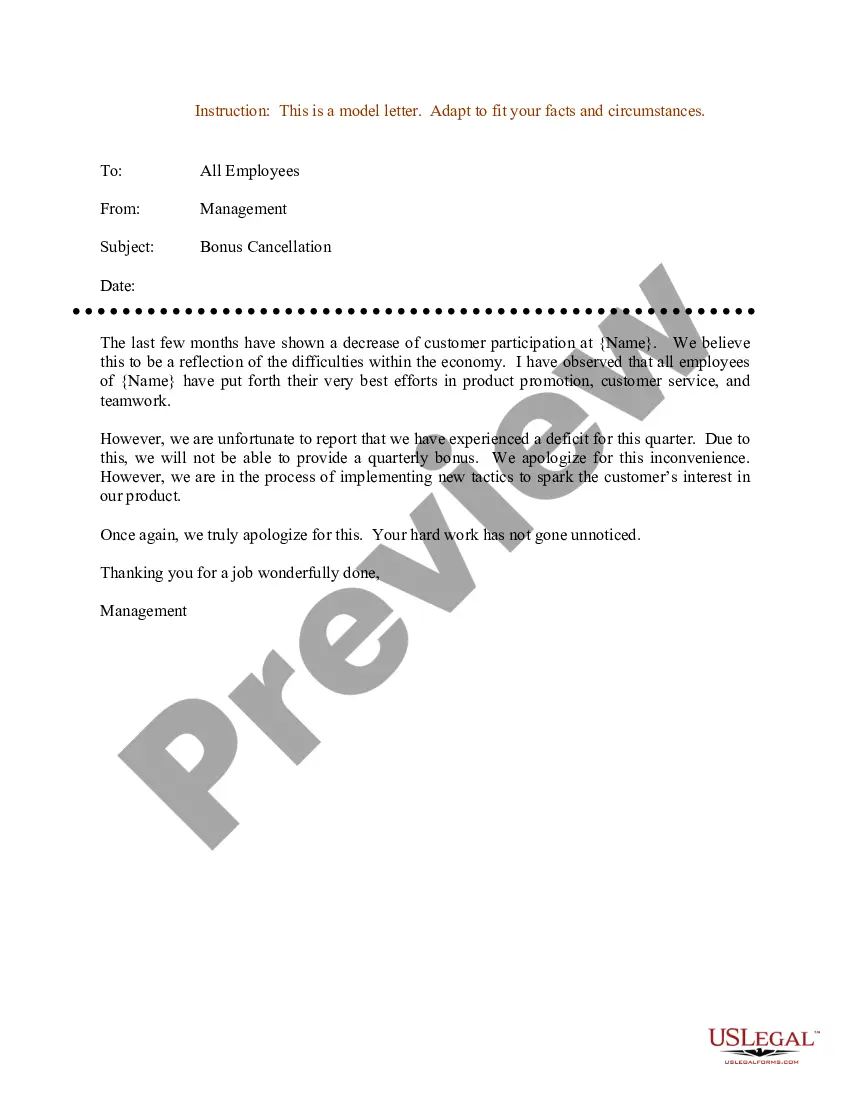
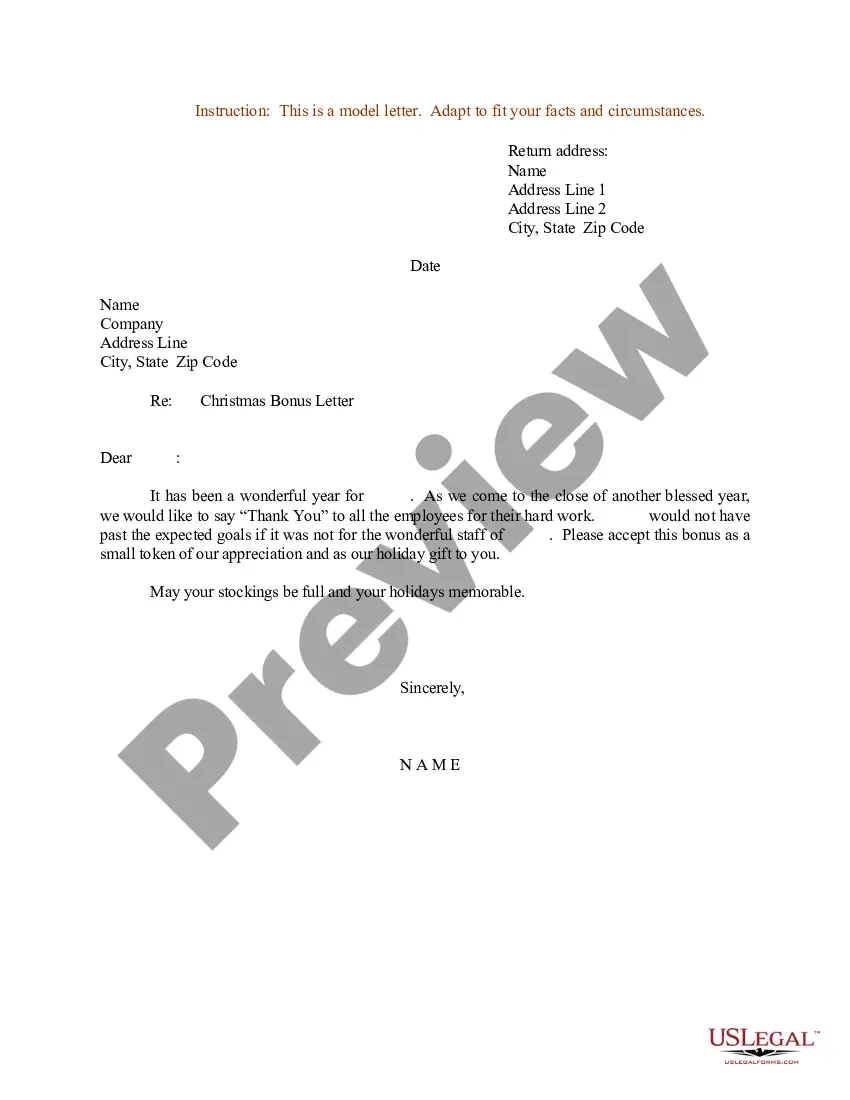
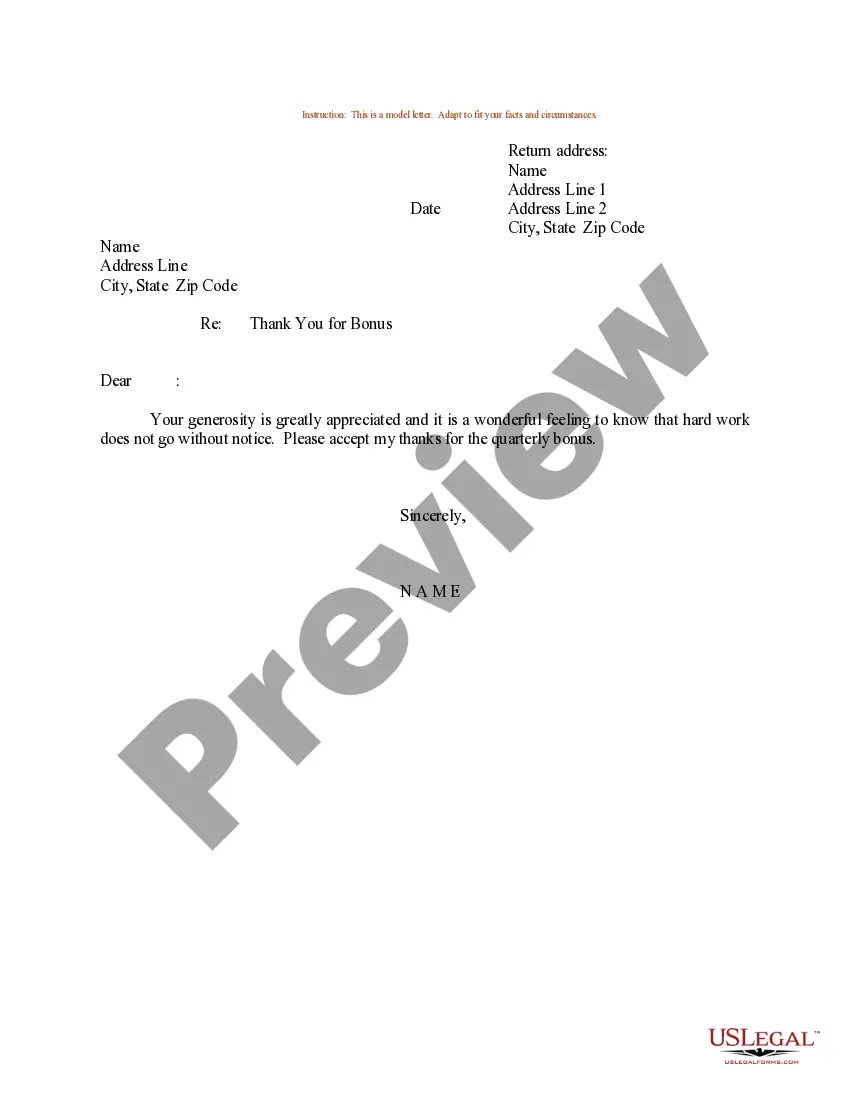
Get your form ready online
Our built-in tools help you complete, sign, share, and store your documents in one place.
Make edits, fill in missing information, and update formatting in US Legal Forms—just like you would in MS Word.
Download a copy, print it, send it by email, or mail it via USPS—whatever works best for your next step.
Sign and collect signatures with our SignNow integration. Send to multiple recipients, set reminders, and more. Go Premium to unlock E-Sign.
If this form requires notarization, complete it online through a secure video call—no need to meet a notary in person or wait for an appointment.
We protect your documents and personal data by following strict security and privacy standards.

Make edits, fill in missing information, and update formatting in US Legal Forms—just like you would in MS Word.

Download a copy, print it, send it by email, or mail it via USPS—whatever works best for your next step.

Sign and collect signatures with our SignNow integration. Send to multiple recipients, set reminders, and more. Go Premium to unlock E-Sign.

If this form requires notarization, complete it online through a secure video call—no need to meet a notary in person or wait for an appointment.

We protect your documents and personal data by following strict security and privacy standards.
Looking for another form?










Form popularity
FAQ
How to write a bonus letter Address the letter. In the beginning of the letter, label and address it like you start any correspondence with your team. Announce the bonus. After you address your recipient, try to immediately explain why you're writing them a letter. Give details. Congratulate them. End the letter.
Bonus Letter Rule – At the end of a one-syllable word, if the word has one vowel, followed immediately by an f, l, or s at the end, double that consonant. (The extra f, l, or s is considered a bonus letter because it is extra. The f, l, or s is doubled only if it immediately follows the vowel.
The stars are a visual reminder that they have encountered a bonus letter. This reminds students that although there are two identical consonants, they work together to make one sound. Physically marking the text helps students solidify their understanding of bonus letters (starred in orange).
Admission of Regular Students Is at least 18 years of age and demonstrates evidence of potential success in the community college.
Full-time: Student enrolls and participates in 12 credit hours or more per semester. Three-quarter (¾)-time: Student enrolls and participates in 9, 10, or 11 credit hours per semester. Half (½)-time: Student enrolls and participates in 6, 7, or 8 credit hours per semester.
How to write a bonus request letter Draft the structure of your letter. State why you're requesting the bonus. Provide evidence for why you're requesting the bonus. Invite the supervisor to discuss the bonus with you further. Proofread your letter before you deliver it.
Discretionary Bonus. Executive may also, in the discretion of the Board of Directors, receive an additional bonus based on individual merit and performance. The amount of this bonus, if any, in any such year shall be determined by the Board of Directors, in its sole discretion. Discretionary Bonus.

