Bonus Template For Employees In Harris
Description
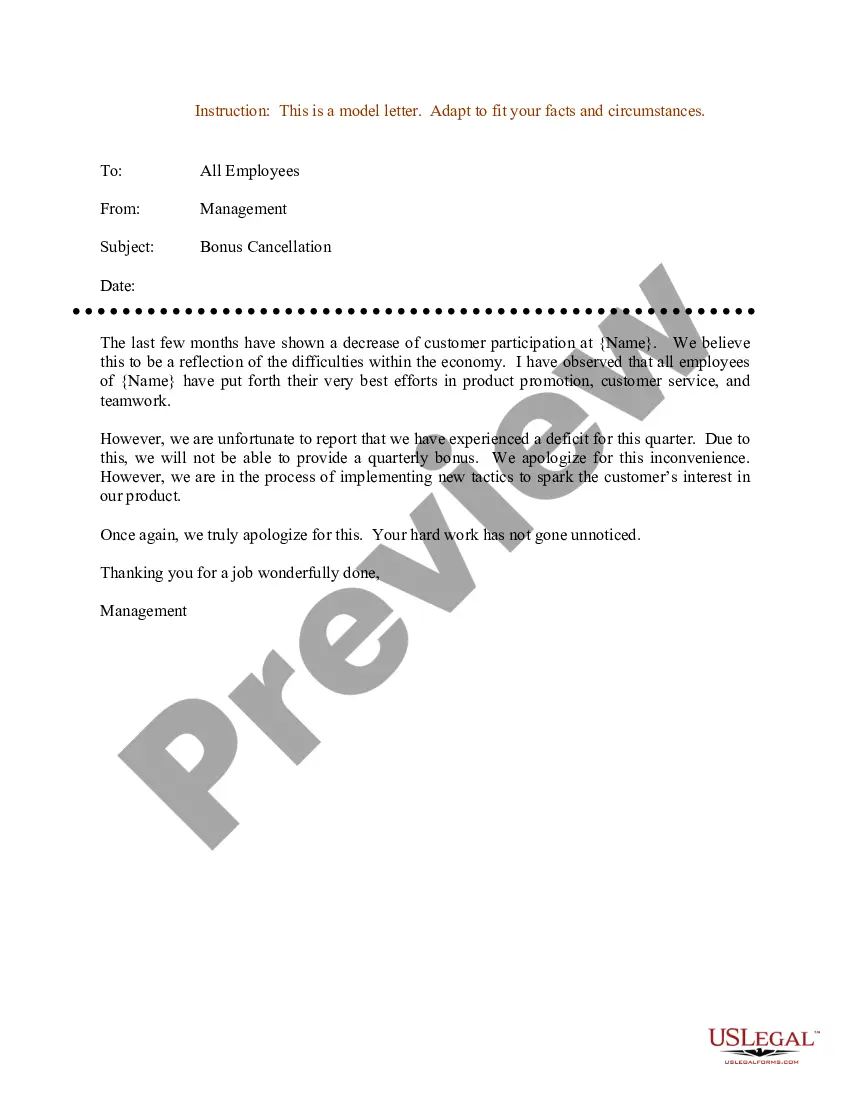
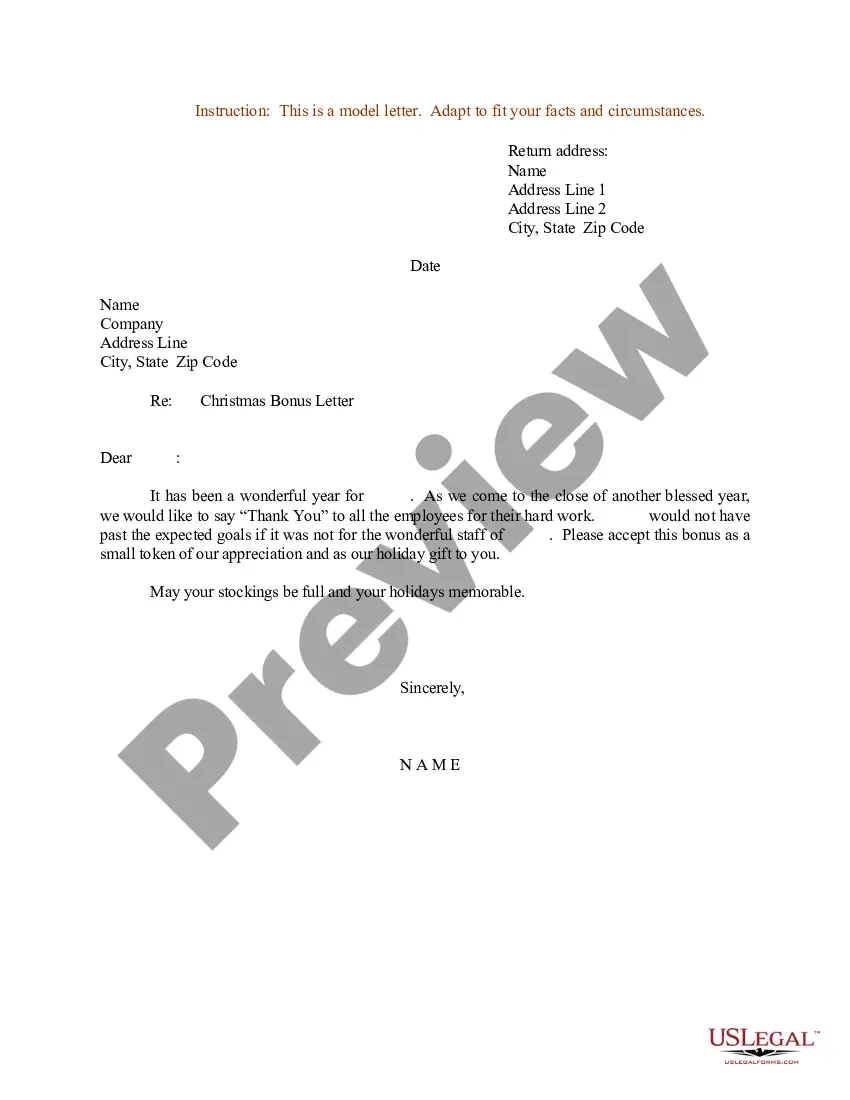
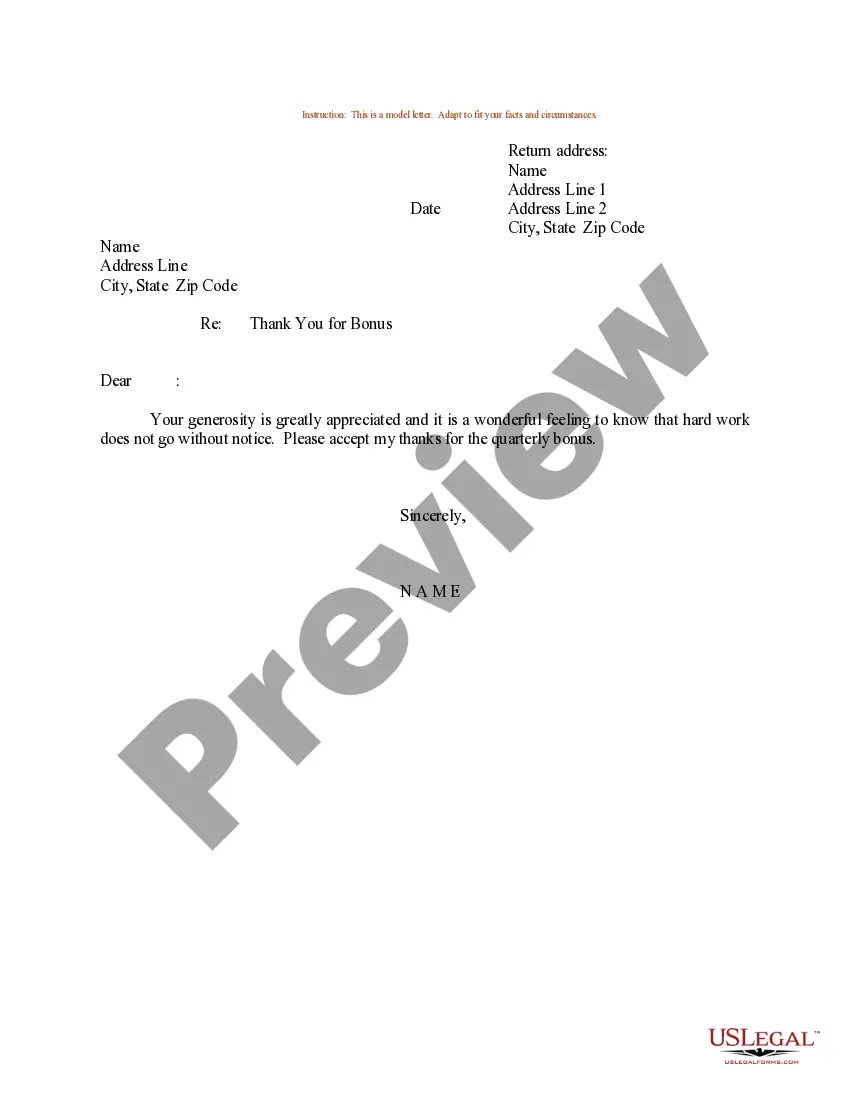
Get your form ready online
Our built-in tools help you complete, sign, share, and store your documents in one place.
Make edits, fill in missing information, and update formatting in US Legal Forms—just like you would in MS Word.
Download a copy, print it, send it by email, or mail it via USPS—whatever works best for your next step.
Sign and collect signatures with our SignNow integration. Send to multiple recipients, set reminders, and more. Go Premium to unlock E-Sign.
If this form requires notarization, complete it online through a secure video call—no need to meet a notary in person or wait for an appointment.
We protect your documents and personal data by following strict security and privacy standards.

Make edits, fill in missing information, and update formatting in US Legal Forms—just like you would in MS Word.

Download a copy, print it, send it by email, or mail it via USPS—whatever works best for your next step.

Sign and collect signatures with our SignNow integration. Send to multiple recipients, set reminders, and more. Go Premium to unlock E-Sign.

If this form requires notarization, complete it online through a secure video call—no need to meet a notary in person or wait for an appointment.

We protect your documents and personal data by following strict security and privacy standards.
Looking for another form?









Form popularity
FAQ
A typical bonus percentage ranges from 1% to 15% of a team member's salary. Nearly half of American workers had access to a nonproduction bonus (i.e., a bonus that isn't scaled via a productivity formula) in 2024.
Components of an Effective Employee Bonus Plan Make Bonus Opportunities Available to Everyone. Start Early and Tie the Bonuses to Financial Results. Reward Early Wins. Fund the Payout in Advance. Educate Your Employees. Celebrate Wins.
An employee bonus structure is a vital element in the ecosystem of a thriving workplace. Essentially, it serves as a strategic framework that employers can use to reward their workforce for meeting specific goals, excelling in their roles, or contributing towards overall organizational success.
A great bonus would be about 10-15% of your annual salary. But most people receive offers closer to 5% of their annual salary.
What's considered “typical” or “good” for a bonus amount really depends on the type of bonus you're receiving. An annual bonus of 5-10% of your yearly salary is standard in a lot of industries, just as a 5-10% annual raise is considered standard.
A typical bonus payout structure is 3% to 5% of annual salary for clerical and support staff. Managers might receive payments in the low double-digit percentage range, and executives in the mid-double-digit range. Senior executives at the highest levels may receive the bulk of their compensation via bonus payments.
What is the formula for a salary bonus? The formula used for the calculation of bonus is as follows: Applicable Bonus = Your Salary x 8.33/100.
Be straightforward, be sincere and don't be afraid to ``toot your own horn''. Be respectful and let them know how much you love your job and what you do. Then, simply ask for your bonus (or raise). You can either leave out the amount, or if you do state an amount, be ready to negotiate.
Put all the details of the Bonus Scheme in writing so the terms are easily understandable. Make sure the scheme is separate to the contract of employment so it can be easily reviewed and amended or updated as necessary. You should evaluate the scheme regularly to see if it is producing the results you want.
A bonus plan is a compensation strategy used by organizations to reward employees for their performance, contributions, or achievement of specific goals. Bonus plans are designed to motivate employees, enhance performance, and align individual goals with organizational objectives.

