Template For Bonus Structure In Georgia
Description
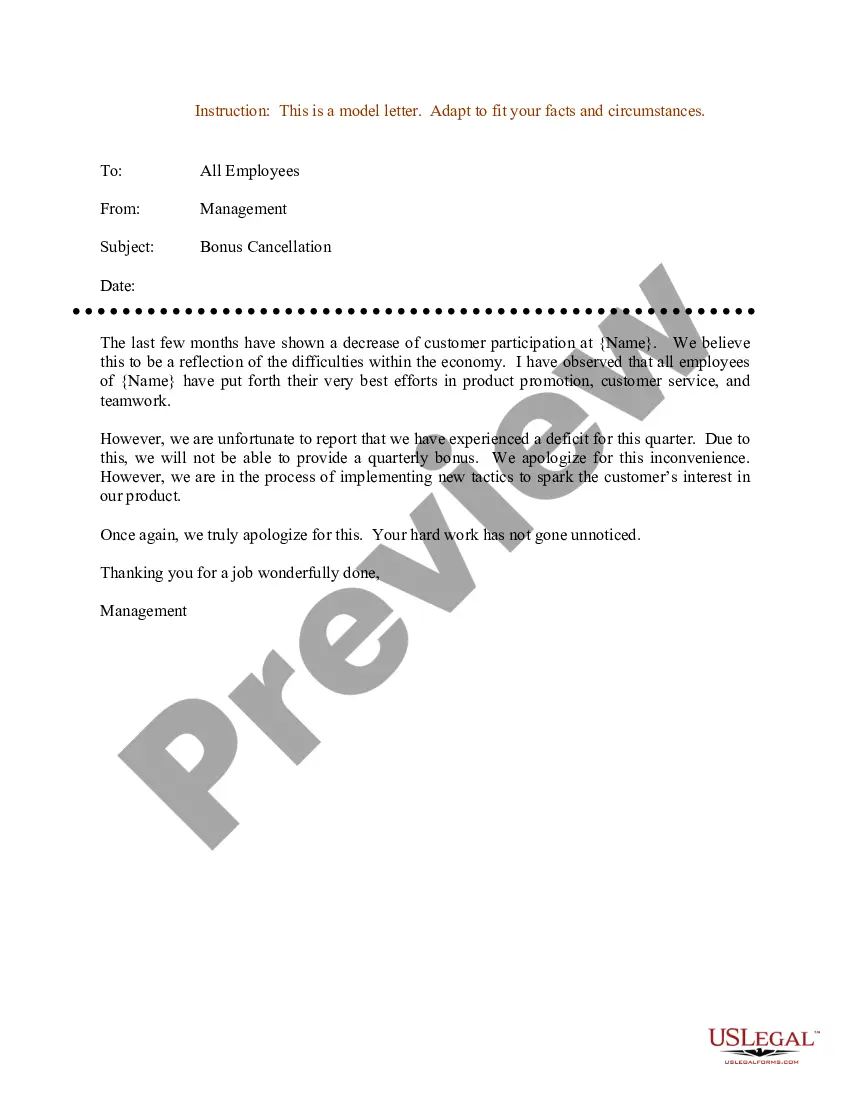
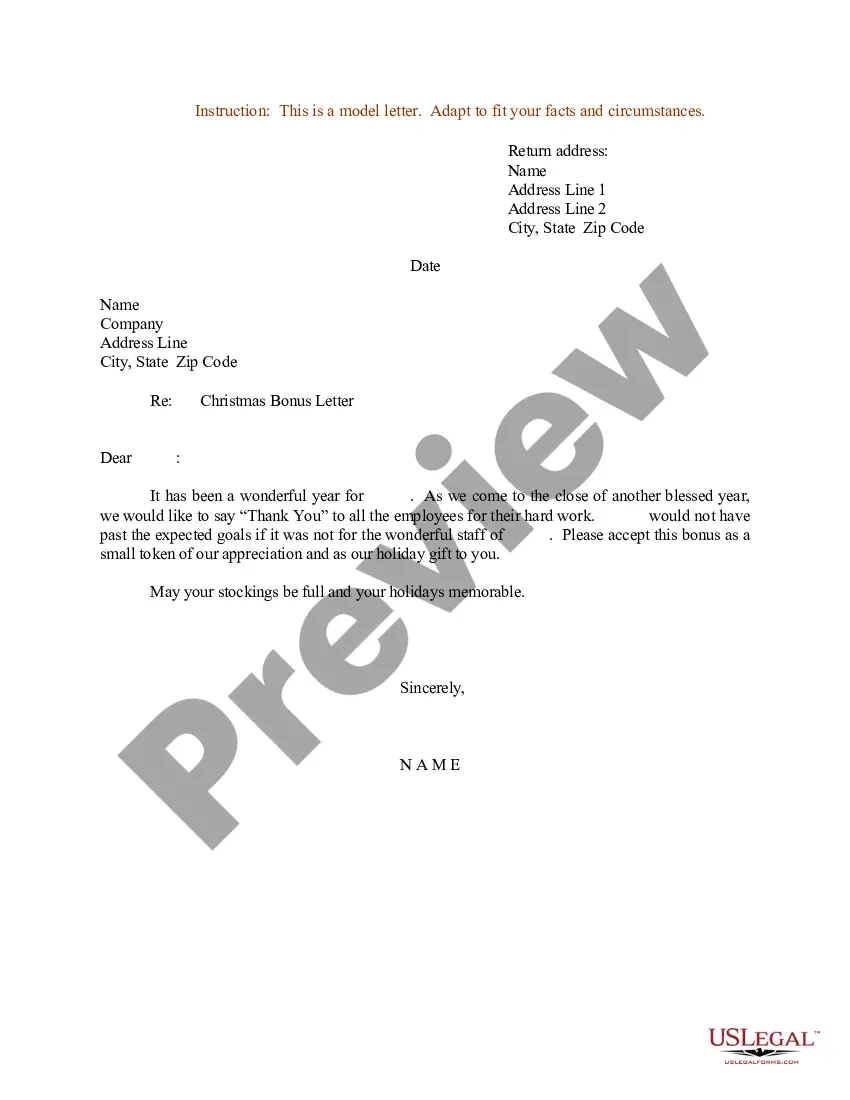
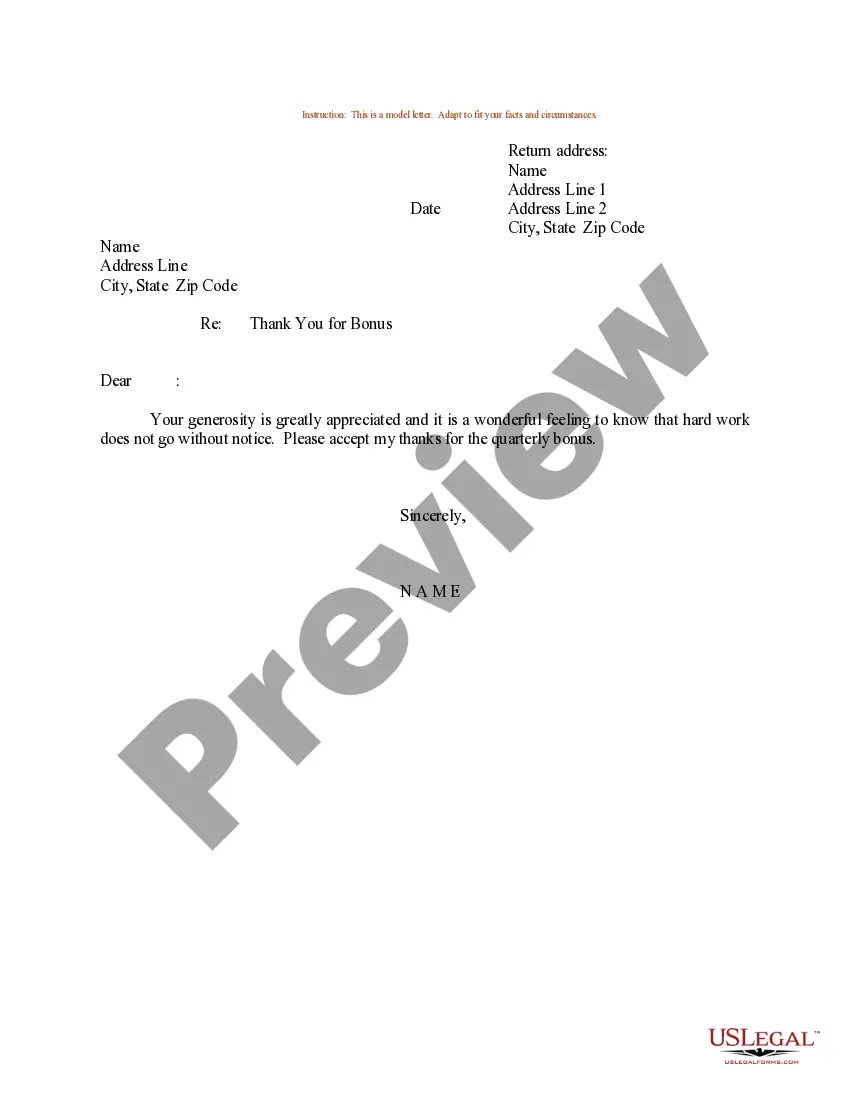
Get your form ready online
Our built-in tools help you complete, sign, share, and store your documents in one place.
Make edits, fill in missing information, and update formatting in US Legal Forms—just like you would in MS Word.
Download a copy, print it, send it by email, or mail it via USPS—whatever works best for your next step.
Sign and collect signatures with our SignNow integration. Send to multiple recipients, set reminders, and more. Go Premium to unlock E-Sign.
If this form requires notarization, complete it online through a secure video call—no need to meet a notary in person or wait for an appointment.
We protect your documents and personal data by following strict security and privacy standards.

Make edits, fill in missing information, and update formatting in US Legal Forms—just like you would in MS Word.

Download a copy, print it, send it by email, or mail it via USPS—whatever works best for your next step.

Sign and collect signatures with our SignNow integration. Send to multiple recipients, set reminders, and more. Go Premium to unlock E-Sign.

If this form requires notarization, complete it online through a secure video call—no need to meet a notary in person or wait for an appointment.

We protect your documents and personal data by following strict security and privacy standards.
Looking for another form?






Form popularity
FAQ
Be straightforward, be sincere and don't be afraid to ``toot your own horn''. Be respectful and let them know how much you love your job and what you do. Then, simply ask for your bonus (or raise). You can either leave out the amount, or if you do state an amount, be ready to negotiate.
7 Steps to Negotiating a Bonus Research and Prepare. The first step in successful bonus negotiation is to be well-prepared. Assess Your Performance. Before entering the negotiation room, take a deep dive into your achievements and contributions. Know Your Worth. Schedule a Meeting. Make Your Case. Be Flexible. Follow Up.
Be straightforward, be sincere and don't be afraid to ``toot your own horn''. Be respectful and let them know how much you love your job and what you do. Then, simply ask for your bonus (or raise). You can either leave out the amount, or if you do state an amount, be ready to negotiate.
The typical bonus amount can range from 1% to 15% of an employee's salary, usually depending on a number of factors such as industry, company performance, and individual or team accomplishments. The average bonus for employees continues to rise over time. In 2020, the average employee bonus was only 8.1%.
Here are some key factors to consider: Alignment with company goals: The bonus structure should be aligned with the overall goals and objectives of the company. Fairness and equity: The bonus structure should be fair and equitable, with clear and transparent criteria for determining eligibility and payouts.
Georgia: The state applies a progressive income tax rate to bonuses, ranging from 1% to 5.75%. Connecticut: For supplemental wages such as bonuses, the flat withholding rate is 6.99%.
California similarly defines remuneration or wages as "all amounts for labor performed by employees of every description, whether the amount is fixed or ascertained by the standard of time, task, piece, commission basis, or other method of calculation." That means that all wages, whether a bonus, incentive, or ...
Once you have both performance percentage and salary percentage for each individual, you can multiply them together by an individual. Add up all individuals to get a total ratio. Divide each individual's share by the full rate, and that's the portion of the bonus pool that an individual receives.
The 9.6% average is a good bonus percentage benchmark, but it isn't one-size-fits-all. You should shift this percentage based on industry factors and what's feasible for your company.

