Sample Bonus Template For Retention In Georgia
Description
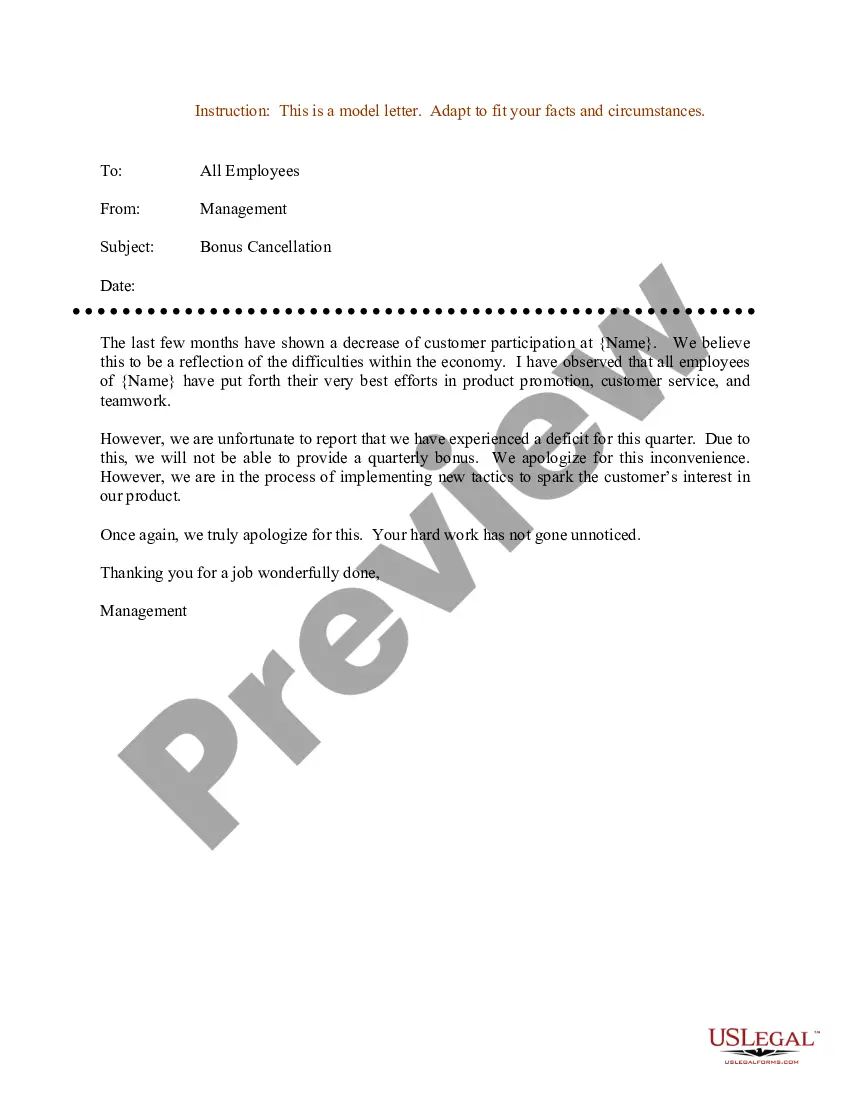
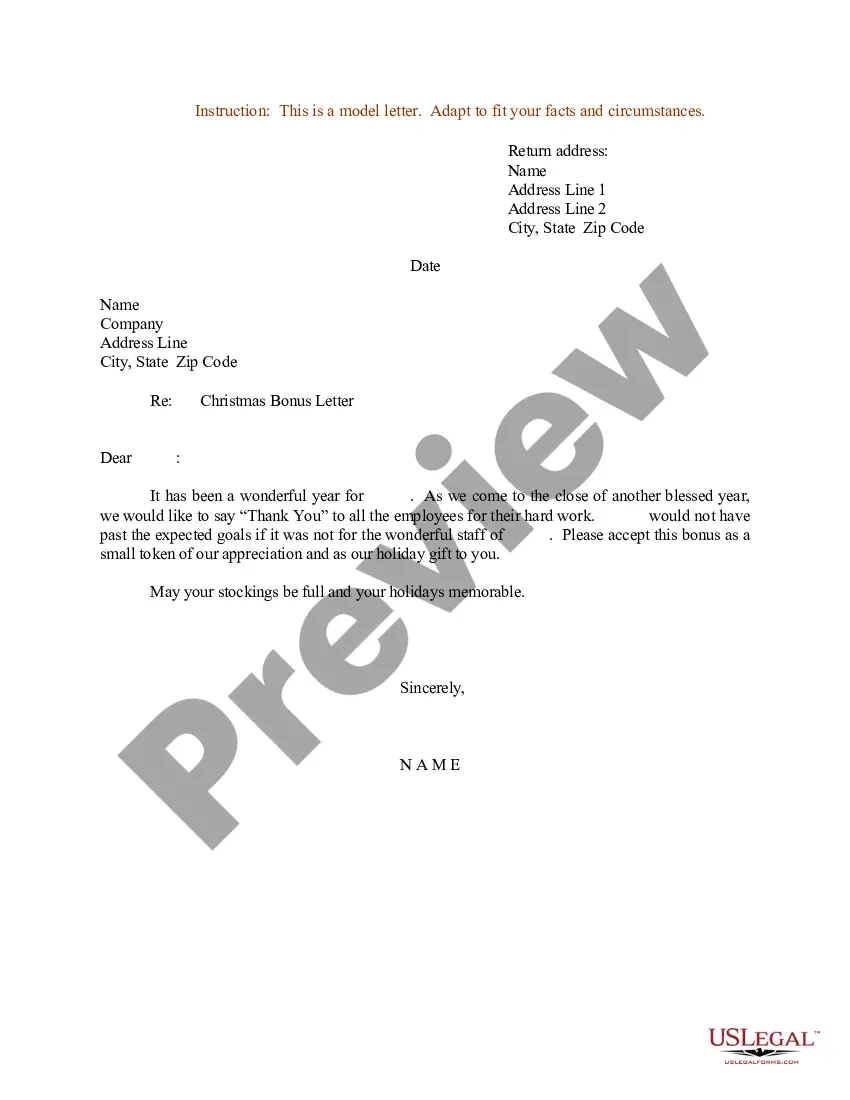
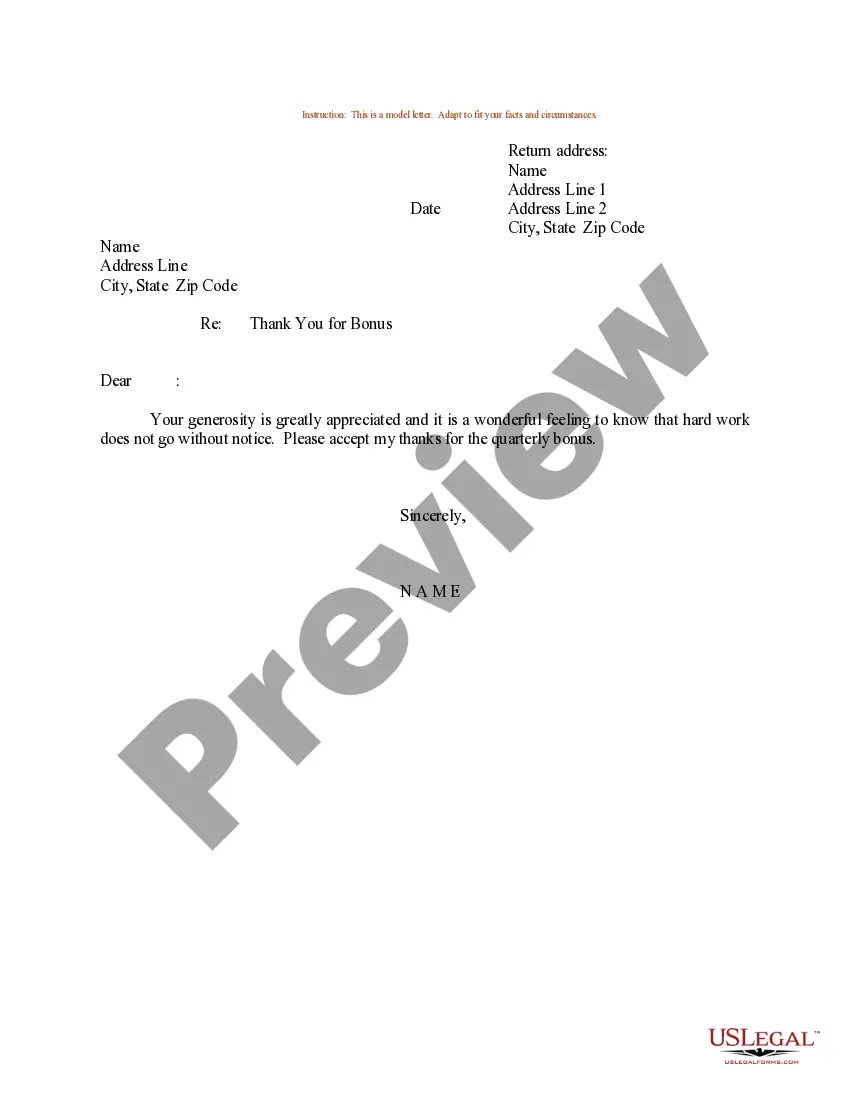
Get your form ready online
Our built-in tools help you complete, sign, share, and store your documents in one place.
Make edits, fill in missing information, and update formatting in US Legal Forms—just like you would in MS Word.
Download a copy, print it, send it by email, or mail it via USPS—whatever works best for your next step.
Sign and collect signatures with our SignNow integration. Send to multiple recipients, set reminders, and more. Go Premium to unlock E-Sign.
If this form requires notarization, complete it online through a secure video call—no need to meet a notary in person or wait for an appointment.
We protect your documents and personal data by following strict security and privacy standards.

Make edits, fill in missing information, and update formatting in US Legal Forms—just like you would in MS Word.

Download a copy, print it, send it by email, or mail it via USPS—whatever works best for your next step.

Sign and collect signatures with our SignNow integration. Send to multiple recipients, set reminders, and more. Go Premium to unlock E-Sign.

If this form requires notarization, complete it online through a secure video call—no need to meet a notary in person or wait for an appointment.

We protect your documents and personal data by following strict security and privacy standards.
Looking for another form?










Form popularity
FAQ
A retention incentive can range from 10% to 30% of an employee's annual salary. The size depends on a number of factors, including the employee's role, the length of the retention period, and the company's budget. For example: A senior executive earning $200,000 could be offered a bonus of $20,000 to $50,000.
Some examples of effective employee retention strategies include attracting and hiring the right people, improving your onboarding process, offering flexible work arrangements, prioritizing total well-being, working on DEIB, providing fair compensation & benefits, effective performance management, and recognition, and ...
Examples of retention bonuses in this category include bonuses tied to sales targets or project milestones. Project-Specific Retention Bonus: In cases where an employee's contribution is vital to the completion of a critical project, a project-specific retention bonus may be offered.
Retention bonuses typically range from 10-25% of the employee's salary and are negotiated separately from the employment contract. A retention bonus example: If your CMO makes $352,000 a year, their yearly executive retention bonus at 10% would be $35,200.
As of Sept. 15, 2023, workers can qualify for a one-time retention stipend of $1,000 if they meet the following requirements: Currently are in the SEIU collective bargaining unit, meaning they provided personal assistance services to a person who uses PCA Choice, CDCS, or CSG services within the past six (6) months.
Who can receive a retention bonus? Any employee is eligible for a retention bonus. Most often, companies only give retention bonuses to highly skilled employees that may be difficult to replace. Similarly, employees with specific company or project knowledge are more likely to receive a retention bonus.
Governor Brian Kemp announced a $1,000 year-end bonus for educators, supporting staff, and state employees. Governor Brian Kemp announced a $1,000 year-end bonus for educators, supporting staff, and state employees in Georgia. Schools districts will oversee when funds are distributed.
Generally speaking, a retention bonus ranges from 25-95% of the employee's base salary. The company must offer an amount that is meaningful to the employee for it to properly incentivize him/her to sign the retention contract.
The typical bonus amount can range from 1% to 15% of an employee's salary, usually depending on a number of factors such as industry, company performance, and individual or team accomplishments. The average bonus for employees continues to rise over time. In 2020, the average employee bonus was only 8.1%.
The lesson is this: In proposing a retention bonus or agreement to your employer, you should first emphasize (a) why it would be in the interests of the employer, and, then (b) what benefit will come about to the employer if it offers the retention bonus.

