Sample Bonus Plans For Executives In Georgia
Description
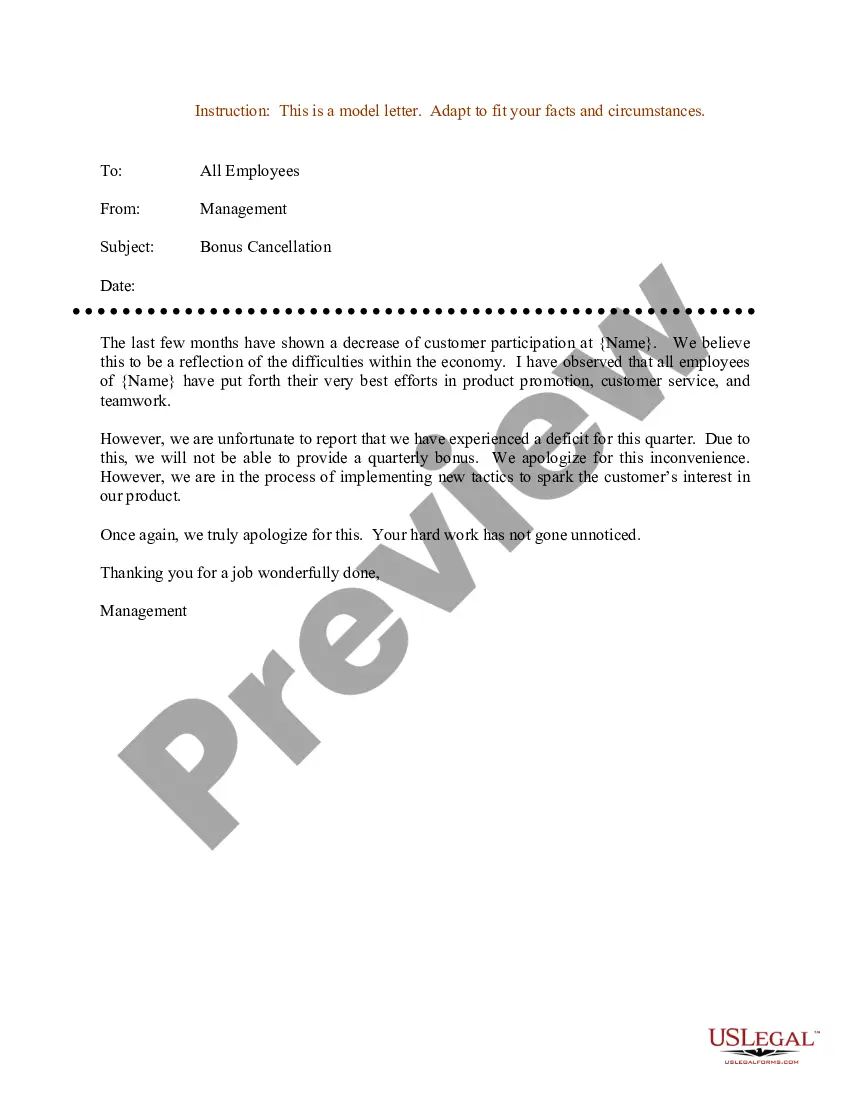
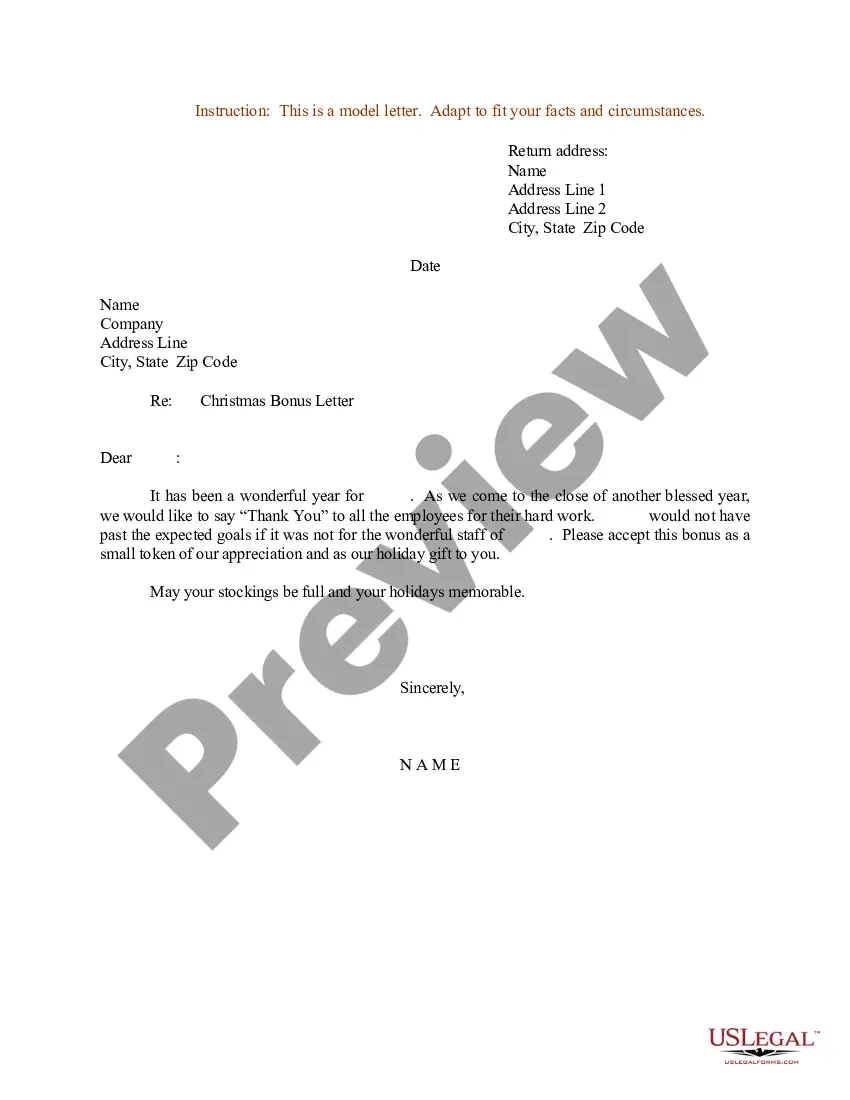
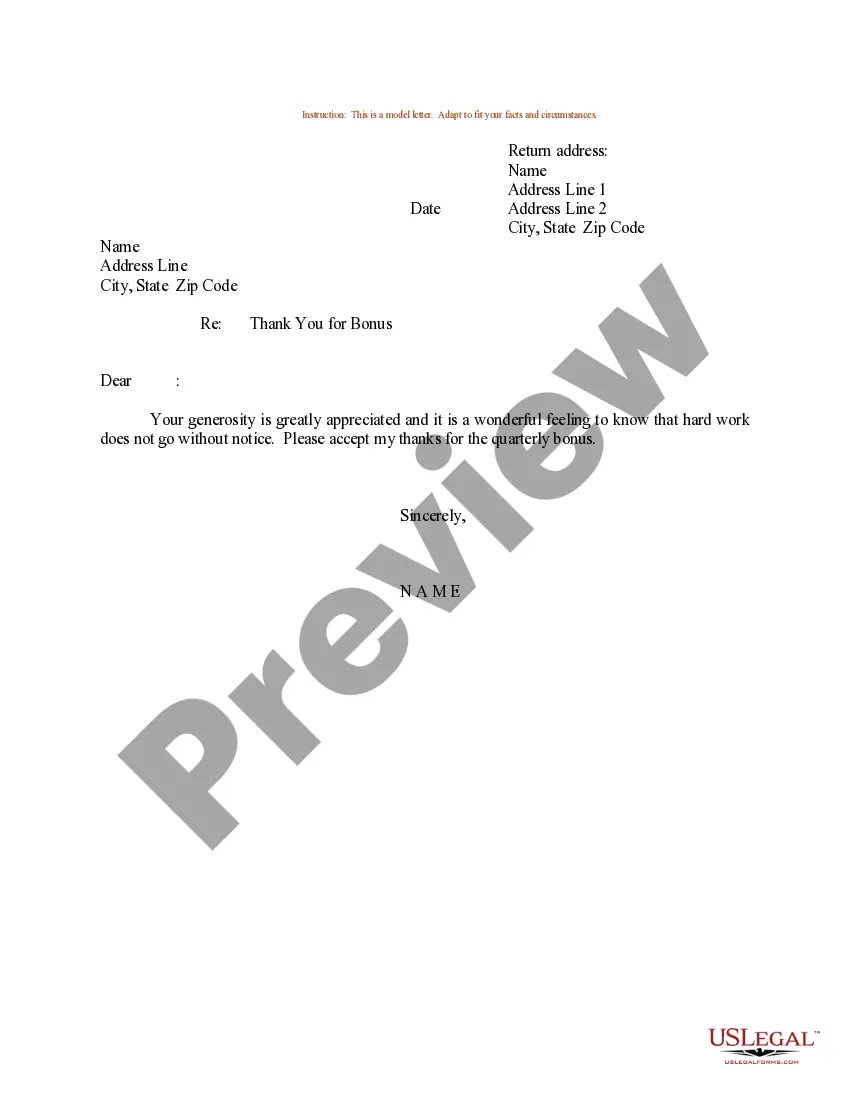
Get your form ready online
Our built-in tools help you complete, sign, share, and store your documents in one place.
Make edits, fill in missing information, and update formatting in US Legal Forms—just like you would in MS Word.
Download a copy, print it, send it by email, or mail it via USPS—whatever works best for your next step.
Sign and collect signatures with our SignNow integration. Send to multiple recipients, set reminders, and more. Go Premium to unlock E-Sign.
If this form requires notarization, complete it online through a secure video call—no need to meet a notary in person or wait for an appointment.
We protect your documents and personal data by following strict security and privacy standards.

Make edits, fill in missing information, and update formatting in US Legal Forms—just like you would in MS Word.

Download a copy, print it, send it by email, or mail it via USPS—whatever works best for your next step.

Sign and collect signatures with our SignNow integration. Send to multiple recipients, set reminders, and more. Go Premium to unlock E-Sign.

If this form requires notarization, complete it online through a secure video call—no need to meet a notary in person or wait for an appointment.

We protect your documents and personal data by following strict security and privacy standards.
Looking for another form?





Form popularity
FAQ
An executive bonus plan, also known as a Section 162 plan, is a compensation strategy that provides additional benefits to key employees or executives. This plan is a type of life insurance where the employer pays the premiums as a bonus.
The typical bonus amount can range from 1% to 15% of an employee's salary, usually depending on a number of factors such as industry, company performance, and individual or team accomplishments. The average bonus for employees continues to rise over time. In 2020, the average employee bonus was only 8.1%.
Ing to a 2024 report, CEOs of large public companies saw major increases in executive compensation and earned an average base salary of $2 million in 2024. Those at midsize firms averaged a base salary of about $1.15 million, and CEOs of smaller companies earned an average base salary of around $850,000.
A typical executive compensation package has financial and non-financial components. They are salary, benefits, bonuses and equity. Commonly, an executive would get more amount of equity than a normal worker and a normal worker quite often wouldn't get any equity in a private company.
A good compensation package should align with the employee's needs, goals, and values while matching or surpassing industry standards. It's also essential to align with the company's strategic objectives, ensuring that it's sustainable and beneficial for both parties.
An executive bonus plan, also known as a Section 162 plan, is a compensation strategy that provides additional benefits to key employees or executives. This plan is a type of life insurance where the employer pays the premiums as a bonus.
The median bonus was $2.15 million. Bonuses may be used to reward performance or as a kind of deferred compensation to discourage executives from quitting. They are often part of both short and long term compensation, and more often part of a plan or formula than simply discretionary.
An executive bonus plan, also known as a Section 162 plan, is a compensation strategy that provides additional benefits to key employees or executives. This plan is a type of life insurance where the employer pays the premiums as a bonus.
You can set bonus amounts as a percentage of each manager's annual salary, perhaps as much as 20 percent. Alternatively, you might set aside a percentage of the company's profits for bonuses and divide this among your managers based on how successfully they attained their goals.
