Bonus Letter Sample For Scholarship Application In Franklin
Description
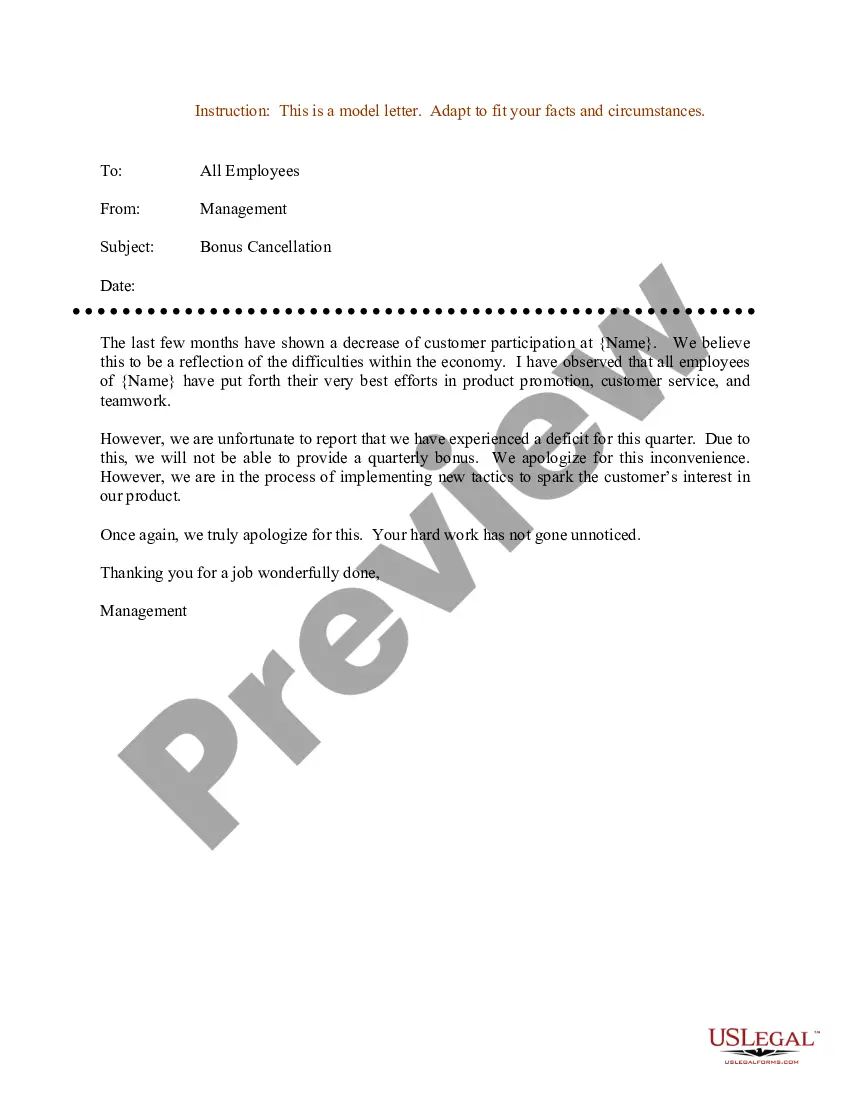
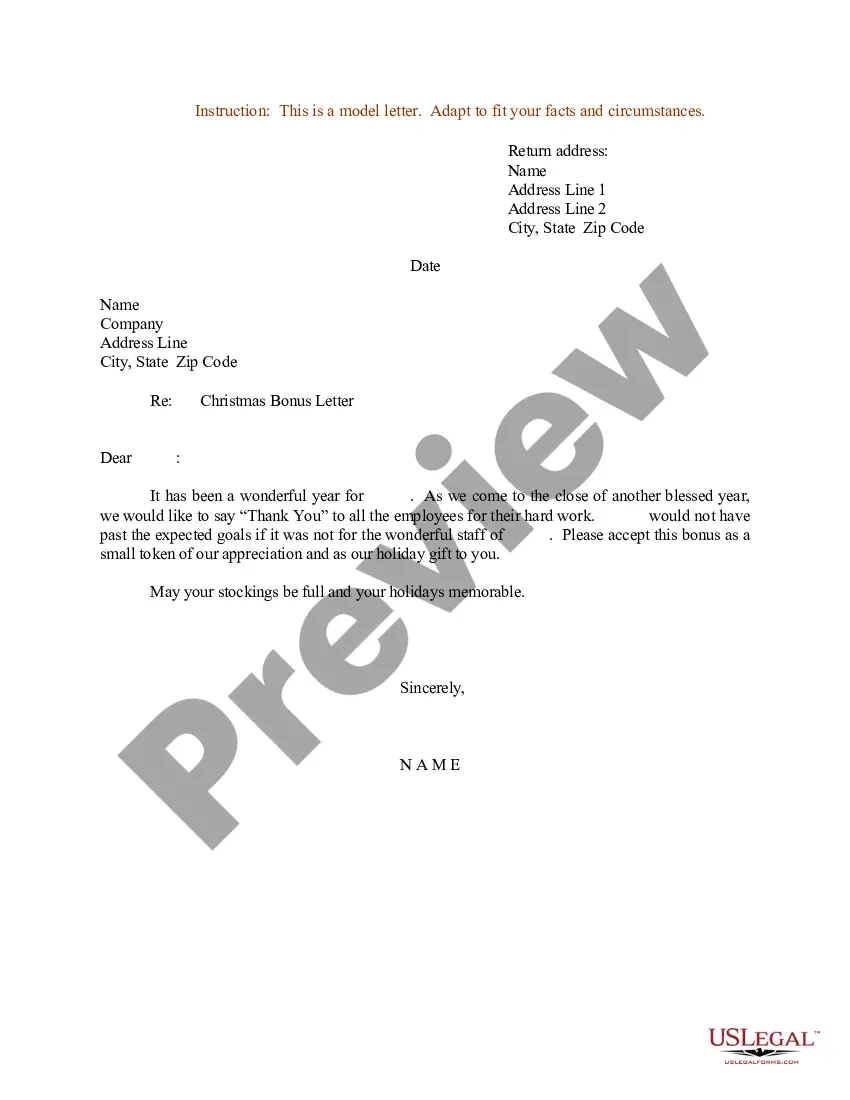
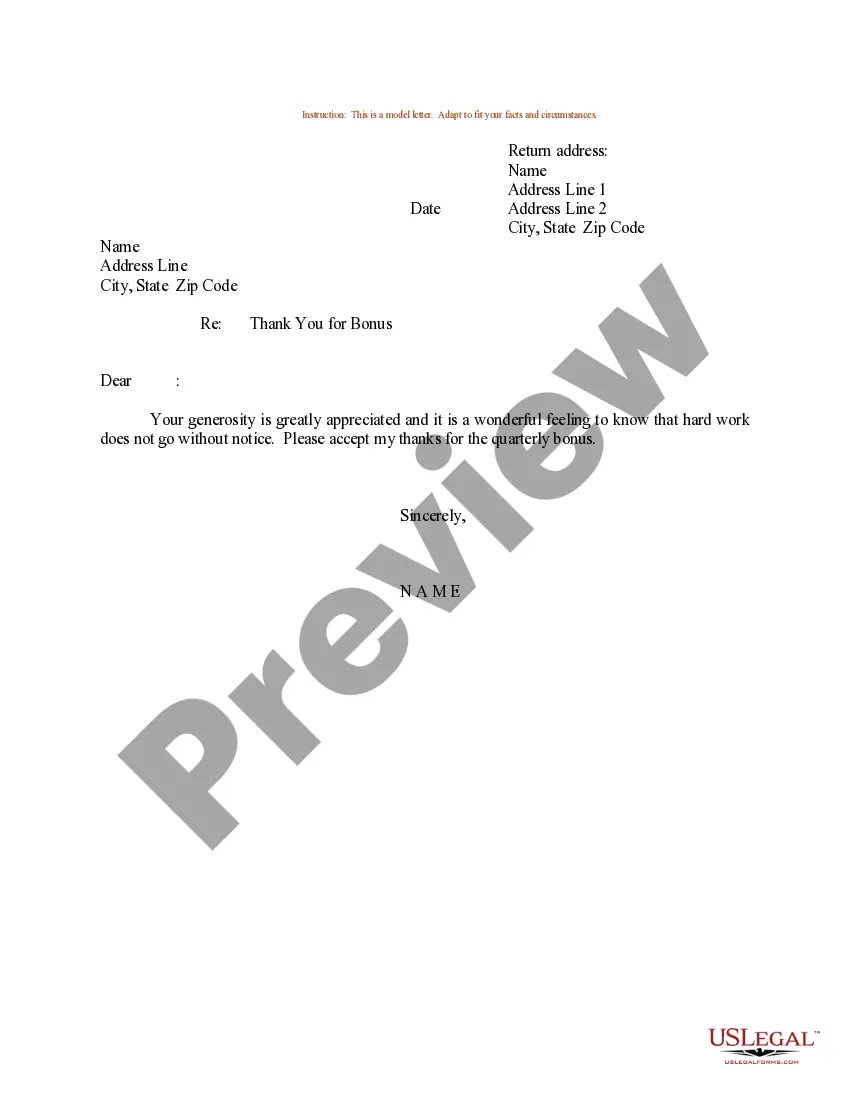
Get your form ready online
Our built-in tools help you complete, sign, share, and store your documents in one place.
Make edits, fill in missing information, and update formatting in US Legal Forms—just like you would in MS Word.
Download a copy, print it, send it by email, or mail it via USPS—whatever works best for your next step.
Sign and collect signatures with our SignNow integration. Send to multiple recipients, set reminders, and more. Go Premium to unlock E-Sign.
If this form requires notarization, complete it online through a secure video call—no need to meet a notary in person or wait for an appointment.
We protect your documents and personal data by following strict security and privacy standards.

Make edits, fill in missing information, and update formatting in US Legal Forms—just like you would in MS Word.

Download a copy, print it, send it by email, or mail it via USPS—whatever works best for your next step.

Sign and collect signatures with our SignNow integration. Send to multiple recipients, set reminders, and more. Go Premium to unlock E-Sign.

If this form requires notarization, complete it online through a secure video call—no need to meet a notary in person or wait for an appointment.

We protect your documents and personal data by following strict security and privacy standards.
Looking for another form?







Form popularity
FAQ
Bonus letters are double consonants found at the end of the word. There are only four consonants that are consistently doubled: f, l, s, and z. These letters are doubled when they directly follow a vowel in a closed syllable. In other words, these letters are 'stuck' to the short vowel.
If you're asking for a bonus for a specific project, provide facts and figures about the outcome of the project and how it exceeded the stakeholders' requirements. If you're asking for a bonus for more general reasons, offer details about why you deserve it.
How to write a bonus letter Address the letter. In the beginning of the letter, label and address it like you start any correspondence with your team. Announce the bonus. After you address your recipient, try to immediately explain why you're writing them a letter. Give details. Congratulate them. End the letter.
Use positive language to express the company's values, such as ““We wish to reward you for your excellent customer service,”” or ““We appreciate your innovative ideas and want to reward your hard work.”” Explain how the bonus is an affirmation of the company's values and how it will help employees continue to thrive.
Dear Sir/Madam On behalf of XYZ Team, I request you to award bonus for the entire team since they have worked very hard throughout the COVID-19 pandemic. Despite of the hard times, limited staff and havoc caused by pandemic, our team diligently...
In the case of a scholarship award, a letter of intent can be referred to as a statement of purpose where you describe the importance of being awarded the scholarship. Introduce yourself. Include your plans while in college and afterward, and your motivation for choosing a particular course of study.
Components of a LOI Opening Paragraph: Your summary statement. Statement of Need: The "why" of the project. ( ... Project Activity: The "what" and "how" of the project. ( ... Outcomes (1–2 paragraphs; before or after the Project Activity) ... Credentials (1–2 paragraphs) ... Budget (1–2 paragraphs) ... Closing (1 paragraph) ... Signature.
Briefly introduce yourself, state the scholarship you are applying for, and express your enthusiasm. Mention a compelling reason or a personal story that makes the scholarship particularly significant to you. Clearly articulate your academic pursuits and how they align with your career aspirations.
Letter of intent example Dear Recipient's Name, I am writing to express my interest in collaborating with Company Name as a freelancer on the upcoming Specific Project Name or Type of Project project.
How to write a scholarship cover letter Review the scholarship requirements. Write an introduction. Discuss your professional or work experience. Highlight your academic goals and interests. Review your post-graduation plans. Write a concluding paragraph. Proofread and edit your letter.

