Sample Bonus Template For Employees In Fairfax
Description
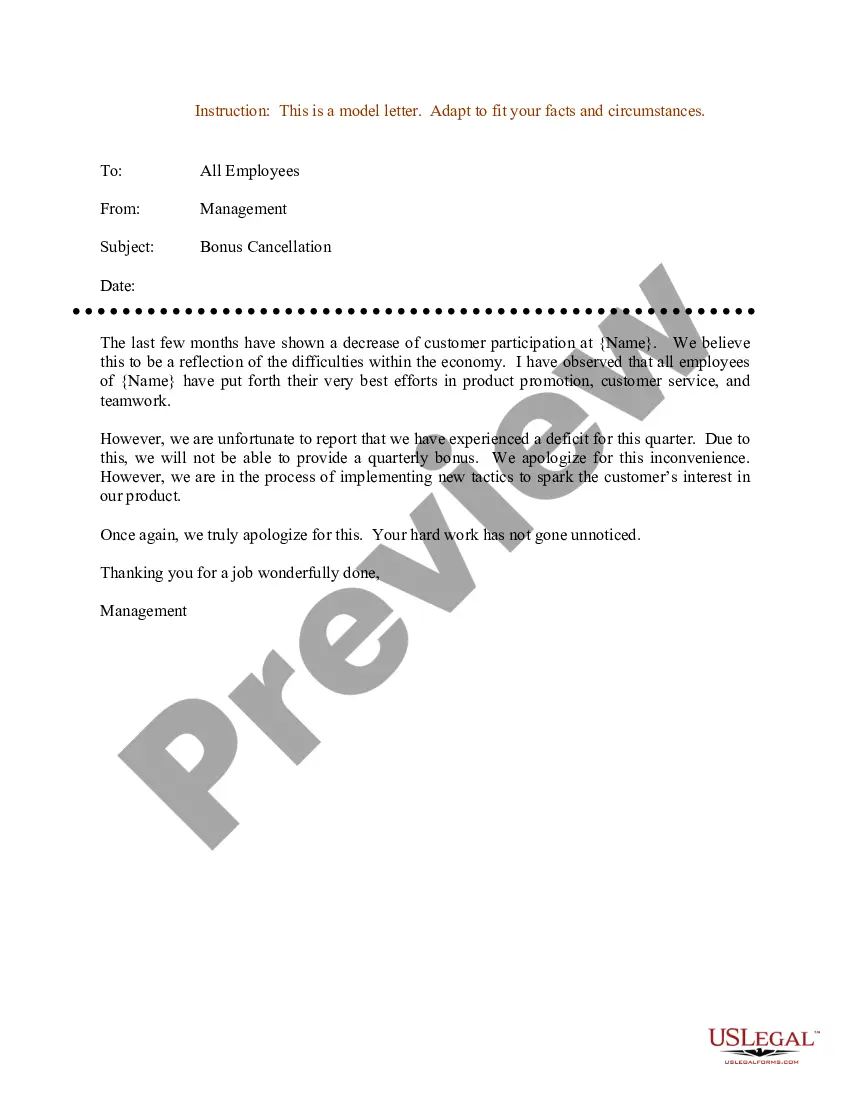
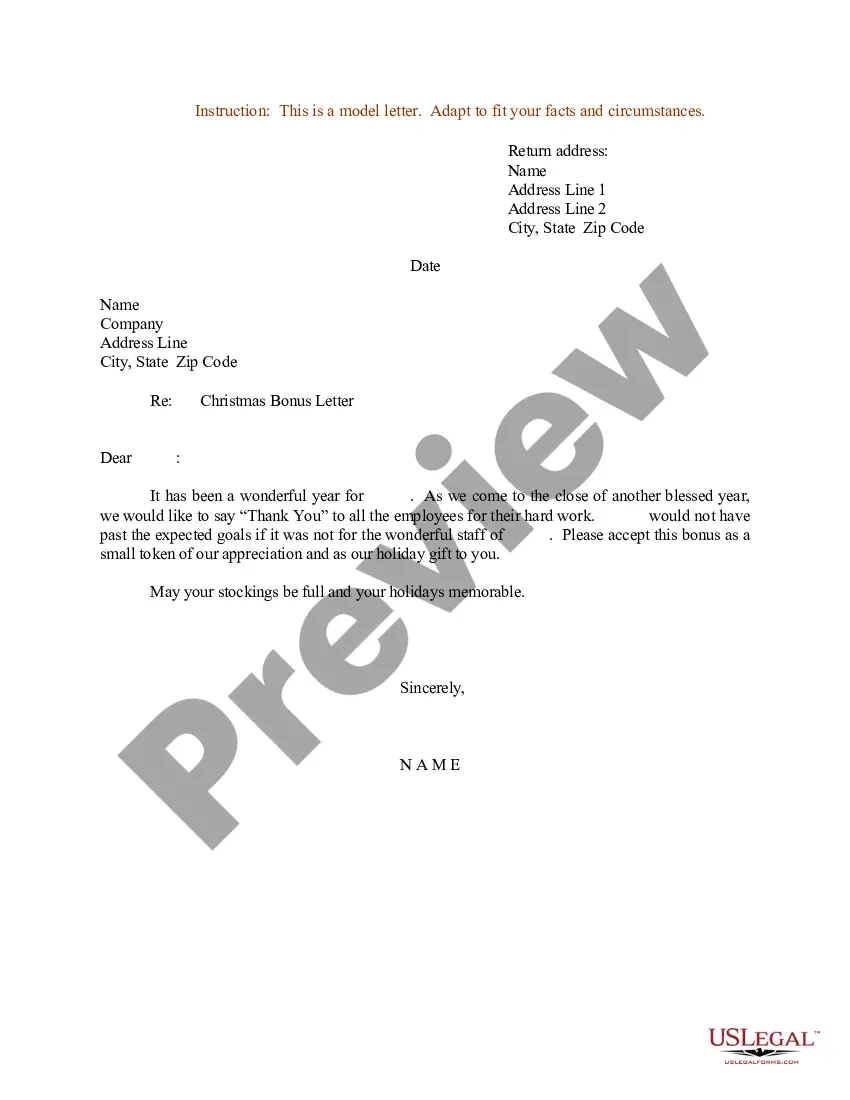
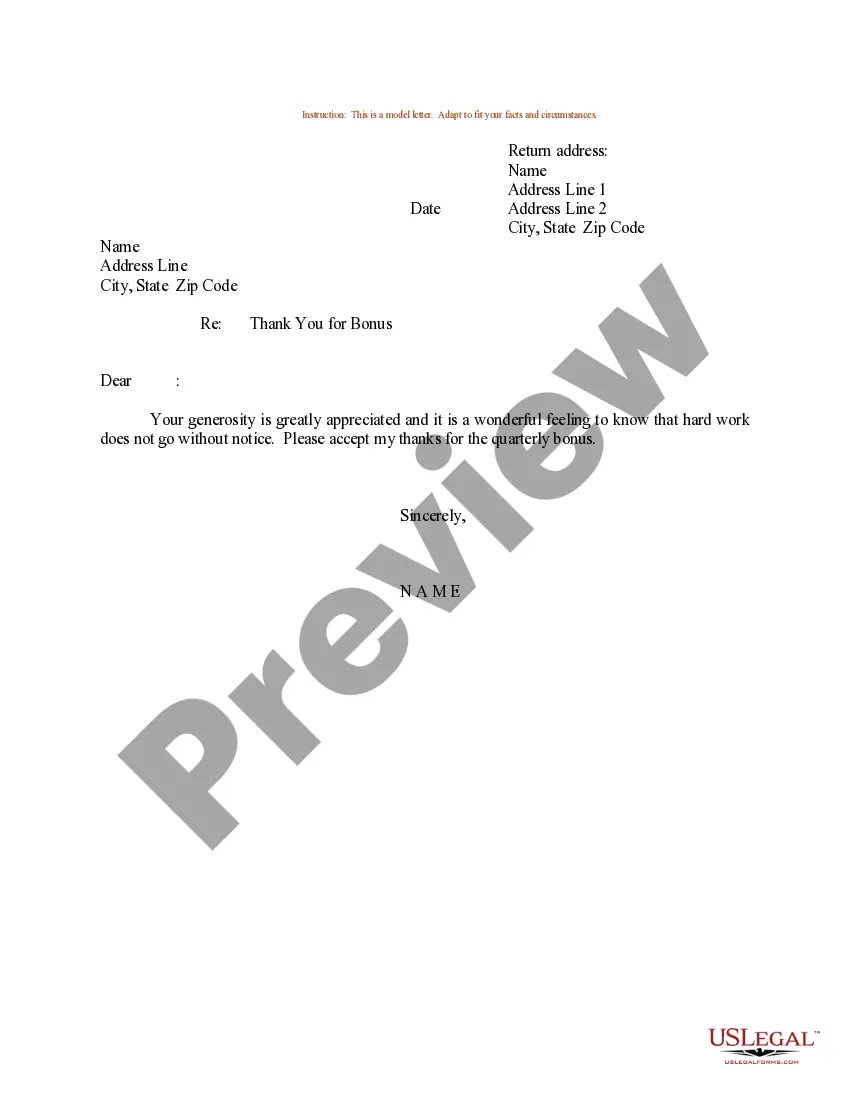
Get your form ready online
Our built-in tools help you complete, sign, share, and store your documents in one place.
Make edits, fill in missing information, and update formatting in US Legal Forms—just like you would in MS Word.
Download a copy, print it, send it by email, or mail it via USPS—whatever works best for your next step.
Sign and collect signatures with our SignNow integration. Send to multiple recipients, set reminders, and more. Go Premium to unlock E-Sign.
If this form requires notarization, complete it online through a secure video call—no need to meet a notary in person or wait for an appointment.
We protect your documents and personal data by following strict security and privacy standards.

Make edits, fill in missing information, and update formatting in US Legal Forms—just like you would in MS Word.

Download a copy, print it, send it by email, or mail it via USPS—whatever works best for your next step.

Sign and collect signatures with our SignNow integration. Send to multiple recipients, set reminders, and more. Go Premium to unlock E-Sign.

If this form requires notarization, complete it online through a secure video call—no need to meet a notary in person or wait for an appointment.

We protect your documents and personal data by following strict security and privacy standards.
Looking for another form?






Form popularity
FAQ
Add up all individuals to get a total ratio. Divide each individual's share by the full rate, and that's the portion of the bonus pool that an individual receives. It may sound a little complicated, but it's straightforward and fair. Spend a little time to rate each employee.
Key Components of a Bonus Letter Header and Date. Company Letterhead: Includes the company's name, logo, and contact information. Employee Information. Recipient's Name: The name of the employee receiving the bonus. Bonus Details. Payment Details. Terms and Conditions. Acknowledgment. Closing.
A KPI bonus structure directly links an employee's compensation to their measured performance against specific targets. This method emphasizes accountability while providing clear metrics for performance evaluation and reward distribution.
Components of an Effective Employee Bonus Plan Make Bonus Opportunities Available to Everyone. Start Early and Tie the Bonuses to Financial Results. Reward Early Wins. Fund the Payout in Advance. Educate Your Employees. Celebrate Wins.
Components of an Effective Employee Bonus Plan Make Bonus Opportunities Available to Everyone. Start Early and Tie the Bonuses to Financial Results. Reward Early Wins. Fund the Payout in Advance. Educate Your Employees. Celebrate Wins.
Have are 9 most popular employee bonuses: Signing Bonus. Every employee journey starts with onboarding, and organizations need to get it right. Annual Bonus. Spot Bonus. Retention Bonus. Non-Monetary Bonus. Holiday Bonus. Commission. Profit-Sharing Bonus.
An annual bonus of 5-10% of your yearly salary is standard in a lot of industries, just as a 5-10% annual raise is considered standard.
The typical bonus amount can range from 1% to 15% of an employee's salary, usually depending on a number of factors such as industry, company performance, and individual or team accomplishments. The average bonus for employees continues to rise over time. In 2020, the average employee bonus was only 8.1%.
Role, level, and seniority Executives typically receive higher bonuses in line with their performance (10–30% of their salary for an annual bonus). This higher compensation is designed to reflect their strategic decision-making and leadership roles.
Details to Include: Bonus Amount: Clearly state the amount of the bonus being awarded. Performance Period: Define the time frame for which the bonus is applicable. Performance Metrics or Criteria: Include any performance benchmarks or company-wide metrics that influenced the bonus calculation.

