Sample Bonus Template For Managers In Cuyahoga
Description
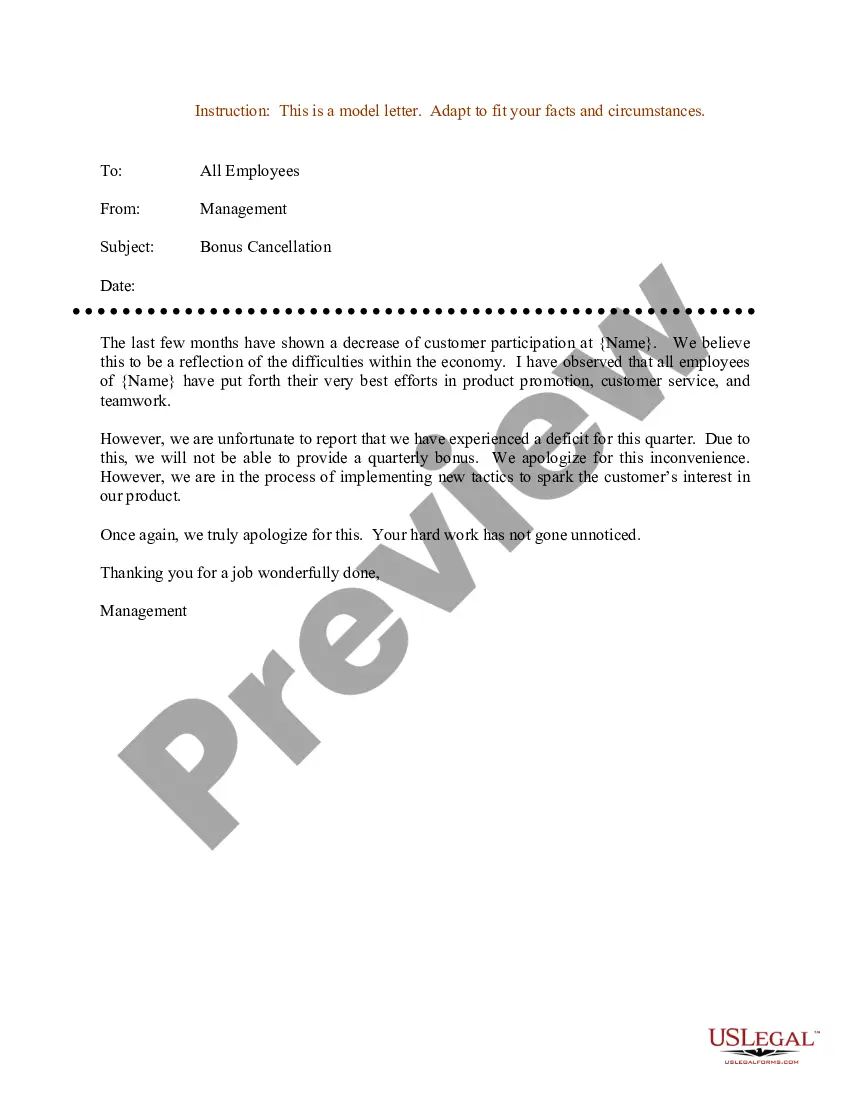
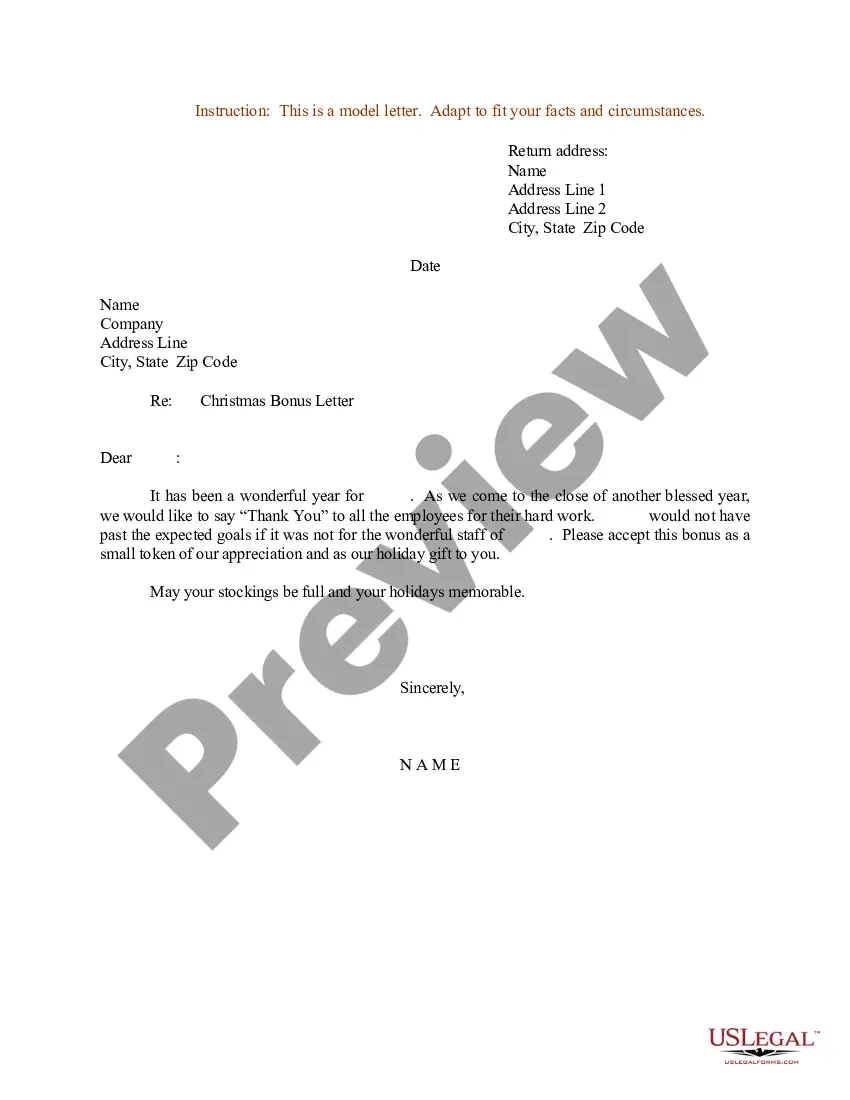
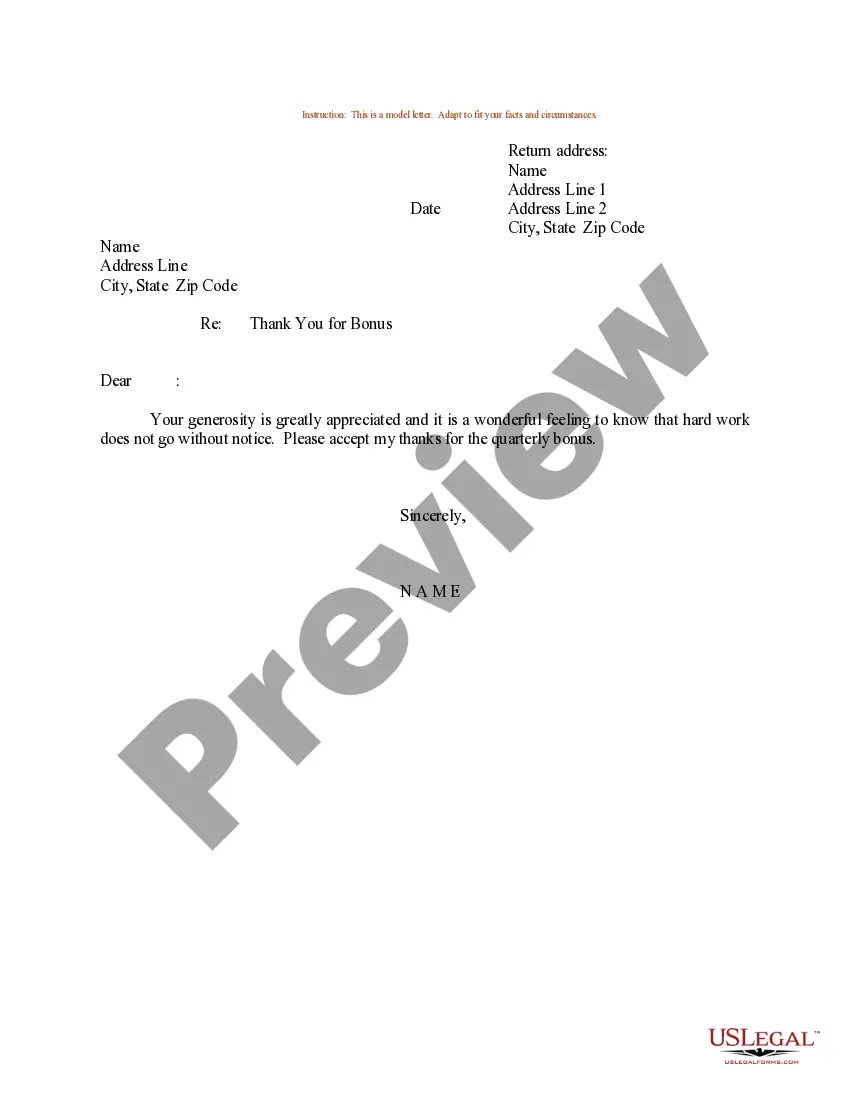
Get your form ready online
Our built-in tools help you complete, sign, share, and store your documents in one place.
Make edits, fill in missing information, and update formatting in US Legal Forms—just like you would in MS Word.
Download a copy, print it, send it by email, or mail it via USPS—whatever works best for your next step.
Sign and collect signatures with our SignNow integration. Send to multiple recipients, set reminders, and more. Go Premium to unlock E-Sign.
If this form requires notarization, complete it online through a secure video call—no need to meet a notary in person or wait for an appointment.
We protect your documents and personal data by following strict security and privacy standards.

Make edits, fill in missing information, and update formatting in US Legal Forms—just like you would in MS Word.

Download a copy, print it, send it by email, or mail it via USPS—whatever works best for your next step.

Sign and collect signatures with our SignNow integration. Send to multiple recipients, set reminders, and more. Go Premium to unlock E-Sign.

If this form requires notarization, complete it online through a secure video call—no need to meet a notary in person or wait for an appointment.

We protect your documents and personal data by following strict security and privacy standards.
Looking for another form?



Form popularity
FAQ
What is the formula for a salary bonus? The formula used for the calculation of bonus is as follows: Applicable Bonus = Your Salary x 8.33/100.
Rule 2. At the end of one-syllable words that have a vowel (a, e, i, o, u) IMMEDIATELY followed by either an f, l, or s or sometimes z, you MUST double the consonant. Examples: hill miss whiff buzz. fill puff pass fizz. off fell chess fuzz. lass mass toss jazz. Rule 3. Examples: ball tall mall call fall.
A typical bonus payout structure is 3% to 5% of annual salary for clerical and support staff. Managers might receive payments in the low double-digit percentage range, and executives in the mid-double-digit range. Senior executives at the highest levels may receive the bulk of their compensation via bonus payments.
A typical bonus percentage ranges from 1% to 15% of a team member's salary. Nearly half of American workers had access to a nonproduction bonus (i.e., a bonus that isn't scaled via a productivity formula) in 2024.
What's considered “typical” or “good” for a bonus amount really depends on the type of bonus you're receiving. An annual bonus of 5-10% of your yearly salary is standard in a lot of industries, just as a 5-10% annual raise is considered standard.
A common structure is tiered bonuses. Here, employees can achieve different "levels" of bonuses based on their performance metrics. For instance, reaching 80% of a target might secure a smaller bonus, while achieving 120% may earn a significantly larger one.
An employee bonus structure is a vital element in the ecosystem of a thriving workplace. Essentially, it serves as a strategic framework that employers can use to reward their workforce for meeting specific goals, excelling in their roles, or contributing towards overall organizational success.
A great bonus would be about 10-15% of your annual salary. But most people receive offers closer to 5% of their annual salary.
A management bonus clause outlines the conditions under which a company's managers are eligible to receive additional compensation beyond their regular salary. It typically specifies performance metrics, financial targets, or other criteria that must be met for the bonus to be awarded.
Mid-level managers bridge the gap between top-tier leadership and operational teams. Their bonuses typically fall between 10% and 30% of their base salary, mirroring their essential role in driving departmental performance and contributing to overall business objectives.

