Sample Bonus Policy In California
Description
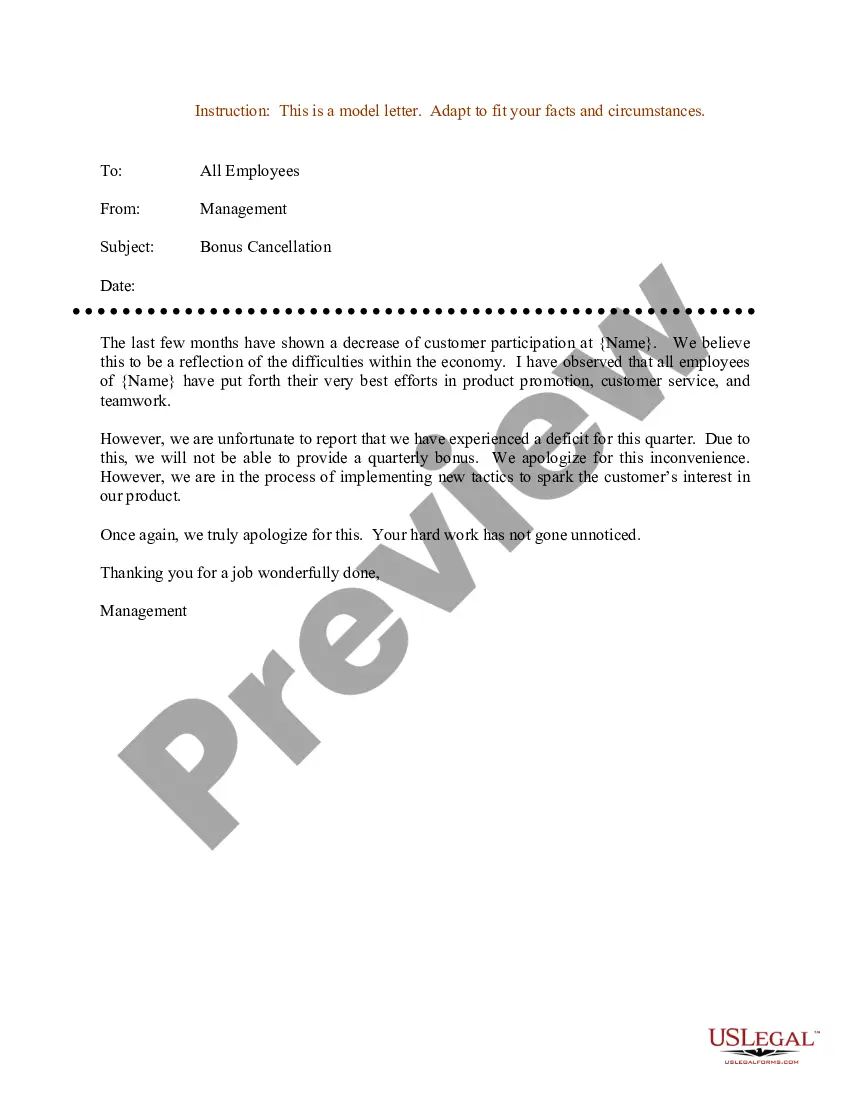
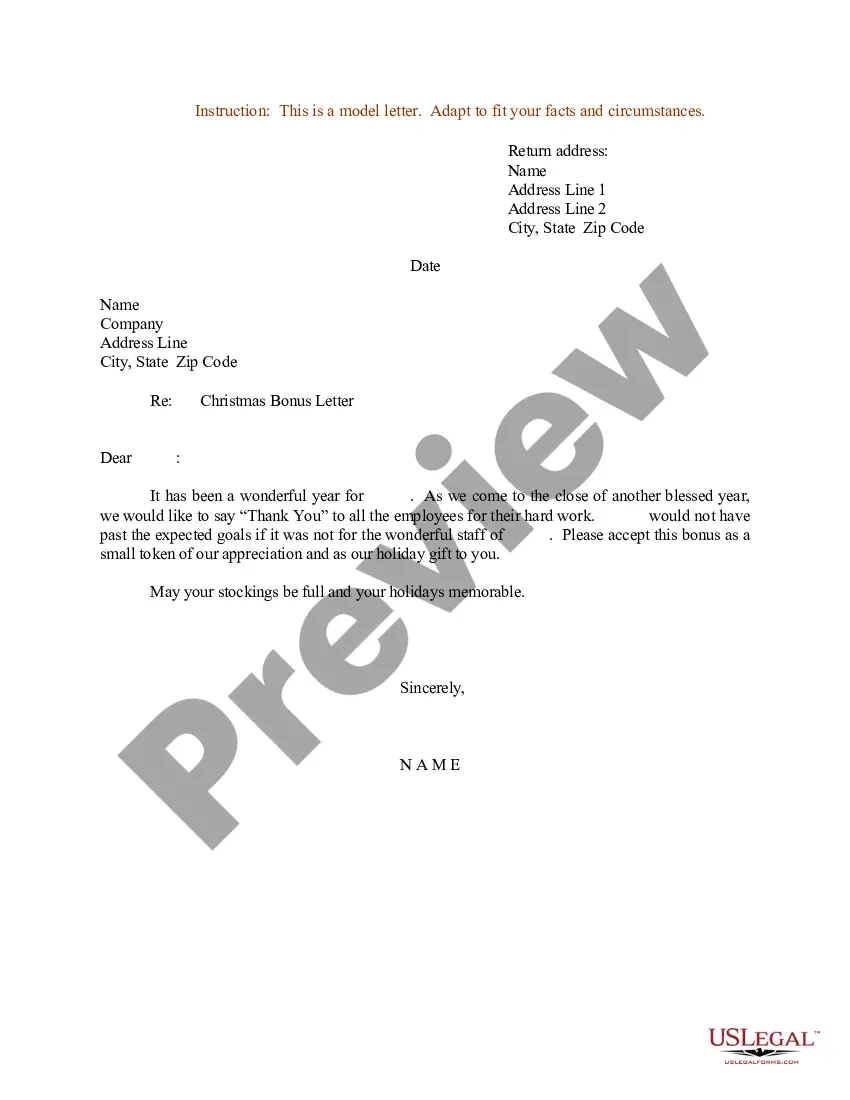
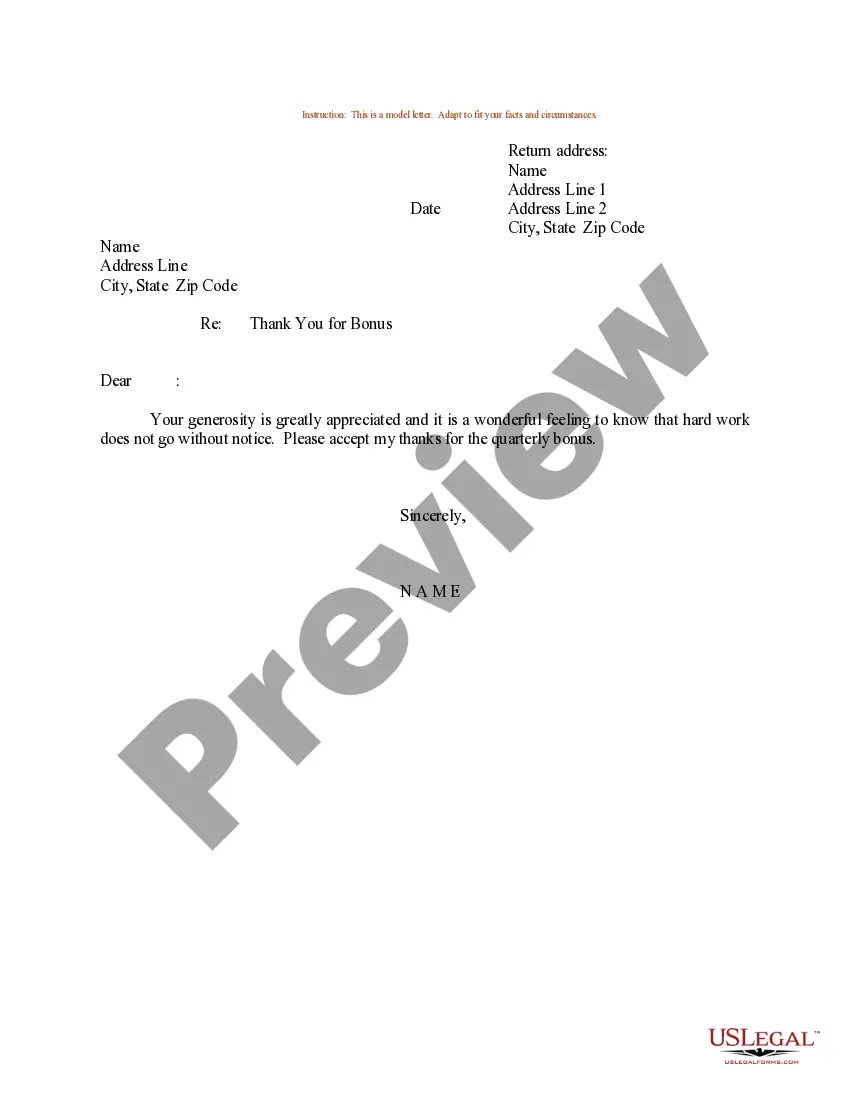
Get your form ready online
Our built-in tools help you complete, sign, share, and store your documents in one place.
Make edits, fill in missing information, and update formatting in US Legal Forms—just like you would in MS Word.
Download a copy, print it, send it by email, or mail it via USPS—whatever works best for your next step.
Sign and collect signatures with our SignNow integration. Send to multiple recipients, set reminders, and more. Go Premium to unlock E-Sign.
If this form requires notarization, complete it online through a secure video call—no need to meet a notary in person or wait for an appointment.
We protect your documents and personal data by following strict security and privacy standards.

Make edits, fill in missing information, and update formatting in US Legal Forms—just like you would in MS Word.

Download a copy, print it, send it by email, or mail it via USPS—whatever works best for your next step.

Sign and collect signatures with our SignNow integration. Send to multiple recipients, set reminders, and more. Go Premium to unlock E-Sign.

If this form requires notarization, complete it online through a secure video call—no need to meet a notary in person or wait for an appointment.

We protect your documents and personal data by following strict security and privacy standards.
Looking for another form?







Form popularity
FAQ
Create a written document outlining the employee bonus plan's details. Give all employees this information so they understand how and why bonuses are given. Provide details on the bonus types in your plan, why they exist and how employees can earn these bonuses, especially if a bonus is tied to a specific outcome.
An incentive program is a formal scheme used to promote or encourage specific actions or behavior by a specific group of people during a defined period of time. Incentive programs are particularly used in business management to motivate employees and in sales to attract and retain customers.
An employee bonus policy provides guidelines on how a company rewards its employees with additional financial incentives. It details eligibility, types of bonuses, and the procedures for granting them, ensuring fairness and transparency.
Be Direct but Diplomatic: Start by discussing your accomplishments and contributions. Use specific examples to illustrate your value to the company. Express Gratitude: Acknowledge any previous bonuses or support you've received. This sets a positive tone for the conversation.
Subject: Bonus Award Notification Dear Employee's Name, We are pleased to inform you that you have been awarded a bonus in recognition of your exceptional performance over the past period. This bonus is a testament to your dedication, hard work, and significant contributions to our team.
Be honest and don't lie and say bonuses are coming back. Tell them what your needs are and communicate with upper management to see what can be improved to ensure they potentially can get these back. Basically if you believe in what you're doing, then keep doing it and others will too.
Create a written document outlining the employee bonus plan's details. Give all employees this information so they understand how and why bonuses are given. Provide details on the bonus types in your plan, why they exist and how employees can earn these bonuses, especially if a bonus is tied to a specific outcome.
Bonuses are additional incentives offered to employees on top of their regular salary, often aimed at increasing productivity and enhancing employee retention. Most bonuses can be categorized as either discretionary (not guaranteed) or nondiscretionary (guaranteed, as shown in your employment contract).
Once you have both performance percentage and salary percentage for each individual, you can multiply them together by an individual. Add up all individuals to get a total ratio. Divide each individual's share by the full rate, and that's the portion of the bonus pool that an individual receives.

