Sample Bonus Template For Employees In Bexar
Description
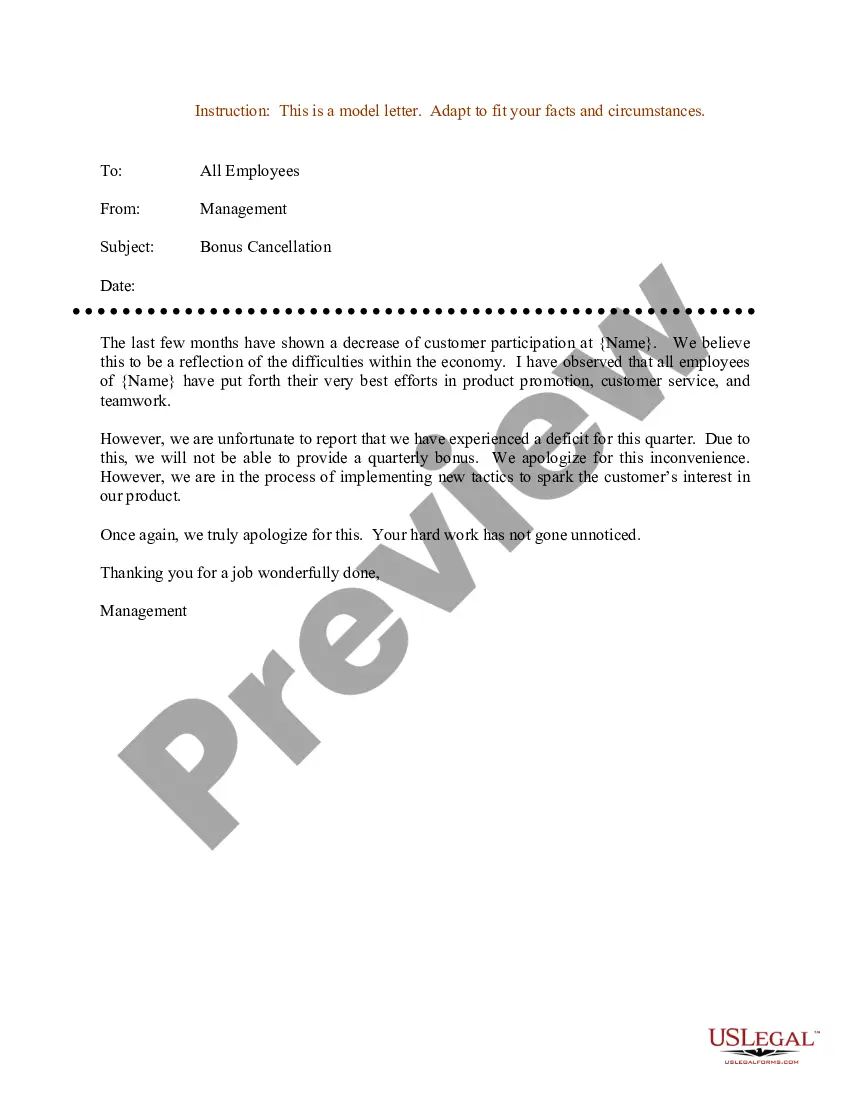
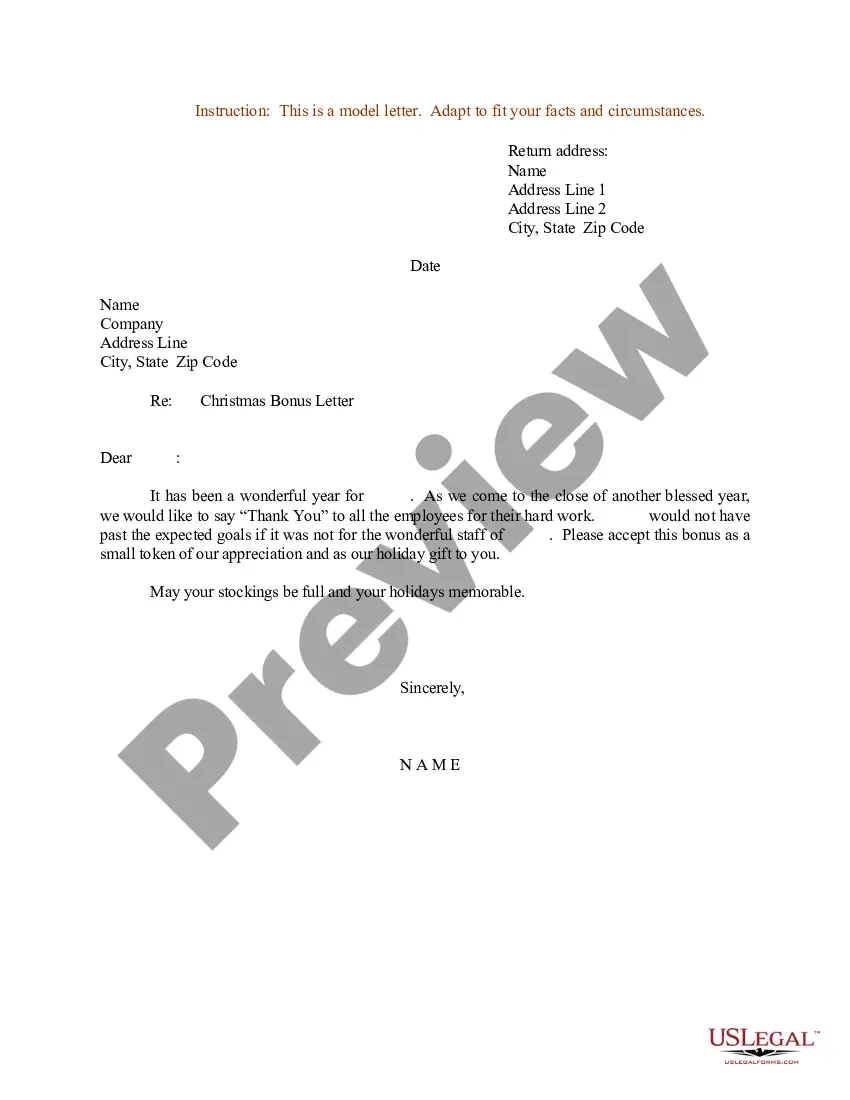
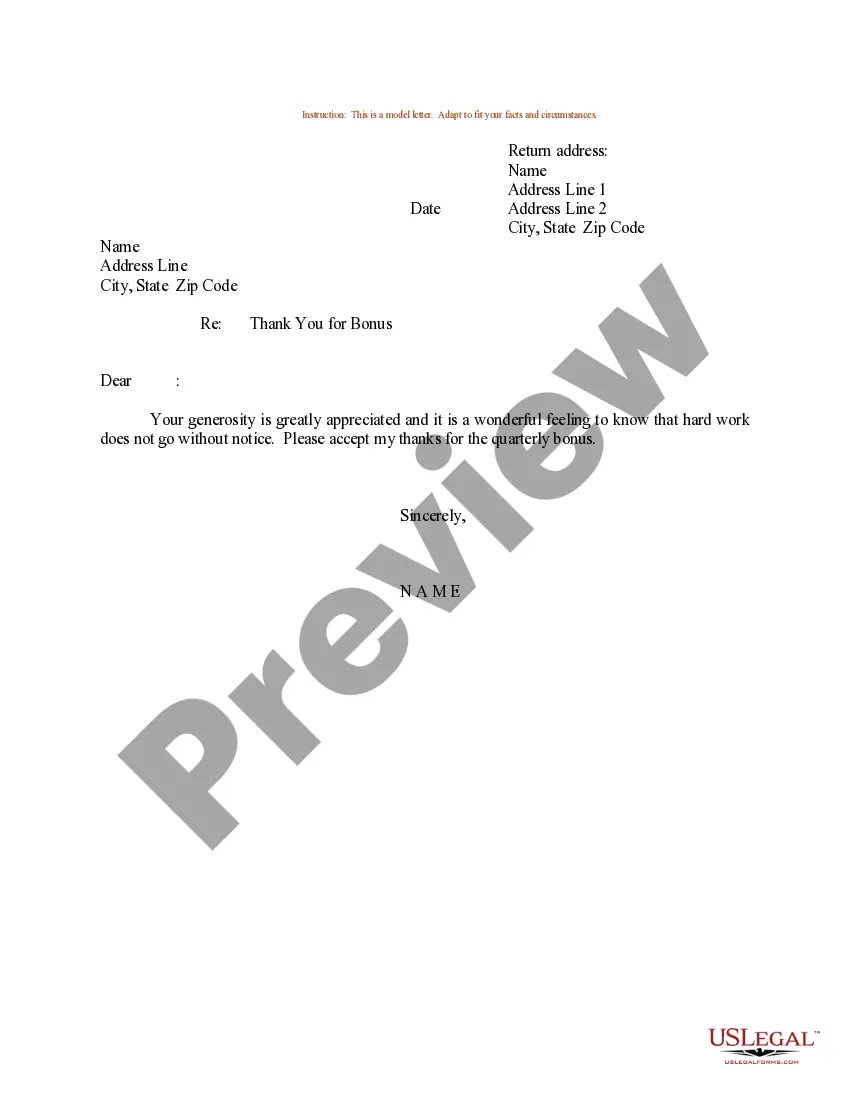
Get your form ready online
Our built-in tools help you complete, sign, share, and store your documents in one place.
Make edits, fill in missing information, and update formatting in US Legal Forms—just like you would in MS Word.
Download a copy, print it, send it by email, or mail it via USPS—whatever works best for your next step.
Sign and collect signatures with our SignNow integration. Send to multiple recipients, set reminders, and more. Go Premium to unlock E-Sign.
If this form requires notarization, complete it online through a secure video call—no need to meet a notary in person or wait for an appointment.
We protect your documents and personal data by following strict security and privacy standards.

Make edits, fill in missing information, and update formatting in US Legal Forms—just like you would in MS Word.

Download a copy, print it, send it by email, or mail it via USPS—whatever works best for your next step.

Sign and collect signatures with our SignNow integration. Send to multiple recipients, set reminders, and more. Go Premium to unlock E-Sign.

If this form requires notarization, complete it online through a secure video call—no need to meet a notary in person or wait for an appointment.

We protect your documents and personal data by following strict security and privacy standards.
Looking for another form?






Form popularity
FAQ
Consider saying ``Thank you for the bonus. I am so appreciative of it. I will continue giving my best every day''. Adding that second and third line makes all the difference.
Bonus Amount: State the exact amount of the bonus being awarded. For instance, “You will receive a performance bonus of $5,000.” Rationale for Award: Provide a brief explanation of why the bonus is being awarded. This could include a summary of the employee's achievements and their impact on the organization.
Bonus letters are double consonants found at the end of the word. There are only four consonants that are consistently doubled: f, l, s, and z. These letters are doubled when they directly follow a vowel in a closed syllable. In other words, these letters are 'stuck' to the short vowel.
Dear Employee Name, We are pleased to present you with your year award in the amount of $__. This bonus award reflects your excellent performance, the contributions you made and the goals achieved on behalf of Company Name during the past year.
If you're asking for a bonus for a specific project, provide facts and figures about the outcome of the project and how it exceeded the stakeholders' requirements. If you're asking for a bonus for more general reasons, offer details about why you deserve it.
Notify them that they're receiving a bonus and give a brief reason why. For example, if this bonus is for a particular achievement you can mention the specific action or project.
The typical bonus amount can range from 1% to 15% of an employee's salary, usually depending on a number of factors such as industry, company performance, and individual or team accomplishments. The average bonus for employees continues to rise over time. In 2020, the average employee bonus was only 8.1%.

