Sample Bonus Plans For Executives In Arizona
Description
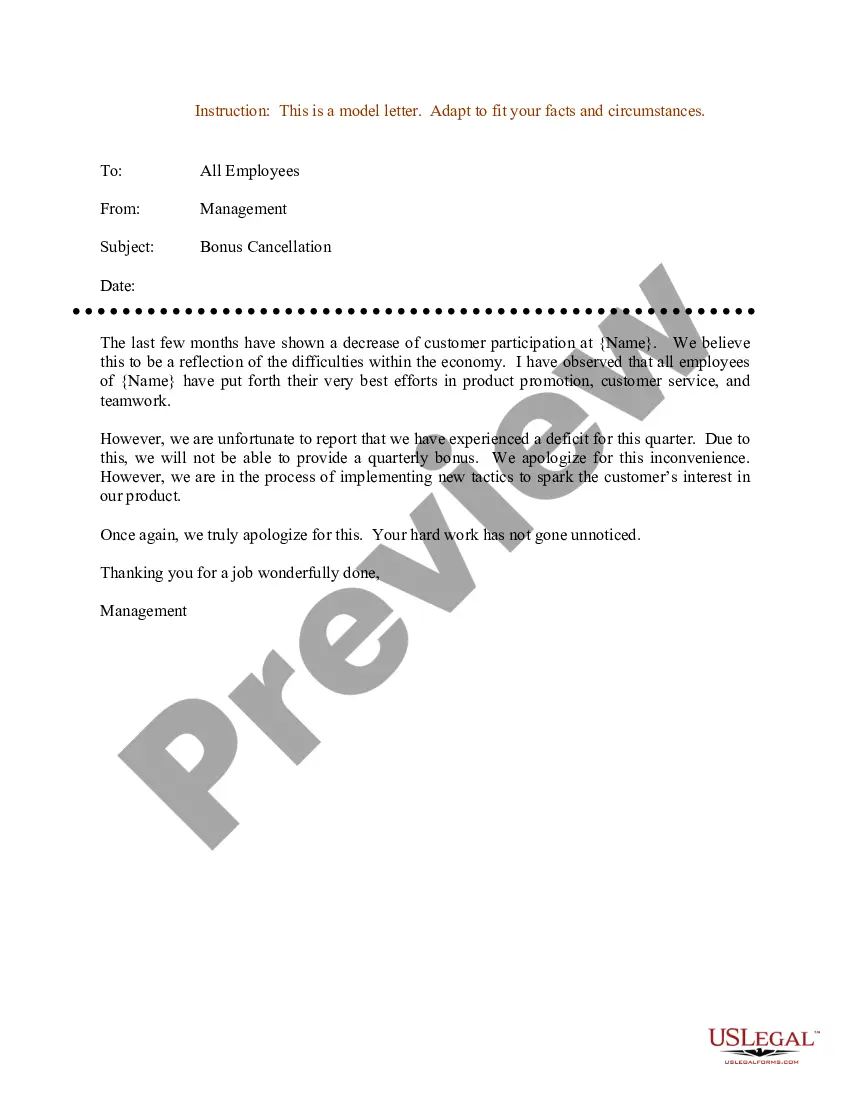
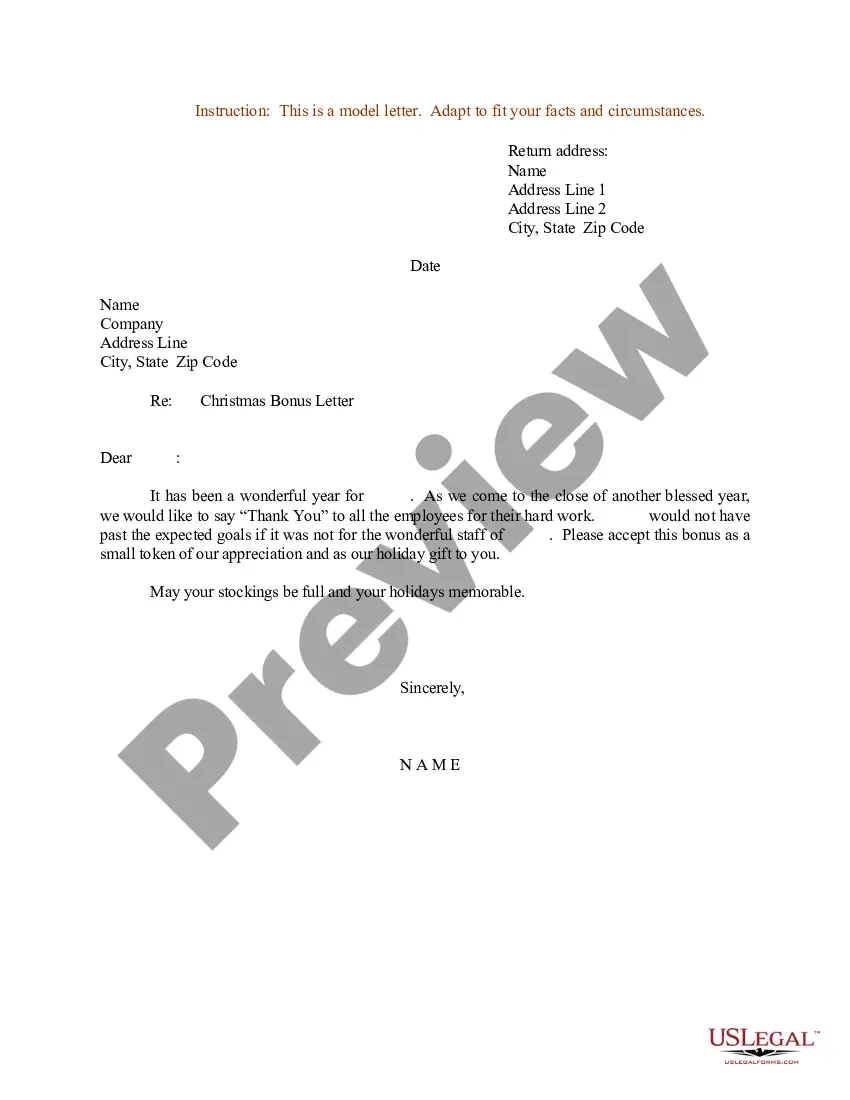
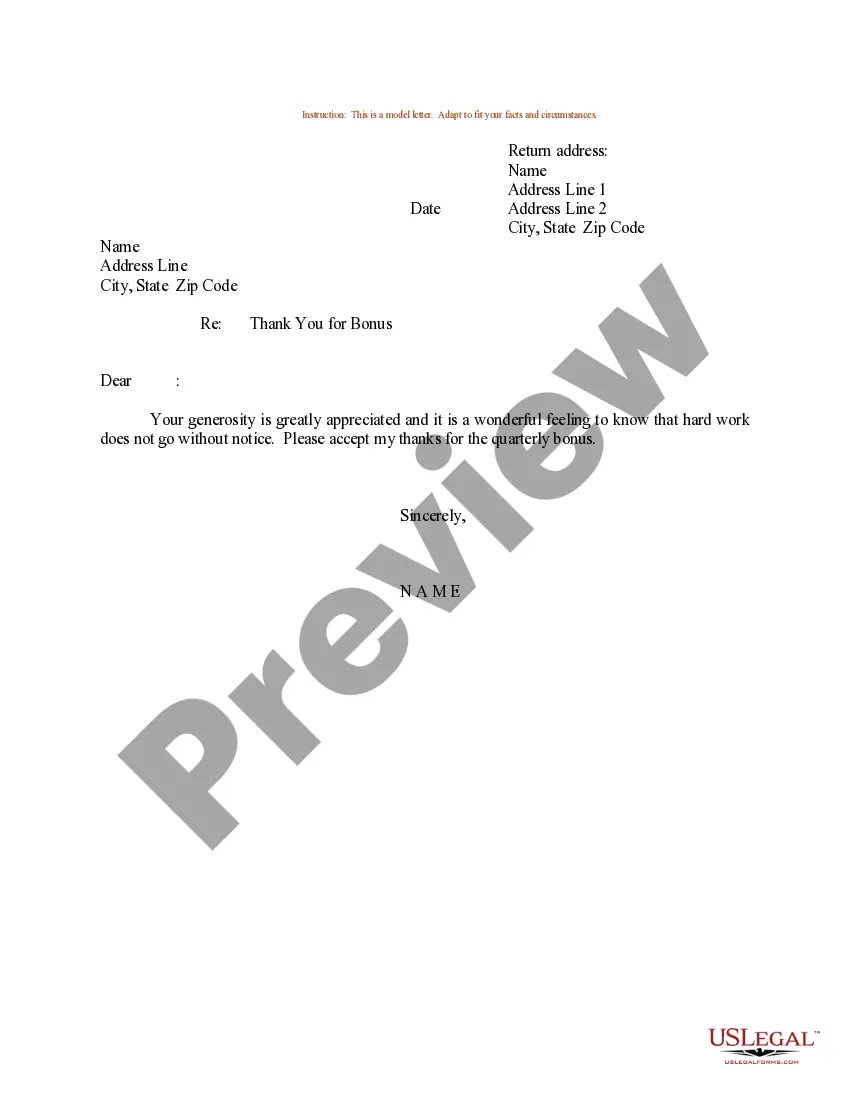
Get your form ready online
Our built-in tools help you complete, sign, share, and store your documents in one place.
Make edits, fill in missing information, and update formatting in US Legal Forms—just like you would in MS Word.
Download a copy, print it, send it by email, or mail it via USPS—whatever works best for your next step.
Sign and collect signatures with our SignNow integration. Send to multiple recipients, set reminders, and more. Go Premium to unlock E-Sign.
If this form requires notarization, complete it online through a secure video call—no need to meet a notary in person or wait for an appointment.
We protect your documents and personal data by following strict security and privacy standards.

Make edits, fill in missing information, and update formatting in US Legal Forms—just like you would in MS Word.

Download a copy, print it, send it by email, or mail it via USPS—whatever works best for your next step.

Sign and collect signatures with our SignNow integration. Send to multiple recipients, set reminders, and more. Go Premium to unlock E-Sign.

If this form requires notarization, complete it online through a secure video call—no need to meet a notary in person or wait for an appointment.

We protect your documents and personal data by following strict security and privacy standards.
Looking for another form?

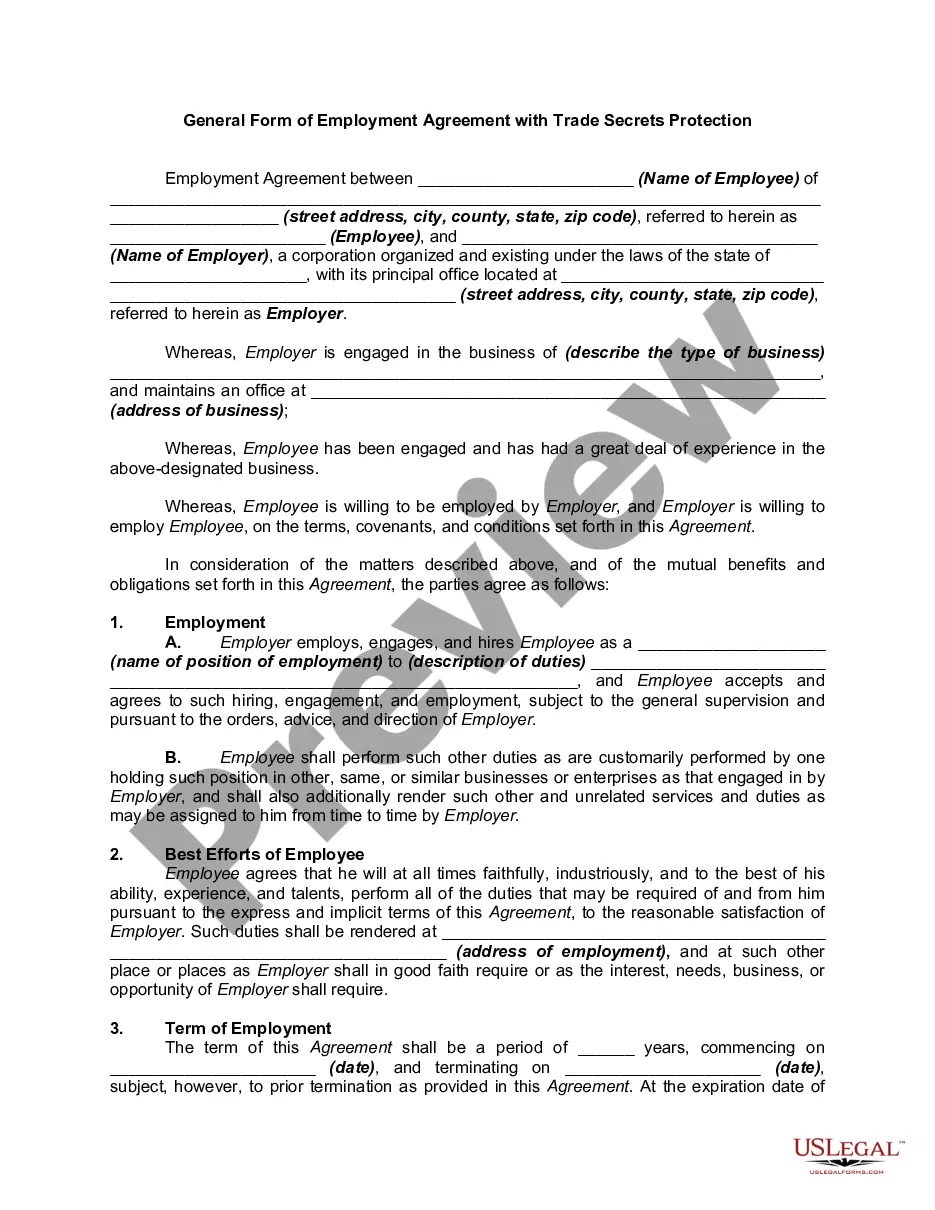








Form popularity
FAQ
An executive bonus plan, also known as a Section 162 plan, is a compensation strategy that provides additional benefits to key employees or executives. This plan is a type of life insurance where the employer pays the premiums as a bonus.
An executive bonus plan, also known as a Section 162 plan, is a compensation strategy that provides additional benefits to key employees or executives. This plan is a type of life insurance where the employer pays the premiums as a bonus.
The median bonus was $2.15 million. Bonuses may be used to reward performance or as a kind of deferred compensation to discourage executives from quitting. They are often part of both short and long term compensation, and more often part of a plan or formula than simply discretionary.
Executive bonus plans are typically offered to C-suite employees such as chief executives, chief operations executives, and chief financial officers. Premium payments are usually tax deductible for the employer and considered additional taxable compensation for the employee.
How to Calculate Bonuses for Employees. To calculate a bonus based on your employee's salary, just multiply the employee's salary by your bonus percentage.
The typical bonus amount can range from 1% to 15% of an employee's salary, usually depending on a number of factors such as industry, company performance, and individual or team accomplishments. The average bonus for employees continues to rise over time. In 2020, the average employee bonus was only 8.1%.
One of the most common types of bonus is an annual bonus, which employers give out once a year. Annual bonuses are usually based on your overall performance, although companies who use profit-sharing rewards may distribute bonuses based on company success and profits.
Put all the details of the Bonus Scheme in writing so the terms are easily understandable. Make sure the scheme is separate to the contract of employment so it can be easily reviewed and amended or updated as necessary. You should evaluate the scheme regularly to see if it is producing the results you want.
An executive bonus plan, also known as a Section 162 plan, is a compensation strategy that provides additional benefits to key employees or executives. This plan is a type of life insurance where the employer pays the premiums as a bonus.
Bonuses are considered supplemental income and will be taxed at a higher rate than normal income. A great bonus would be about 10-15% of your annual salary. But most people receive offers closer to 5% of their annual salary.

