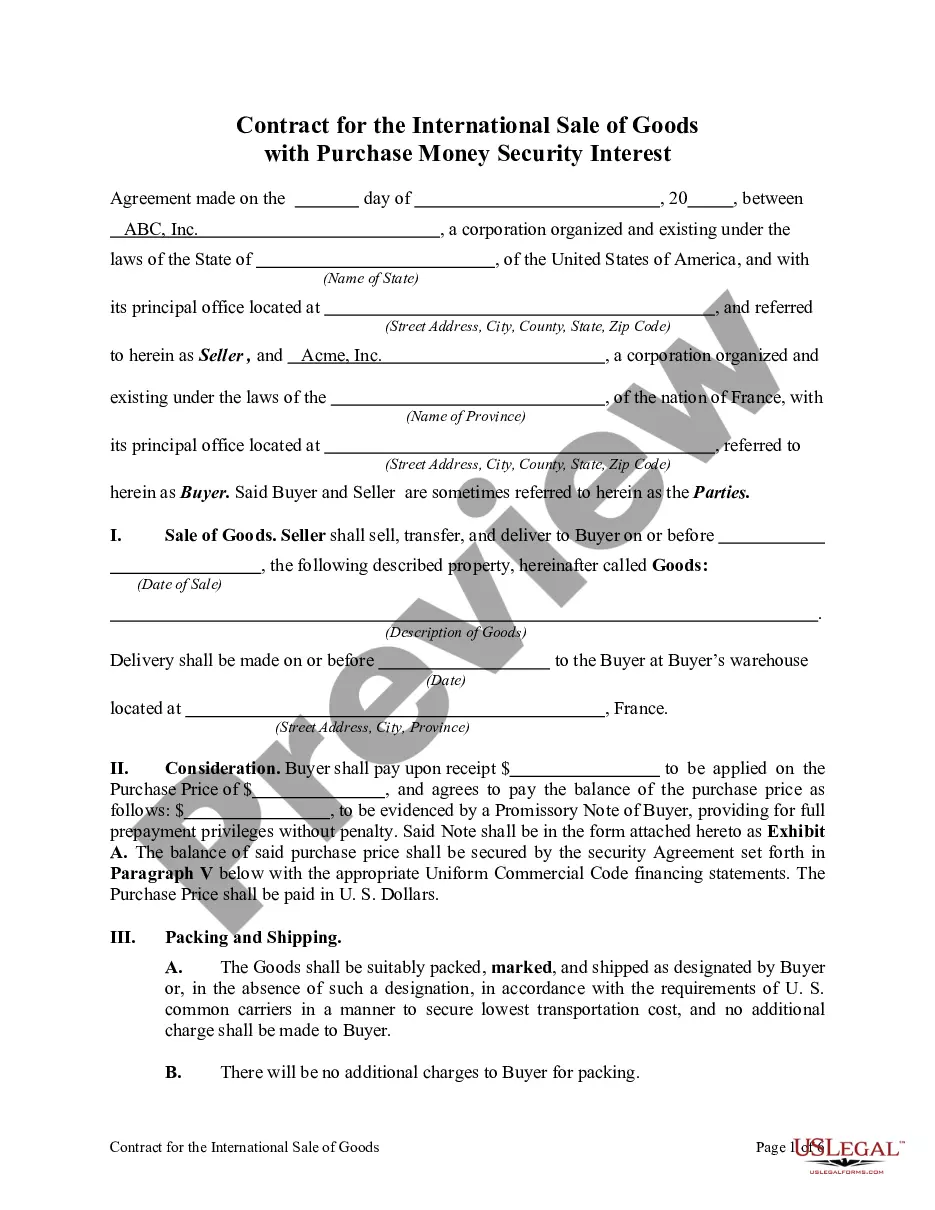
International Sales Contract Sample With No Experience In Miami-Dade
Description


Get your form ready online
Our built-in tools help you complete, sign, share, and store your documents in one place.
Make edits, fill in missing information, and update formatting in US Legal Forms—just like you would in MS Word.
Download a copy, print it, send it by email, or mail it via USPS—whatever works best for your next step.
Sign and collect signatures with our SignNow integration. Send to multiple recipients, set reminders, and more. Go Premium to unlock E-Sign.
If this form requires notarization, complete it online through a secure video call—no need to meet a notary in person or wait for an appointment.
We protect your documents and personal data by following strict security and privacy standards.

Make edits, fill in missing information, and update formatting in US Legal Forms—just like you would in MS Word.

Download a copy, print it, send it by email, or mail it via USPS—whatever works best for your next step.

Sign and collect signatures with our SignNow integration. Send to multiple recipients, set reminders, and more. Go Premium to unlock E-Sign.

If this form requires notarization, complete it online through a secure video call—no need to meet a notary in person or wait for an appointment.

We protect your documents and personal data by following strict security and privacy standards.
Looking for another form?









Form popularity
FAQ
A contract is not enforceable until an offer is made and the other party accepts the offer. An offer does not technically exist until the requesting party or the offeree has received it. Even after it's been received, the offer can still be changed or terminated any time before acceptance.
The basic elements required for the agreement to be a legally enforceable contract are: mutual assent, expressed by a valid offer and acceptance; adequate consideration; capacity; and legality. In some states, elements of consideration can be satisfied by a valid substitute.
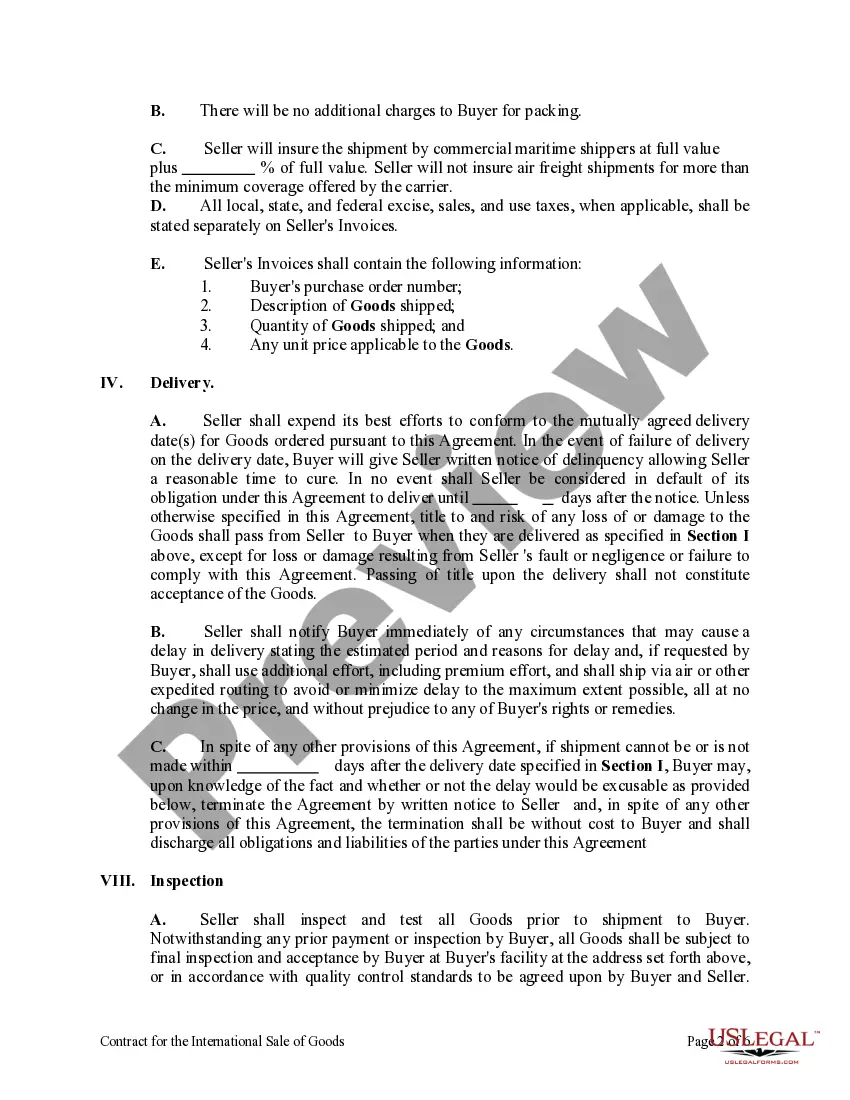
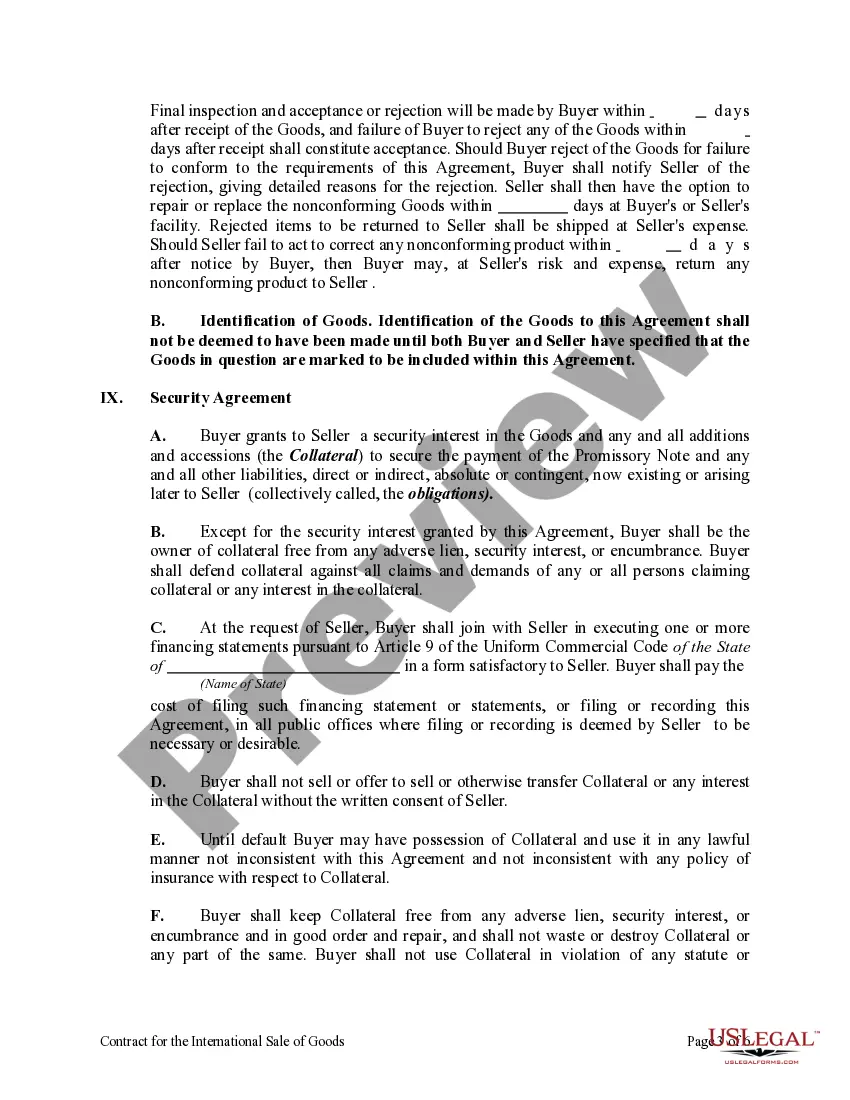
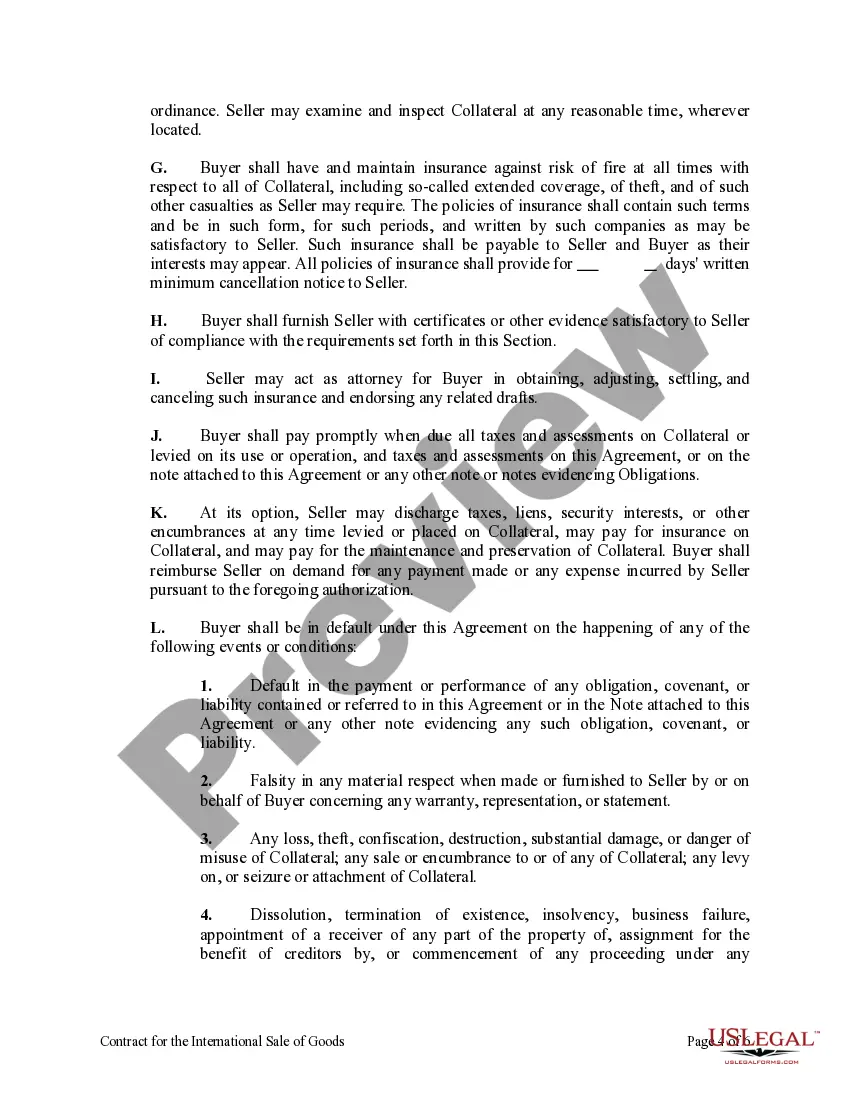
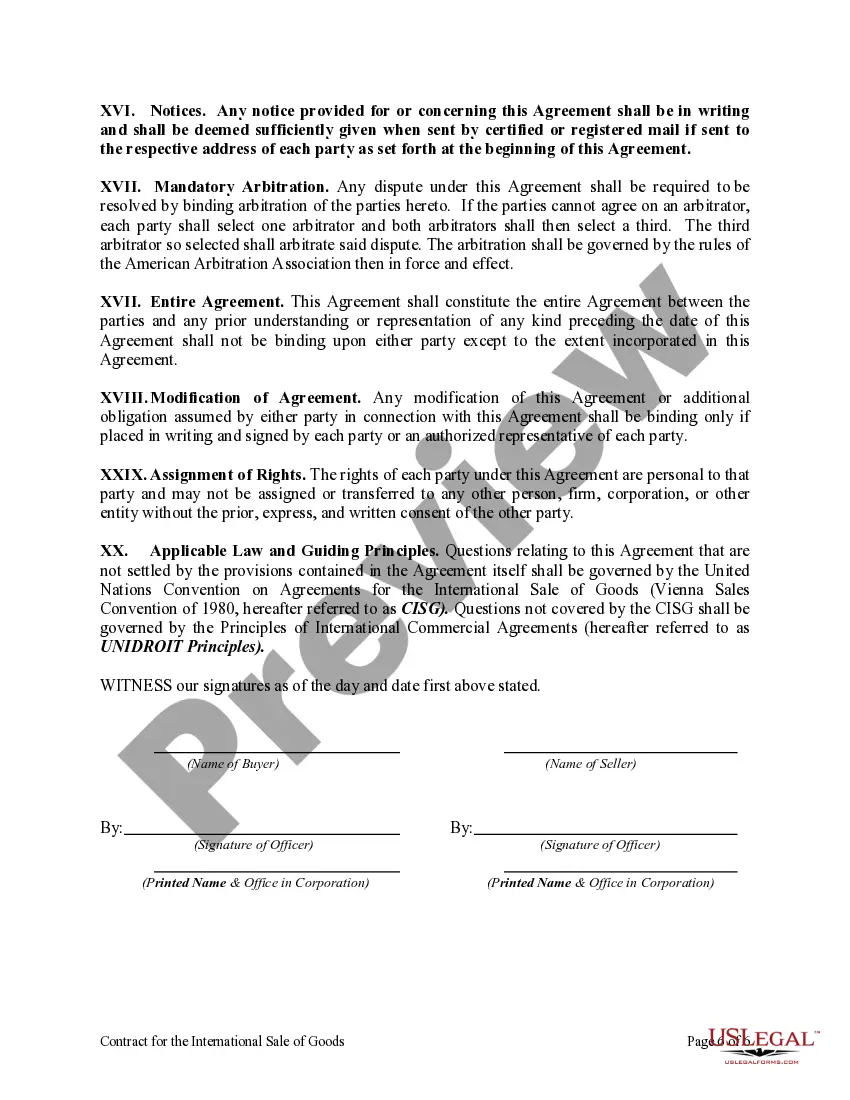
International sale contracts refer to contracts for the sale of goods involving sea transit and various forms of contractual documents common in the import and export trades.
Contingencies. Contingencies are conditions that must be met for the sale to proceed.
To be enforceable, a contract of sale must contain certain elements. Offer: The offeror must make an offer (an agreement to sell). Acceptance: The offeree must accept the offer. Awareness: All parties must know the agreement they are entering into.
The 1980 United Nations Convention on Contracts for the International Sale of Goods (CISG) regulates the rights of buyers and sellers in international sales.
International contracts are legally binding agreements between parties who are based in separate countries. As with any contract, it will require the parties to do or refrain from doing particular actions.
An international sales contract is a contract between two parties whose place of business is in two different countries.
International sales jobs are roles that create and improve relationships between a company and its international partners or sell products through branches in other countries.
The international sales contract - what exactly is it? An international sales contract is a contract between two parties whose place of business is in two different countries.
