Temporary Injunction Form With Injunction In Houston
Description
















Get your form ready online
Our built-in tools help you complete, sign, share, and store your documents in one place.
Make edits, fill in missing information, and update formatting in US Legal Forms—just like you would in MS Word.
Download a copy, print it, send it by email, or mail it via USPS—whatever works best for your next step.
Sign and collect signatures with our SignNow integration. Send to multiple recipients, set reminders, and more. Go Premium to unlock E-Sign.
If this form requires notarization, complete it online through a secure video call—no need to meet a notary in person or wait for an appointment.
We protect your documents and personal data by following strict security and privacy standards.

Make edits, fill in missing information, and update formatting in US Legal Forms—just like you would in MS Word.

Download a copy, print it, send it by email, or mail it via USPS—whatever works best for your next step.

Sign and collect signatures with our SignNow integration. Send to multiple recipients, set reminders, and more. Go Premium to unlock E-Sign.

If this form requires notarization, complete it online through a secure video call—no need to meet a notary in person or wait for an appointment.

We protect your documents and personal data by following strict security and privacy standards.
Looking for another form?








Form popularity
FAQ
Injunction – Disadvantages Aside from specific performance, where a court forces a party to fulfill a contractual obligation, it is more difficult to use an injunction to force another party to do something. Also, parties may have only a limited amount of time to petition the court for an injunction.
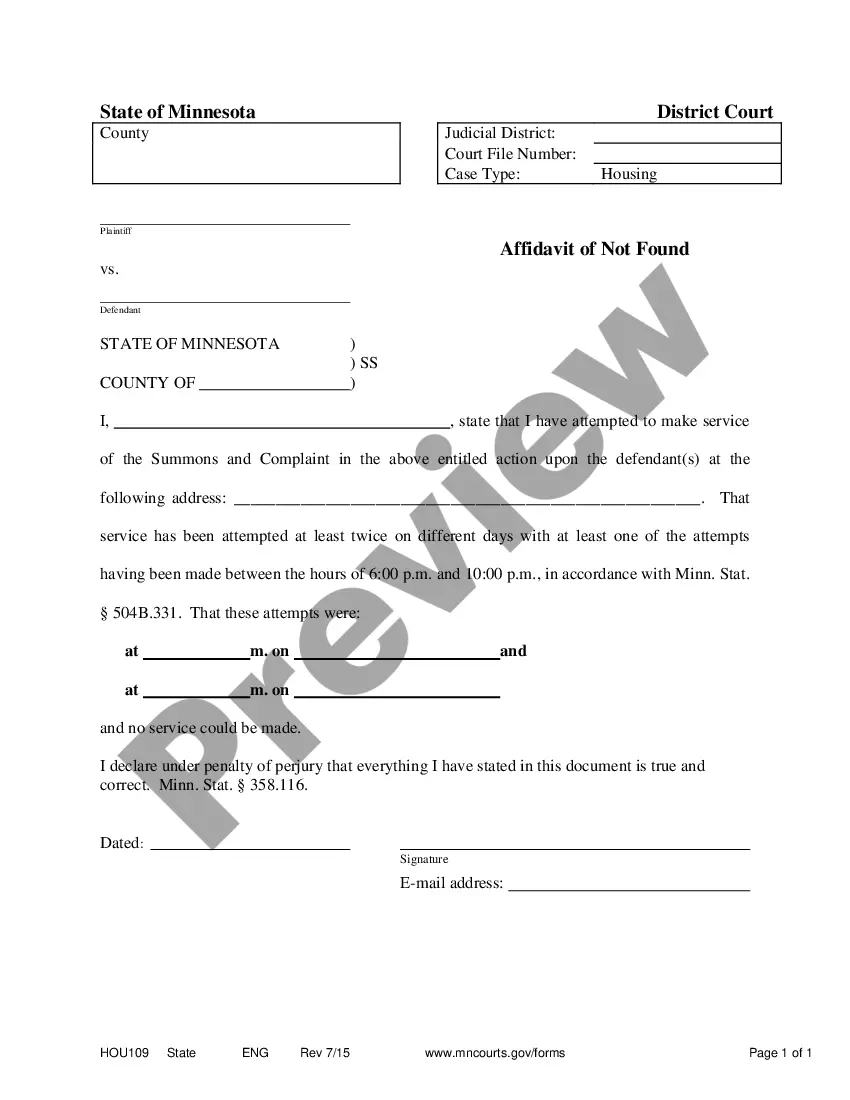
You can ask the judge for a TRO by filing a Motion for Temporary Restraining Order, Temporary Injunction, and Temporary Orders. You must also file an affidavit or statement made under penalty of perjury that explains why the TRO is necessary and why you cannot wait for the temporary orders hearing.
To obtain a temporary injunction, the applicant must plead and prove three specific elements: (1) a cause of action against the defendant; (2) a probable right to the relief sought; and (3) a probable, imminent, and irreparable injury in the interim.
A Temporary Order lasts until further order by the Court or until the parties reach another agreement.
Temporary Restraining Order The judge decides whether to grant the TRO based on the information presented in the accuser's application. The accuser must include information that convinces the judge they are in immediate danger of abuse, assault, or physical harm.
You can ask the judge for a TRO by filing a Motion for Temporary Restraining Order, Temporary Injunction, and Temporary Orders. You must also file an affidavit or statement made under penalty of perjury that explains why the TRO is necessary and why you cannot wait for the temporary orders hearing.
To warrant preliminary injunctive relief, the moving party must show (1) a substantial likelihood of success on the merits, (2) that it would suffer irrepa- rable injury if the injunction were not granted, (3) that an injunction would not substantially injure other interested parties, and (4) that the public interest ...
(1) that it has suffered an irreparable injury; (2) that remedies available at law, such as monetary damages, are inadequate to compensate for that injury; (3) that, considering the balance of hardships between the parties, a remedy in equity is warranted; and (4) that the public interest would not be disserved by ...
The order will expire on the set date, by Order of the Court, by agreement of all parties, or until your case has a final order issued.
TROs: A TRO can be requested if immediate harm or danger is shown. Preliminary Injunctions: These are used in serious cases where the harm to the plaintiff is significant and immediate, and the other party is not greatly affected.
