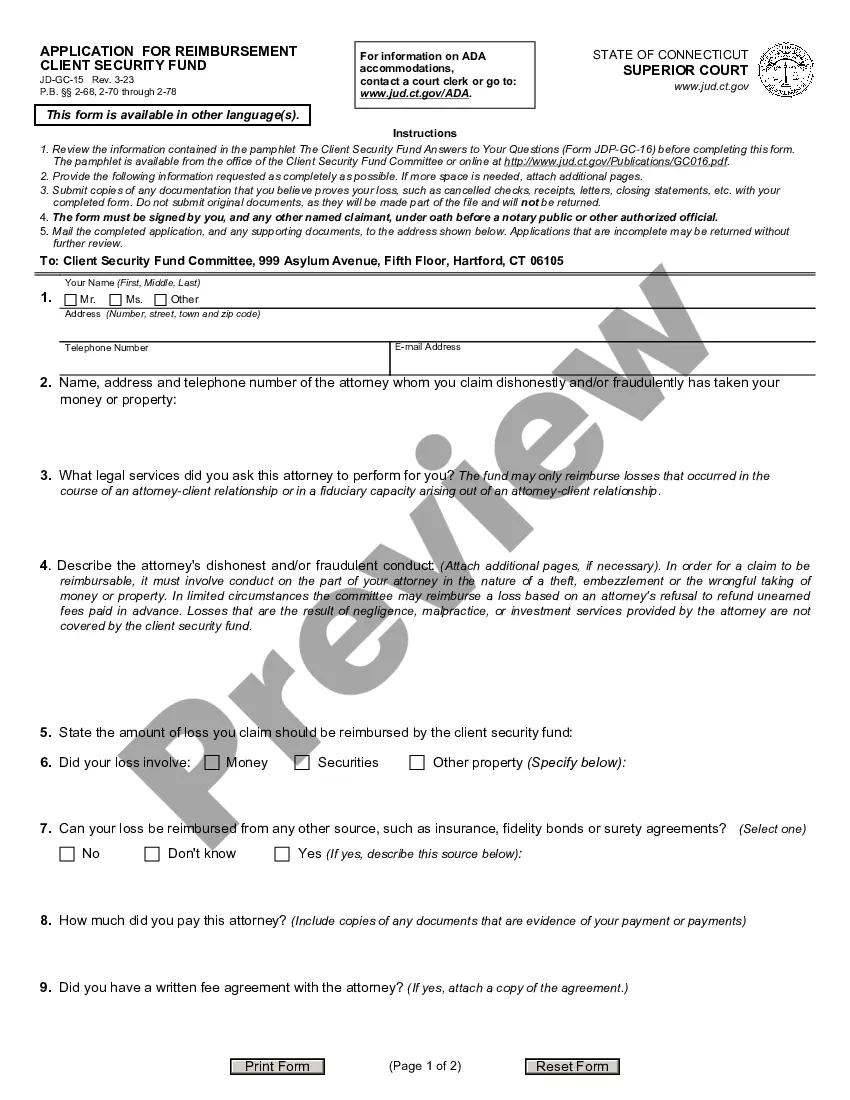
Employment Discrimination For Ada In Washington
Description




Get your form ready online
Our built-in tools help you complete, sign, share, and store your documents in one place.
Make edits, fill in missing information, and update formatting in US Legal Forms—just like you would in MS Word.
Download a copy, print it, send it by email, or mail it via USPS—whatever works best for your next step.
Sign and collect signatures with our SignNow integration. Send to multiple recipients, set reminders, and more. Go Premium to unlock E-Sign.
If this form requires notarization, complete it online through a secure video call—no need to meet a notary in person or wait for an appointment.
We protect your documents and personal data by following strict security and privacy standards.

Make edits, fill in missing information, and update formatting in US Legal Forms—just like you would in MS Word.

Download a copy, print it, send it by email, or mail it via USPS—whatever works best for your next step.

Sign and collect signatures with our SignNow integration. Send to multiple recipients, set reminders, and more. Go Premium to unlock E-Sign.

If this form requires notarization, complete it online through a secure video call—no need to meet a notary in person or wait for an appointment.

We protect your documents and personal data by following strict security and privacy standards.
Looking for another form?









Form popularity
FAQ
Short answer: The average disability discrimination settlement in California is approximately $40,000 – $150,000 with the median settlement around $75,000. Settlements in less complex cases often settle below approximately $40,000 or lower and complex cases can surpass approximately $1,000,000.
The ADA only prohibits discrimination on the basis of disability. It makes it unlawful to refuse to hire a qualified applicant with a disability because he is disabled or because a reasonable accommodation is required to make it possible for this person to perform essential job functions.
ADA violations are commonly cited when: The building doesn't have an accessible entrance or exit. Ramps to the building or curb are too steep. ADA signage is missing or incorrect.
Under the Act, a plaintiff is required to present evidence that he or she (1) suffers from a disability, (2) is a qualified individual, and (3) was subjected to an adverse employment action because of the disability.
Employers in California must provide reasonable accommodations to qualified applicants with a disability. Qualified applicants who are not given reasonable accommodations as required by state and federal law can file a lawsuit against the employer for damages.
If a company violated your ADA rights you would contact the US Department of Justice and submit a violation to them. A company once denied services for my service dog and I. I contacted the Department of Justice. An Assistant District Attorney contacted me and the situation was remedied.
Reasonable accommodation can include, but is not limited to, the following: Changing job duties. Providing leave for medical care. Changing work schedules. Relocating the work area. Providing mechanical or electrical aids.
The provider does not have to be a medical doctor (MD). Examples may include doctors (including psychiatrists), psychologists, nurses, physical therapists, occupational therapists, speech therapists, vocational rehabilitation specialists, and licensed mental health professionals, among others.
Content to consider in body of letter: Identify yourself as a person with a disability. State that you are requesting accommodations under the ADA (or the Rehabilitation Act of 1973 if you are a federal employee) Identify your specific problematic job tasks. Identify your accommodation ideas.