Discrimination Title Vii Rights Within In Hennepin
Description




Get your form ready online
Our built-in tools help you complete, sign, share, and store your documents in one place.
Make edits, fill in missing information, and update formatting in US Legal Forms—just like you would in MS Word.
Download a copy, print it, send it by email, or mail it via USPS—whatever works best for your next step.
Sign and collect signatures with our SignNow integration. Send to multiple recipients, set reminders, and more. Go Premium to unlock E-Sign.
If this form requires notarization, complete it online through a secure video call—no need to meet a notary in person or wait for an appointment.
We protect your documents and personal data by following strict security and privacy standards.

Make edits, fill in missing information, and update formatting in US Legal Forms—just like you would in MS Word.

Download a copy, print it, send it by email, or mail it via USPS—whatever works best for your next step.

Sign and collect signatures with our SignNow integration. Send to multiple recipients, set reminders, and more. Go Premium to unlock E-Sign.

If this form requires notarization, complete it online through a secure video call—no need to meet a notary in person or wait for an appointment.

We protect your documents and personal data by following strict security and privacy standards.
Looking for another form?







Form popularity
FAQ
All Hennepin County employees and volunteers will foster environments that demonstrate and support respect and eliminate workplace bullying and discrimination in the workplace. Violations of this policy will not be tolerated.
Legal scholars have identified three theories of discrimination: disparate treatment, disparate impact, and reasonable accommodation. In addition, there is protection for those participating in discrimination cases or opposing discriminatory actions. In the act, these theories are stated in very general terms.
Policy Statement. All University members are prohibited from engaging in, or assisting or abetting another's engagement in, discrimination and related retaliation (collectively “prohibited conduct”).
Nonprofit does not and shall not discriminate on the basis of race, color, religion (creed), gender, gender expression, age, national origin (ancestry), disability, marital status, sexual orientation, or military status, in any of its activities or operations.
Complaint forms can be submitted to the MnDOT Office of Civil Rights in any of the following ways: Online. Email: OCRformsubmissions.dot@state.mn. Mail: Phone: 651-366-3073. TTY: 800-627-3529. Fax: 651-366-3127. Federal agencies: Federal Highway Administration. Office of Civil Rights. Chief Investigations and Adjudication.
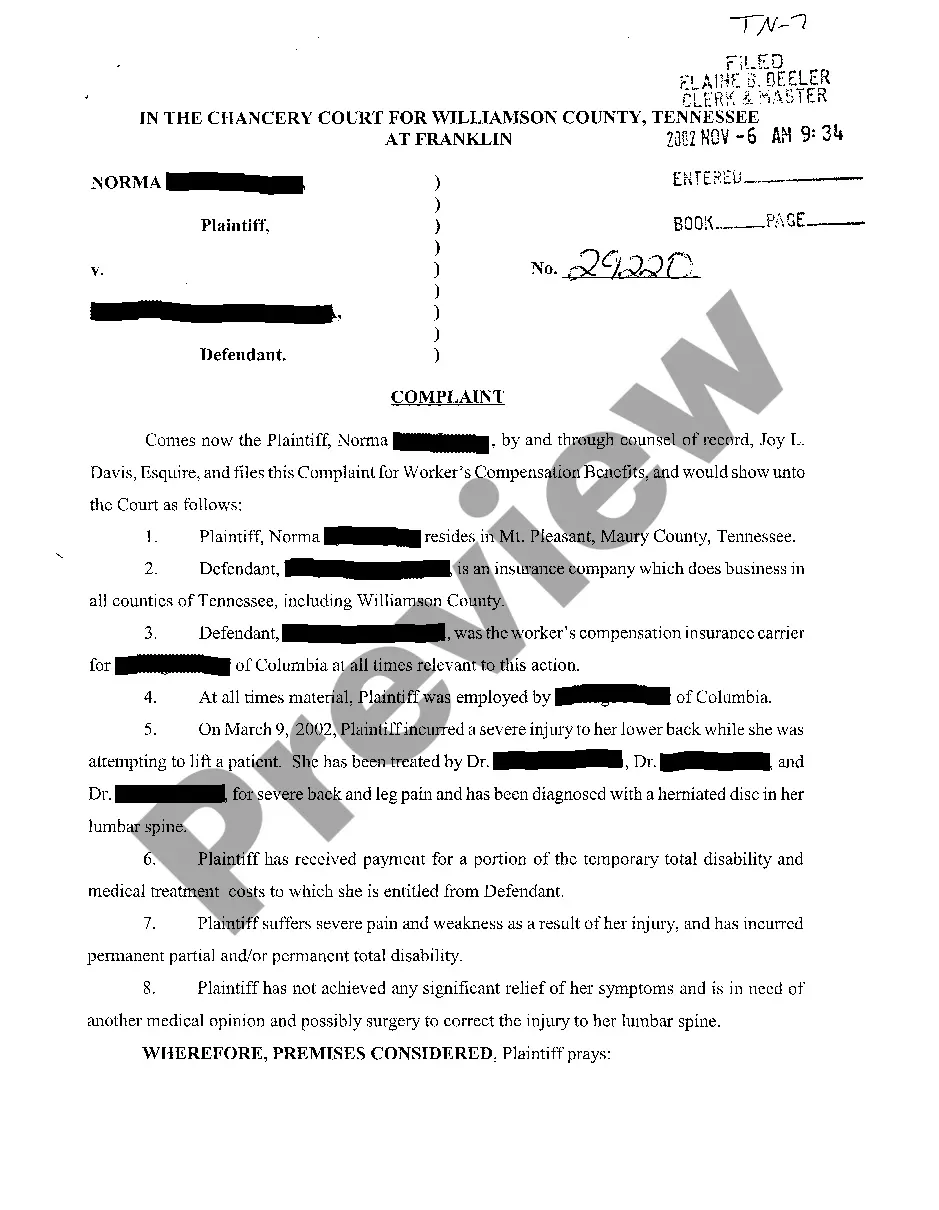
Proving workplace discrimination in California can be one of the most difficult steps in a successful discrimination case. It can also be complex, confusing and frustrating.
The employee must first present evidence that he is a member of a protected class, he was qualified for the position he held, he suffered an adverse employment action such as being fired, and that he was replaced with another worker who is not a member of that protected class.
The employee must first present evidence that he is a member of a protected class, he was qualified for the position he held, he suffered an adverse employment action such as being fired, and that he was replaced with another worker who is not a member of that protected class.
To prove discrimination, plaintiffs must provide evidence that they: (a) are a member of a protected class, (b) are qualified for the position at issue, (c) suffered an adverse employment action, and (d) the employer treated similarly situated employees outside of the protected class more favorably (or some other ...
However, discrimination is a state of mind and, therefore, notoriously hard to prove. Sophisticated employers are well aware that discrimination is illegal. Thus, most cases are established through circumstantial evidence.