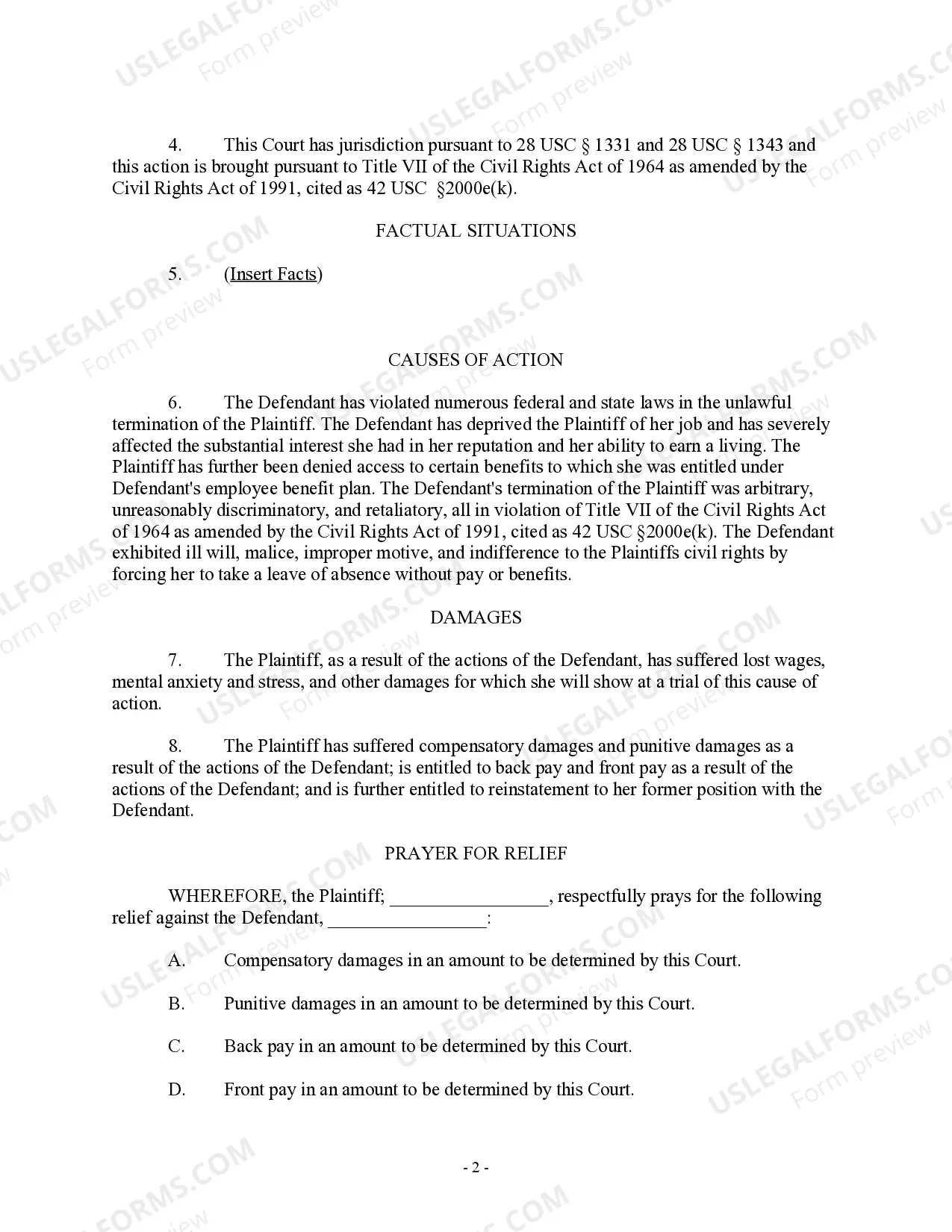
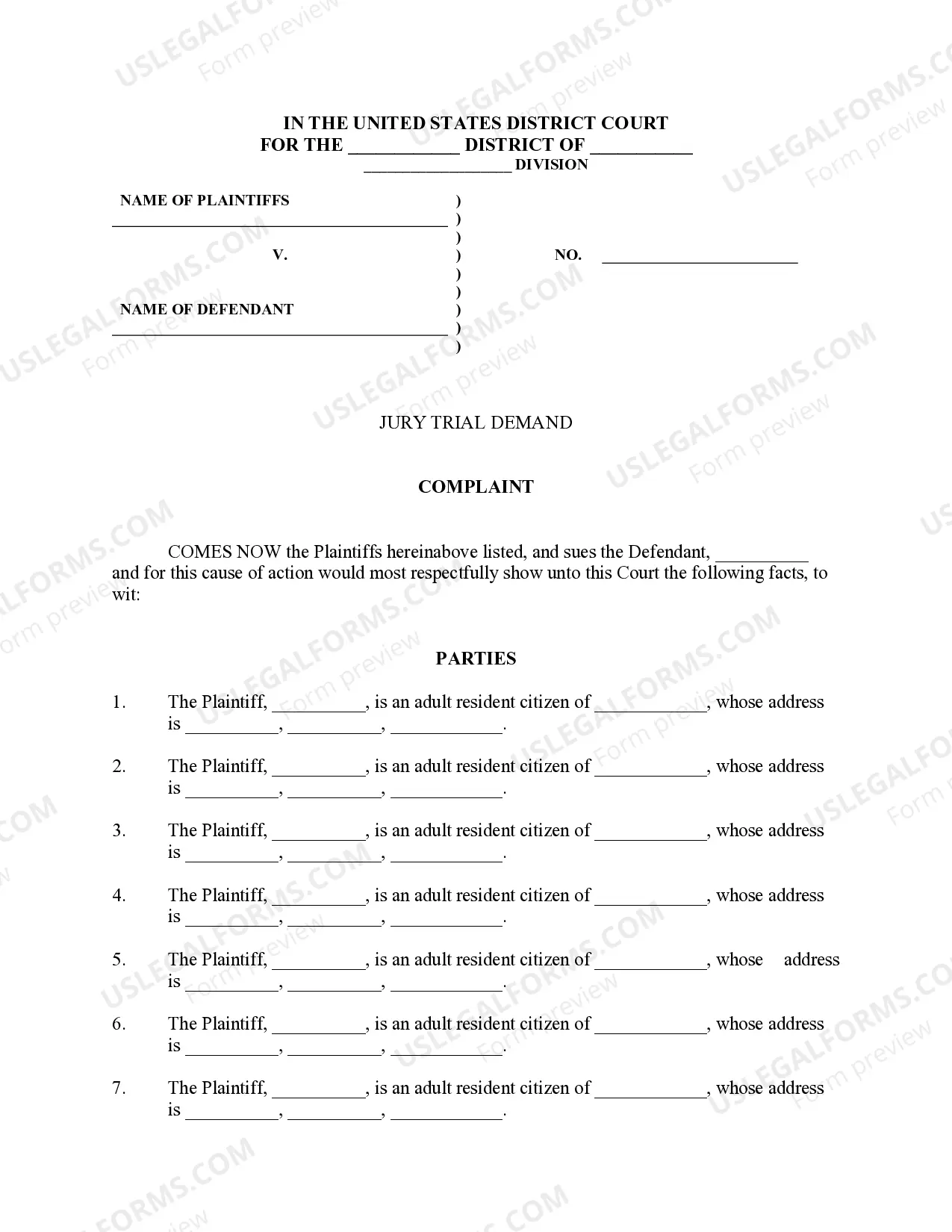
This is a multi-state form covering the subject matter of the title.
Rights Pregnancy Discrimination Formula In Wayne
Category:
State:
Multi-State
County:
Wayne
Control #:
US-000291
Format:
Word;
Rich Text
Instant download
Description
Free preview





Get your form ready online
Our built-in tools help you complete, sign, share, and store your documents in one place.
Built-in online Word editor
Make edits, fill in missing information, and update formatting in US Legal Forms—just like you would in MS Word.
Export easily
Download a copy, print it, send it by email, or mail it via USPS—whatever works best for your next step.
E-sign your document
Sign and collect signatures with our SignNow integration. Send to multiple recipients, set reminders, and more. Go Premium to unlock E-Sign.
Notarize online 24/7
If this form requires notarization, complete it online through a secure video call—no need to meet a notary in person or wait for an appointment.
Store your document securely
We protect your documents and personal data by following strict security and privacy standards.

Make edits, fill in missing information, and update formatting in US Legal Forms—just like you would in MS Word.

Download a copy, print it, send it by email, or mail it via USPS—whatever works best for your next step.

Sign and collect signatures with our SignNow integration. Send to multiple recipients, set reminders, and more. Go Premium to unlock E-Sign.

If this form requires notarization, complete it online through a secure video call—no need to meet a notary in person or wait for an appointment.

We protect your documents and personal data by following strict security and privacy standards.
Looking for another form?





Form popularity
FAQ
Federal civil rights law prohibits discrimination in employment or harassment at work because of an employee's pregnancy, childbirth or related medical conditions. This applies to employers with at least 15 employees. The federal agency that enforces this law is the U.S. Equal Employment Opportunity Commission or EEOC.
To successfully win a pregnancy discrimination claim, an employee must provide evidence showing that her pregnancy was a substantial motivating reason for an adverse employment (such as a demotion, a write up and, of course, a termination) and that other employees in similar situations were treated differently.
A lot goes into proving pregnancy discrimination. A few ways you can prove your case include: Using direct evidence: If you have written documentation of your experience with pregnancy discrimination or your employer admits your pregnancy was a factor in their decision, it will be much easier to prove your case.
How To Prove Pregnancy Discrimination Timing of Events. Violation of Policies and Procedures. Documenting Workplace Performance. Direct Evidence. Circumstantial Evidence. Title VII of the Civil Rights Act of 1964. Pregnant Workers Fairness Act. Americans With Disabilities Act.
The Pregnancy Discrimination Act of 1978, which amended Title VII of the Civil Rights Act of 1964, 42 U.S.C. §§ 2000e et seq., prohibits discrimination on the basis of pregnancy, childbirth, or related medical conditions.
Average Pregnancy Discrimination Settlement in California Complexity of CaseAverage California Pregnancy Discrimination Settlement Minor Approximately: $50,000 – $100,000 Moderate Approximately: $100,000 – $250,000 High Approximately: $250,000 – $1,000,000
Federal civil rights law prohibits discrimination in employment or harassment at work because of an employee's pregnancy, childbirth or related medical conditions. This applies to employers with at least 15 employees. The federal agency that enforces this law is the U.S. Equal Employment Opportunity Commission or EEOC.
Pregnancy has been a protected class for a while in the United States. The PWFA went into effect on June 27, 2023. On April 15, 2024 the EEOC issued its final regulation to carry out the law. So, no. US employers are not allowed to deny employment if you are pregnant IF YOUR EMPLOYER HAS MORE THAN 15 EMPLOYEES.