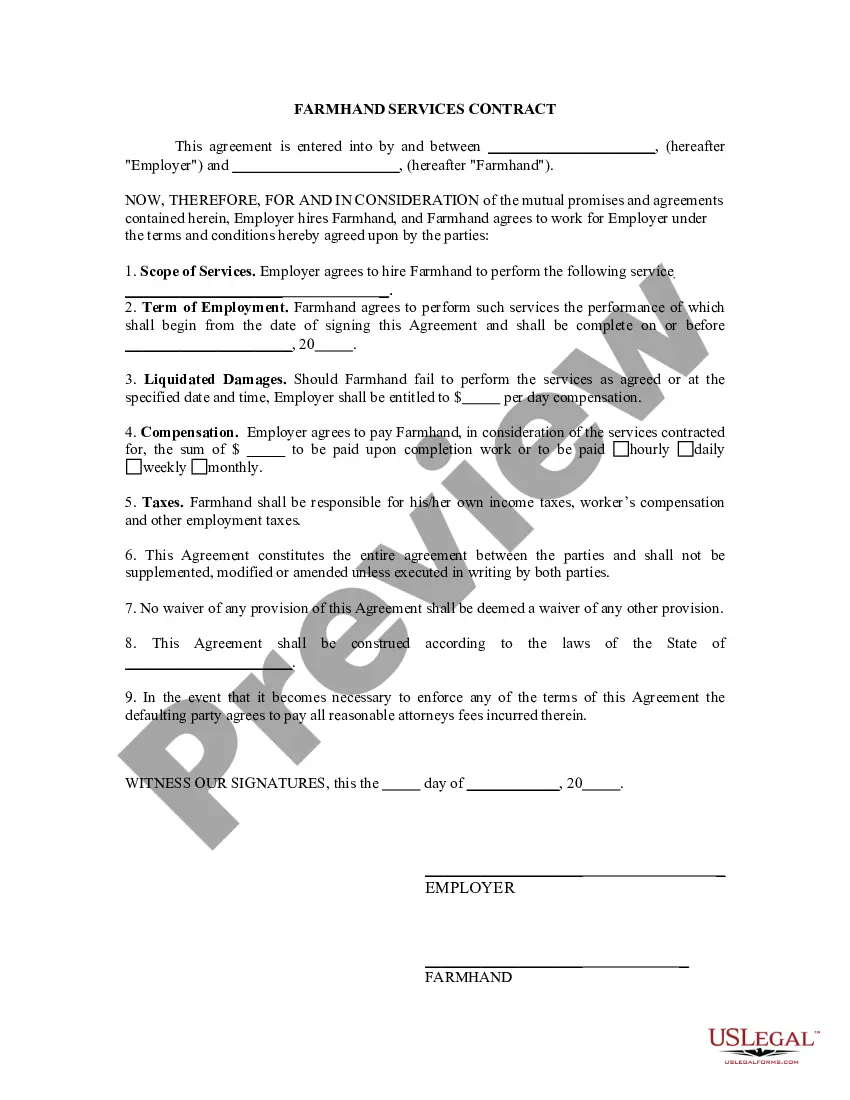
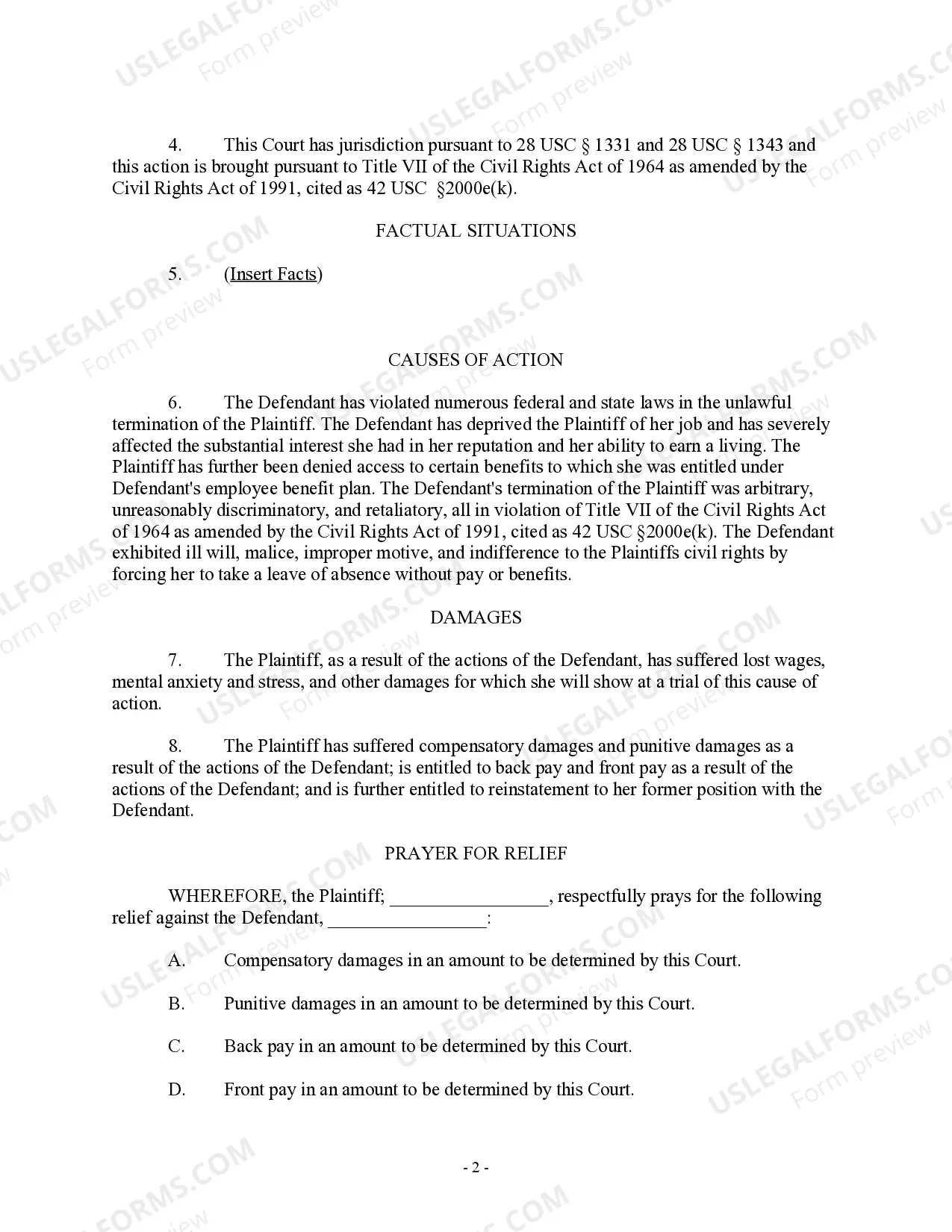
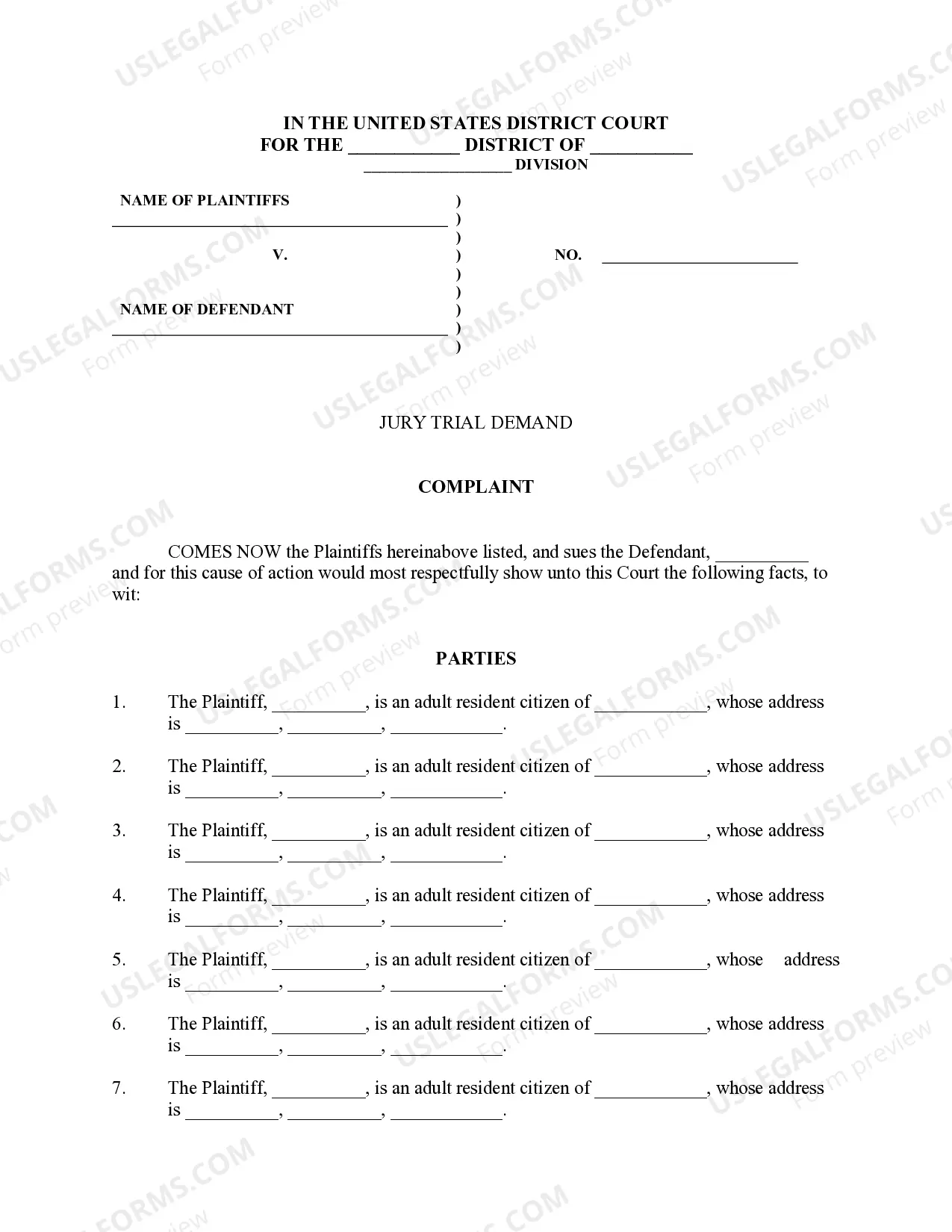
This is a multi-state form covering the subject matter of the title.
Wrongful Termination Court For Medical Reasons In Pima
Category:
State:
Multi-State
County:
Pima
Control #:
US-000291
Format:
Word;
Rich Text
Instant download
Description
Free preview





Get your form ready online
Our built-in tools help you complete, sign, share, and store your documents in one place.
Built-in online Word editor
Make edits, fill in missing information, and update formatting in US Legal Forms—just like you would in MS Word.
Export easily
Download a copy, print it, send it by email, or mail it via USPS—whatever works best for your next step.
E-sign your document
Sign and collect signatures with our SignNow integration. Send to multiple recipients, set reminders, and more. Go Premium to unlock E-Sign.
Notarize online 24/7
If this form requires notarization, complete it online through a secure video call—no need to meet a notary in person or wait for an appointment.
Store your document securely
We protect your documents and personal data by following strict security and privacy standards.

Make edits, fill in missing information, and update formatting in US Legal Forms—just like you would in MS Word.

Download a copy, print it, send it by email, or mail it via USPS—whatever works best for your next step.

Sign and collect signatures with our SignNow integration. Send to multiple recipients, set reminders, and more. Go Premium to unlock E-Sign.

If this form requires notarization, complete it online through a secure video call—no need to meet a notary in person or wait for an appointment.

We protect your documents and personal data by following strict security and privacy standards.
Looking for another form?






Form popularity
FAQ
California laws protect you when you have a medical condition that impacts your ability to work. The California Fair Employment and Housing Act (FEHA) prohibits employer discrimination based on actual or perceived medical conditions, including firing and other adverse employment actions.
Wrongful termination cases can be difficult to win since the employee must provide evidence that their discharge was unlawful. Although assembling solid proof and hiring legal counsel improves the odds, employers frequently contend the dismissal was justified due to performance-related issues.
Average Settlements for Wrongful Termination in California Case DamagesAverage Settlement Received Low Between $5,000 and $30,000 Moderate Between $30,000 and $100,000 High Between $100,000 and $1,000,000+
There are a number of circumstances that might be considered Wrongful Termination in California, which may include an employee who is terminated because of discriminatory practices in the workplace, when a company violates public policy in the process of terminating the employee, or when a company's own guidelines for ...
Some important things that you will need to have a successful claim after you have completed the previous required steps include: Proving the termination was illegal. You must prove that your firing violated California labor laws or public policy. Causation. Damages. Employer's defense.
Although employers may legally let employees go from their jobs for no reason (when employment is “at will”), it is against federal and state laws to fire someone because of their race, ethnicity, country of origin, gender or sexual orientation, age and/or disability.
Under Title VII of the Civil Rights Act of 1964 and Arizona civil rights laws, it is illegal to terminate employment based on factors such as race, gender, sexual orientation, age, disability, religion, national origin, pregnancy, or genetic information. Employment contract breaches.
The AZ law only provides job protection (meaning you can't get fired or be disciplined) for 40 hours of sick time, and that's only if you've been there longer than 90 days before you use it.
So, while California employers can fire at-will workers at any time for any legal reason, they cannot fire an employee solely because of an employee's medical condition. Here is an overview of several laws that offer varying protections against being fired for an illness.