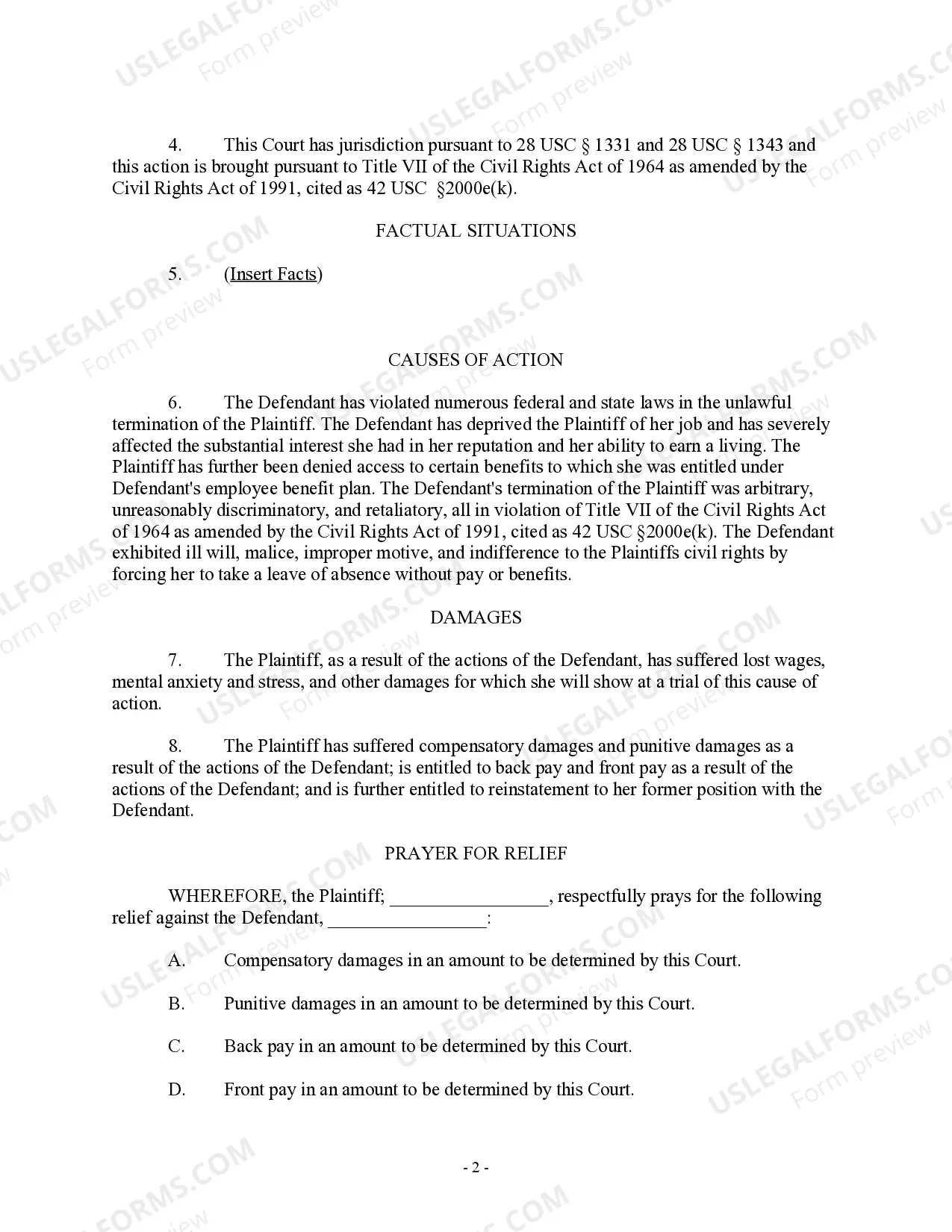
This is a multi-state form covering the subject matter of the title.
Human Rights Court In District In Ohio
State:
Multi-State
Category:
Control #:
US-000291
Format:
Word;
Rich Text
99 downloads
Description
Free preview





Get your form ready online
Our built-in tools help you complete, sign, share, and store your documents in one place.
Built-in online Word editor
Make edits, fill in missing information, and update formatting in US Legal Forms—just like you would in MS Word.
Export easily
Download a copy, print it, send it by email, or mail it via USPS—whatever works best for your next step.
E-sign your document
Sign and collect signatures with our SignNow integration. Send to multiple recipients, set reminders, and more. Go Premium to unlock E-Sign.
Notarize online 24/7
If this form requires notarization, complete it online through a secure video call—no need to meet a notary in person or wait for an appointment.
Store your document securely
We protect your documents and personal data by following strict security and privacy standards.

Make edits, fill in missing information, and update formatting in US Legal Forms—just like you would in MS Word.

Download a copy, print it, send it by email, or mail it via USPS—whatever works best for your next step.

Sign and collect signatures with our SignNow integration. Send to multiple recipients, set reminders, and more. Go Premium to unlock E-Sign.

If this form requires notarization, complete it online through a secure video call—no need to meet a notary in person or wait for an appointment.

We protect your documents and personal data by following strict security and privacy standards.
Looking for another form?




Form popularity
FAQ
The Supreme Court of Ohio is established by Article IV, Section 1, of the Ohio Constitution, which provides that “the judicial power of the state is vested in a Supreme Court, Courts of Appeals, Courts of Common Pleas and divisions thereof, and such other courts inferior to the Supreme Court as may from time to time be ...
The Ohio Civil Rights Act protects applicants and employees of private employers, state, county and local governments, educational institutions, labor organizations, employment agencies and personnel placement services from unlawful discriminatory employment practices.
The Ohio Civil Rights Act protects applicants and employees of private employers, state, county and local governments, educational institutions, labor organizations, employment agencies and personnel placement services from unlawful discriminatory employment practices.
This act, signed into law by President Lyndon Johnson on July 2, 1964, prohibited discrimination in public places, provided for the integration of schools and other public facilities, and made employment discrimination illegal. It was the most sweeping civil rights legislation since Reconstruction.
Unlawful discrimination under the Ohio Revised Code includes discrimination based on certain protected classes, such as race, color, national origin, religion, disability, age, familial status and military status.
Ohio's state courts are divided into three levels: trial courts, appellate courts and the state supreme court. Trial courts consist of municipal, county, and common pleas courts. Common pleas courts may include separate general, domestic relations, probate, and juvenile divisions, or combinations thereof.
The federal district courts in Ohio are the: Northern District of Ohio. Southern District of Ohio.
The Supreme Court of Ohio is the highest court in the state system, sometimes called “the court of last resort.” Most, but not all, of the cases the Supreme Court hears are appeals from the state's lower courts. The Court is made up of the Chief Justice and six Justices.