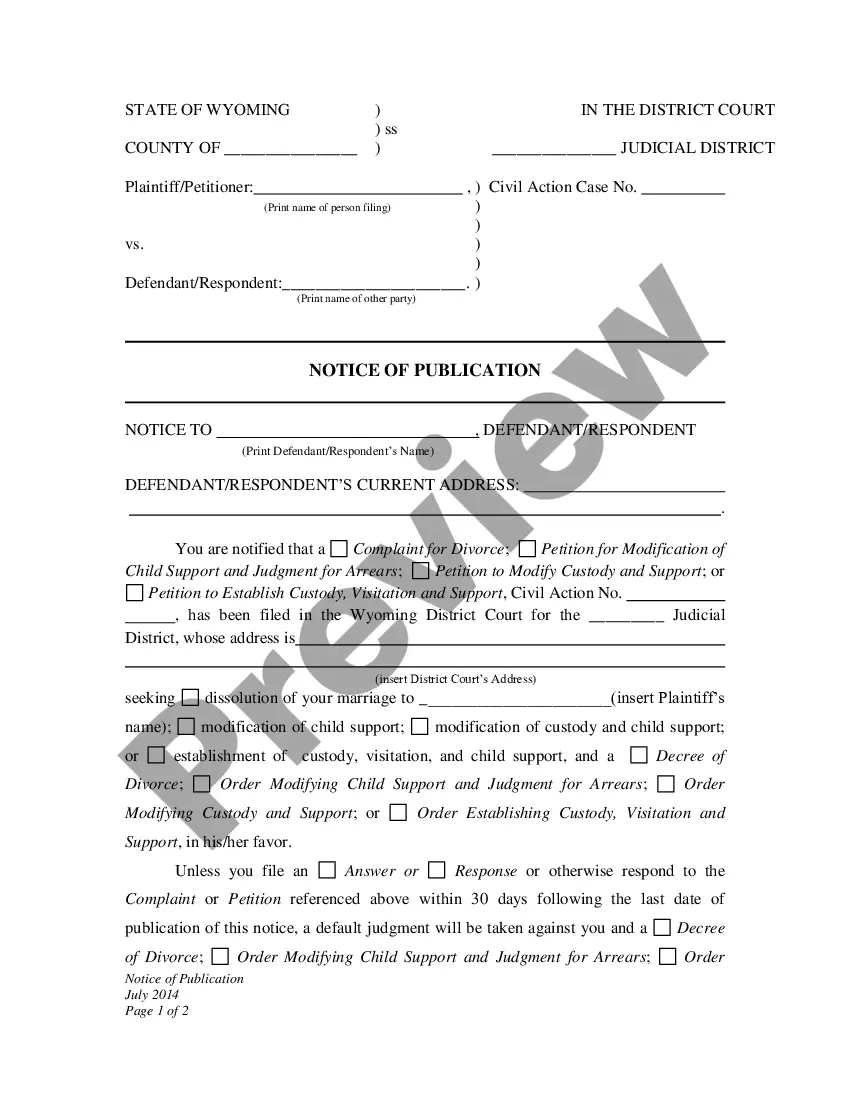
This is a multi-state form covering the subject matter of the title.
Pregnant With Discrimination In Contra Costa
Category:
State:
Multi-State
County:
Contra Costa
Control #:
US-000291
Format:
Word;
Rich Text
Instant download
Description
Free preview





Get your form ready online
Our built-in tools help you complete, sign, share, and store your documents in one place.
Built-in online Word editor
Make edits, fill in missing information, and update formatting in US Legal Forms—just like you would in MS Word.
Export easily
Download a copy, print it, send it by email, or mail it via USPS—whatever works best for your next step.
E-sign your document
Sign and collect signatures with our SignNow integration. Send to multiple recipients, set reminders, and more. Go Premium to unlock E-Sign.
Notarize online 24/7
If this form requires notarization, complete it online through a secure video call—no need to meet a notary in person or wait for an appointment.
Store your document securely
We protect your documents and personal data by following strict security and privacy standards.

Make edits, fill in missing information, and update formatting in US Legal Forms—just like you would in MS Word.

Download a copy, print it, send it by email, or mail it via USPS—whatever works best for your next step.

Sign and collect signatures with our SignNow integration. Send to multiple recipients, set reminders, and more. Go Premium to unlock E-Sign.

If this form requires notarization, complete it online through a secure video call—no need to meet a notary in person or wait for an appointment.

We protect your documents and personal data by following strict security and privacy standards.
Looking for another form?







Form popularity
FAQ
Expanded Rights for Pregnant and Nursing Employees. 1. Pregnancy Disability Leave (PDL): Under the California Fair Employment and Housing Act (FEHA), pregnant employees are entitled to up to four months of leave per pregnancy if they are disabled due to pregnancy, childbirth, or related medical conditions.
Average Pregnancy Discrimination Settlement in California Complexity of CaseAverage California Pregnancy Discrimination Settlement Minor Approximately: $50,000 – $100,000 Moderate Approximately: $100,000 – $250,000 High Approximately: $250,000 – $1,000,000
The PWFA requires employers with 15 or more employees to provide reasonable accommodations for known limitations related to, affected by, or arising out of pregnancy, childbirth, or related medical conditions, unless the accommodation will cause the employer an “undue hardship.”
Under this law, an employer cannot: Refuse to hire a candidate based on her pregnancy or future ability to conceive children. Fire an employee because of pregnancy. Deny an employee a promotion or raise because of pregnancy.
Please know that, while we are an adoption agency, this article's purpose is not to persuade you to choose adoption for your unborn child. This serves simply to talk about unplanned pregnancy options, and every pregnant woman ultimately has three: parenting, abortion or adoption.
Proving pregnancy discrimination requires more than a victim's claim. There must be evidence that the employer acted against the individual exclusively based on their pregnancy. That evidence must be clear, inarguable, and documented.
Generally, the Pregnant Workers Fairness Act (PWFA) requires a covered employer to provide a “reasonable accommodation” to a qualified employee's or applicant's known limitations related to, affected by, or arising out of pregnancy, childbirth, or related medical conditions, unless the accommodation will cause the ...
Congressman Mark DeSaulnier (DE-SOWN-YAY) proudly represents California's 10th Congressional District, which includes much of Contra Costa County and a part of Alameda County.
How To Prove Pregnancy Discrimination Timing of Events. Violation of Policies and Procedures. Documenting Workplace Performance. Direct Evidence. Circumstantial Evidence. Title VII of the Civil Rights Act of 1964. Pregnant Workers Fairness Act. Americans With Disabilities Act.
No, in California, an employer cannot treat a pregnant employee differently than other employees.