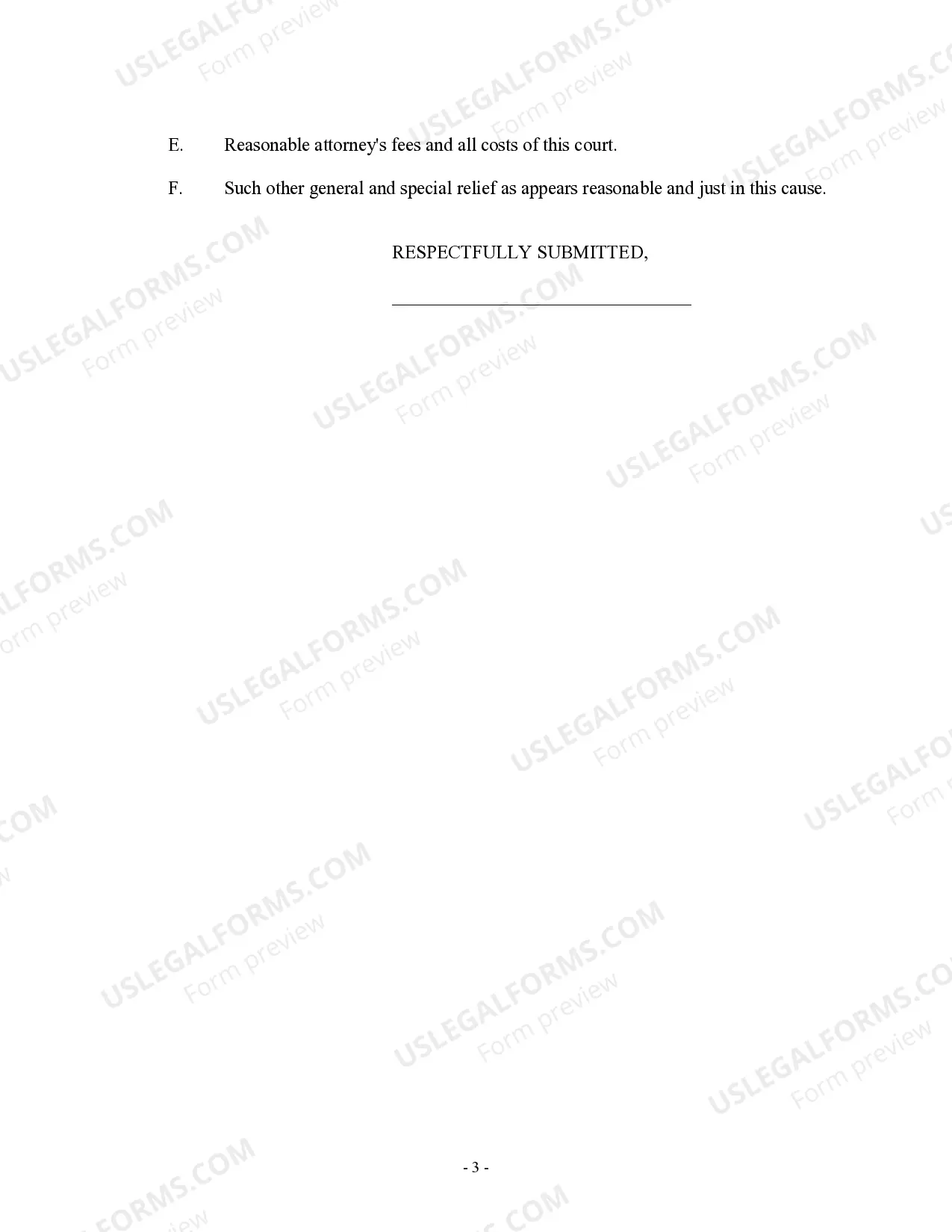
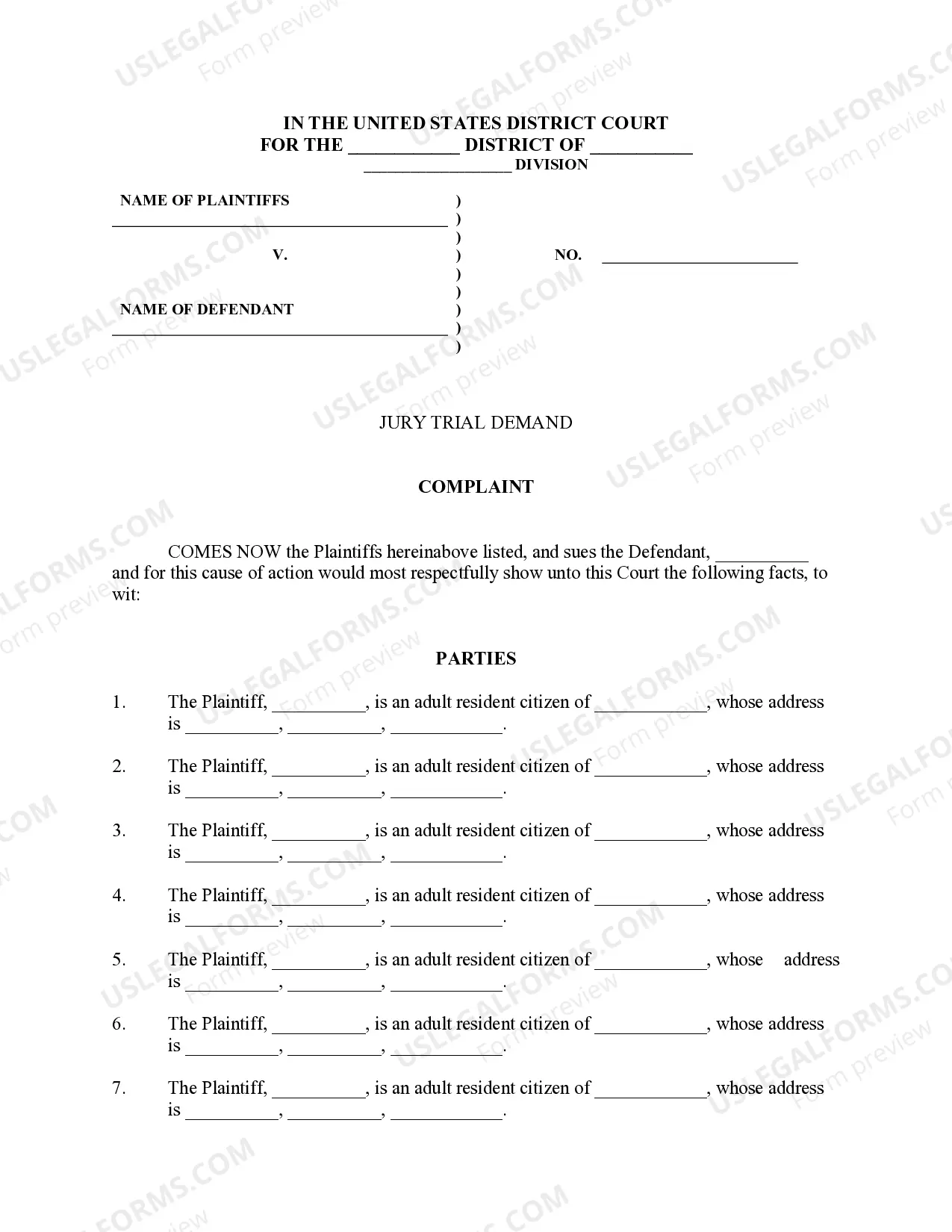
This is a multi-state form covering the subject matter of the title.
Wrongful Termination Court For Being Sick In Collin
State:
Multi-State
Category:
County:
Collin
Control #:
US-000291
Format:
Word;
Rich Text
99 downloads
Description
Free preview




Get your form ready online
Our built-in tools help you complete, sign, share, and store your documents in one place.
Built-in online Word editor
Make edits, fill in missing information, and update formatting in US Legal Forms—just like you would in MS Word.
Export easily
Download a copy, print it, send it by email, or mail it via USPS—whatever works best for your next step.
E-sign your document
Sign and collect signatures with our SignNow integration. Send to multiple recipients, set reminders, and more. Go Premium to unlock E-Sign.
Notarize online 24/7
If this form requires notarization, complete it online through a secure video call—no need to meet a notary in person or wait for an appointment.
Store your document securely
We protect your documents and personal data by following strict security and privacy standards.

Make edits, fill in missing information, and update formatting in US Legal Forms—just like you would in MS Word.

Download a copy, print it, send it by email, or mail it via USPS—whatever works best for your next step.

Sign and collect signatures with our SignNow integration. Send to multiple recipients, set reminders, and more. Go Premium to unlock E-Sign.

If this form requires notarization, complete it online through a secure video call—no need to meet a notary in person or wait for an appointment.

We protect your documents and personal data by following strict security and privacy standards.
Looking for another form?

Form popularity
FAQ
For instance, it would be illegal for an employer to terminate an employee because of race, religion, age or disability discrimination or retaliation. Other examples would include terminating an employee because the employee disclosed she was pregnant, or because the employee made a workplace safety complaint.
Since employment in Texas is ``at will'' absent an agreement to the contrary, an employer could choose to discipline or even terminate an employee for leaving work due to illness without permission UNLESS the circumstance falls within the protection of state and federal disability laws or the Family Medical Leave Act.
Generally, yes. If you have FMLA, they generally have to keep your job, but otherwise, if you are TOO sick to work, they can terminate. So employment in Texas is at-will.
Under both state and federal law, it is illegal to discriminate against an employee based on their medical condition when making employment decisions—including hiring, firing, promoting, and demoting.
Texas Government Code, Section 661.202, states that an employee, without deduction in salary, is entitled to sick leave when sickness, injury, or pregnancy and confinement prevent the employee's performance of duty.
Texas is an at-will state, meaning your employer can fire you for a good reason, bad reason or simply no reason at all. However, there are circumstances where termination may be illegal, and you can sue your employer for damages.
Employees must establish the existence of an employment relationship, the circumstances of their termination (whether direct or constructive), and evidence indicating unlawful motives behind the termination.
Yes, an employer can terminate an employee for calling in sick too often, but there are important considerations: Company Policy: Employers typically have attendance policies that outline acceptable levels of absenteeism. If an employee exceeds those thresholds, they may face disciplinary action.