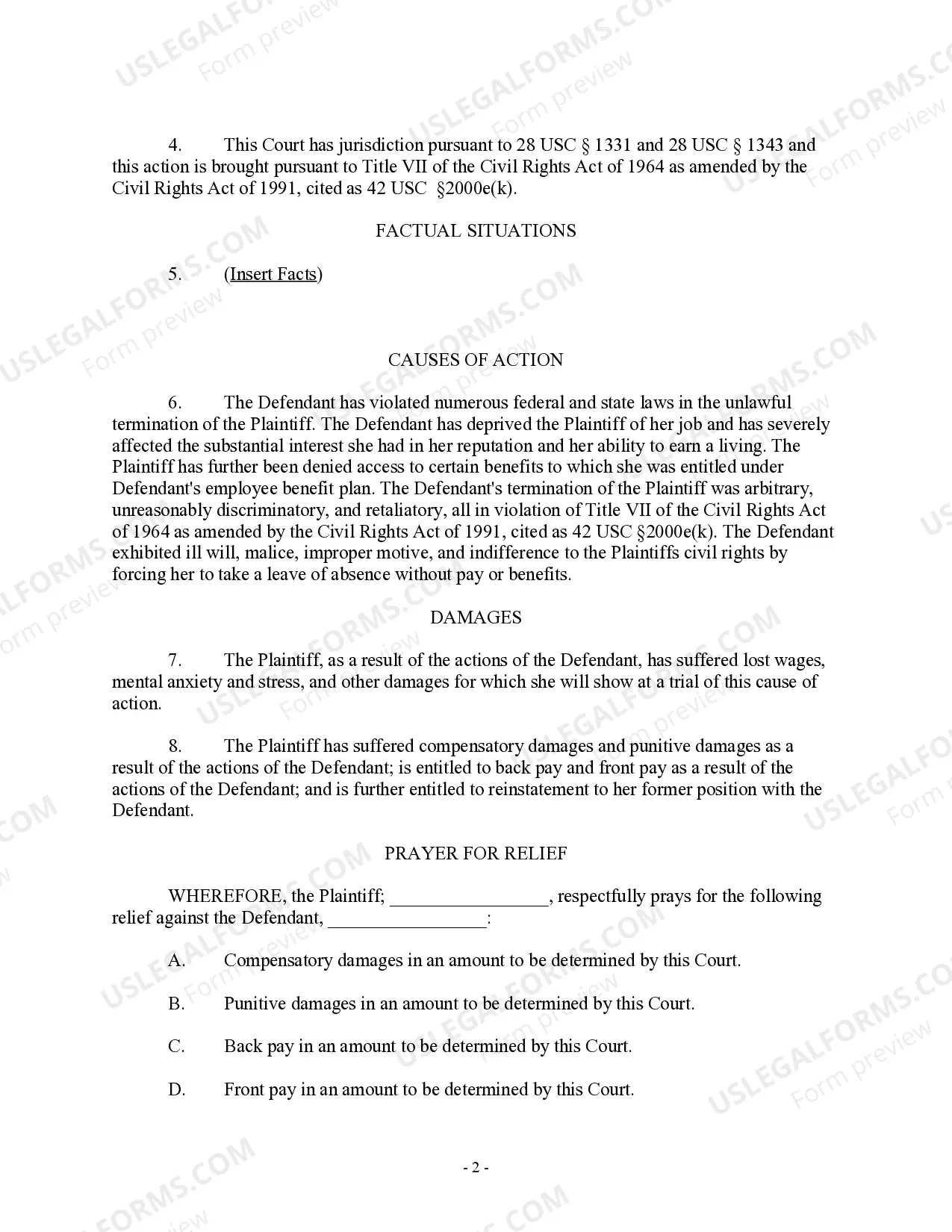
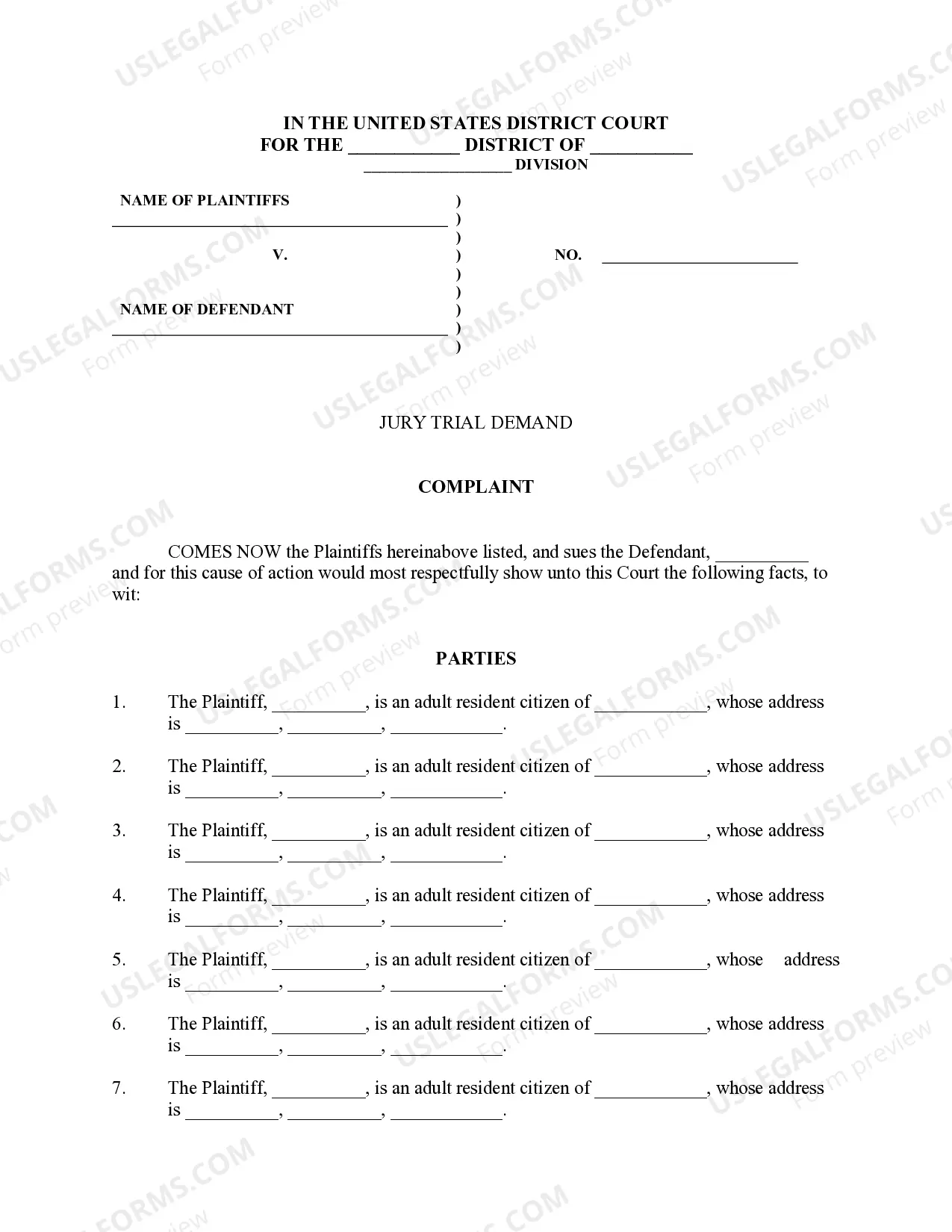
This is a multi-state form covering the subject matter of the title.
Pregnancy Discrimination For Job In Chicago
State:
Multi-State
Category:
City:
Chicago
Control #:
US-000291
Format:
Word;
Rich Text
99 downloads
Description
Free preview





Get your form ready online
Our built-in tools help you complete, sign, share, and store your documents in one place.
Built-in online Word editor
Make edits, fill in missing information, and update formatting in US Legal Forms—just like you would in MS Word.
Export easily
Download a copy, print it, send it by email, or mail it via USPS—whatever works best for your next step.
E-sign your document
Sign and collect signatures with our SignNow integration. Send to multiple recipients, set reminders, and more. Go Premium to unlock E-Sign.
Notarize online 24/7
If this form requires notarization, complete it online through a secure video call—no need to meet a notary in person or wait for an appointment.
Store your document securely
We protect your documents and personal data by following strict security and privacy standards.

Make edits, fill in missing information, and update formatting in US Legal Forms—just like you would in MS Word.

Download a copy, print it, send it by email, or mail it via USPS—whatever works best for your next step.

Sign and collect signatures with our SignNow integration. Send to multiple recipients, set reminders, and more. Go Premium to unlock E-Sign.

If this form requires notarization, complete it online through a secure video call—no need to meet a notary in person or wait for an appointment.

We protect your documents and personal data by following strict security and privacy standards.
Looking for another form?






Form popularity
FAQ
It's against the law for employers to fire or demote you because you decide to become a mother. The Family and Medical Leave Act (FMLA) says companies with 50 or more workers must give you up to 12 weeks of unpaid leave to take care of your new baby.
The Illinois Human Rights Act (the “Act”), provides broad protection against discrimination based on a person's current pregnancy, past pregnancy, potential or intended pregnancy, and medical conditions related to pregnancy or childbirth.
Under the Equality Act 2010, it is unlawful to treat someone unfavourably because they are pregnant, have a pregnancy-related illness, have recently given birth, are breastfeeding, or are taking or seeking to take maternity leave.
State against unfounded charges of prohibited discrimination in employment, real estate transactions, financial credit, and public accommodations, including in elementary, secondary, and higher education.
Current legislation. In the US, parents and family are federally protected under the 1993 Family and Medical Leave Act (FMLA) to go on maternity or family leave after the adoption or birth of a child. Under this law, legal parents are protected for up to 12 weeks of unpaid leave (per year).
It's against the law for employers to fire or demote you because you decide to become a mother. The Family and Medical Leave Act (FMLA) says companies with 50 or more workers must give you up to 12 weeks of unpaid leave to take care of your new baby.
The Illinois Human Rights Act (the “Act”), provides broad protection against discrimination based on a person's current pregnancy, past pregnancy, potential or intended pregnancy, and medical conditions related to pregnancy or childbirth.
Public Act 98-1050 requires all employers in Illinois to post a notice prepared by the Department and to include in any employee handbook information regarding an employee's rights under this amendment to the Illinois Human Rights Act regarding pregnancy in the workplace and an employer's obligation to accommodate ...
Despite a rich set of welfare policies targeting parents and children in the first postpartum year, mothers and infants are not immune to adverse shocks. For example, mothers can still be laid off from work, and this can have important implications for the wellbeing of both mothers and children.