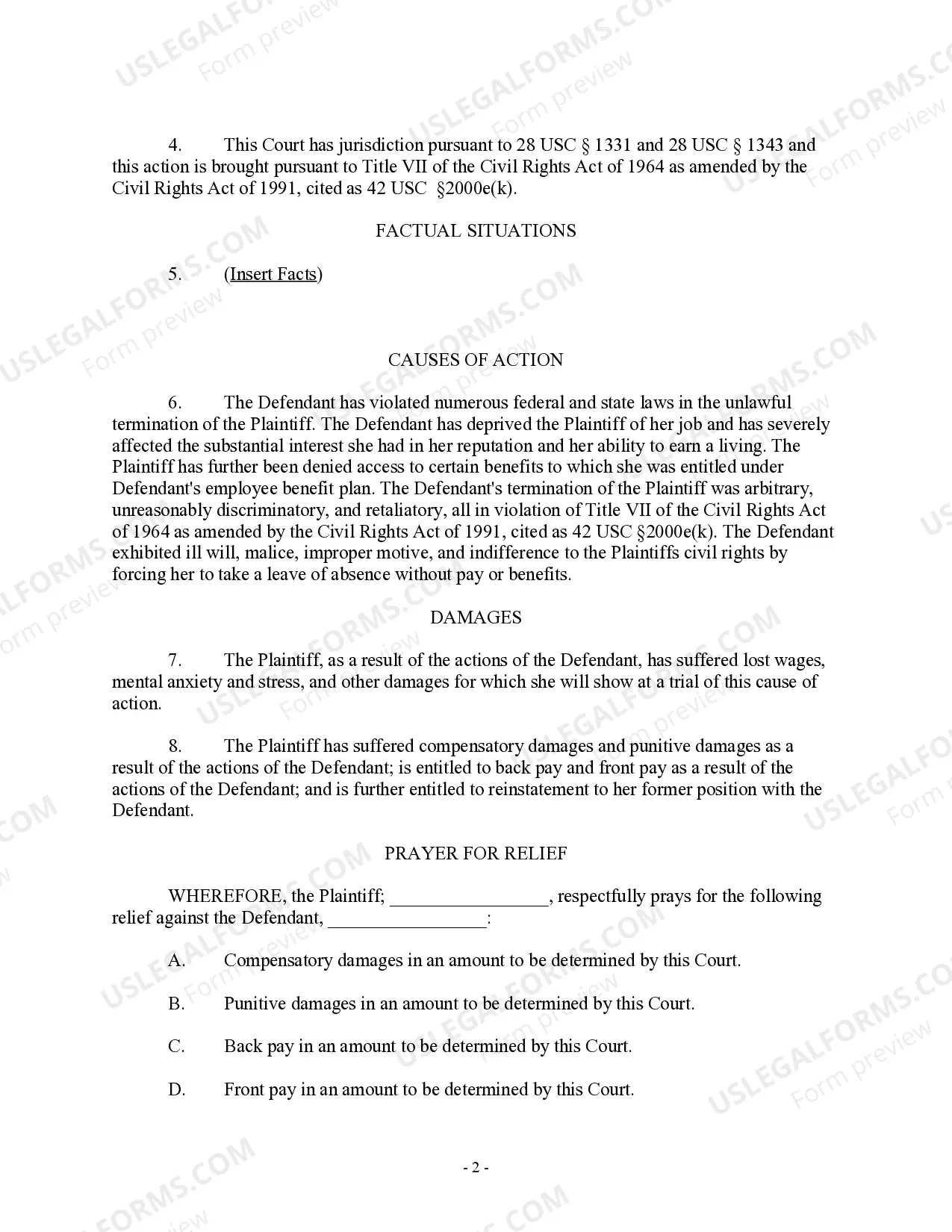
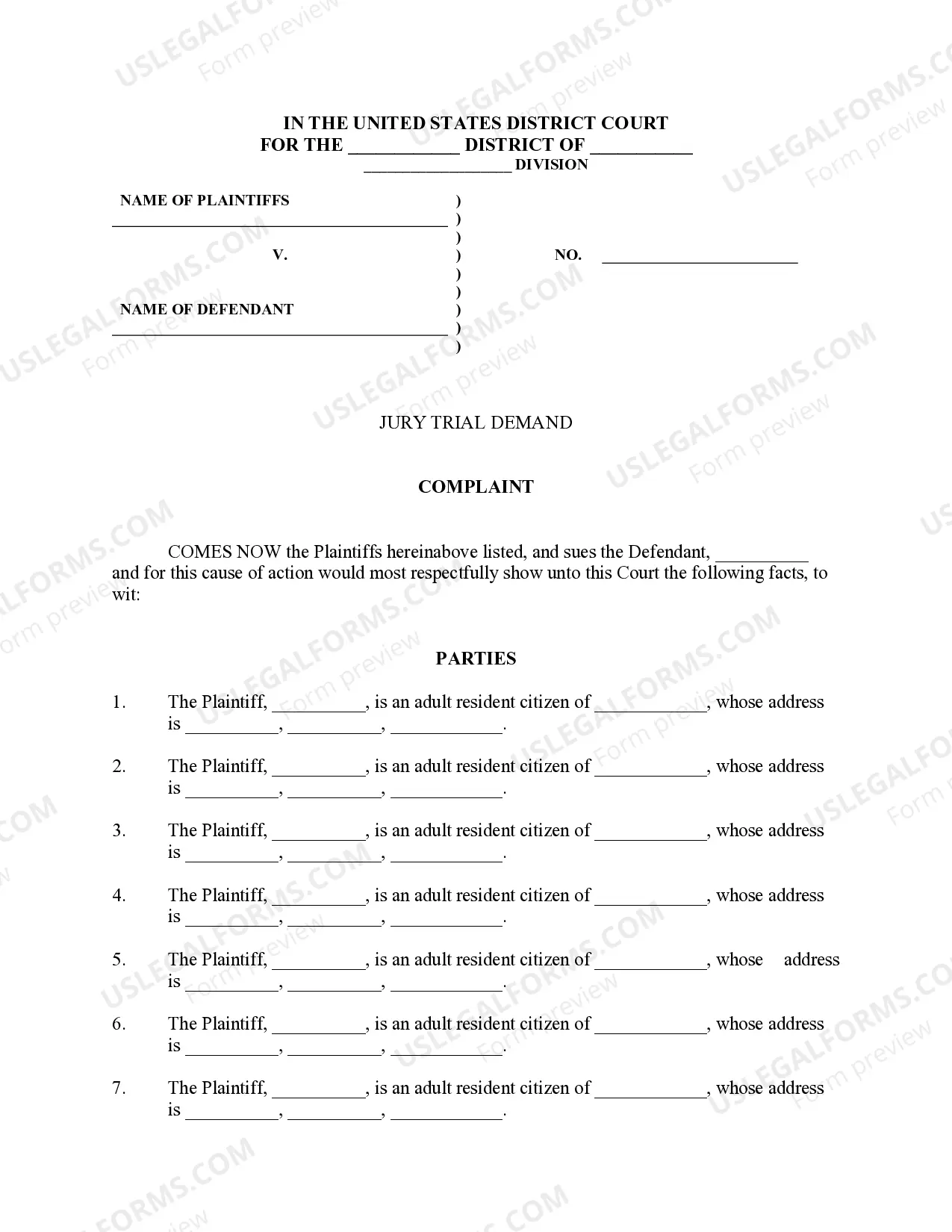
This is a multi-state form covering the subject matter of the title.
Civil Rights Under Law In Bexar
State:
Multi-State
Category:
County:
Bexar
Control #:
US-000291
Format:
Word;
Rich Text
99 downloads
Description
Free preview





Get your form ready online
Our built-in tools help you complete, sign, share, and store your documents in one place.
Built-in online Word editor
Make edits, fill in missing information, and update formatting in US Legal Forms—just like you would in MS Word.
Export easily
Download a copy, print it, send it by email, or mail it via USPS—whatever works best for your next step.
E-sign your document
Sign and collect signatures with our SignNow integration. Send to multiple recipients, set reminders, and more. Go Premium to unlock E-Sign.
Notarize online 24/7
If this form requires notarization, complete it online through a secure video call—no need to meet a notary in person or wait for an appointment.
Store your document securely
We protect your documents and personal data by following strict security and privacy standards.

Make edits, fill in missing information, and update formatting in US Legal Forms—just like you would in MS Word.

Download a copy, print it, send it by email, or mail it via USPS—whatever works best for your next step.

Sign and collect signatures with our SignNow integration. Send to multiple recipients, set reminders, and more. Go Premium to unlock E-Sign.

If this form requires notarization, complete it online through a secure video call—no need to meet a notary in person or wait for an appointment.

We protect your documents and personal data by following strict security and privacy standards.
Looking for another form?








Form popularity
FAQ
Many pre-law students major in political science, but if you're interested in civil rights law, taking courses or majoring in criminal justice, sociology, American studies, English, history, and even philosophy can be beneficial. There's no right or wrong major to make your way into the field.
How to Become a Civil Rights Lawyer: Steps to Take Take Political Science, Philosophy, Criminal Justice, and History Classes Throughout Your Undergrad. Take the LSAT. Complete Your J.D. Get Work or Volunteer Experience. Successfully Pass Your Bar Exam.
Learn more. #1: Commit to small actions. #2: Get educated on human rights issues. #3: Join a local group. #4: Get involved in the political process. #5: If you're a student, look for classes and degrees in relevant fields. #6: Get experience. #7: Be flexible and willing to go where you're needed.
Many pre-law students major in political science, but if you're interested in civil rights law, taking courses or majoring in criminal justice, sociology, American studies, English, history, and even philosophy can be beneficial. There's no right or wrong major to make your way into the field.
How Long Will It Take To Qualify? Most prospective lawyers, in all fields, undertake seven years of post-secondary education to become qualified in their field and ready to work. After completing four years of undergraduate study, typical law school courses last for three years.
The Bexar County District Clerk's Office is located at 101 W. Nueva, Suite 217, San Antonio, Texas 78205. They can be reached at (210) 335-2113.
Examples of civil rights include the right to vote, the right to a fair trial, the right to government services, the right to a public education, the right to gainful employment, the right to housing, the right to use public facilities, freedom of religion.
The most common complaint involves allegations of color of law violations. Another common complaint involves racial violence, such as physical assaults, homicides, verbal or written threats, or desecration of property.
Please contact the Civil Rights Office to learn more. Call: 1-888-388-6332 or 512-438-4313. Email: HHSCivilRightsOffice@hhs.texas. Fax: 512-438-5885. Mail: Civil Rights Office. Health and Human Services Commission. P.O. Box 13247, Mail Code: 1560. Austin, Texas 78711.