Sample Jury Trial Demand With Motion In Montgomery
Description





Get your form ready online
Our built-in tools help you complete, sign, share, and store your documents in one place.
Make edits, fill in missing information, and update formatting in US Legal Forms—just like you would in MS Word.
Download a copy, print it, send it by email, or mail it via USPS—whatever works best for your next step.
Sign and collect signatures with our SignNow integration. Send to multiple recipients, set reminders, and more. Go Premium to unlock E-Sign.
If this form requires notarization, complete it online through a secure video call—no need to meet a notary in person or wait for an appointment.
We protect your documents and personal data by following strict security and privacy standards.

Make edits, fill in missing information, and update formatting in US Legal Forms—just like you would in MS Word.

Download a copy, print it, send it by email, or mail it via USPS—whatever works best for your next step.

Sign and collect signatures with our SignNow integration. Send to multiple recipients, set reminders, and more. Go Premium to unlock E-Sign.

If this form requires notarization, complete it online through a secure video call—no need to meet a notary in person or wait for an appointment.

We protect your documents and personal data by following strict security and privacy standards.
Looking for another form?





Form popularity
FAQ
If a juror has a bias, or there is some other reason why a juror cannot be fair and impartial, the judge may excuse that juror. These are called strikes, “for cause,” in that there was cause to dismiss the juror.
A motion is a paper you can file in your case. It asks the court to decide something in your case. For example, if you need more time to answer a complaint against you, you can file a motion to extend the time to answer. If you do not have a case, you cannot file a motion.
Q5: What Happens if a Motion to Strike is Granted? If granted, the court will order the removal of the specified parts from the pleading. This can lead to a narrowing of the issues in the case or, in some instances, weaken the opposing party's position significantly.
"Motion to strike jury demand" means that one party has requested a jury trial and the other party is objecting to the request for a jury based on some ground, such as it may be the type of proceeding that a jury is not mandated or that the party asking for a jury has no right to ask for a jury in this manner.
A motion to strike is a request to a judge that part of a party's pleading or a piece of evidence be removed from the record. During the pleading stage, this can be accomplished by a tool such as Rule 12(f) of the Federal Rules of Civil Procedure or a state equivalent.
Any party may demand a trial by jury of any issue triable of right by a jury by (1) serving upon the other parties a demand therefor in writing at any time after the commencement of the action and not later than 10 days after the service of the last pleading directed to such issue, and (2) filing the demand as required ...
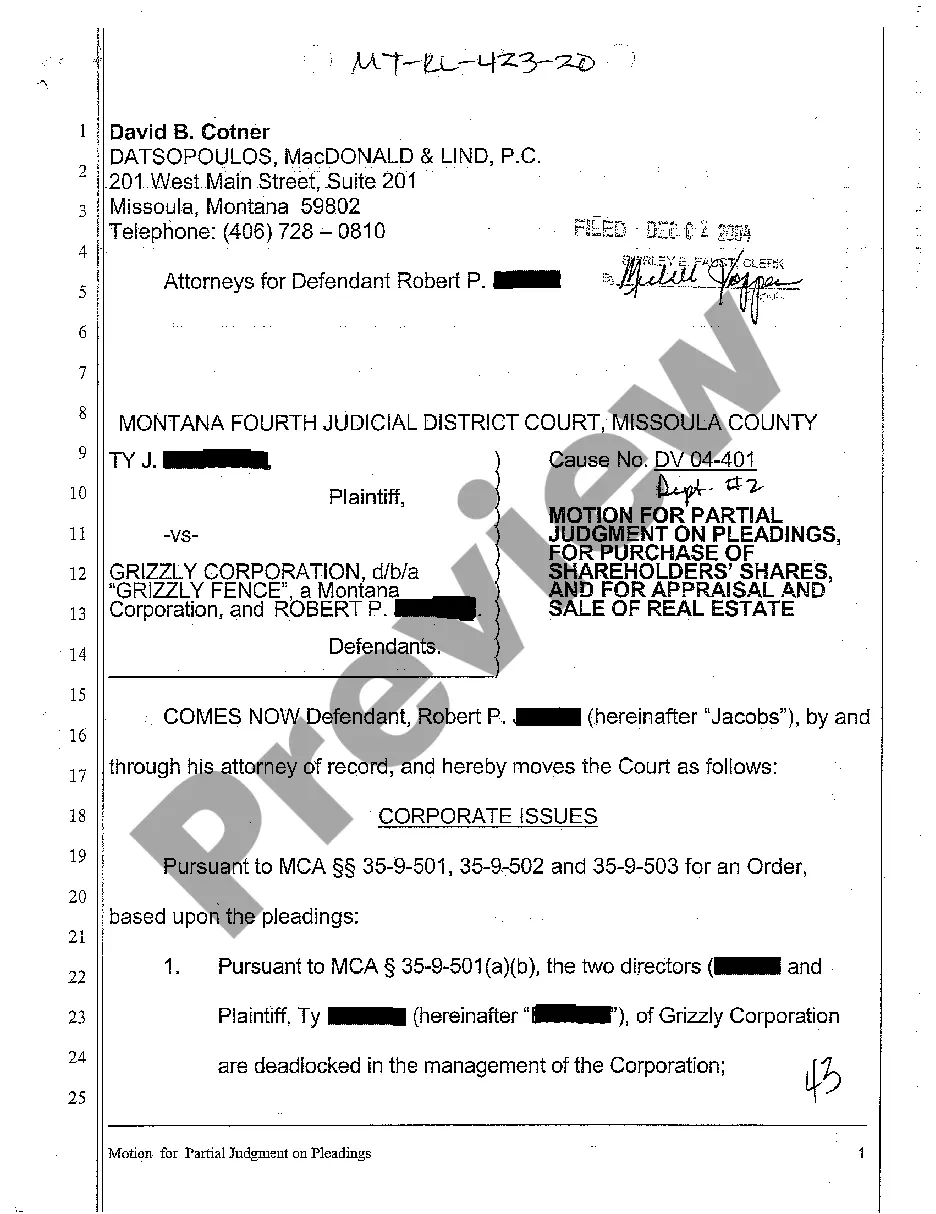
General format - each motion generally consists of a case caption, a title that briefly identifies the relief sought, a series of numbered paragraphs that explains -- in a logical way -- why you are entitled to that relief, a prayer for relief, a signature block, a certification that a copy of the motion was sent to ...
In an action for a declaratory judgment, the demand for relief in the complaint shall specify the rights and other legal relations on which a declaration is requested and state whether further or consequential relief is or could be claimed and the nature and extent of any such relief which is claimed.