Patent Infringement On Amazon In Wayne
Description

Get your form ready online
Our built-in tools help you complete, sign, share, and store your documents in one place.
Make edits, fill in missing information, and update formatting in US Legal Forms—just like you would in MS Word.
Download a copy, print it, send it by email, or mail it via USPS—whatever works best for your next step.
Sign and collect signatures with our SignNow integration. Send to multiple recipients, set reminders, and more. Go Premium to unlock E-Sign.
If this form requires notarization, complete it online through a secure video call—no need to meet a notary in person or wait for an appointment.
We protect your documents and personal data by following strict security and privacy standards.

Make edits, fill in missing information, and update formatting in US Legal Forms—just like you would in MS Word.

Download a copy, print it, send it by email, or mail it via USPS—whatever works best for your next step.

Sign and collect signatures with our SignNow integration. Send to multiple recipients, set reminders, and more. Go Premium to unlock E-Sign.

If this form requires notarization, complete it online through a secure video call—no need to meet a notary in person or wait for an appointment.

We protect your documents and personal data by following strict security and privacy standards.
Looking for another form?







Form popularity
FAQ
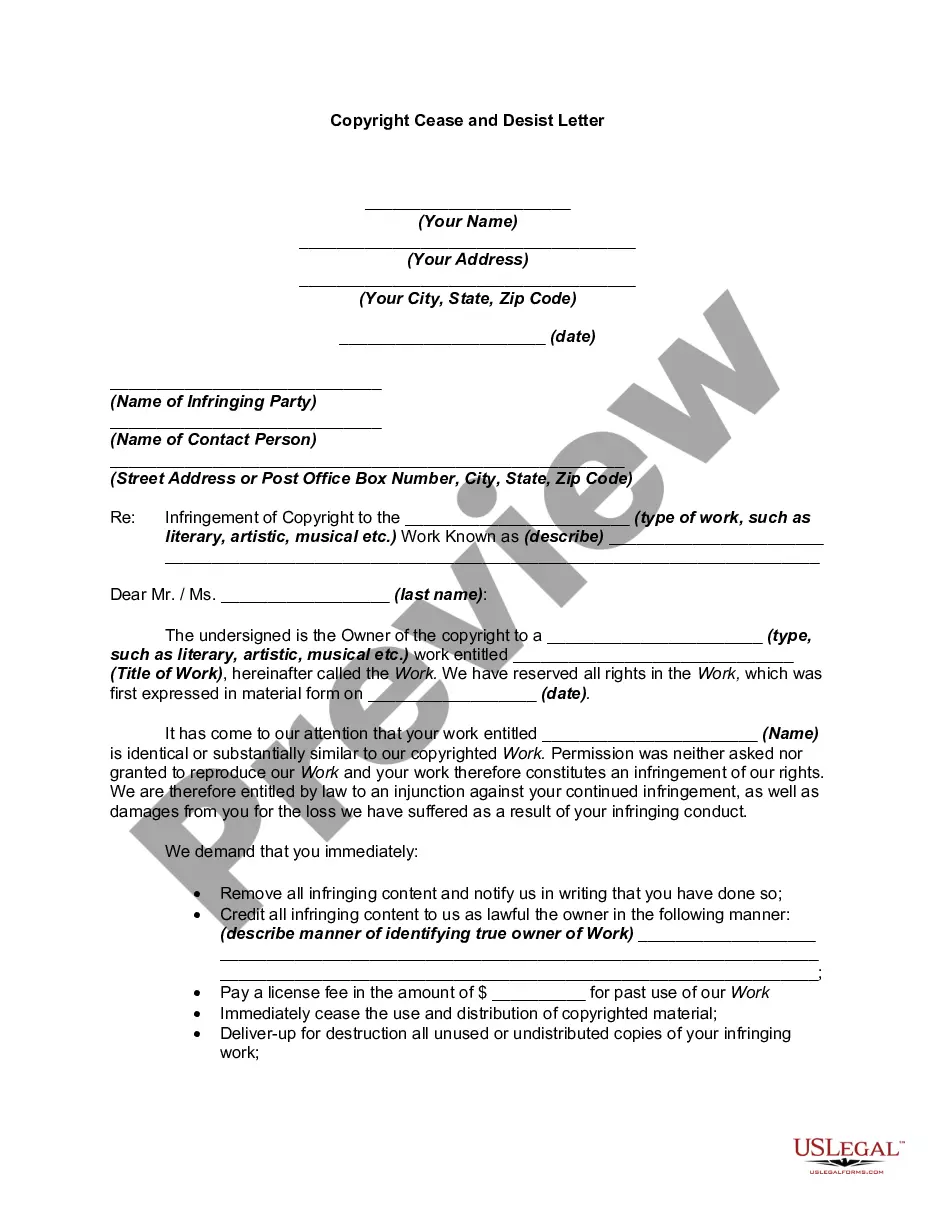
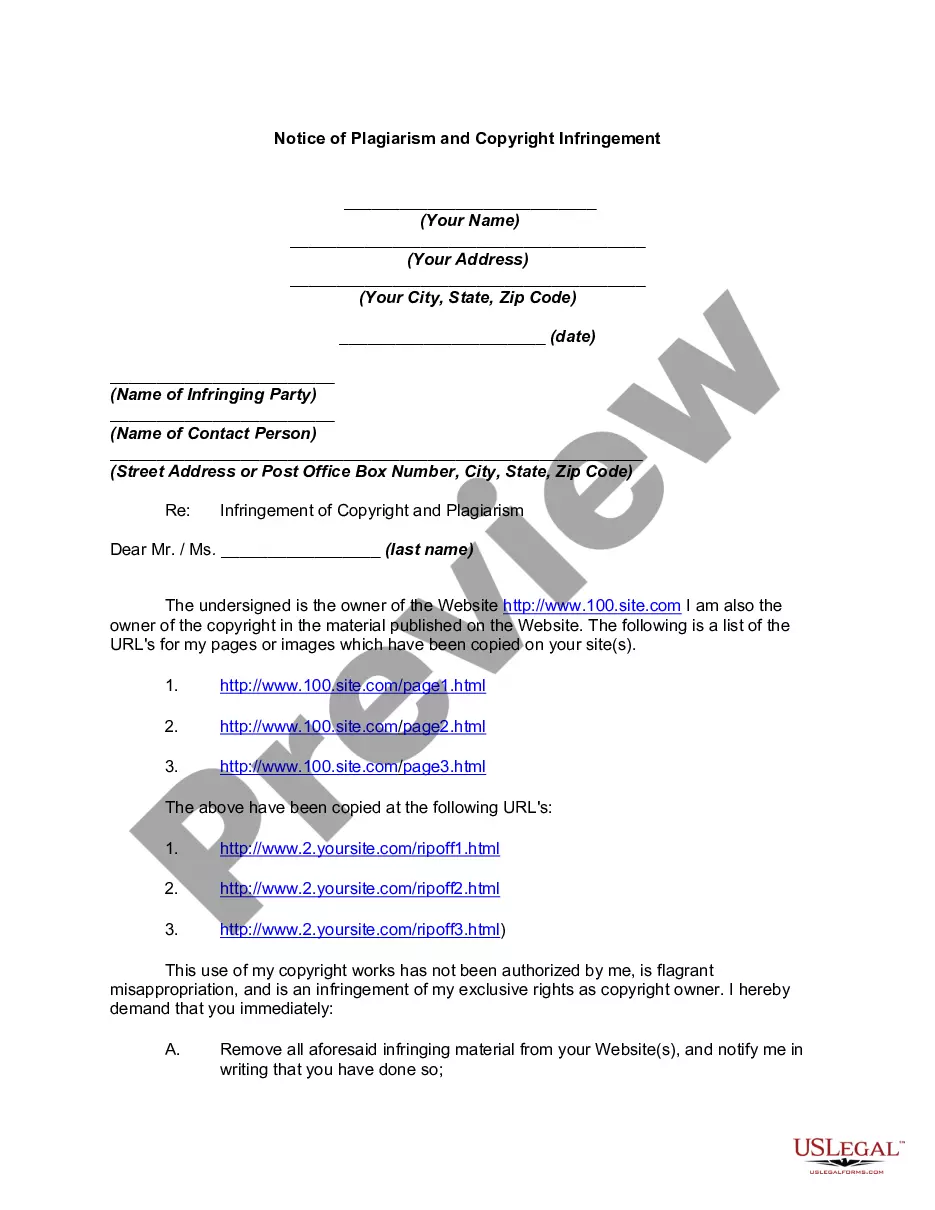
A copyright owner can sue in civil court, seeking an injunction to prohibit the defendant's further unauthorized use of copyrighted materials, as well as to recover damages. The U.S. Department of Justice can also make the case for criminal copyright infringement under specific conditions (see below).
Click on the Appeal button next to the listing deactivation record. Dispute the violation by submitting a DMCA counter-notice ( ) from the Explanation link located below the appeal form.
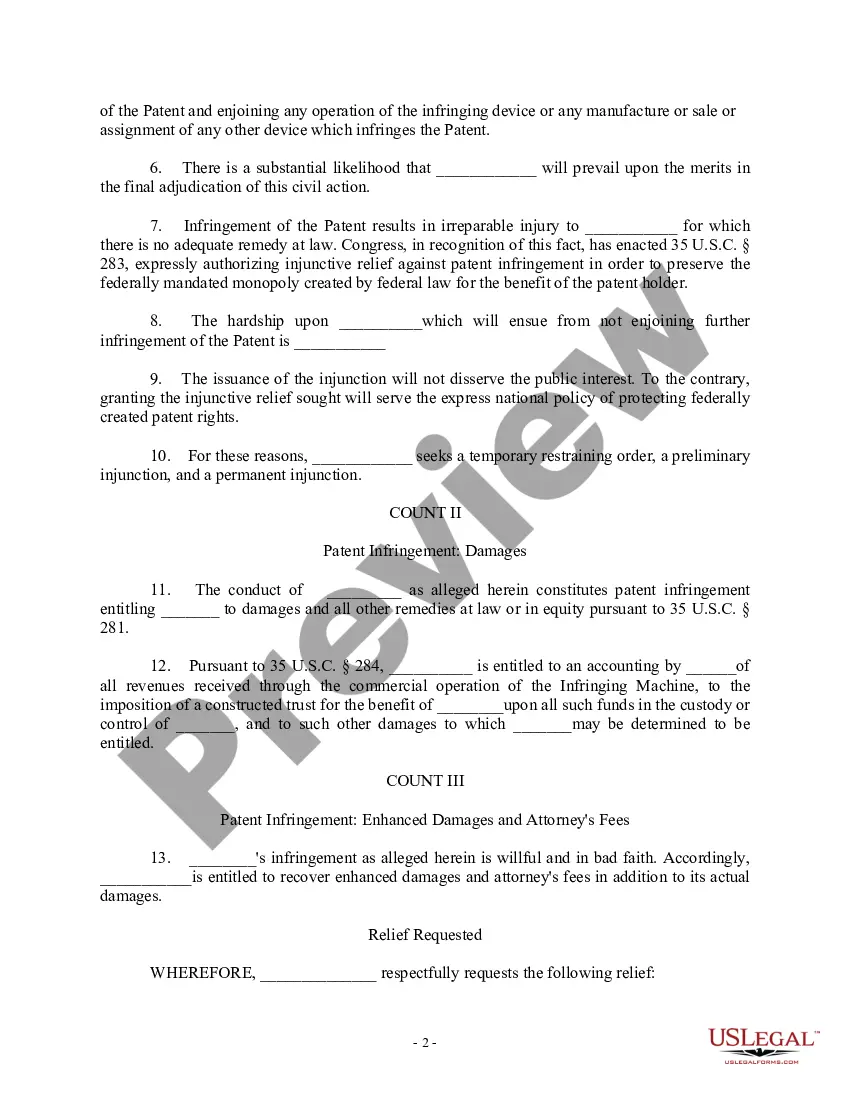
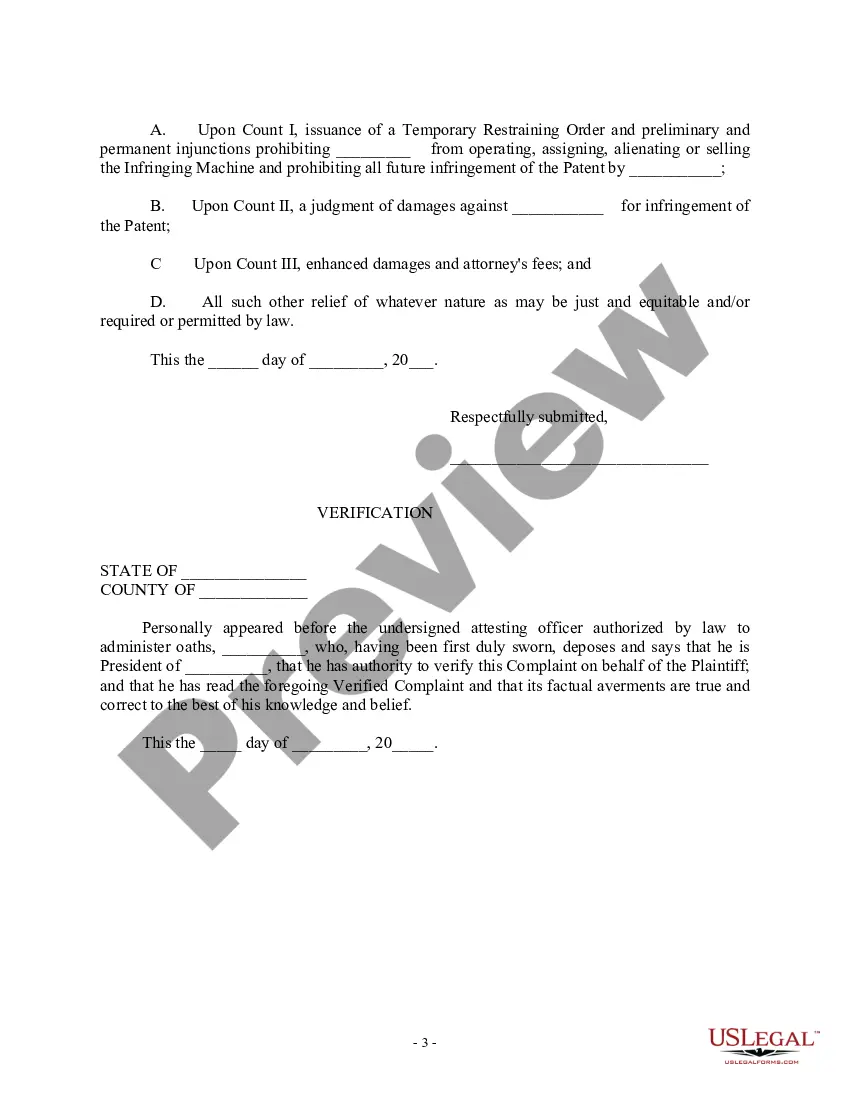
Patent infringement, or the unauthorized sale of patented goods, occurs when there is an unapproved use of a product that is patented. It may include: The making, manufacturing, or production of a patented good. Using a patented product in any way for profit or gain.
A patent holder must sue the unauthorized party in federal district court. The patent holder can sue in any federal court where the infringed product is found. Patent lawsuits are time-consuming. Depending on where you live, these suits can take years to get to trial.
Getting Started in Litigation Your attorney will file a formal complaint in federal court, explaining how the defendant has infringed on your patent. Together with your attorney, you will need to compile evidence of your ownership of the patent and the infringement.
Your counsel should be a Registered Patent Attorney. Many attorneys who handle patent cases are not Registered Patent Attorneys. Registered Patent Attorneys have science and engineering degrees and have been admitted to the Patent Bar in addition to their State Bar.
Contact the person or company who sent you the notice. This could be Amazon, the intellectual property owner, or their agent and find out why you are in violation. Be nice and courteous with them, your reputation is at stake here. Remember not all lawyers bite, and those that do, bite them back.
If a patent holder believes that another party has infringed upon their patent and chooses to litigate, they will file a civil lawsuit in a U.S. district court.
Start by identifying the potential infringement, consult with a patent lawyer, potentially send a cease and desist letter, and if necessary, file a patent infringement lawsuit. Each step is crucial in effectively protecting your intellectual property rights and preventing further unauthorized use of your invention.