Patent Infringement In India In Michigan
Description

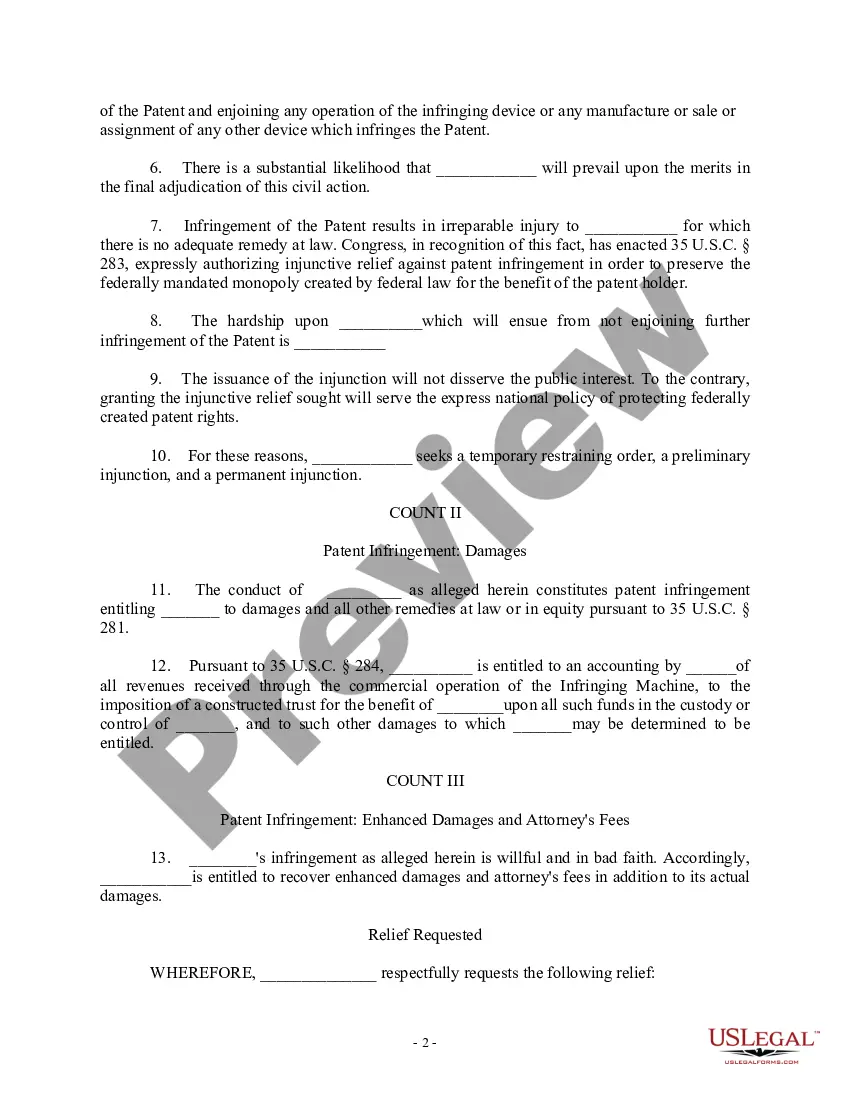
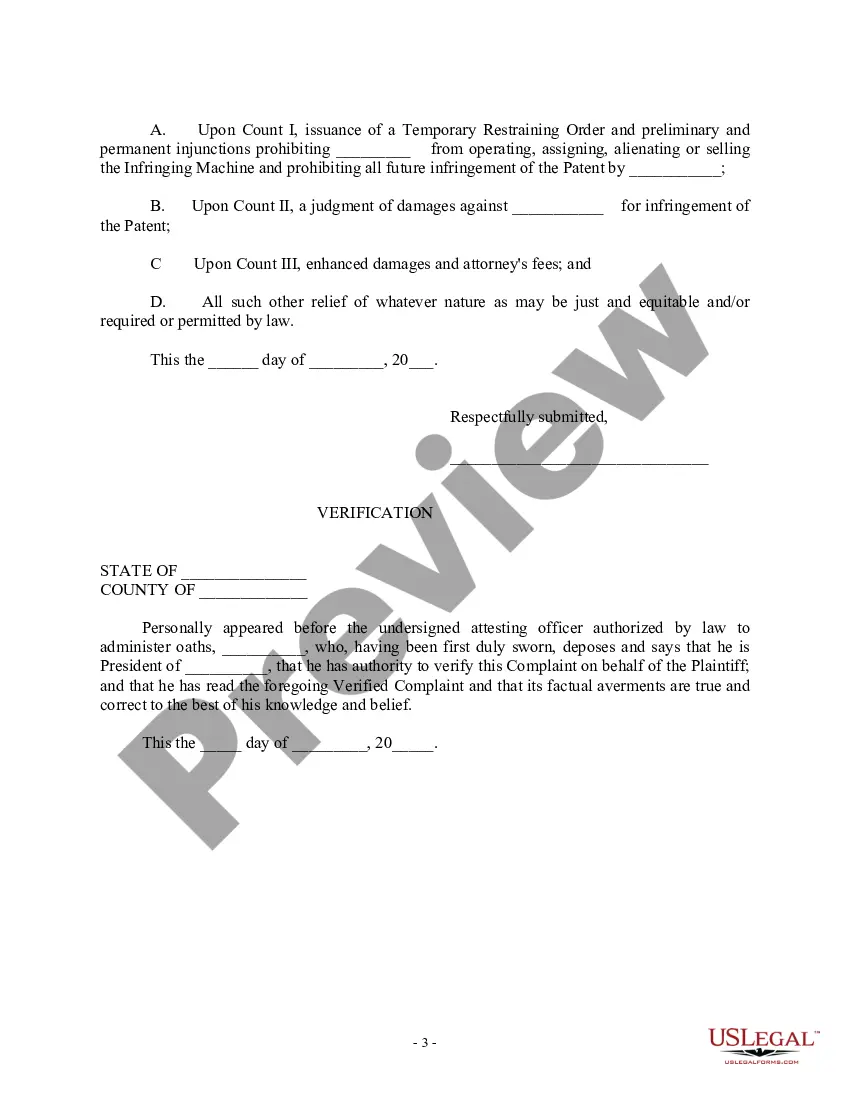

Get your form ready online
Our built-in tools help you complete, sign, share, and store your documents in one place.
Make edits, fill in missing information, and update formatting in US Legal Forms—just like you would in MS Word.
Download a copy, print it, send it by email, or mail it via USPS—whatever works best for your next step.
Sign and collect signatures with our SignNow integration. Send to multiple recipients, set reminders, and more. Go Premium to unlock E-Sign.
If this form requires notarization, complete it online through a secure video call—no need to meet a notary in person or wait for an appointment.
We protect your documents and personal data by following strict security and privacy standards.

Make edits, fill in missing information, and update formatting in US Legal Forms—just like you would in MS Word.

Download a copy, print it, send it by email, or mail it via USPS—whatever works best for your next step.

Sign and collect signatures with our SignNow integration. Send to multiple recipients, set reminders, and more. Go Premium to unlock E-Sign.

If this form requires notarization, complete it online through a secure video call—no need to meet a notary in person or wait for an appointment.

We protect your documents and personal data by following strict security and privacy standards.
Looking for another form?








Form popularity
FAQ
If a patent holder believes that another party has infringed upon their patent and chooses to litigate, they will file a civil lawsuit in a U.S. district court.
Jurisdiction for Patent Litigation matters in India As per Section 104, a person filing a suit for infringement of patent or for declaration under Section 105 or seeking any relief under Section 106, shall do so in a “district court” having jurisdiction to try the suit.
4. Does Indian Patent give protection worldwide? No. Patent protection is a territorial right and therefore it is effective only within the territory of India.
If the patent is licensed exclusively, the rights of the exclusive licensee to sue for infringement are equivalent to that of the patentee. The exclusive licensee must make the patentee a party to the proceedings either as a plaintiff or defendant.
The infringement analysis is a two-step inquiry. First, the Court must determine the scope and meaning of the claim(s) at issue as a matter of law . Second, the finder of fact must compare the accused product to the properly construed claim to determine whether there has been an infringement.
Patent infringement in India can lead to civil remedies such as injunctions, damages, or an account of profits. Criminal penalties are generally not applied, but financial liability can be substantial.
The IPR Center encourages victims to visit its website at .IPRCenter to obtain more information about the IPR Center and to report violations of intellectual property rights online or by emailing IPRCenter@dhs. You can also report IP crime by clicking on The IRP Center's “Report IP Theft” button.
Jurisdiction for Patent Litigation matters in India As per Section 104, a person filing a suit for infringement of patent or for declaration under Section 105 or seeking any relief under Section 106, shall do so in a “district court” having jurisdiction to try the suit.
Patents are territorial rights. In general, an application for a patent must be filed, and the patent granted and enforced, in each country in which you seek patent protection for your invention, in ance with the law of that country.