Patent Infringement In Europe In Miami-Dade
Description

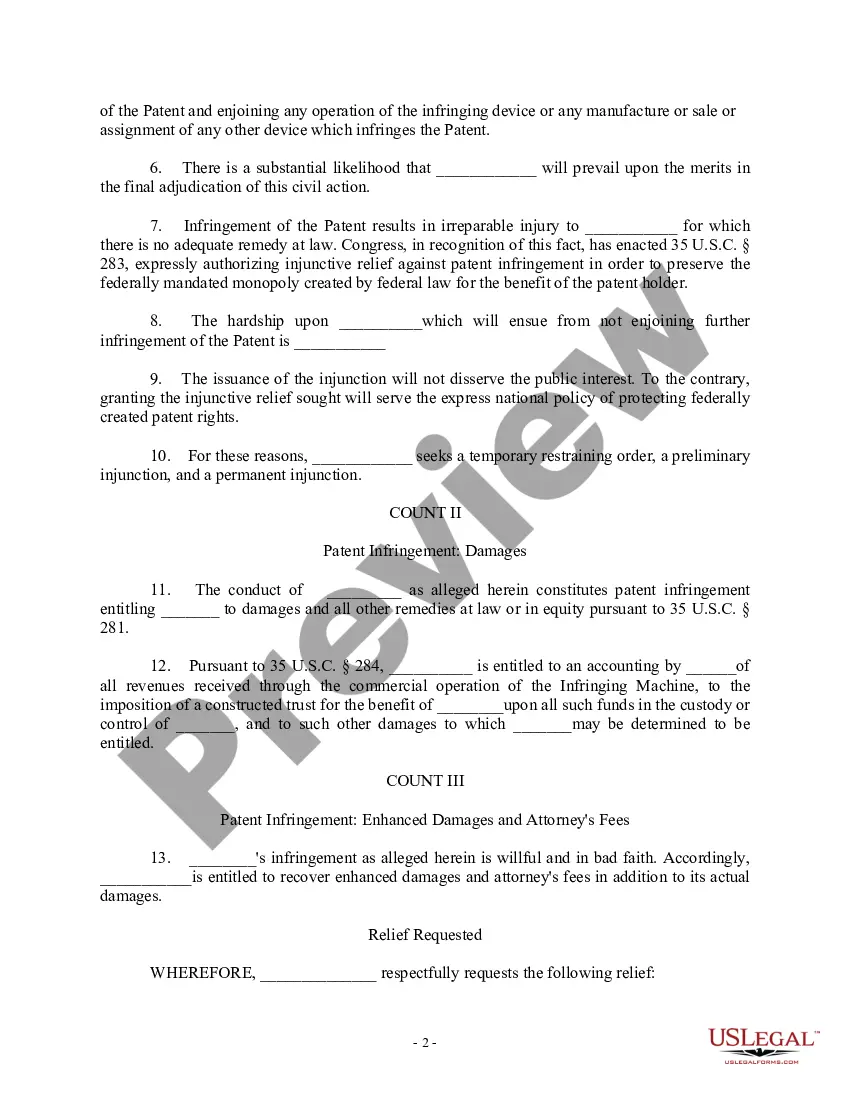
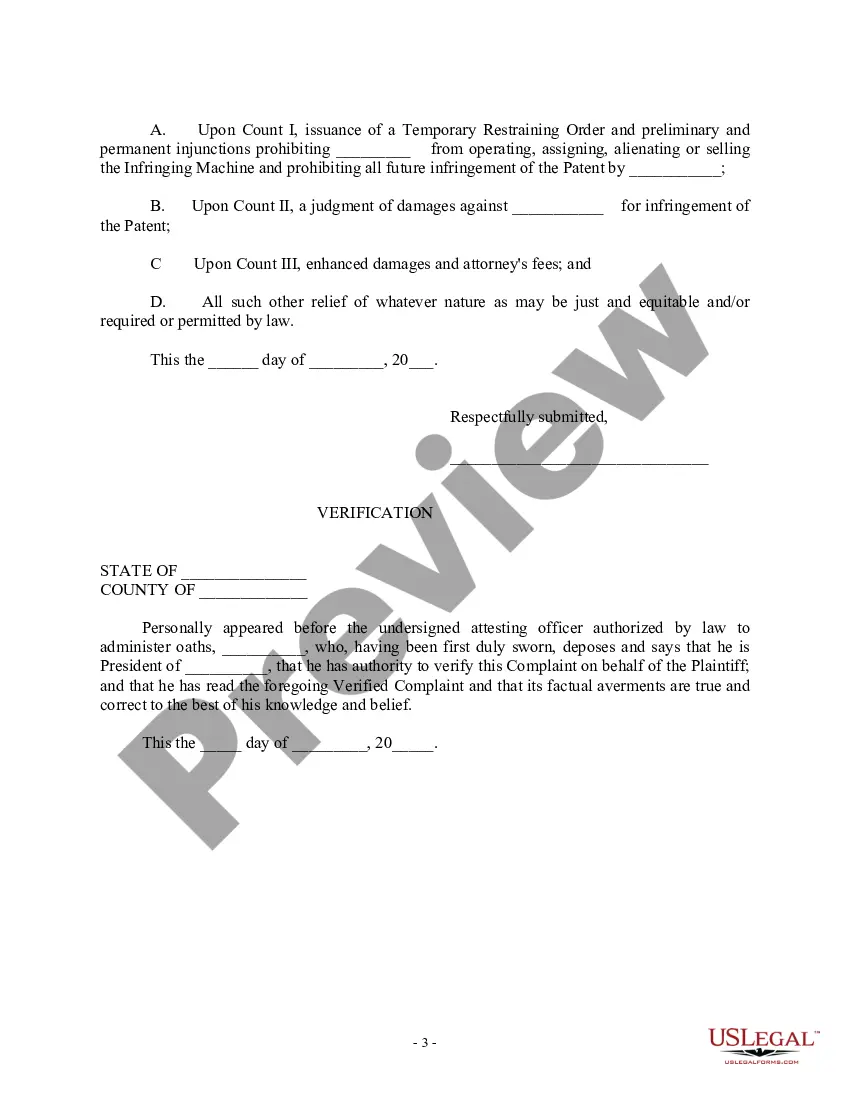
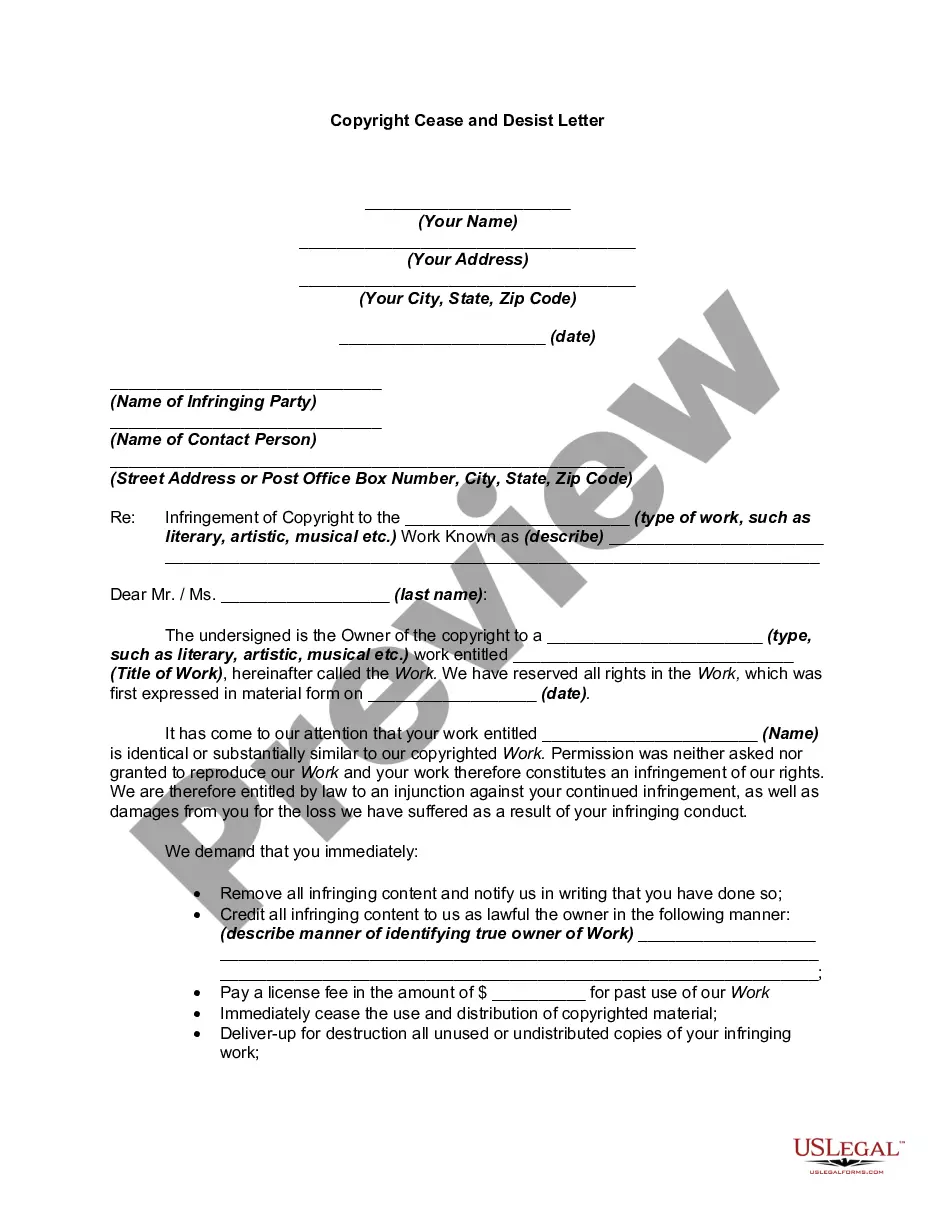
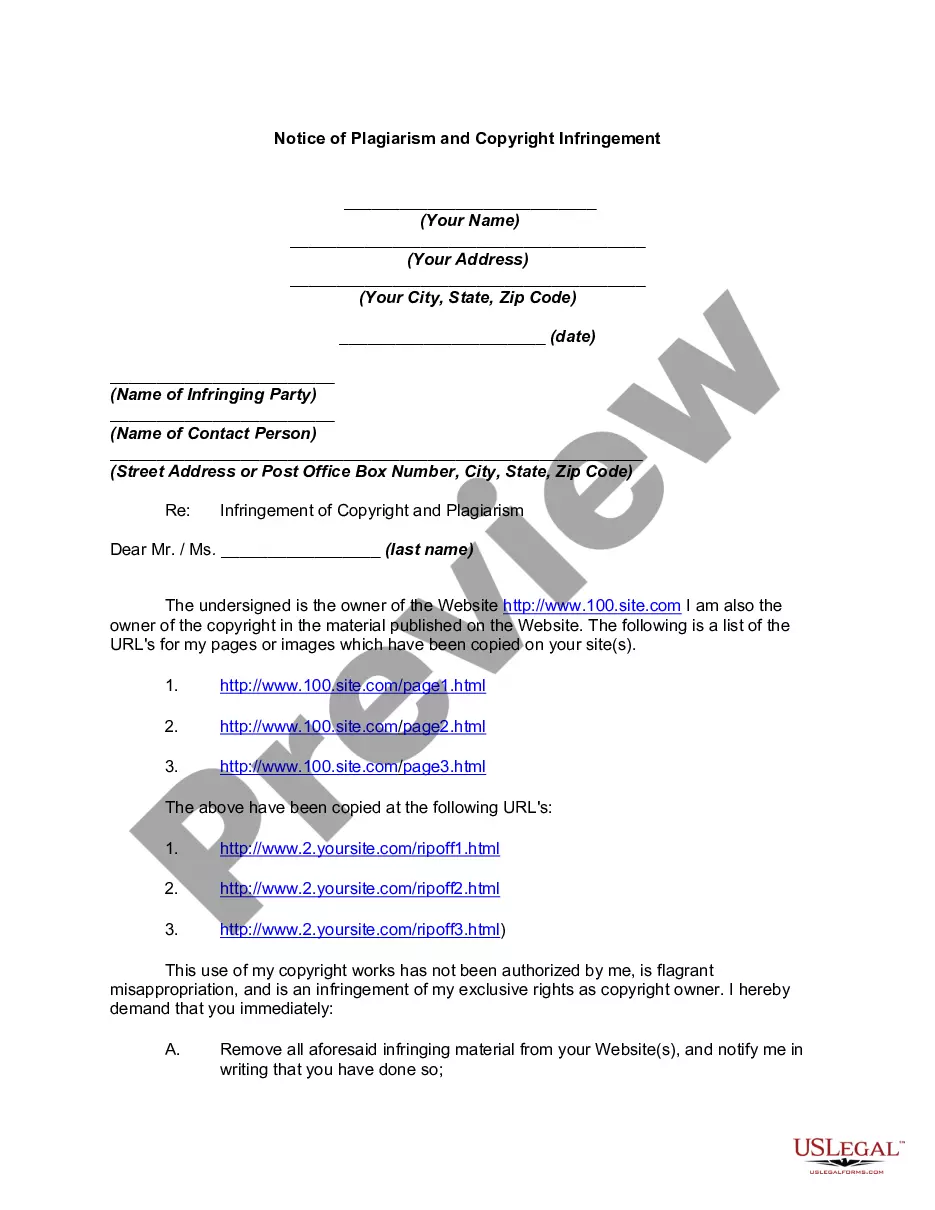
Get your form ready online
Our built-in tools help you complete, sign, share, and store your documents in one place.
Make edits, fill in missing information, and update formatting in US Legal Forms—just like you would in MS Word.
Download a copy, print it, send it by email, or mail it via USPS—whatever works best for your next step.
Sign and collect signatures with our SignNow integration. Send to multiple recipients, set reminders, and more. Go Premium to unlock E-Sign.
If this form requires notarization, complete it online through a secure video call—no need to meet a notary in person or wait for an appointment.
We protect your documents and personal data by following strict security and privacy standards.

Make edits, fill in missing information, and update formatting in US Legal Forms—just like you would in MS Word.

Download a copy, print it, send it by email, or mail it via USPS—whatever works best for your next step.

Sign and collect signatures with our SignNow integration. Send to multiple recipients, set reminders, and more. Go Premium to unlock E-Sign.

If this form requires notarization, complete it online through a secure video call—no need to meet a notary in person or wait for an appointment.

We protect your documents and personal data by following strict security and privacy standards.
Looking for another form?



Form popularity
FAQ
Jurisdiction for Patent Litigation matters in India As per Section 104, a person filing a suit for infringement of patent or for declaration under Section 105 or seeking any relief under Section 106, shall do so in a “district court” having jurisdiction to try the suit.
A U.S. patent holder can block importation and sale of an infringing machine, manufacture or composition of matter in the U.S. and can sue for damages. Suit can be brought against foreign companies in U.S. federal court, so long as the patent holder can serve the infringer.
Since the rights granted by a U.S. patent extend only throughout the territory of the United States and have no effect in a foreign country, an inventor who wishes patent protection in other countries must apply for a patent in each of the other countries or in regional patent offices.
All that is necessary is that the copying be substantial and material and that protected expression – not just ideas – were copied. Likewise, the similarity between the two works must be similarity of protected elements (the expression), not unprotected elements (the facts, ideas, etc.).
A patent owner can file a civil lawsuit to recover damages for past infringement and obtain injunctions against further infringing activities. Proving patent infringement in court requires a plaintiff to prove two broad elements: ownership and validity of the patent, and infringement of the patent by the defendant.
The technical nature of patent litigation means that experiments are often an essential (and sometimes the only) way to prove key aspects of infringement (or, more unusually, invalidity), particularly in life sciences-related cases.
Literal Infringement Literal infringement takes place when a product or process exactly matches the patent claims. To determine literal infringement, each element of the patented claim must be present in the accused product or process. If any element is missing, it is not considered literal infringement.
A patent owner can file a civil lawsuit to recover damages for past infringement and obtain injunctions against further infringing activities. Proving patent infringement in court requires a plaintiff to prove two broad elements: ownership and validity of the patent, and infringement of the patent by the defendant.
Since the rights granted by a U.S. patent extend only throughout the territory of the United States and have no effect in a foreign country, an inventor who wishes patent protection in other countries must apply for a patent in each of the other countries or in regional patent offices.
Should you wish to submit an anonymous report verbally, you may call the IPR Center Hotline at 1-866-IPR-2060 or 1-866-477-2060.