Patent Infringement On Amazon In Florida
Description

Get your form ready online
Our built-in tools help you complete, sign, share, and store your documents in one place.
Make edits, fill in missing information, and update formatting in US Legal Forms—just like you would in MS Word.
Download a copy, print it, send it by email, or mail it via USPS—whatever works best for your next step.
Sign and collect signatures with our SignNow integration. Send to multiple recipients, set reminders, and more. Go Premium to unlock E-Sign.
If this form requires notarization, complete it online through a secure video call—no need to meet a notary in person or wait for an appointment.
We protect your documents and personal data by following strict security and privacy standards.

Make edits, fill in missing information, and update formatting in US Legal Forms—just like you would in MS Word.

Download a copy, print it, send it by email, or mail it via USPS—whatever works best for your next step.

Sign and collect signatures with our SignNow integration. Send to multiple recipients, set reminders, and more. Go Premium to unlock E-Sign.

If this form requires notarization, complete it online through a secure video call—no need to meet a notary in person or wait for an appointment.

We protect your documents and personal data by following strict security and privacy standards.
Looking for another form?


Form popularity
FAQ
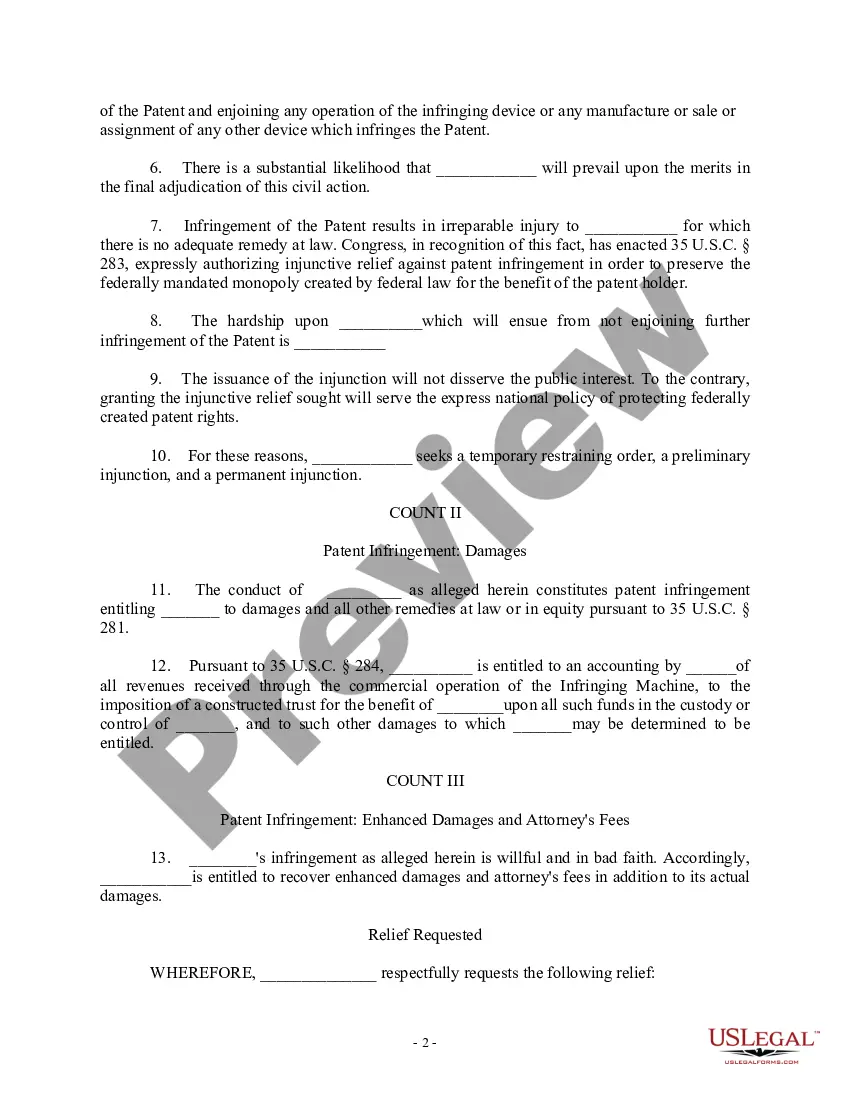
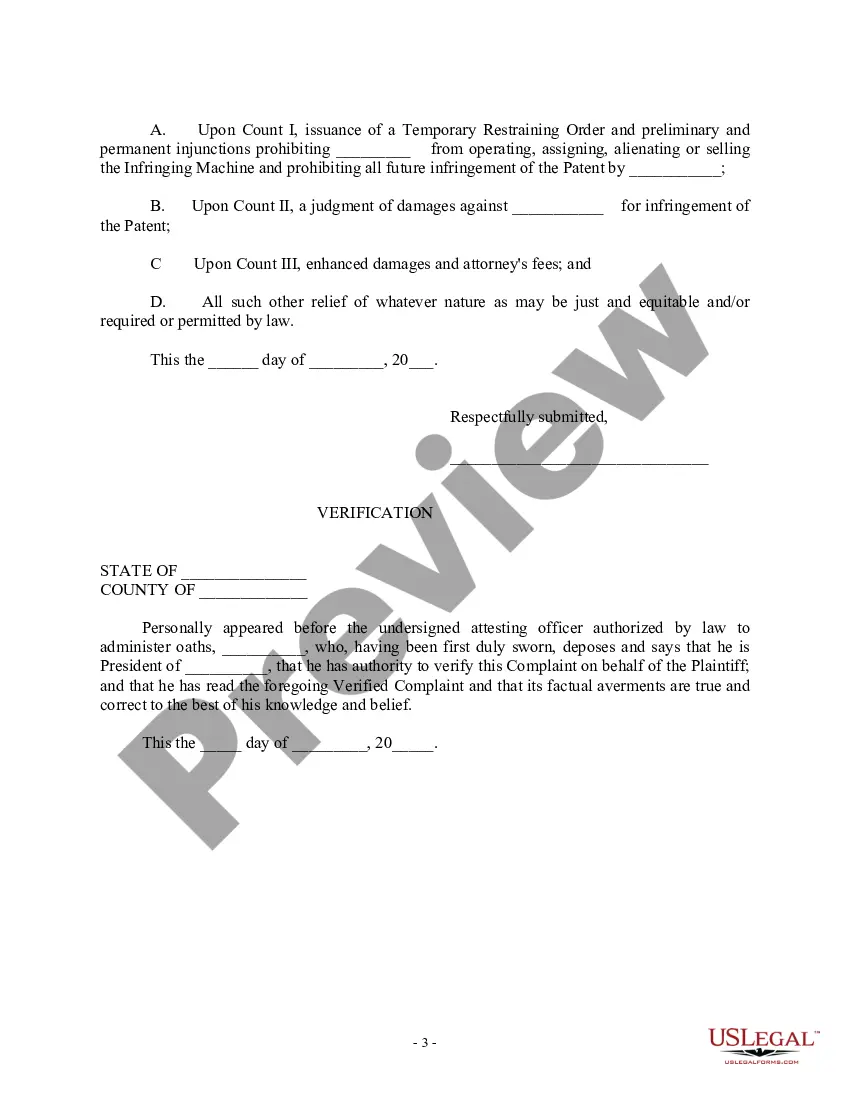
Getting Started in Litigation Your attorney will file a formal complaint in federal court, explaining how the defendant has infringed on your patent. Together with your attorney, you will need to compile evidence of your ownership of the patent and the infringement.
Even Amazon itself isn't immune to claims of patent infringement. While the company is typically protected from liability when third-party sellers advertise counterfeit products, Williams-Sonoma filed a lawsuit against Amazon for alleged direct violation of its patents.
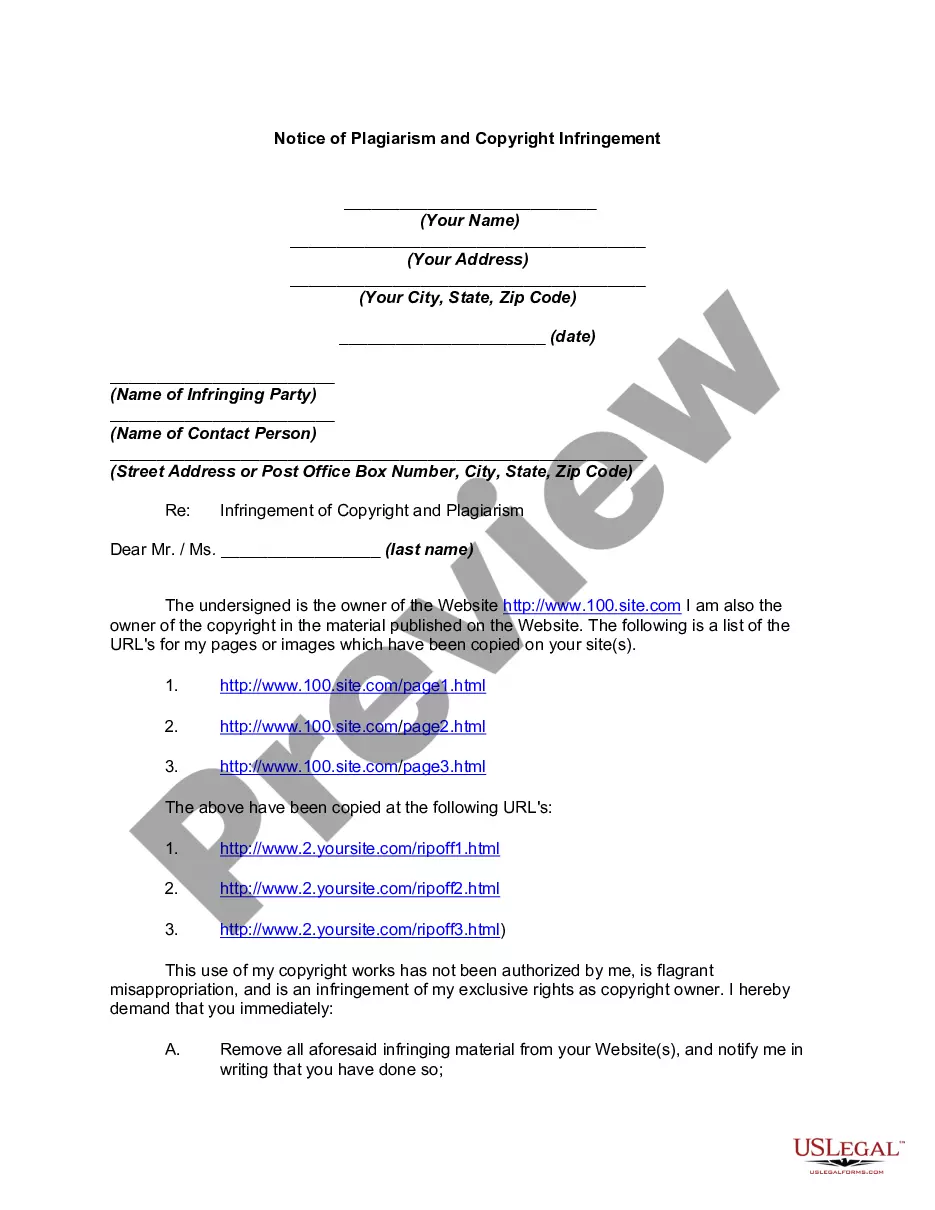
The key for Amazon sellers to avoid copyright infringement issues is to utilize only original content with all aspects of their products. A common pitfall for Amazon sellers is copying and pasting content from other websites or products (e.g., pictures or descriptions) for use on their own materials.
Identity of the Infringer This may be a particularly easy process if there is only one specific individual who has infringed on your patent. It can become much more complicated, however, when there are multiple individuals and businesses involved.
Here's a comprehensive step-by-step guide on how to respond to false claims of copyright infringement made by competitors on Amazon: Review the Claim Details. Assess the Validity of the Claim. Gather Evidence to Support Your Defense. Communicate with Amazon. Submit a Counter-Notice. Engage in Dialogue with the Claimant.
Prepare a Counter-Notice This could include invoices, images, or other documents that prove your innocence. Then, write a letter stating that you have been wrongly accused of copyright infringement. It should be written ing to Amazon's guidelines to prevent your counter-notice from getting declined.
Click on the Appeal button next to the listing deactivation record. Dispute the violation by submitting a DMCA counter-notice ( ) from the Explanation link located below the appeal form.
Contact the person or company who sent you the notice. This could be Amazon, the intellectual property owner, or their agent and find out why you are in violation. Be nice and courteous with them, your reputation is at stake here. Remember not all lawyers bite, and those that do, bite them back.
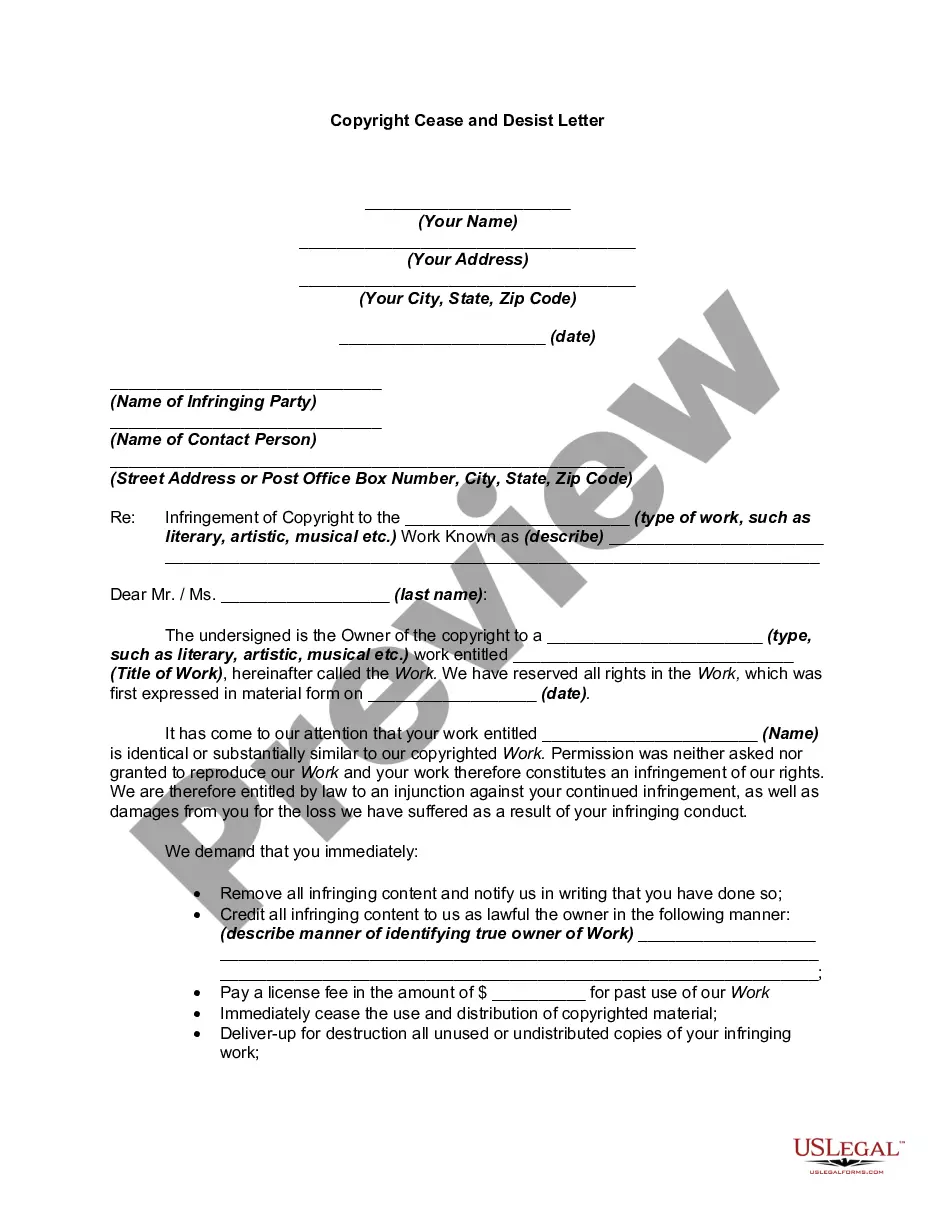
Copyright infringement is violating an owner's exclusive rights to a work of art, granted by the federal Copyright Act, by the use of protected works without permission. The use of copyrighted works is unauthorized unless consent is given by the owner.