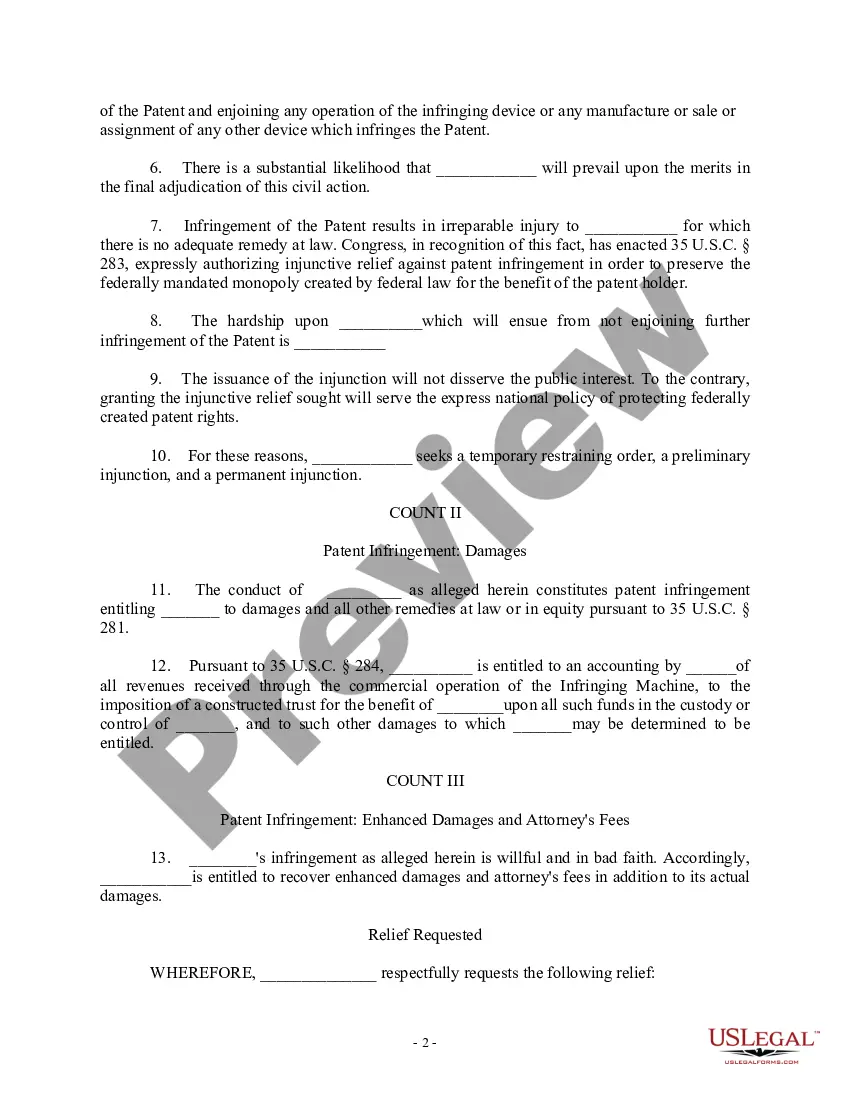
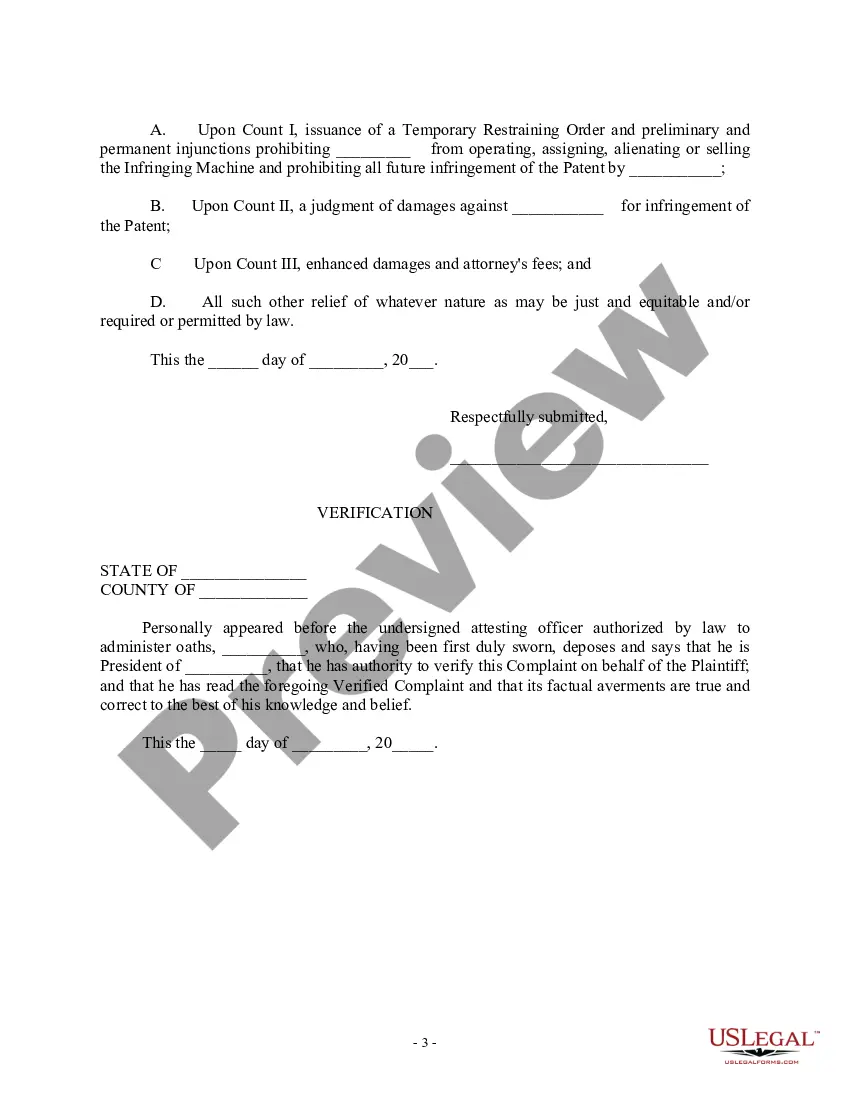
Patent Infringement In Pharmaceutical Industry In Alameda
Description



Get your form ready online
Our built-in tools help you complete, sign, share, and store your documents in one place.
Make edits, fill in missing information, and update formatting in US Legal Forms—just like you would in MS Word.
Download a copy, print it, send it by email, or mail it via USPS—whatever works best for your next step.
Sign and collect signatures with our SignNow integration. Send to multiple recipients, set reminders, and more. Go Premium to unlock E-Sign.
If this form requires notarization, complete it online through a secure video call—no need to meet a notary in person or wait for an appointment.
We protect your documents and personal data by following strict security and privacy standards.

Make edits, fill in missing information, and update formatting in US Legal Forms—just like you would in MS Word.

Download a copy, print it, send it by email, or mail it via USPS—whatever works best for your next step.

Sign and collect signatures with our SignNow integration. Send to multiple recipients, set reminders, and more. Go Premium to unlock E-Sign.

If this form requires notarization, complete it online through a secure video call—no need to meet a notary in person or wait for an appointment.

We protect your documents and personal data by following strict security and privacy standards.
Looking for another form?
Form popularity
FAQ
As part of the terms of granting the patent to the inventor, patents are published into the public domain.
Getting Started in Litigation Your attorney will file a formal complaint in federal court, explaining how the defendant has infringed on your patent. Together with your attorney, you will need to compile evidence of your ownership of the patent and the infringement.
A “freedom to operate” search can identify whether your invention infringes on another inventor's existing patent. To determine whether you're risking infringement, you need to conduct what is known as a “freedom to operate” search, or FTO.
You can find the prosecution history in the Patent Center. After you enter the application, click on “Documents & Transactions” on the left-hand side. On the right side, click on all of the documents and you can download all of the communications between the inventor and the examiner.
There are three steps involved: Discovering the details of the accused activity; Studying the claims of the patent; and. Comparing the accused activity to the patent claims.
Patent infringement lawsuits are heard almost exclusively in the federal district courts, while appeals in patent infringement cases are heard exclusively by the federal appellate courts—and since 1982, the U.S. Court of Appeals for the Federal Circuit.