Event Planning Agreement Template Without Surveyor In Sacramento
Description

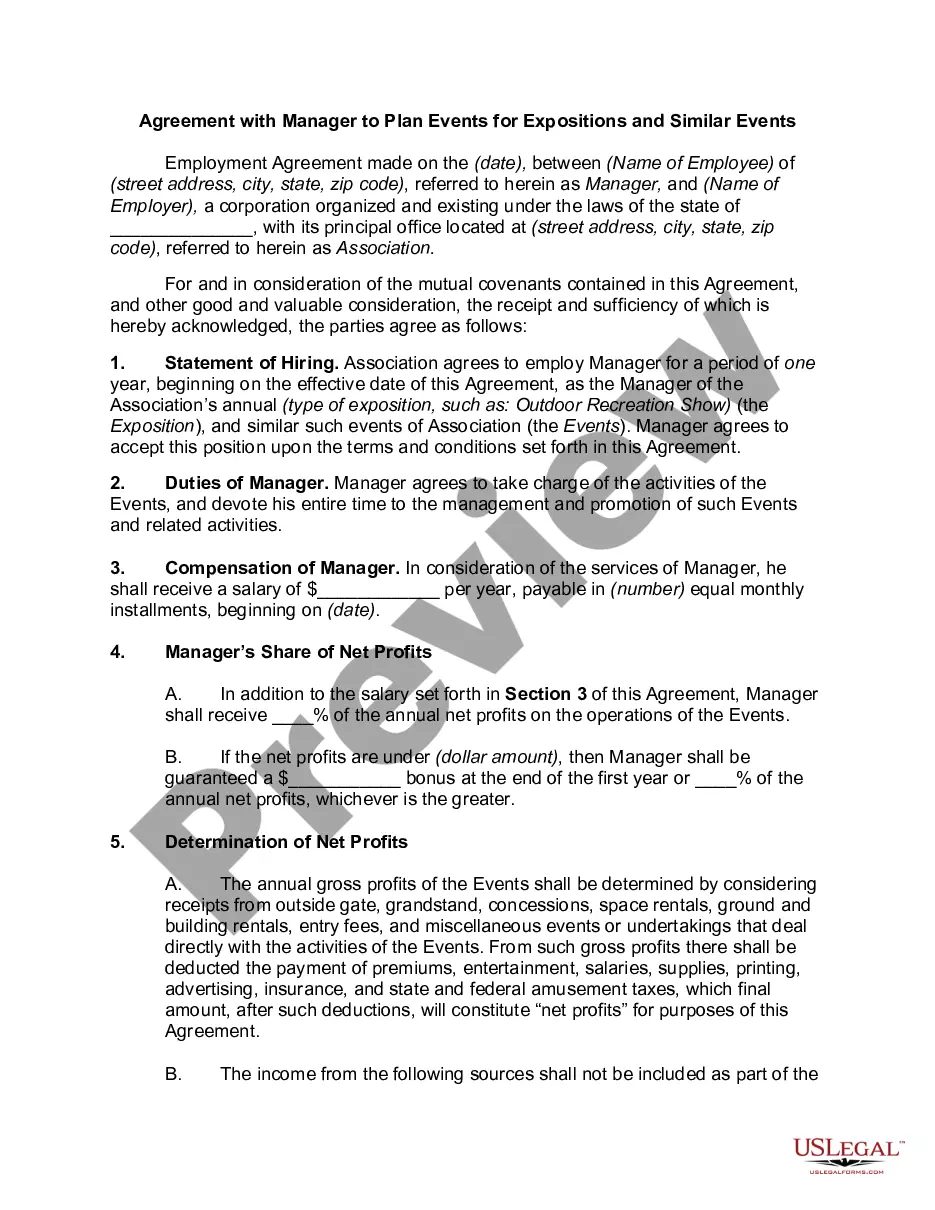
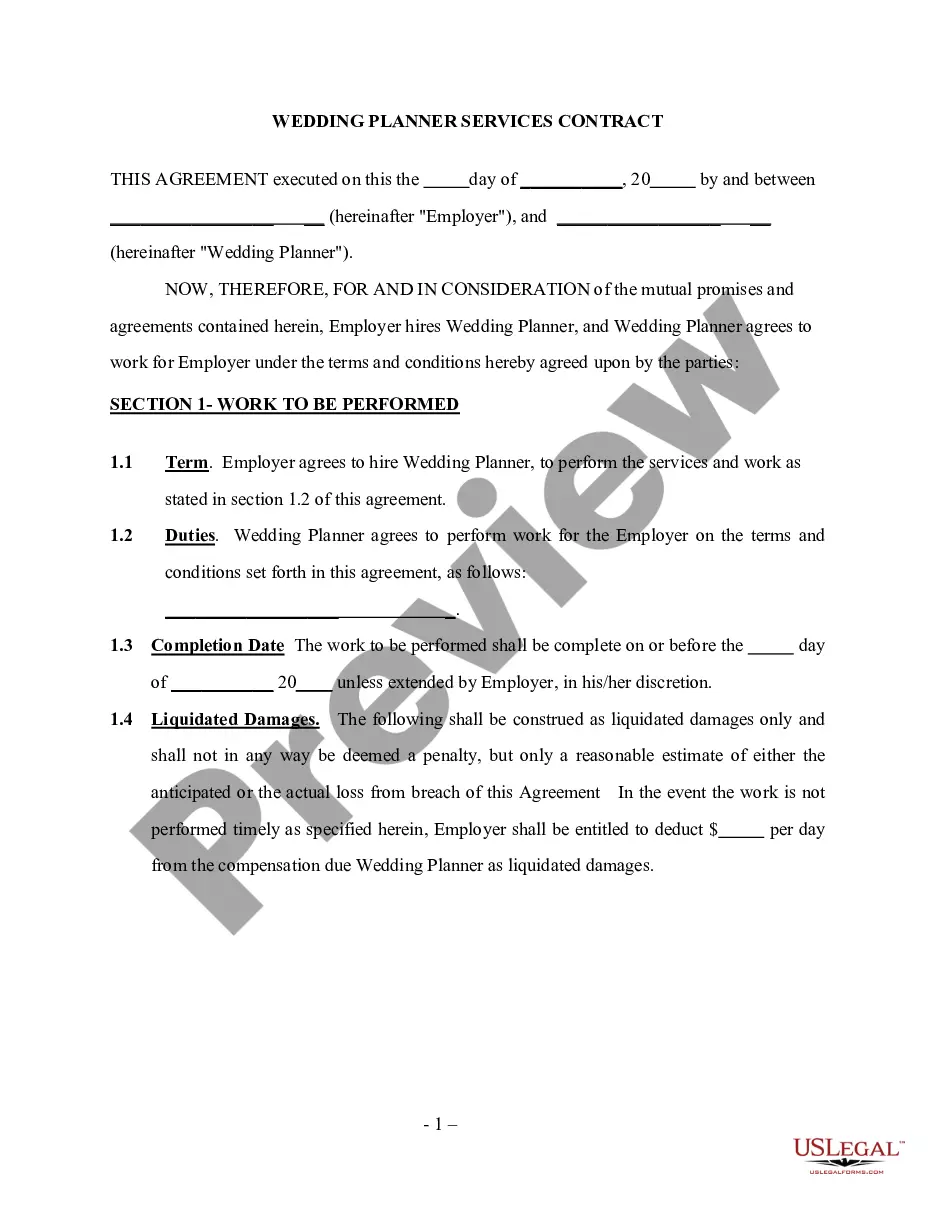
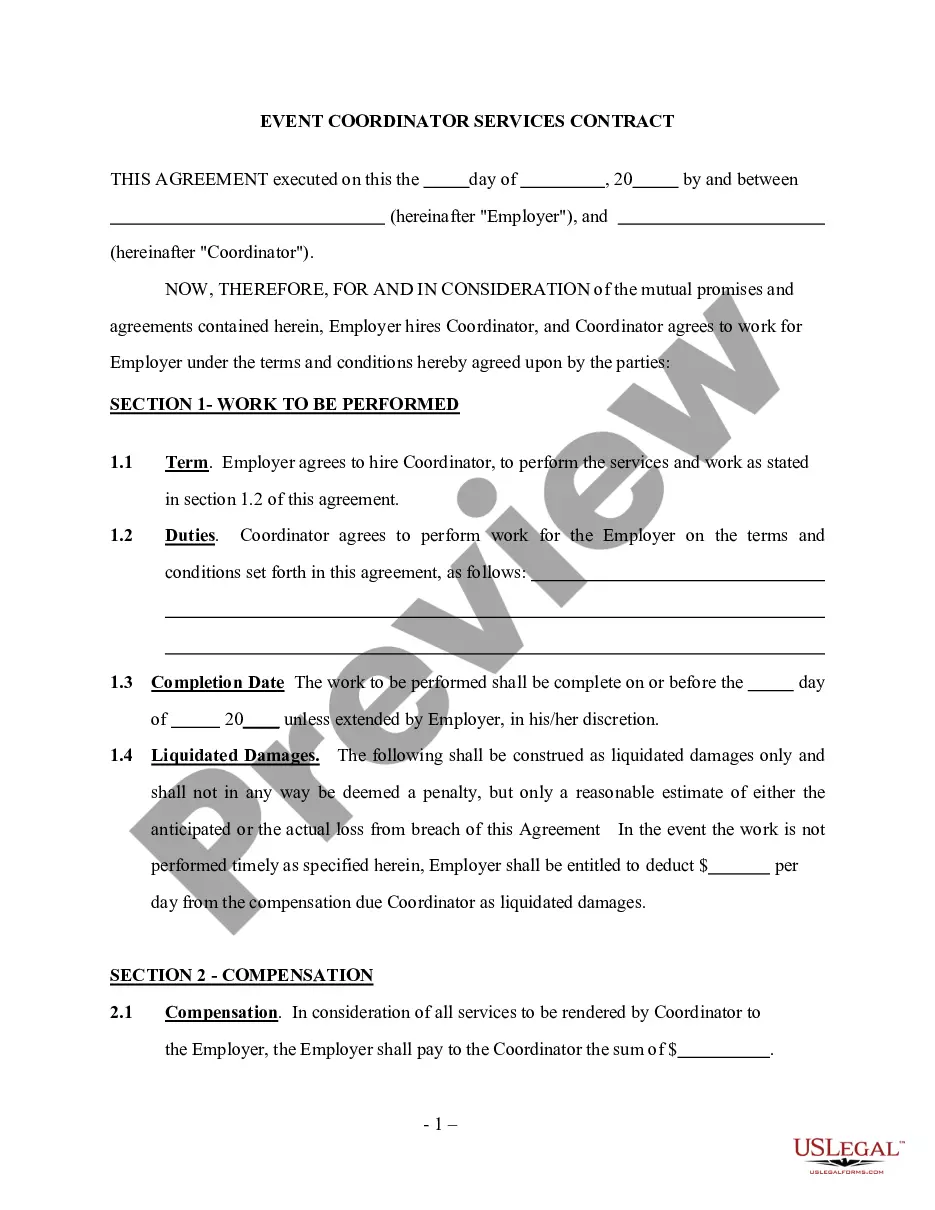
Get your form ready online
Our built-in tools help you complete, sign, share, and store your documents in one place.
Make edits, fill in missing information, and update formatting in US Legal Forms—just like you would in MS Word.
Download a copy, print it, send it by email, or mail it via USPS—whatever works best for your next step.
Sign and collect signatures with our SignNow integration. Send to multiple recipients, set reminders, and more. Go Premium to unlock E-Sign.
If this form requires notarization, complete it online through a secure video call—no need to meet a notary in person or wait for an appointment.
We protect your documents and personal data by following strict security and privacy standards.

Make edits, fill in missing information, and update formatting in US Legal Forms—just like you would in MS Word.

Download a copy, print it, send it by email, or mail it via USPS—whatever works best for your next step.

Sign and collect signatures with our SignNow integration. Send to multiple recipients, set reminders, and more. Go Premium to unlock E-Sign.

If this form requires notarization, complete it online through a secure video call—no need to meet a notary in person or wait for an appointment.

We protect your documents and personal data by following strict security and privacy standards.
Looking for another form?








Form popularity
FAQ
In summary, the success of an event is determined by the following five essential event management elements: concept, coordination, control, culmination, and closeout. You can ensure that your event is well-organized, well-executed, and memorable for your attendees by incorporating these elements into your planning.
How to Create a Checklist Step-by-Step Step 1: Determine the Purpose of Your Checklist. Step 2: Identify the Items to Include. Step 3: Organize the Checklist. Step 4: Define Clear Instructions. Step 5: Review and Refine the Checklist. Step 6: Test and Validate the Checklist. Step 7: Implement and Use the Checklist.
7 Steps To Planning & Managing An Event Step 1: Define Your Event Goals and Objectives. Step 2: Organize Your Team. Step 3: Set a Budget. Step 4: Choose Your Event Date and Venue. Step 5: Plan Event Details. Step 6: Market and Promote the Event. Step 7: Execute and Manage the Event.
An Event Planner can work from almost anywhere if you have a laptop, internet and mobile phone. Most important are your personality and event management skills.
You may wonder, “Can I work from home as an event planner?” The short answer is yes! It comes with unique challenges and requires a different approach to event planning, but it's possible. Keep in mind, however, that there are times when travel is inevitable.
You may wonder, “Can I work from home as an event planner?” The short answer is yes! It comes with unique challenges and requires a different approach to event planning, but it's possible. Keep in mind, however, that there are times when travel is inevitable.
Your event management plan should cover: Event goals and objectives. Individual roles and responsibilities. Volunteers and volunteer training. Budget. Date and time of the event. Event master plan. Event location. Event management software.
While there isn't really such a thing as a registered event planner in the U.S., an event planning certification will be more recognized in the industry than a certificate.
