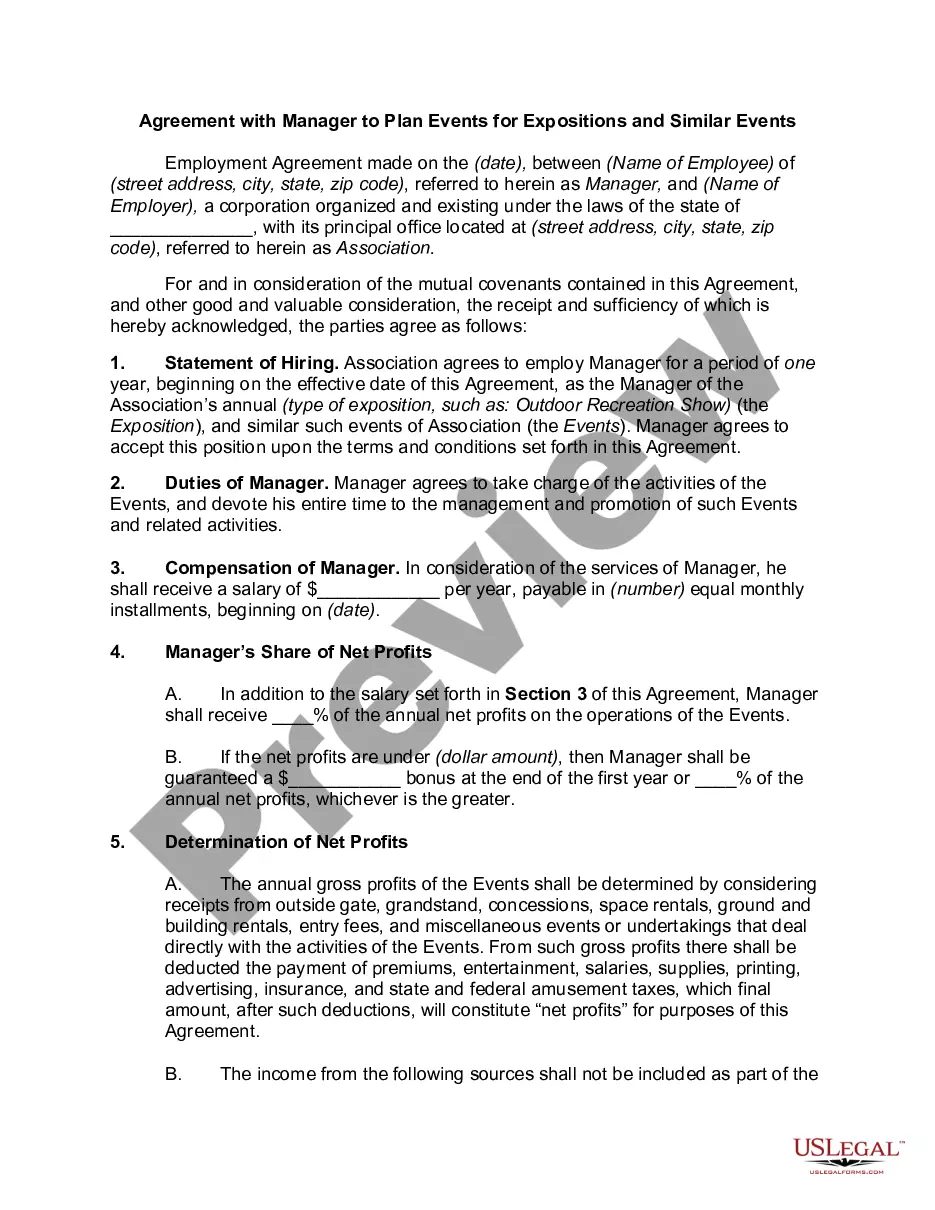
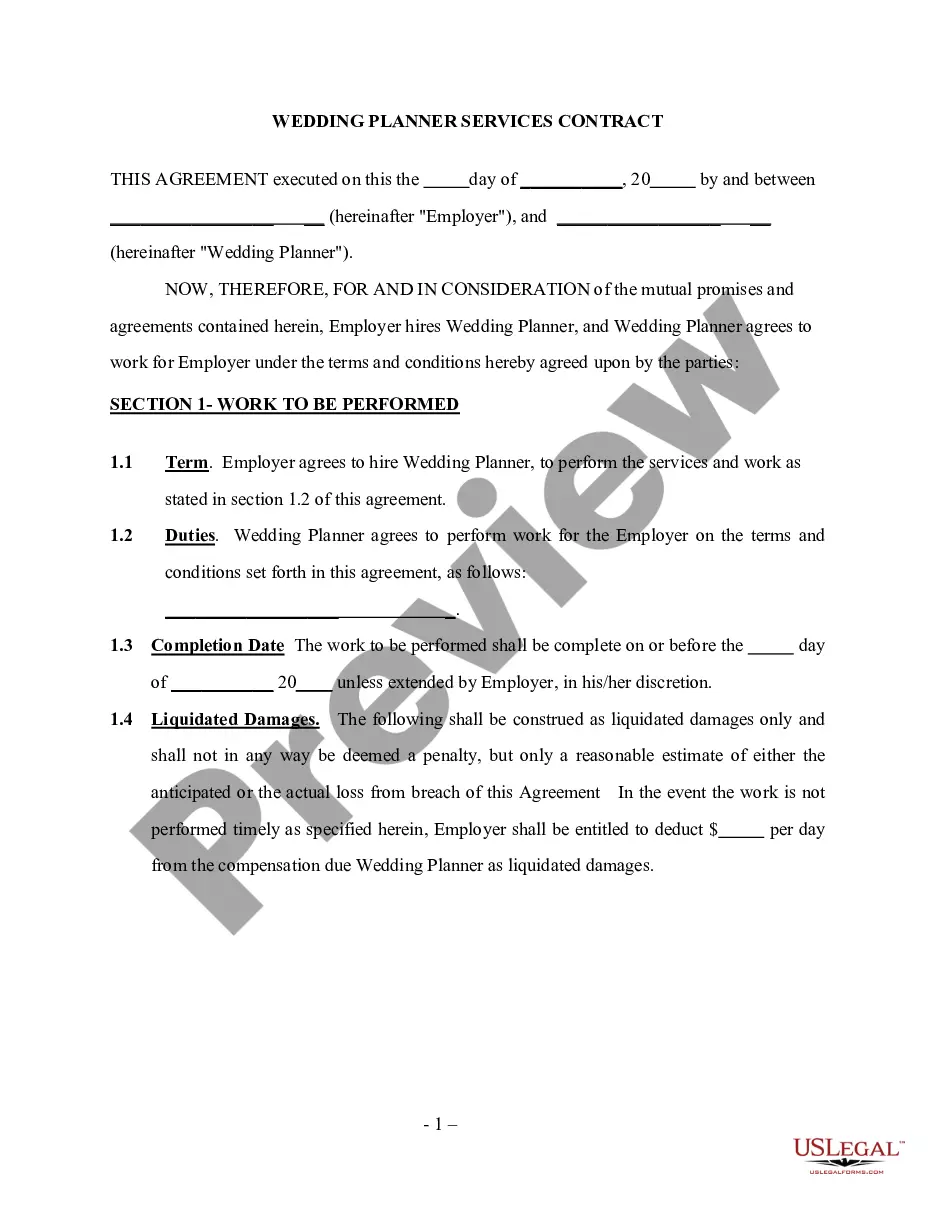
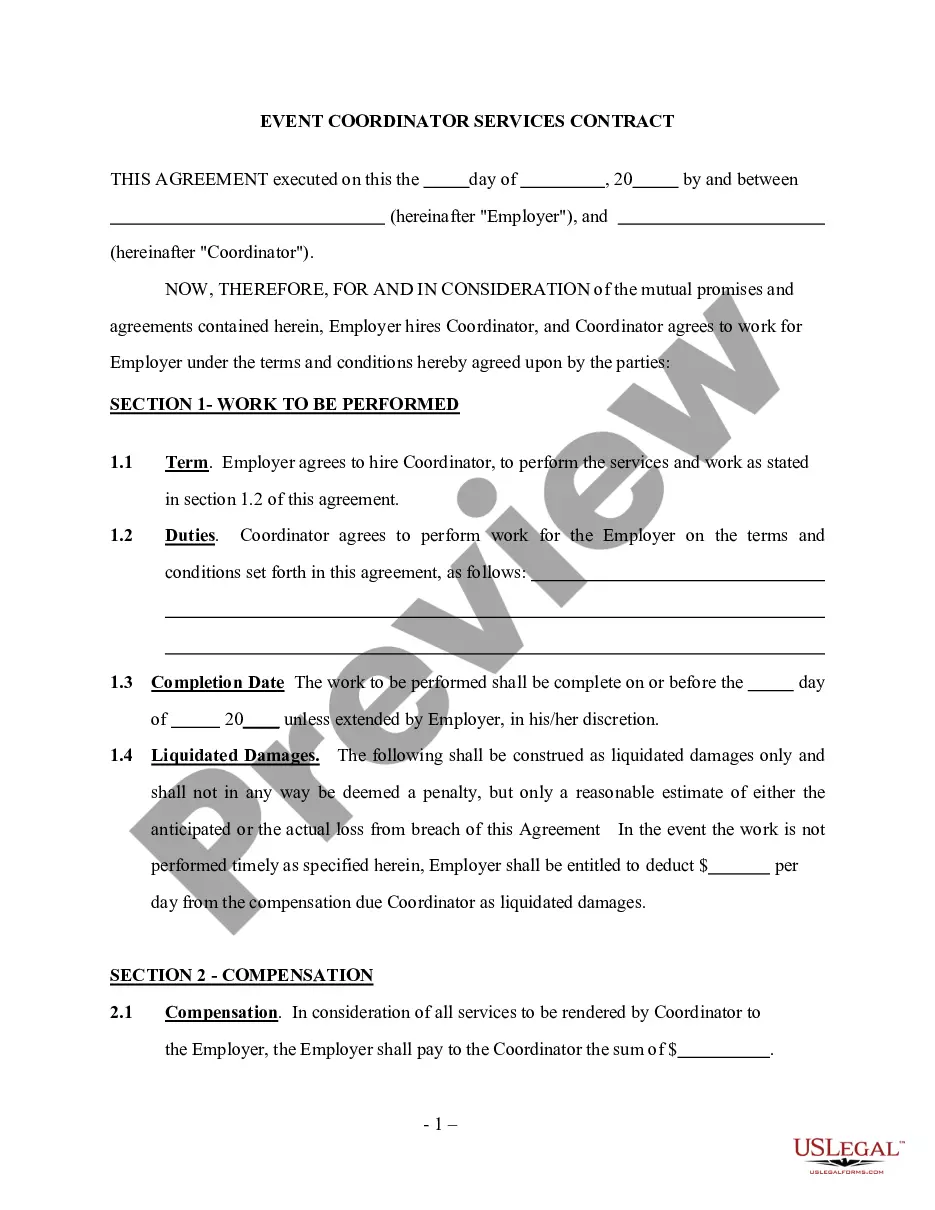
Event Planner Agreement With Hotel In Orange
Description

Get your form ready online
Our built-in tools help you complete, sign, share, and store your documents in one place.
Make edits, fill in missing information, and update formatting in US Legal Forms—just like you would in MS Word.
Download a copy, print it, send it by email, or mail it via USPS—whatever works best for your next step.
Sign and collect signatures with our SignNow integration. Send to multiple recipients, set reminders, and more. Go Premium to unlock E-Sign.
If this form requires notarization, complete it online through a secure video call—no need to meet a notary in person or wait for an appointment.
We protect your documents and personal data by following strict security and privacy standards.

Make edits, fill in missing information, and update formatting in US Legal Forms—just like you would in MS Word.

Download a copy, print it, send it by email, or mail it via USPS—whatever works best for your next step.

Sign and collect signatures with our SignNow integration. Send to multiple recipients, set reminders, and more. Go Premium to unlock E-Sign.

If this form requires notarization, complete it online through a secure video call—no need to meet a notary in person or wait for an appointment.

We protect your documents and personal data by following strict security and privacy standards.
Looking for another form?







Form popularity
FAQ
Tourism and hospitality fields focus on the management, marketing, and operations of hotels, restaurants, parks, and other attractions. Event planning - often associated with tourism and hospitality - focuses on the budgets, timelines, legalities, and logistics of planning various kinds of events.
1 Get educated. The first step to becoming a hotel event planner is to get some formal education in hospitality, event management, or a related field. 2 Gain experience. 3 Find your niche. 4 Build your network. 5 Apply for jobs. 6 Here's what else to consider.
The hospitality industry is a broad category of fields within the service industry that includes lodging, food and beverage services, event planning, theme parks, travel agency, tourism, hotels, restaurants, nightclubs, and bars.
An event contract clearly outlines the terms, expectations, and responsibilities of both the event planner and the client. It helps minimize disputes, ensures financial transparency, and provides a framework for successful event planning.
Tourism and hospitality fields focus on the management, marketing, and operations of hotels, restaurants, parks, and other attractions. Event planning - often associated with tourism and hospitality - focuses on the budgets, timelines, legalities, and logistics of planning various kinds of events.
Education. Meeting, convention, and event planners typically need a bachelor's degree. Although some colleges offer programs in meeting and event management, other common fields of degree include business, communications, and social science.
Event planning falls under the broader category of the hospitality and tourism industry. This industry encompasses a wide range of events, including weddings, conferences, trade shows, meetings, conventions, festivals, and social gatherings.
Types of agreements under Indian Contract Act, 1872 Valid agreement. Section 11 of the Indian Contract Act, 1872. Void agreement. Section 24 of the Indian Contract Act, 1872. Wagering Agreements. Contingent Agreement. Voidable agreement. Express and implied agreements. Illegal Agreements.
Market unpredictability: Unexpected outcomes occur frequently, meaning event contracts carry unpredictable market risk. Liquidity concerns: Since some event contract markets remain relatively new and untested, they pose some liquidity risks when few active parties are interested in a contract.
Event Contract means a Contracts in an excluded commodity (as defined in Section 1a(19) of the Commodity Exchange Act) that is based upon the occurrence, extent of an occurrence, or contingency.2.
