Declaratory Judgment Form Texas Without A Lawyer In Illinois
Description




Get your form ready online
Our built-in tools help you complete, sign, share, and store your documents in one place.
Make edits, fill in missing information, and update formatting in US Legal Forms—just like you would in MS Word.
Download a copy, print it, send it by email, or mail it via USPS—whatever works best for your next step.
Sign and collect signatures with our SignNow integration. Send to multiple recipients, set reminders, and more. Go Premium to unlock E-Sign.
If this form requires notarization, complete it online through a secure video call—no need to meet a notary in person or wait for an appointment.
We protect your documents and personal data by following strict security and privacy standards.

Make edits, fill in missing information, and update formatting in US Legal Forms—just like you would in MS Word.

Download a copy, print it, send it by email, or mail it via USPS—whatever works best for your next step.

Sign and collect signatures with our SignNow integration. Send to multiple recipients, set reminders, and more. Go Premium to unlock E-Sign.

If this form requires notarization, complete it online through a secure video call—no need to meet a notary in person or wait for an appointment.

We protect your documents and personal data by following strict security and privacy standards.
Looking for another form?
Form popularity
FAQ
Title your motion and identify yourself in the introduction. Then, say what you want the court to do and state the facts that back up your request. Write your legal argument by stating the rule and explaining how your facts apply to it. Then, add your signature, a Certificate of Service, and a Notice of Hearing.
It can take the same form, need not be notarized. Under FRCP Rule 5(b), a motion can be served in person, by leaving it at the attorney's office, by mail or by sending it by electronic means if the person consented in writing to receive the motion in this manner.
If you want to file a motion, the process is generally something like this: You write your motion. You file your motion with the court clerk. The court clerk inserts the date and time your motion will be heard by the judge. You “serve” (mail) your motion to the other side.
As of July 1, 2018, E-Filing became mandatory in Illinois for all Civil Areas (except Quasi Criminal, Housing and Wills). The Illinois Supreme Court mandated Cook County to Utilize the Statewide Electronic Filing System (eFileIL) for Civil Case Filings in Cook County - Illinois Supreme Court Order M.R.
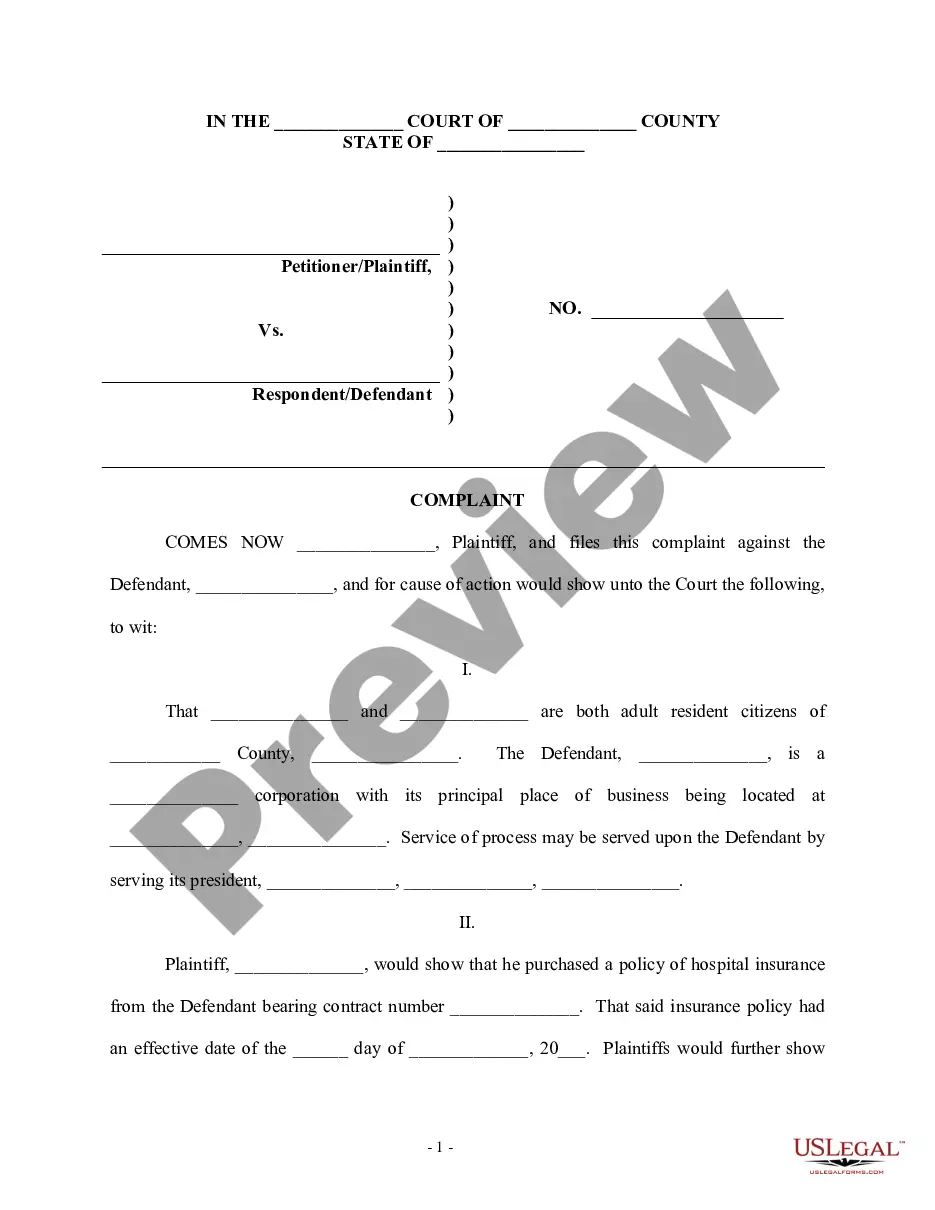
In some circumstances, you file a petition or a motion. The court has several complaint forms that you may use in drafting your complaint. The forms are available online and at the Pro Se Intake Unit. You may also write your own complaint without using a court form.
In some circumstances, you file a petition or a motion. The court has several complaint forms that you may use in drafting your complaint. The forms are available online and at the Pro Se Intake Unit. You may also write your own complaint without using a court form.
A petition is a formal written request to a court or other official body, seeking some form of legal action or relief. It may be filed by a person, group, or organization.
However, some individuals choose to represent themselves and appear in court without a lawyer, a process called “pro se” representation.
Seven Tips When Representing Yourself In Court Make a good impression. If you dress nicely, it tells the judge that you respect the courtroom and care about your case. Be respectful. Know what to ask. Arrive early. Tell your story. Come prepared. Use a lawyer if you need help.