Declaratory Judgment Sample With No Experience In Fulton
Description





Get your form ready online
Our built-in tools help you complete, sign, share, and store your documents in one place.
Make edits, fill in missing information, and update formatting in US Legal Forms—just like you would in MS Word.
Download a copy, print it, send it by email, or mail it via USPS—whatever works best for your next step.
Sign and collect signatures with our SignNow integration. Send to multiple recipients, set reminders, and more. Go Premium to unlock E-Sign.
If this form requires notarization, complete it online through a secure video call—no need to meet a notary in person or wait for an appointment.
We protect your documents and personal data by following strict security and privacy standards.

Make edits, fill in missing information, and update formatting in US Legal Forms—just like you would in MS Word.

Download a copy, print it, send it by email, or mail it via USPS—whatever works best for your next step.

Sign and collect signatures with our SignNow integration. Send to multiple recipients, set reminders, and more. Go Premium to unlock E-Sign.

If this form requires notarization, complete it online through a secure video call—no need to meet a notary in person or wait for an appointment.

We protect your documents and personal data by following strict security and privacy standards.
Looking for another form?






Form popularity
FAQ
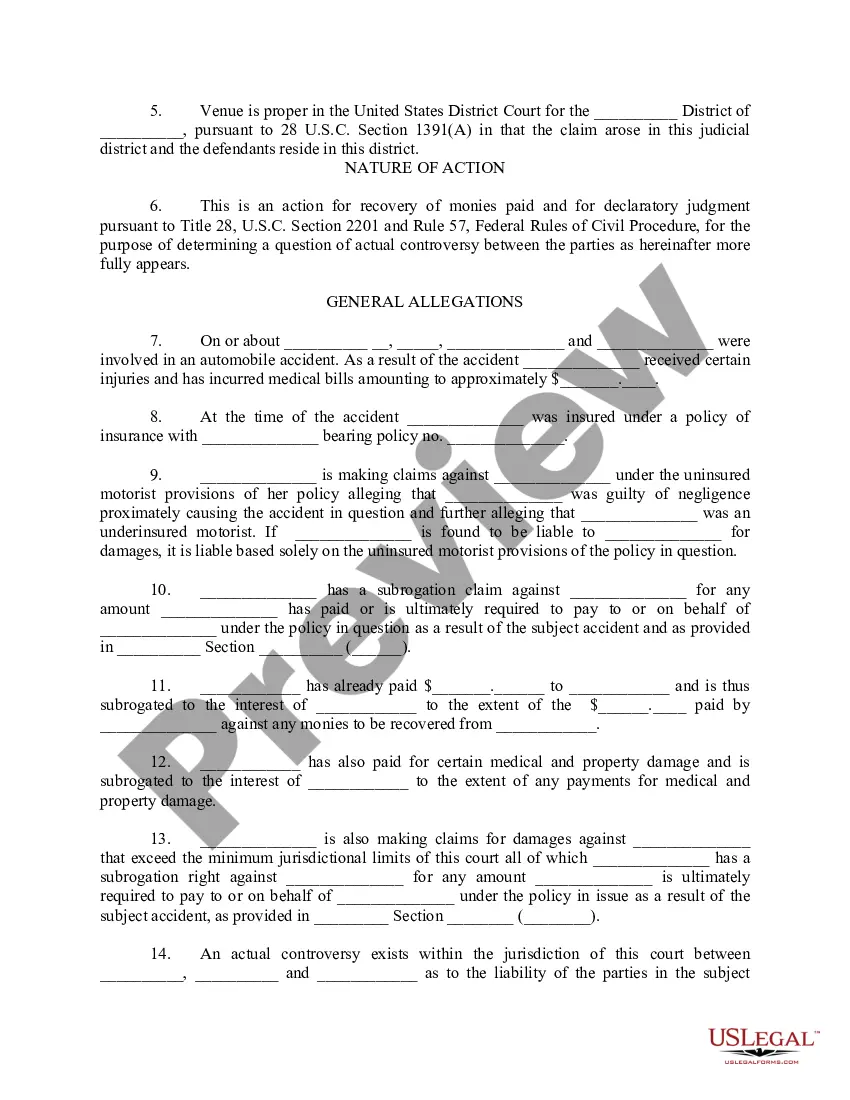
The court would then interpret the contract and define the rights of both parties, offering a legal resolution without the need for a traditional lawsuit. Declaratory judgments are powerful because they provide clarity without requiring one party to be in breach of a contract or to have committed a legal violation.
To bring a claim for declaratory judgment in a situation where a patent dispute may exist or develop, the claimant must establish that an actual controversy exists. If there is a substantial controversy of sufficient immediacy and reality, the court will generally proceed with the declaratory-judgment action.
A declaratory judgment establishes the rights and other legal actions of the parties without providing for or ordering enforcement. One example is, if you purchased a vehicle or boat and cannot obtain a certificate of title from the previous owner, you can obtain a judgment declaring your ownership.
A declaratory judgment plaintiff does not need to allege actual infringement. It is sufficient, for standing purposes, to show that a party “has engaged in a course of conduct evidencing a definite intent and apparent ability to commence use of the mark.” See Starter Corp. v. Converse, Inc., 84 F.
A declaratory judgment is a ruling of the court to clarify something (usually a contract provision) that is in dispute. A summary judgment is a ruling that a case or portion of a case must be dismissed because there are no triable issues of material fact in dispute.
A declaratory judgment is a final judgment entered by the court that adjudicates you as the owner of the vehicle. You need to name the prior owners in the lawsuit. And, you need to have them served. Of course, that's hard to do if you don't know where they live. But, you could even have them served via publication.
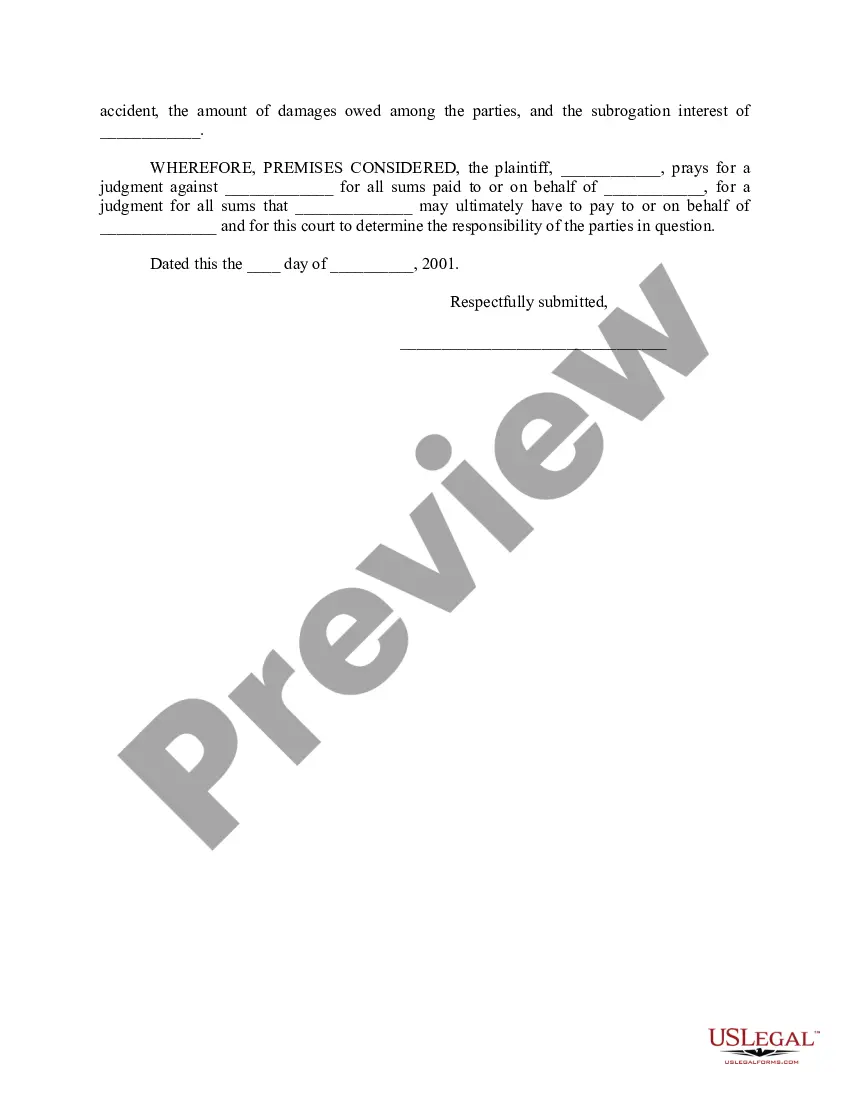
A declaratory judgment is a binding judgment from a court defining the legal relationship between parties and their rights in a matter before the court. When there is uncertainty as to the legal obligations or rights between two parties, a declaratory judgment offers an immediate means to resolve this uncertainty.
One example of a declaratory judgment case is to ask the court to determine who owns a piece of property, or to ask the court to enforce an easement. This is especially common in what is called a “quiet title” action.
To bring a claim for declaratory judgment in a situation where a patent dispute may exist or develop, the claimant must establish that an actual controversy exists. If there is a substantial controversy of sufficient immediacy and reality, the court will generally proceed with the declaratory-judgment action.
