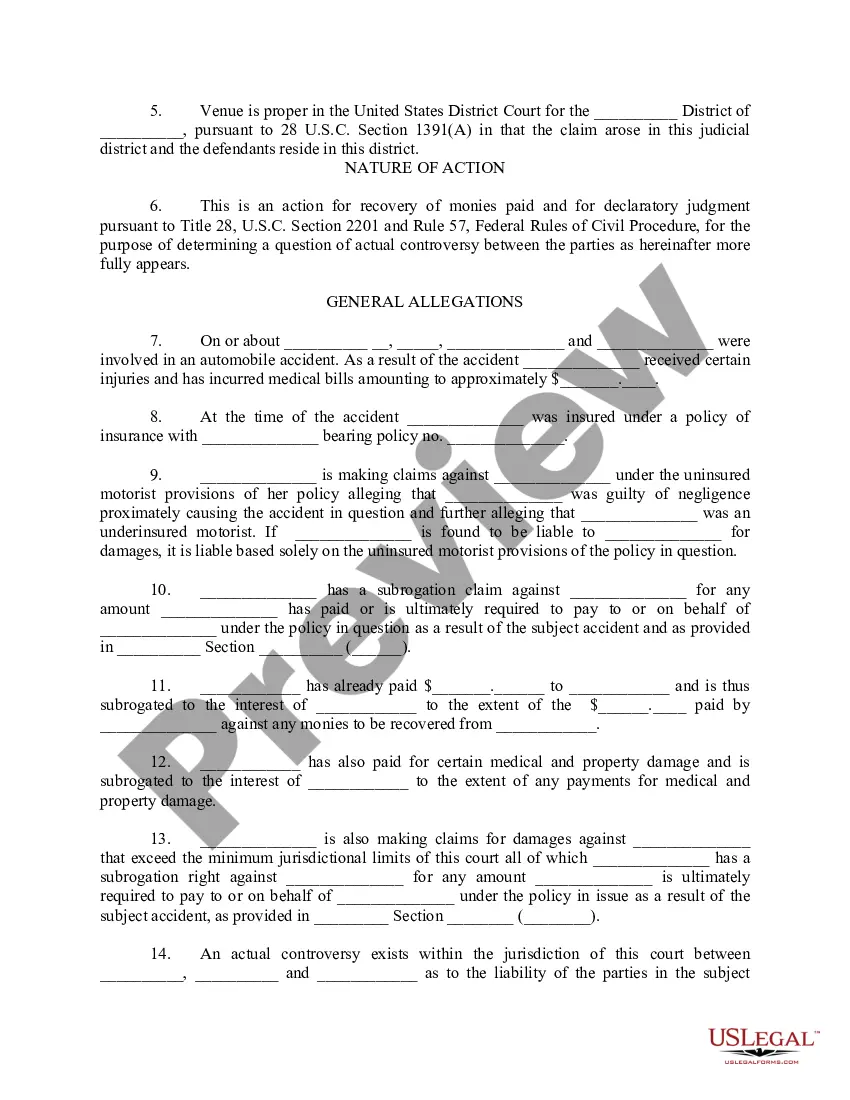
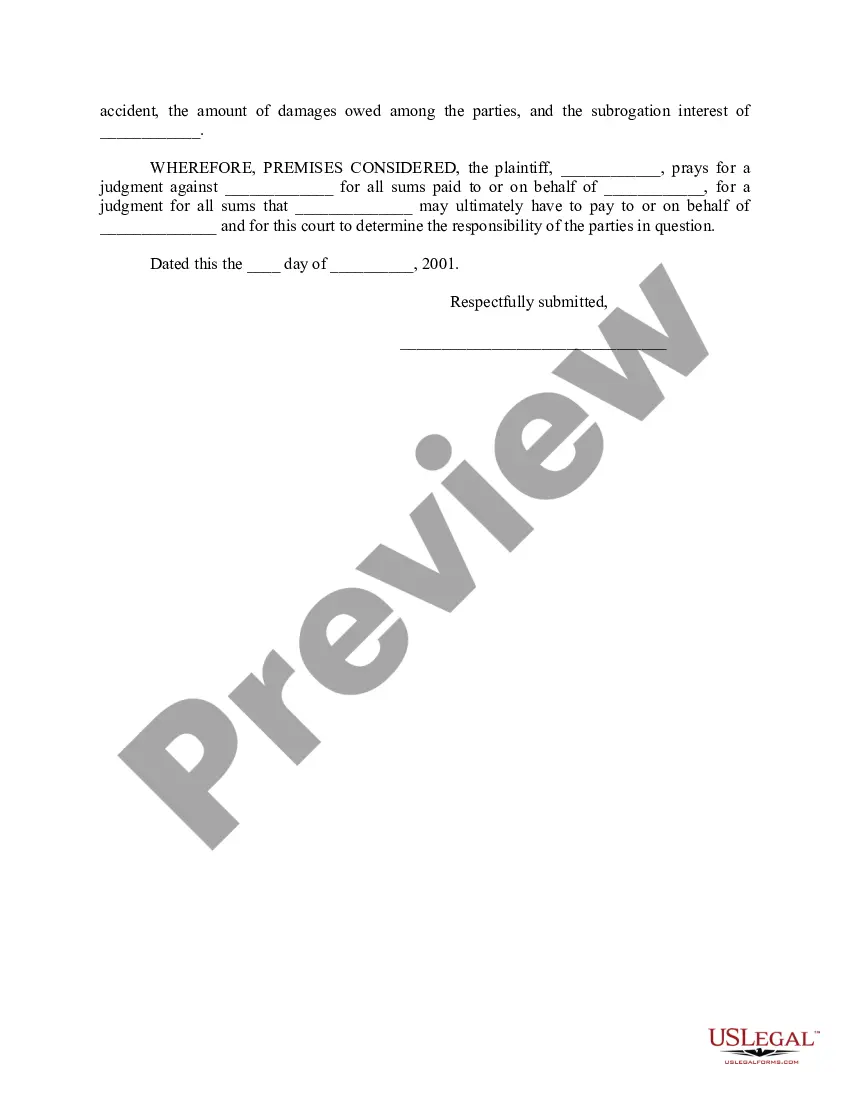
Motion For Declaratory Judgment Sample In Contra Costa
Description




Get your form ready online
Our built-in tools help you complete, sign, share, and store your documents in one place.
Make edits, fill in missing information, and update formatting in US Legal Forms—just like you would in MS Word.
Download a copy, print it, send it by email, or mail it via USPS—whatever works best for your next step.
Sign and collect signatures with our SignNow integration. Send to multiple recipients, set reminders, and more. Go Premium to unlock E-Sign.
If this form requires notarization, complete it online through a secure video call—no need to meet a notary in person or wait for an appointment.
We protect your documents and personal data by following strict security and privacy standards.

Make edits, fill in missing information, and update formatting in US Legal Forms—just like you would in MS Word.

Download a copy, print it, send it by email, or mail it via USPS—whatever works best for your next step.

Sign and collect signatures with our SignNow integration. Send to multiple recipients, set reminders, and more. Go Premium to unlock E-Sign.

If this form requires notarization, complete it online through a secure video call—no need to meet a notary in person or wait for an appointment.

We protect your documents and personal data by following strict security and privacy standards.
Looking for another form?





Form popularity
FAQ
A motion for judgment as a matter of law asks the court to enter a judgment based on the conclusion that no reasonable jury could reach a different conclusion. The motion is made before the case is submitted to the jury but after a party has been fully heard on the issue.
(f) The motion provided for in this section may be made only after one of the following conditions has occurred: (1) If the moving party is a plaintiff, and the defendant has already filed his or her answer to the complaint and the time for the plaintiff to demur to the answer has expired.
A motion for judgment on the pleadings is filed after the pleadings have closed, but early enough not to delay trial. FRCP 12(c). Pleadings are “closed” once a complaint and answers by all defendants have been filed.
(f) The motion provided for in this section may be made only after one of the following conditions has occurred: (1) If the moving party is a plaintiff, and the defendant has already filed his or her answer to the complaint and the time for the plaintiff to demur to the answer has expired.
Under Code of Civil Procedure § 437c(c), a motion for summary judgment "shall be granted if all the papers submitted show that there is no triable issue as to any material fact and that the moving party is entitled to judgment as a matter of law." (Code Civ.
Typically, a motion seeking judgment on the pleadings can be filed any time after an answer has been filed and the time to respond to the answer -- under subsection (f) or otherwise -- has passed. However, the motion can also be filed pretty much at any time up to when the verdict gets handed down.
A judgement on the pleading is a judgement entered after the pleadings have been filed, but before trial. It is different because it is made after the pleadings are closed. A moving party is entitled to summary judgment only if there is no genuine issue as to any "material fact." What does this mean?
Contra Costa County Clerk-Recorder's Office Interested individuals should visit the Clerk-Recorder's website. Choose a preferred method of request—online, in-person, or by mail—and follow the provided instructions. Inquirers can also contact the office at (925) 335-7900 to make further inquiries.
Declaratory relief, also commonly known as declaratory judgment or declaration, is a form of discretionary remedy which parties may seek from the court. A declaration is essentially a statement made by the court at the request of a party.
For example, a policyholder believes that their denied claim is unjust. As a result, they inform the insurer that they are considering a lawsuit to recover losses. The insurer seeks a declaratory judgment to clarify its rights and obligations with hopes of preventing the lawsuit.
