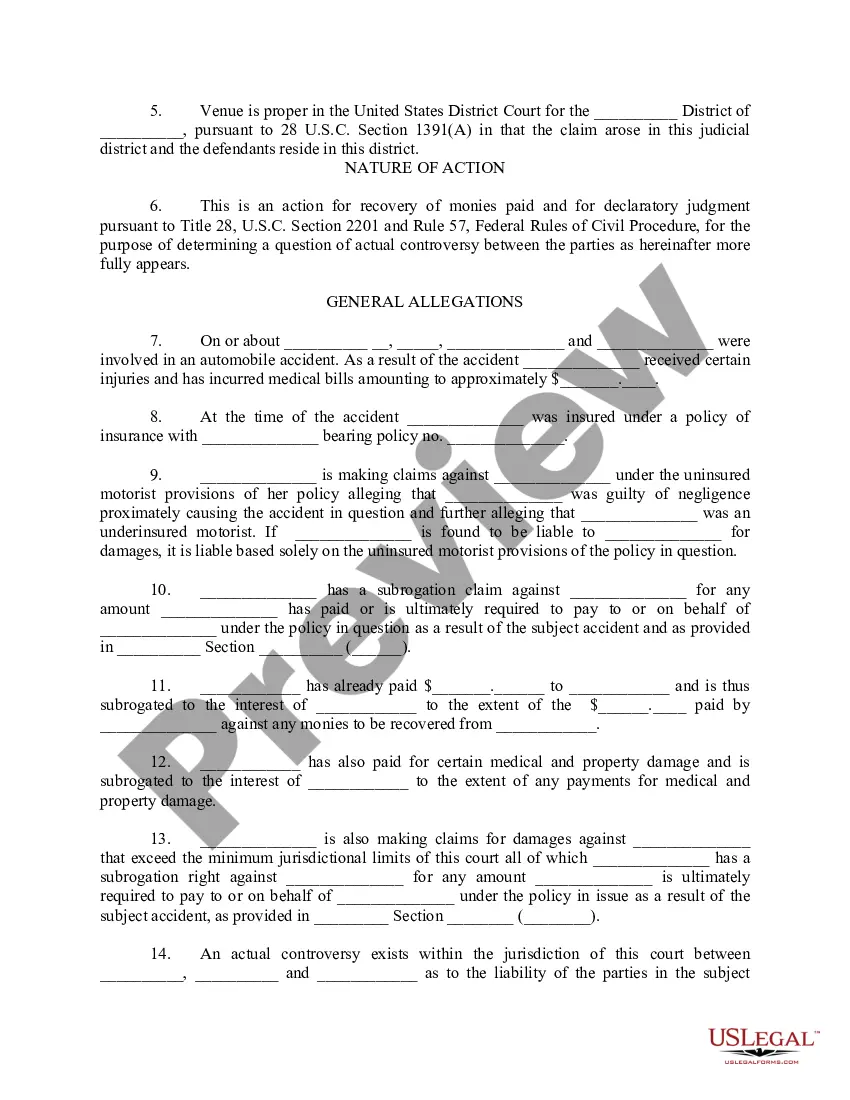
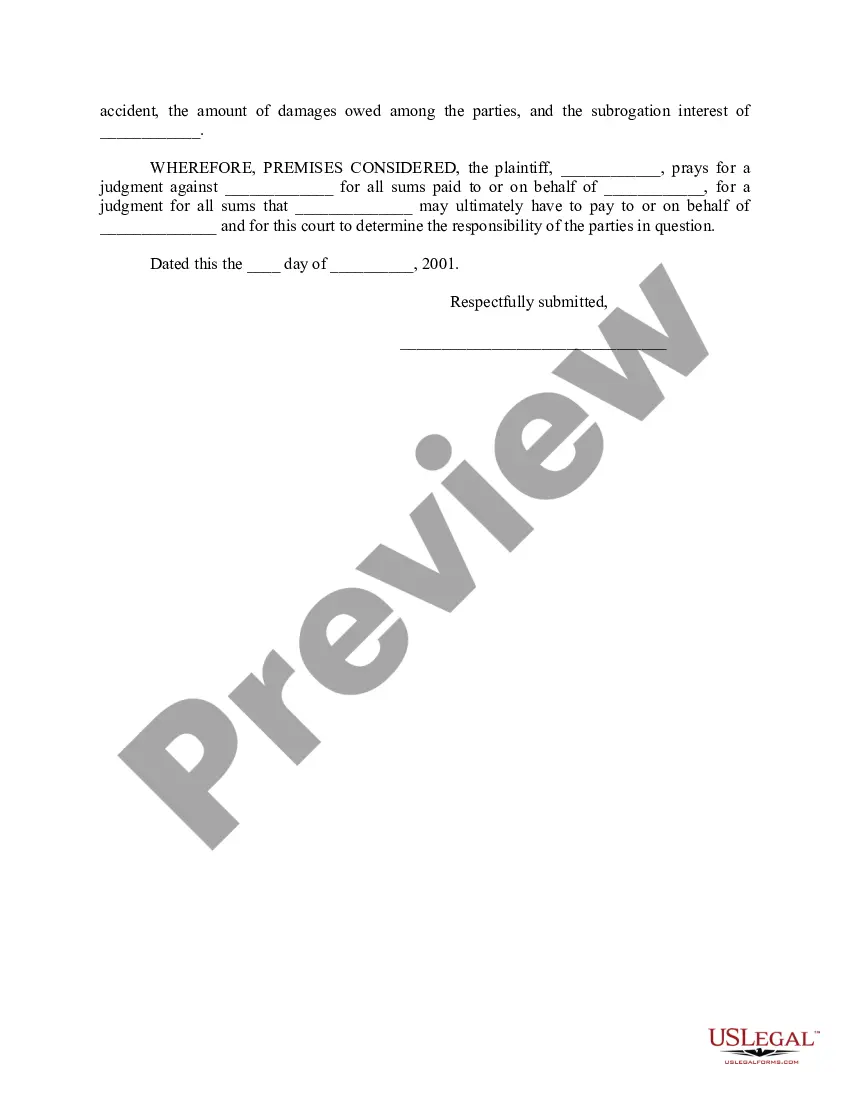
Declaratory Judgment Act With Writing In Contra Costa
Description




Get your form ready online
Our built-in tools help you complete, sign, share, and store your documents in one place.
Make edits, fill in missing information, and update formatting in US Legal Forms—just like you would in MS Word.
Download a copy, print it, send it by email, or mail it via USPS—whatever works best for your next step.
Sign and collect signatures with our SignNow integration. Send to multiple recipients, set reminders, and more. Go Premium to unlock E-Sign.
If this form requires notarization, complete it online through a secure video call—no need to meet a notary in person or wait for an appointment.
We protect your documents and personal data by following strict security and privacy standards.

Make edits, fill in missing information, and update formatting in US Legal Forms—just like you would in MS Word.

Download a copy, print it, send it by email, or mail it via USPS—whatever works best for your next step.

Sign and collect signatures with our SignNow integration. Send to multiple recipients, set reminders, and more. Go Premium to unlock E-Sign.

If this form requires notarization, complete it online through a secure video call—no need to meet a notary in person or wait for an appointment.

We protect your documents and personal data by following strict security and privacy standards.
Looking for another form?


Form popularity
FAQ
An action for an accounting has two elements: (1) “that a relationship exists between the plaintiff and defendant that requires an accounting” and (2) “that some balance is due the plaintiff that can only be ascertained by an accounting.” (Teselle, supra, 173 Cal.
"A complaint for declaratory relief is legally sufficient if it sets forth facts showing the existence of an actual controversy relating to the legal rights and duties of the respective parties under a written instrument and requests that these rights and duties be adjudged by the court." (Maguire v. Hibernia S. & L.
A difference of opinion must ripen into an actual concrete controversy to give rise to a justiciable case for which declaratory relief is appropriate. Furthermore, the controversy must be such as to be capable of resolution by a judgment that decrees, rather than suggests, what the parties can or cannot do.
A declaratory judgment is a court-issued judgment that defines and outlines the rights and obligations of each party in a contract. Declaratory judgments have the same effect and force as final judgments and are legally binding. These judgments are also called a declaration or declaratory relief.
"A complaint for declaratory relief is legally sufficient if it sets forth facts showing the existence of an actual controversy relating to the legal rights and duties of the respective parties under a written instrument and requests that these rights and duties be adjudged by the court." (Maguire v.
A declaratory judgment plaintiff does not need to allege actual infringement. It is sufficient, for standing purposes, to show that a party “has engaged in a course of conduct evidencing a definite intent and apparent ability to commence use of the mark.” See Starter Corp. v. Converse, Inc., 84 F.
A difference of opinion must ripen into an actual concrete controversy to give rise to a justiciable case for which declaratory relief is appropriate. Furthermore, the controversy must be such as to be capable of resolution by a judgment that decrees, rather than suggests, what the parties can or cannot do.
In some instances, a declaratory judgment is filed because the statute of limitations against a potential defendant may pass before the plaintiff incurs damage (for example, a malpractice statute applicable to a certified public accountant may be shorter than the time period the IRS has to assess a taxpayer for ...
To establish federal jurisdiction in a declaratory judgment action, two conditions must be satisfied. First, is the constitutional inquiry - the case must be a 'case or controversy' pursuant to Article III of the US Constitution. Second is the prudential inquiry – declaratory relief must be appropriate.
