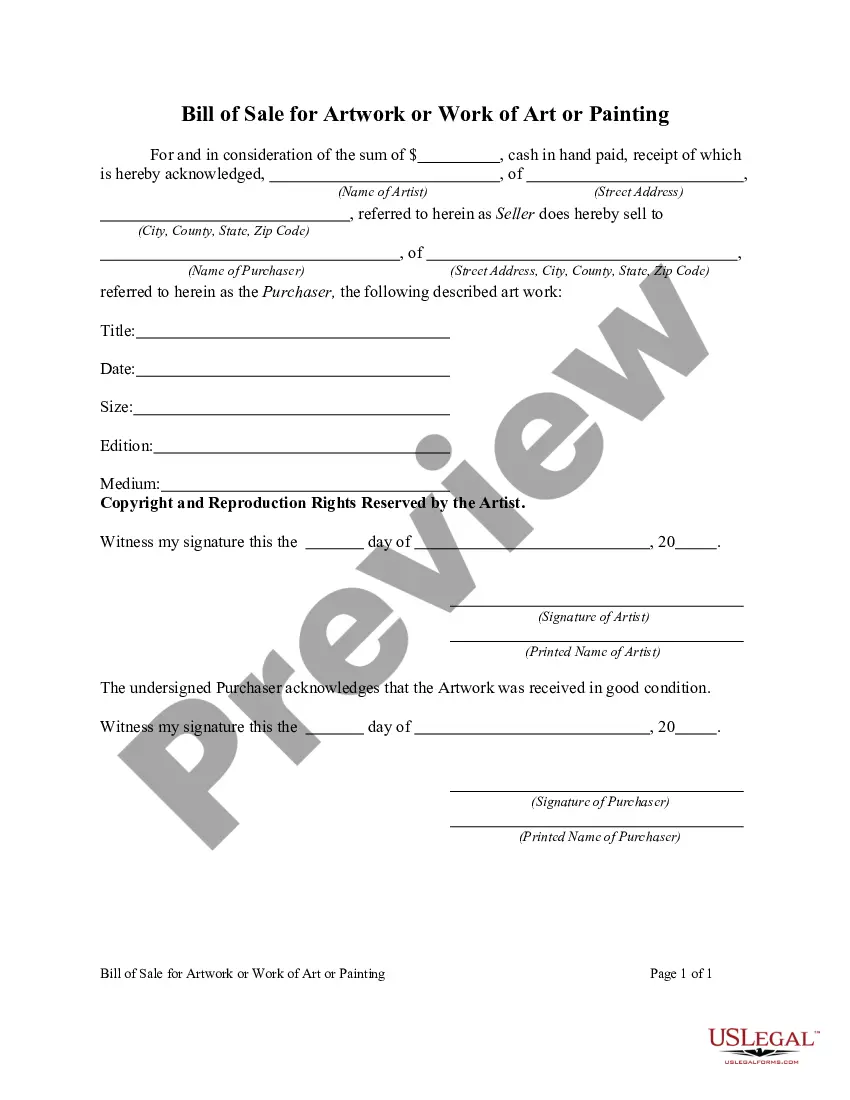
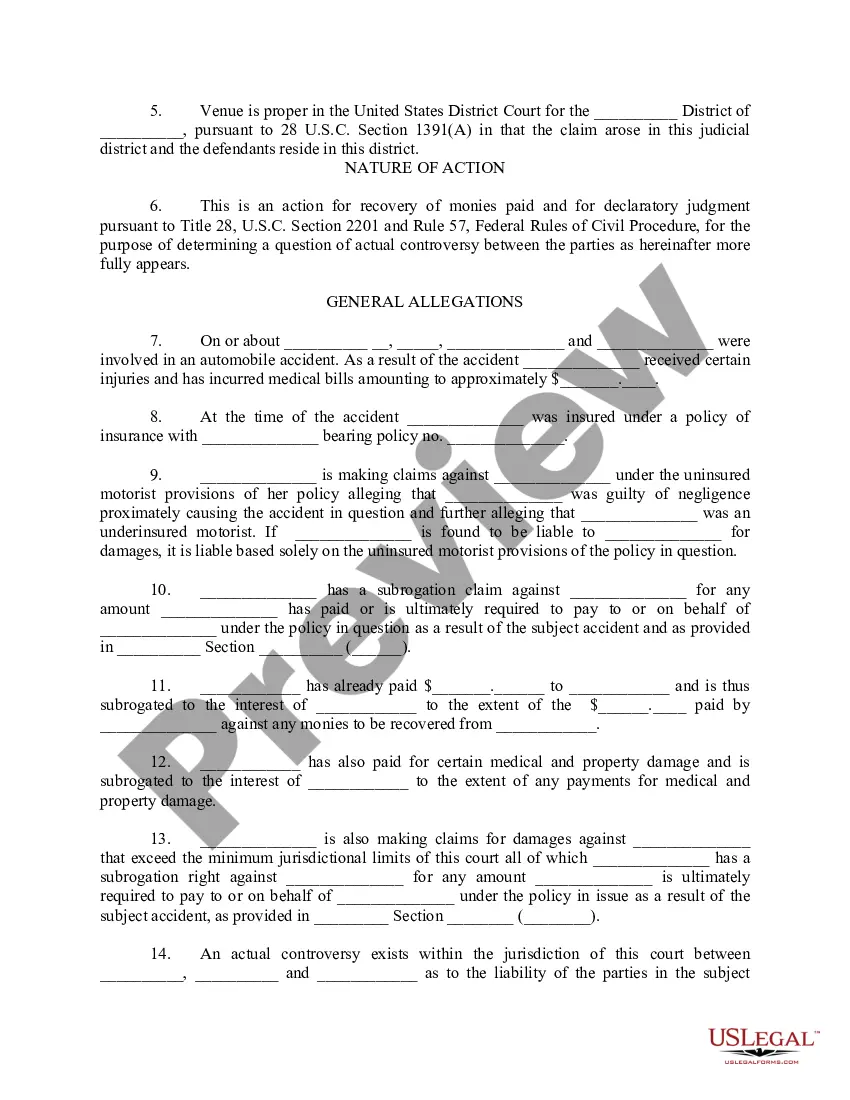
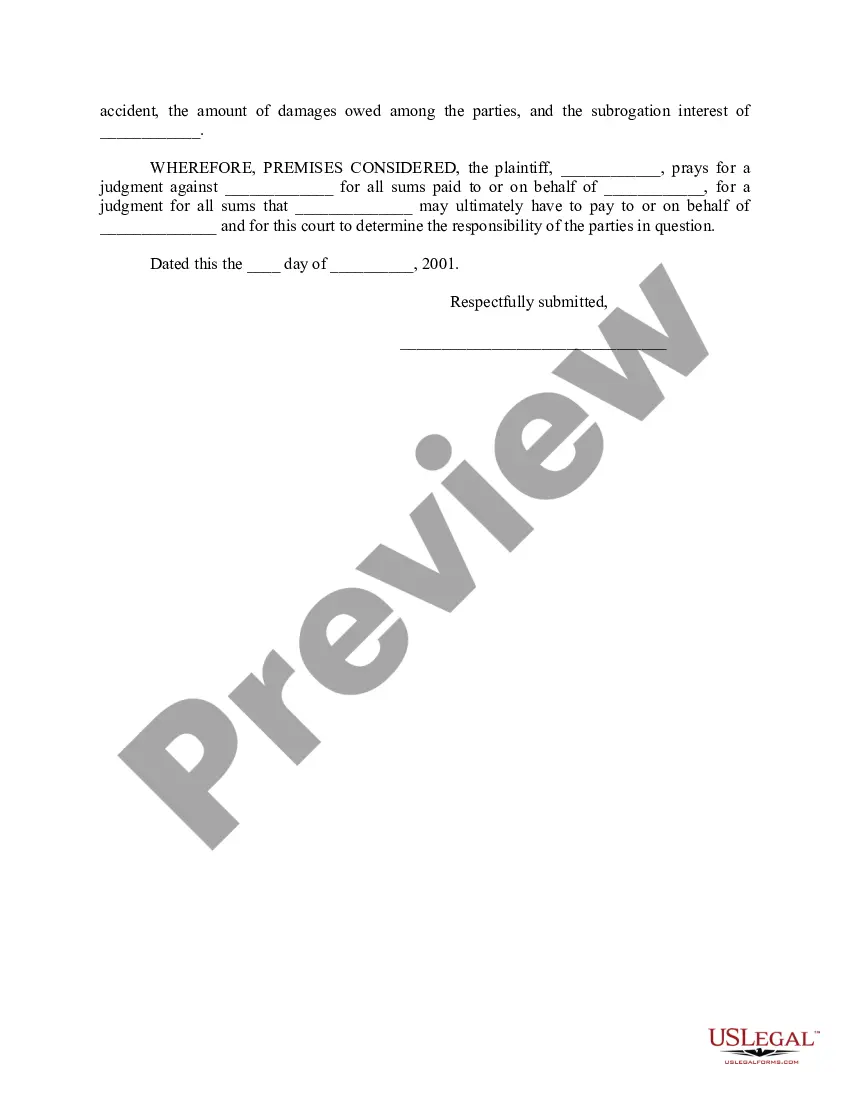
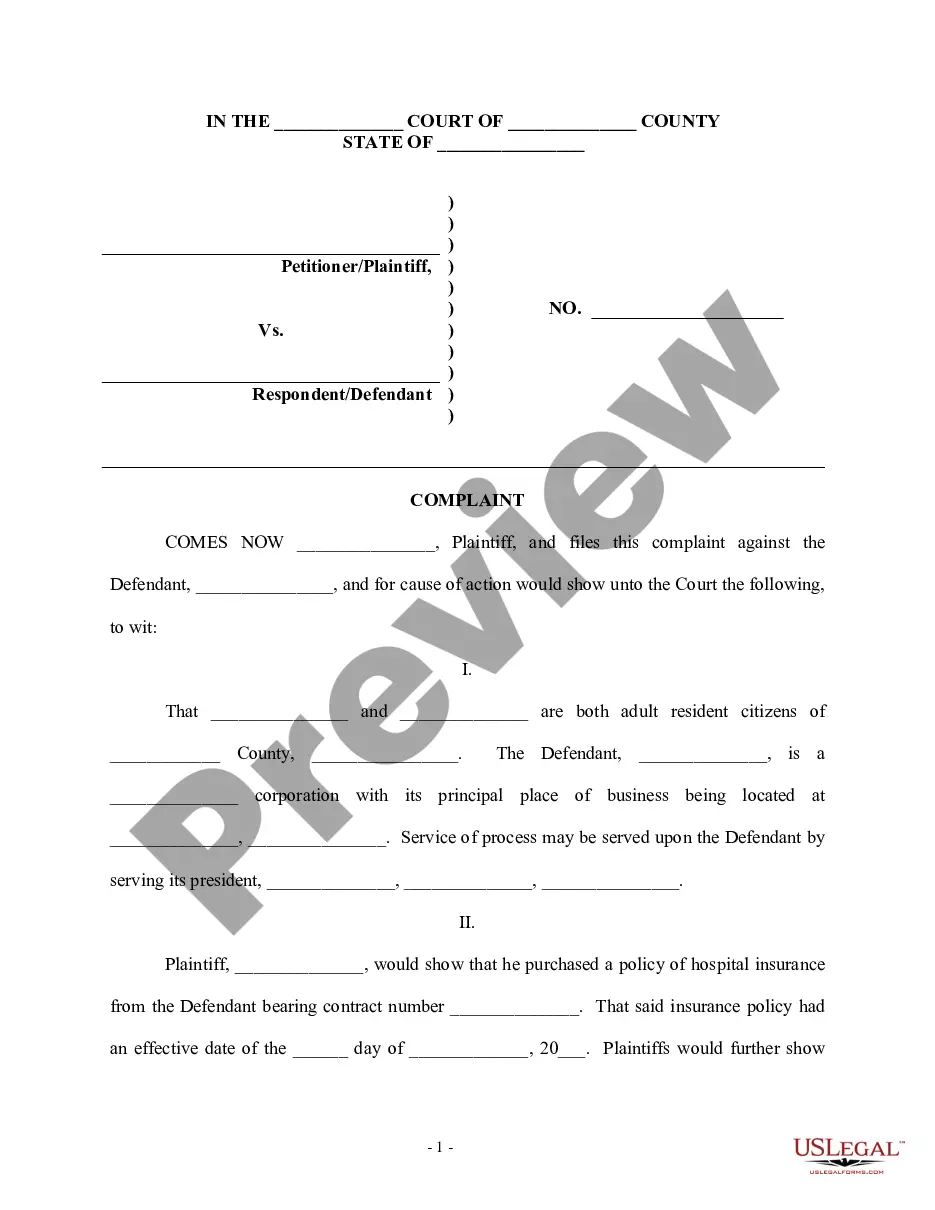
Complaint Subrogation Sample With Insurance Company In Chicago
Description




Get your form ready online
Our built-in tools help you complete, sign, share, and store your documents in one place.
Make edits, fill in missing information, and update formatting in US Legal Forms—just like you would in MS Word.
Download a copy, print it, send it by email, or mail it via USPS—whatever works best for your next step.
Sign and collect signatures with our SignNow integration. Send to multiple recipients, set reminders, and more. Go Premium to unlock E-Sign.
If this form requires notarization, complete it online through a secure video call—no need to meet a notary in person or wait for an appointment.
We protect your documents and personal data by following strict security and privacy standards.

Make edits, fill in missing information, and update formatting in US Legal Forms—just like you would in MS Word.

Download a copy, print it, send it by email, or mail it via USPS—whatever works best for your next step.

Sign and collect signatures with our SignNow integration. Send to multiple recipients, set reminders, and more. Go Premium to unlock E-Sign.

If this form requires notarization, complete it online through a secure video call—no need to meet a notary in person or wait for an appointment.

We protect your documents and personal data by following strict security and privacy standards.
Looking for another form?









Form popularity
FAQ
File a Complaint with Your State's Insurance Department: If your insurer continues to be uncooperative, you can file a formal complaint with your state's Department of Insurance. They will investigate whether the insurance company is handling your claim fairly and within legal guidelines.
21 working days – an insurer must conduct a “prompt investigation,” which applies to all activities of the insured related directly or indirectly to the determination of liability based on claims under the coverage afforded by the policy and shall be evidenced by a bona fide effort to communicate with all insureds and ...
File a complaint with your State Insurance Department. If your state has a strong insurance department, they will hold the company accountable to act in good faith. You can find your state's insurance department contact information on the NAIC's website map here.
An online complaint can be filed here: or by calling 866-445-5364.
Information To Include in Your Letter Give the basics. Tell your story. Explain how you want to resolve the problem. Describe your next steps. Send your complaint letter. Your Mailing Address Your City, State, Zip Code Your email address
Your right to appeal You may ask your insurance company to conduct a full and fair review of its decision. If the case is urgent, your insurance company must speed up this process. External review: You have the right to take your appeal to an independent third party for review. This is called an external review.
The statistic is particularly alarming when one considers that the overwhelming majority of appeals—83.2%—resulted in the insurance company either partially or fully overturning the initial prior authorization denial in 2022. That figure is similar to what the overturn rate was between 2019 and 2021.
Yes, you do need to respond to subrogation letters and if you don't, your insurance will likely drop you. Basically, your insurance company is trying to see if someone else was responsible for your injury, for example, maybe you were injured in a car accident, a work injury, or something of the like.
When you file a claim, your insurer can try to recover costs from the person responsible for your injury or property damage. This is known as subrogation. For example: Your insurance company pays your doctor for your treatment following an auto accident that someone else caused.
One example of subrogation is when an insured driver's car is totaled through the fault of another driver. The insurance carrier reimburses the covered driver under the terms of the policy and then pursues legal action against the driver at fault.