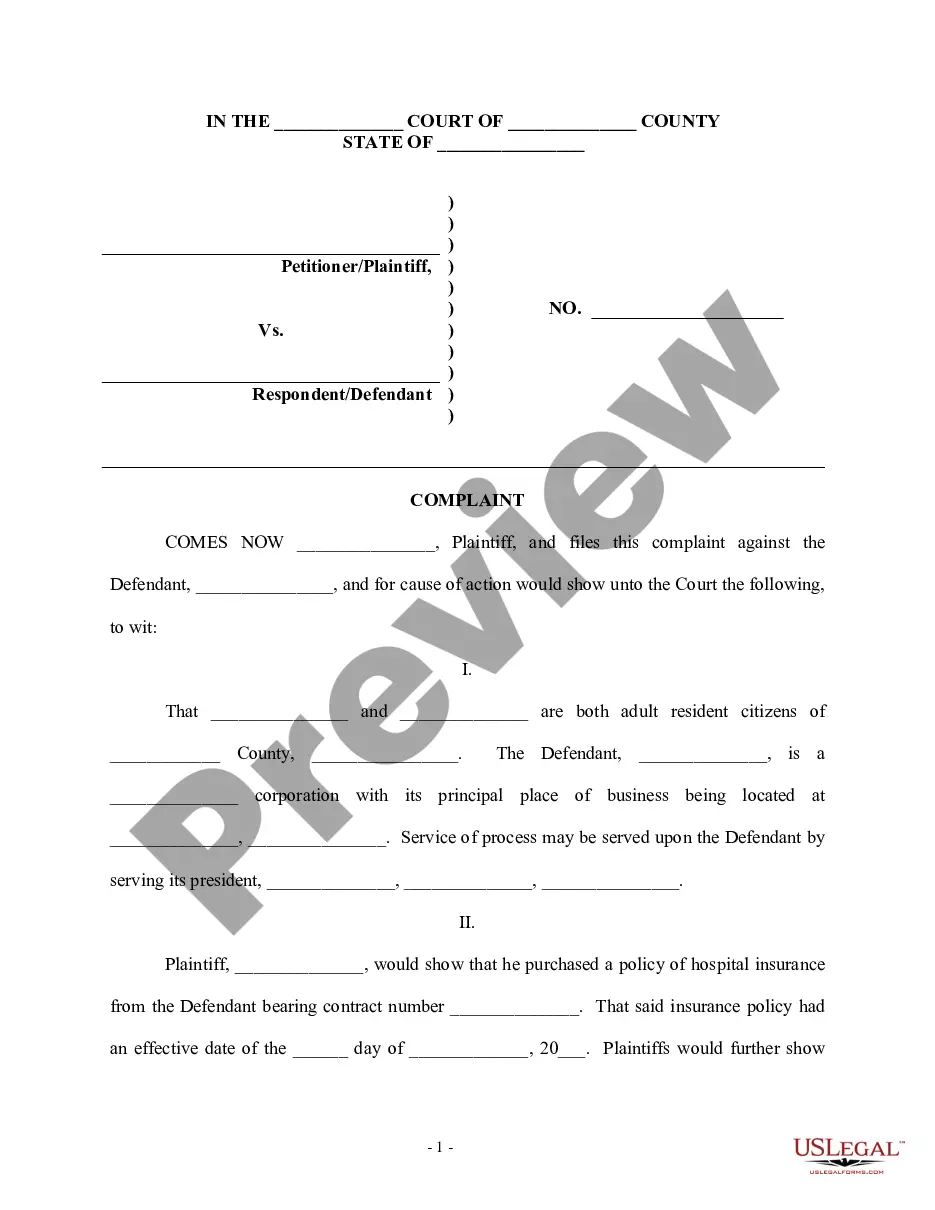
Complaint For Declaratory Judgment Insurance Coverage In Philadelphia
Description




Get your form ready online
Our built-in tools help you complete, sign, share, and store your documents in one place.
Make edits, fill in missing information, and update formatting in US Legal Forms—just like you would in MS Word.
Download a copy, print it, send it by email, or mail it via USPS—whatever works best for your next step.
Sign and collect signatures with our SignNow integration. Send to multiple recipients, set reminders, and more. Go Premium to unlock E-Sign.
If this form requires notarization, complete it online through a secure video call—no need to meet a notary in person or wait for an appointment.
We protect your documents and personal data by following strict security and privacy standards.

Make edits, fill in missing information, and update formatting in US Legal Forms—just like you would in MS Word.

Download a copy, print it, send it by email, or mail it via USPS—whatever works best for your next step.

Sign and collect signatures with our SignNow integration. Send to multiple recipients, set reminders, and more. Go Premium to unlock E-Sign.

If this form requires notarization, complete it online through a secure video call—no need to meet a notary in person or wait for an appointment.

We protect your documents and personal data by following strict security and privacy standards.
Looking for another form?






Form popularity
FAQ
They are generally requested when a lawsuit is threatened but before the lawsuit is actually filed, when a conflict might exist between a party's or parties' rights under law or under contract and as a way to prevent multiple lawsuits from the same plaintiff.
A Writ of Summons is an unusual mechanism in the Commonwealth of Pennsylvania that allows a Plaintiff (the individual or company who is bringing a lawsuit) to start their lawsuit against a Defendant without filing a Complaint.
A writ of summons is a court order requiring a person or entity to respond to a lawsuit. In general, writs are not used in every case. Instead, they are specific to lawsuits that are related to civil proceedings and criminal law.
issued document used to notify a defendant that a civil lawsuit has been filed against it in a Pennsylvania court of common pleas and that the defendant is required to appear in court (Pa. R. Civ.
The Writ of Summons (WOS) is one of the two modes used in commencing a civil action against a person. It is a formal document addressed to the defendant requiring him to appear before the court if he/she wishes to defend himself against the plaintiff's claim.
Personal injury lawsuits such as those stemming from car accidents, medical malpractice, or slip and fall incidents are a one type of civil suit. Other common civil lawsuits include breach of contract, product liability, divorce and family law, property disputes, and housing disputes.
PHILADELPHIA MUNICIPAL COURT. 1339 CHESTNUT STREET, 10TH FLOOR. PHILADELPHIA, PA 19107.
As in most states, the statute of limitations in civil cases in Pennsylvania is two years. In most cases, this means that victims have two years from the date of their injury to file a civil lawsuit.
All complaints are filed by the First Filing Unit, 1339 Chestnut Street, Philadelphia, PA 19107. Mail your complaint to this address. Include a self-address stamped envelope with your filing, to receive your filed complaint, pertinent forms and hearing information.
