Tort Negligence Liability For Injury In Queens
Description





Get your form ready online
Our built-in tools help you complete, sign, share, and store your documents in one place.
Make edits, fill in missing information, and update formatting in US Legal Forms—just like you would in MS Word.
Download a copy, print it, send it by email, or mail it via USPS—whatever works best for your next step.
Sign and collect signatures with our SignNow integration. Send to multiple recipients, set reminders, and more. Go Premium to unlock E-Sign.
If this form requires notarization, complete it online through a secure video call—no need to meet a notary in person or wait for an appointment.
We protect your documents and personal data by following strict security and privacy standards.

Make edits, fill in missing information, and update formatting in US Legal Forms—just like you would in MS Word.

Download a copy, print it, send it by email, or mail it via USPS—whatever works best for your next step.

Sign and collect signatures with our SignNow integration. Send to multiple recipients, set reminders, and more. Go Premium to unlock E-Sign.

If this form requires notarization, complete it online through a secure video call—no need to meet a notary in person or wait for an appointment.

We protect your documents and personal data by following strict security and privacy standards.
Looking for another form?






Form popularity
FAQ
In personal injury law, the term negligence refers to a legal claim that alleges that you were injured as the result of another person's carelessness or failure to exercise ordinary care. When you bring and prevail on a negligence claim, you may be entitled to various forms of compensation.
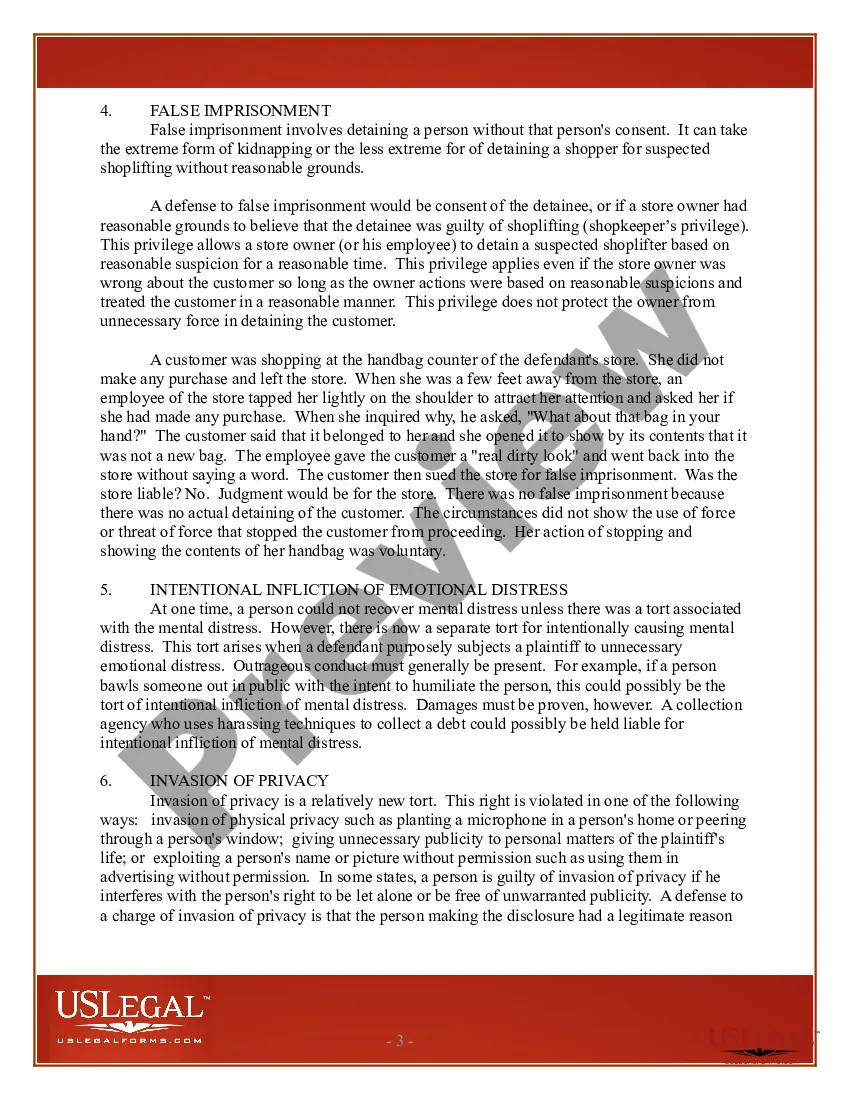
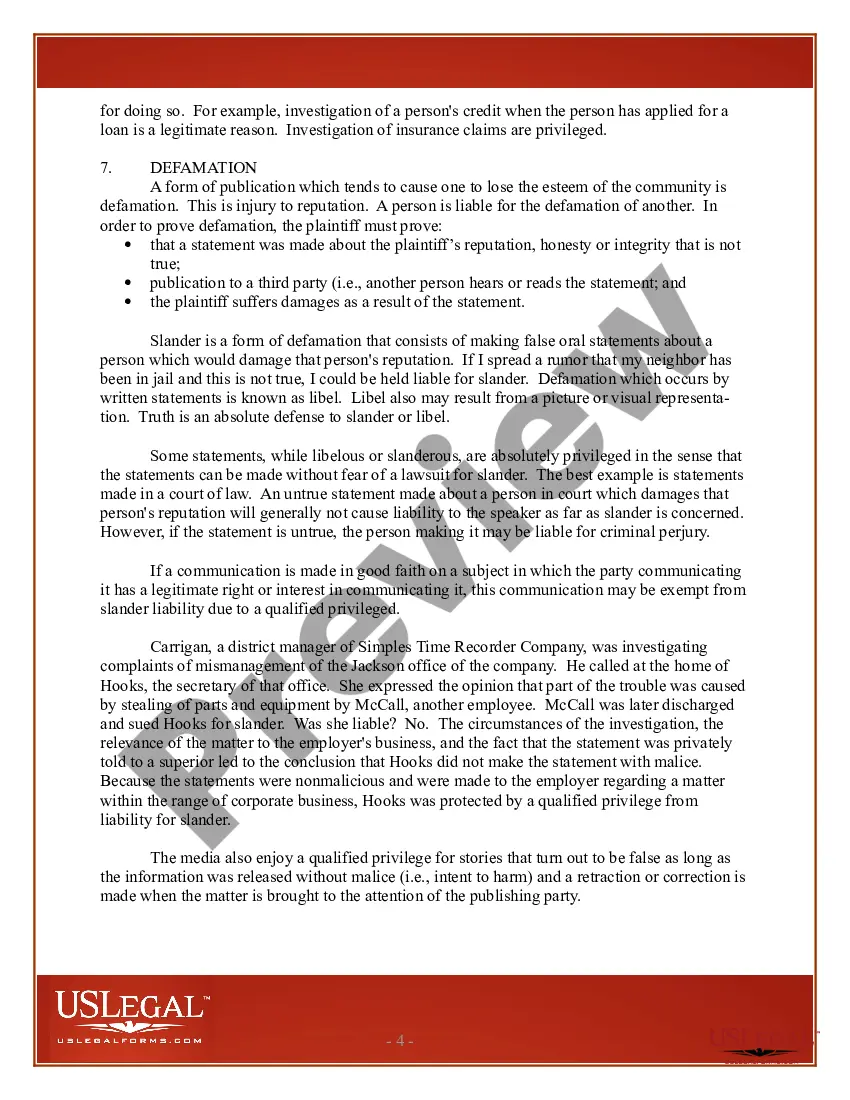
For example, if someone physically attacks another person, the injured person would have a tort claim against the attacker. One key thing to note is that torts are civil cases rather than criminal ones.
Torts are legal wrongs that one party suffers at the hands of another. Negligence is a form of tort which evolved because some types of loss or damage occur between parties that have no contract between them, and therefore there is nothing for one party to sue the other over.
Negligent torts occur when the defendant's actions were unreasonably unsafe. Unlike intentional and negligent torts, strict liability torts do not depend on the degree of care that the defendant used. Rather, in strict liability cases, courts focus on whether a particular result or harm manifested.
The concept of tort law is to redress a wrong done to a person and provide relief from the wrongful acts of others, usually by awarding monetary damages as compensation. The original intent of tort is to provide full compensation for proved harms. Lawsuits involving contracts fall under contract law.
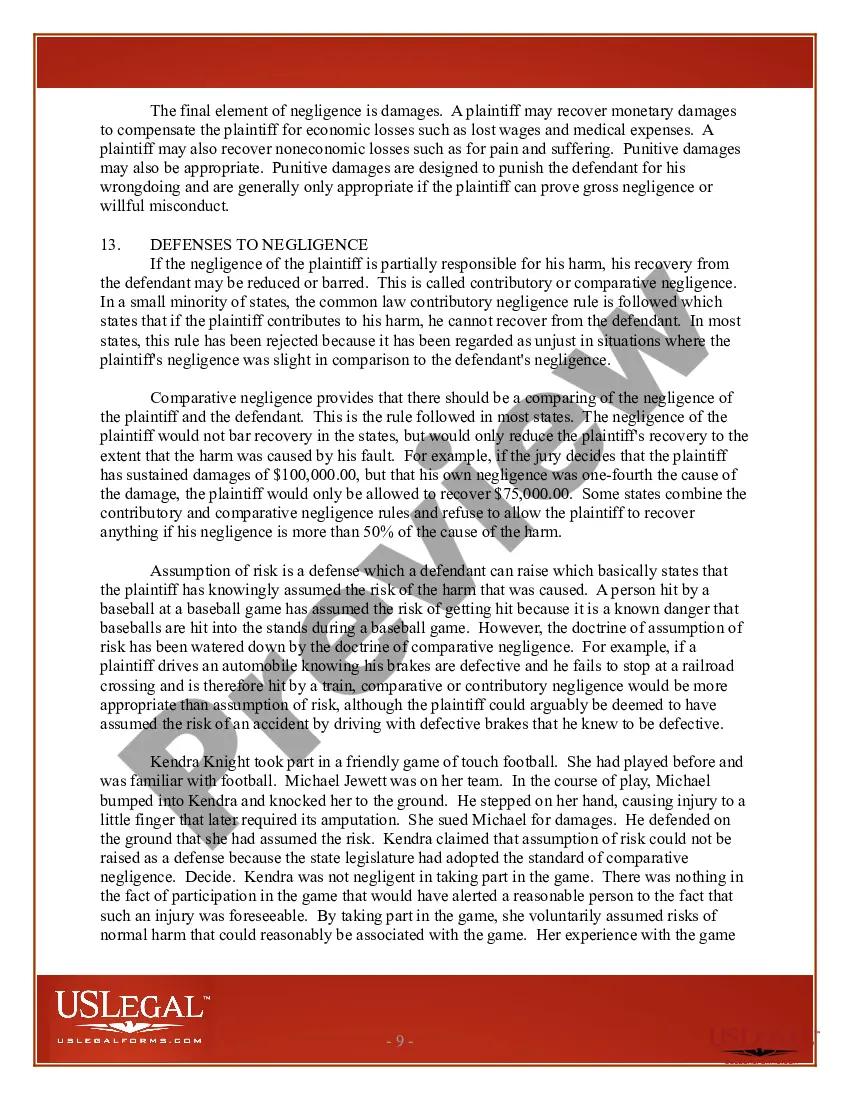
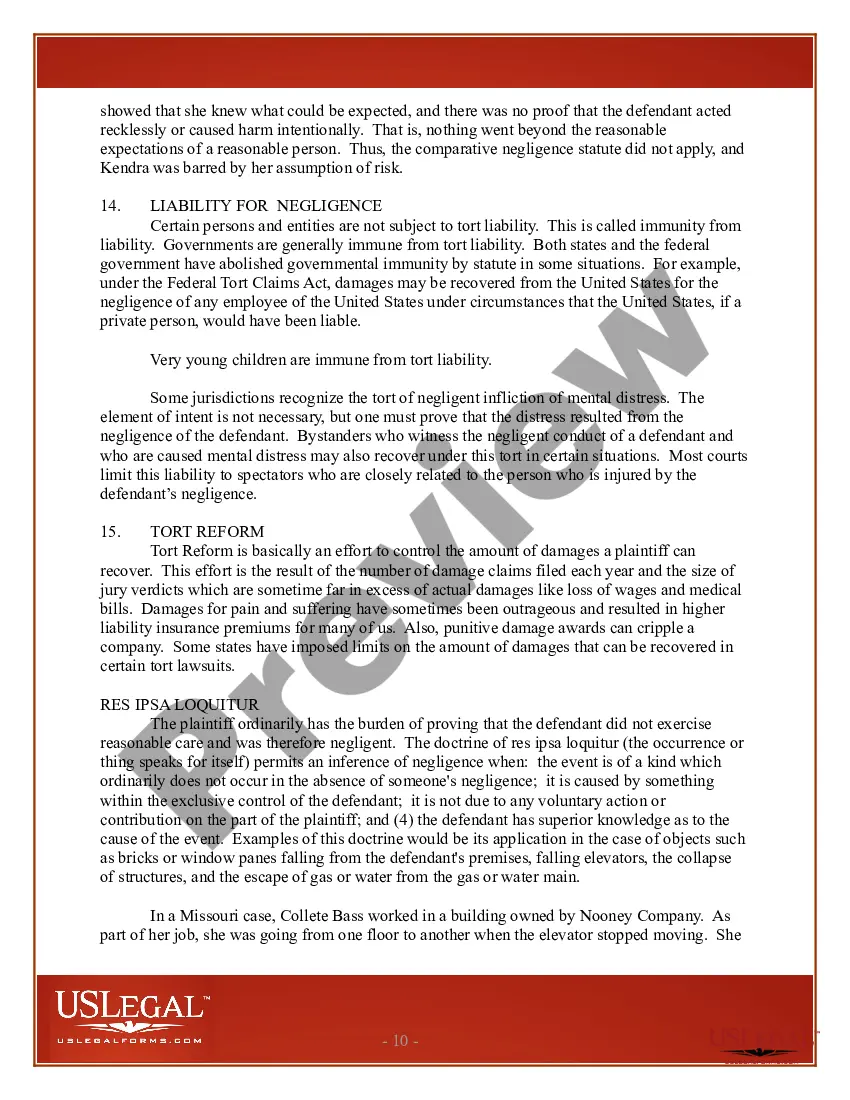
'Negligence as a tort is the breach of a legal duty to the care which results in damage, undesired by the defendant, to the plaintiff. ' 3. Essential Ingredients of Negligence. What are the essentials of constituty a negligence.
For example, a driver on the road has a duty to drive at a reasonable speed. If a driver travels 20 miles over the speed limit, they have acted negligently. If they hit someone and hurt them, they have committed a negligence tort and likely owe the victim for their losses.
Someone does not have to intend to harm another person to be guilty of negligence. Someone injured because of another person's negligence can recover compensation for damages related to those injuries.
Understanding Negligence in Personal Injury Cases To win a personal injury case in Torrance, California, you must show the other person's carelessness hurt you. You need to prove four things: they had a responsibility, they didn't live up to it, it led to your injury, and you lost something because of it.