Types Of Torts In Insurance In New York
Description








Form popularity
FAQ
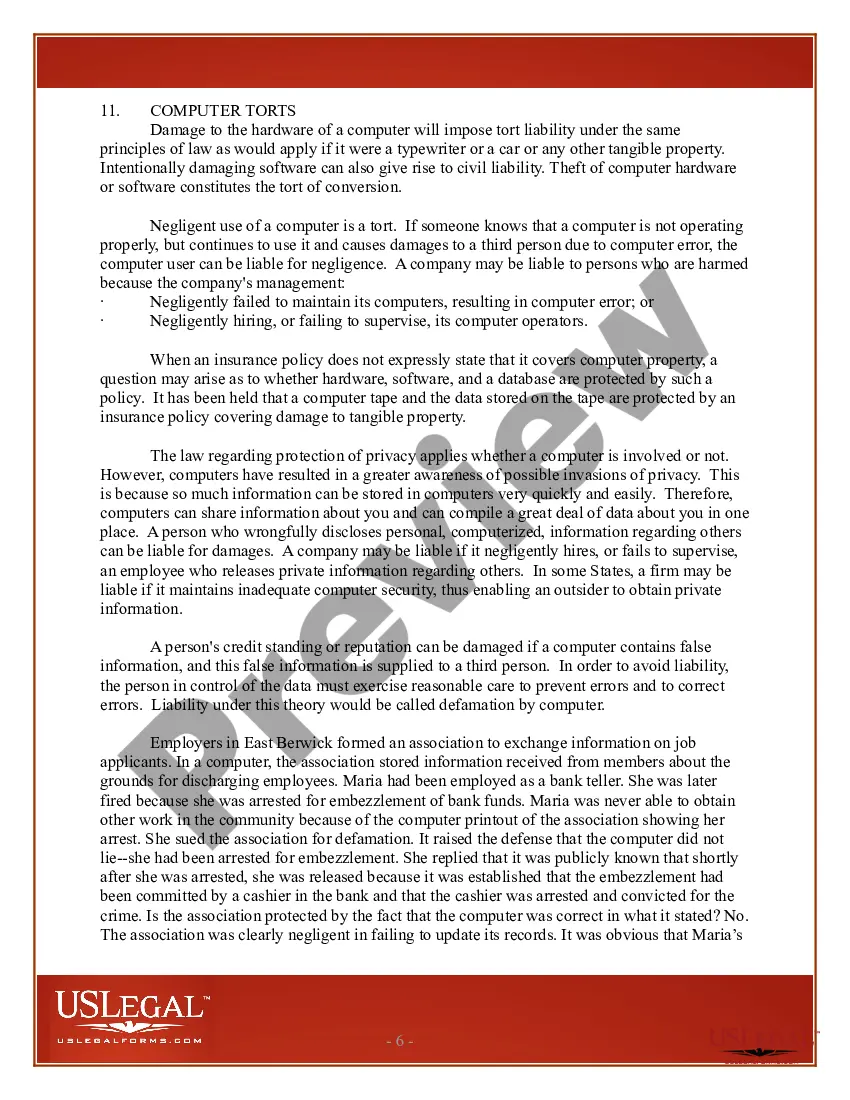
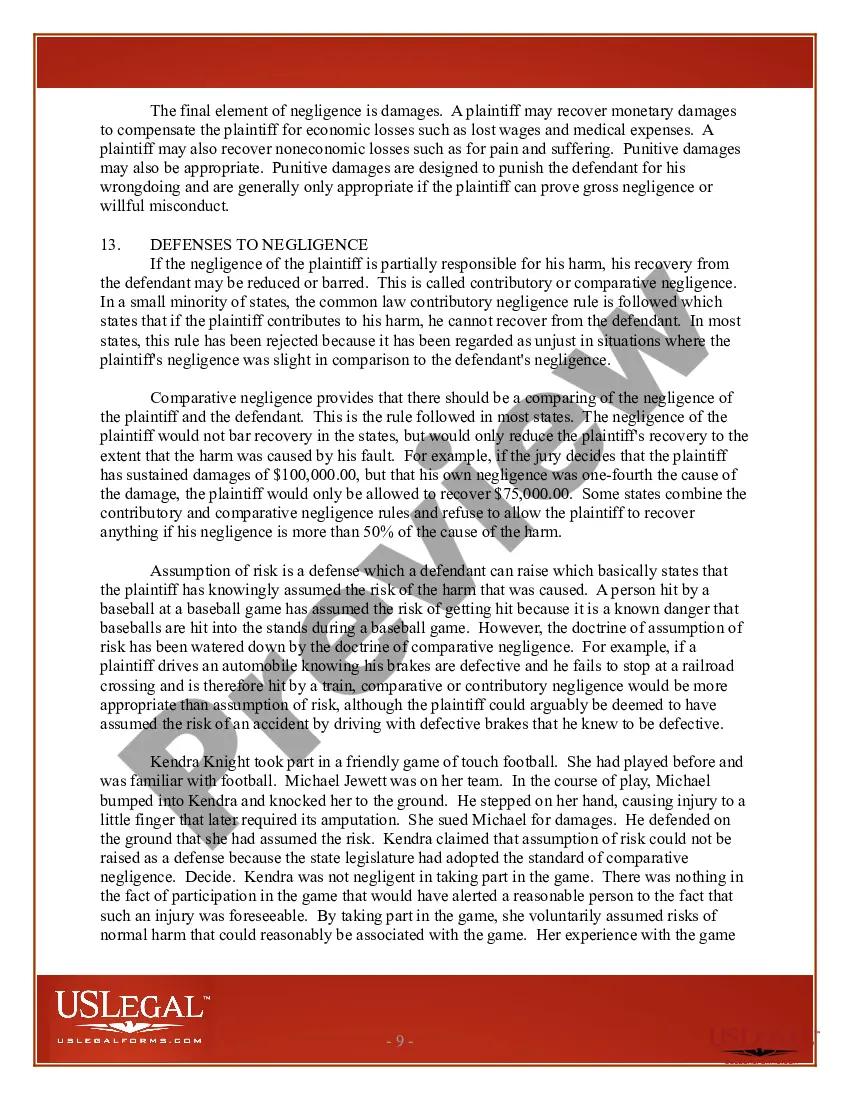
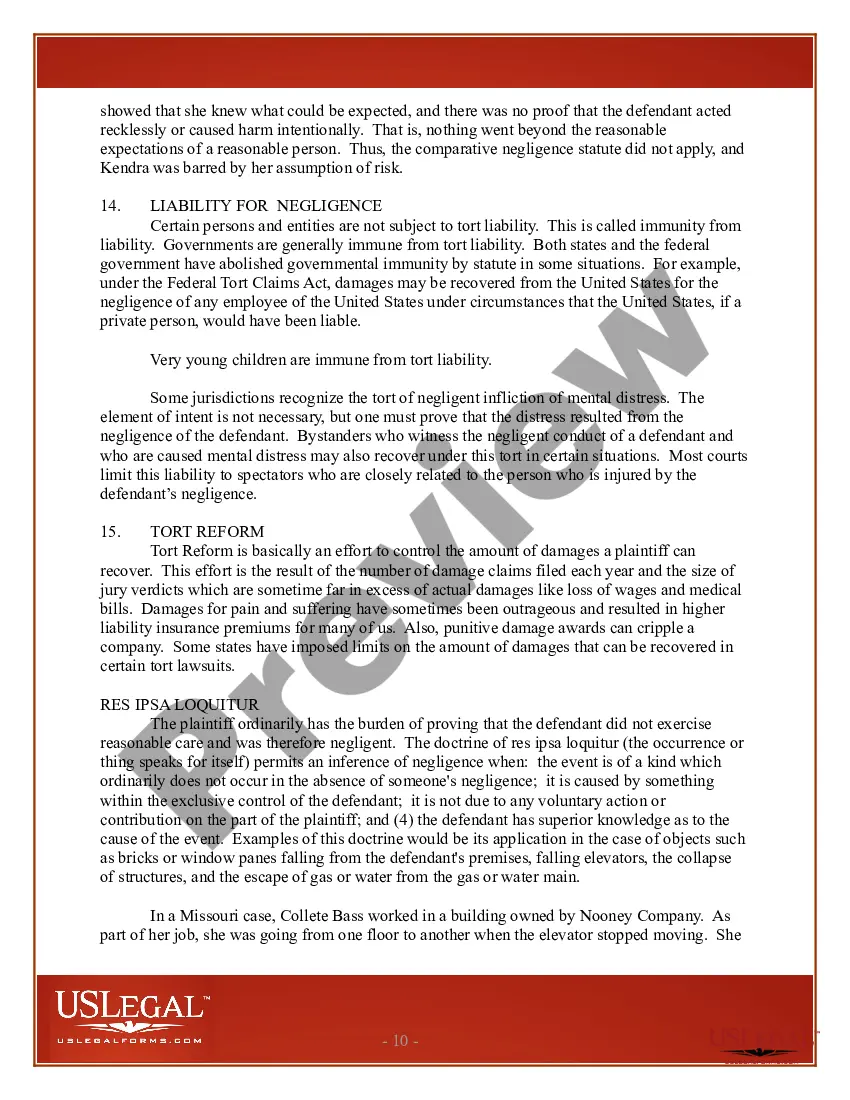
Torts fall into three general categories: Intentional torts (e.g., intentionally hitting a person); Negligent torts (e.g., causing an accident by failing to obey traffic rules); and. Strict liability torts (e.g., liability for making and selling defective products - see Products Liability).
What Are the Four Major Types of Mass Torts? The four primary types of mass torts encompass product liability, pharmaceuticals, environmental hazards, and consumer fraud. Product liability involves defective products causing widespread harm.
Under tort law, seven intentional torts exist. Four of them are personal: assault, battery, intentional infliction of emotional distress, and false imprisonment. The other three are trespass to chattels, trespass to property, and conversion.
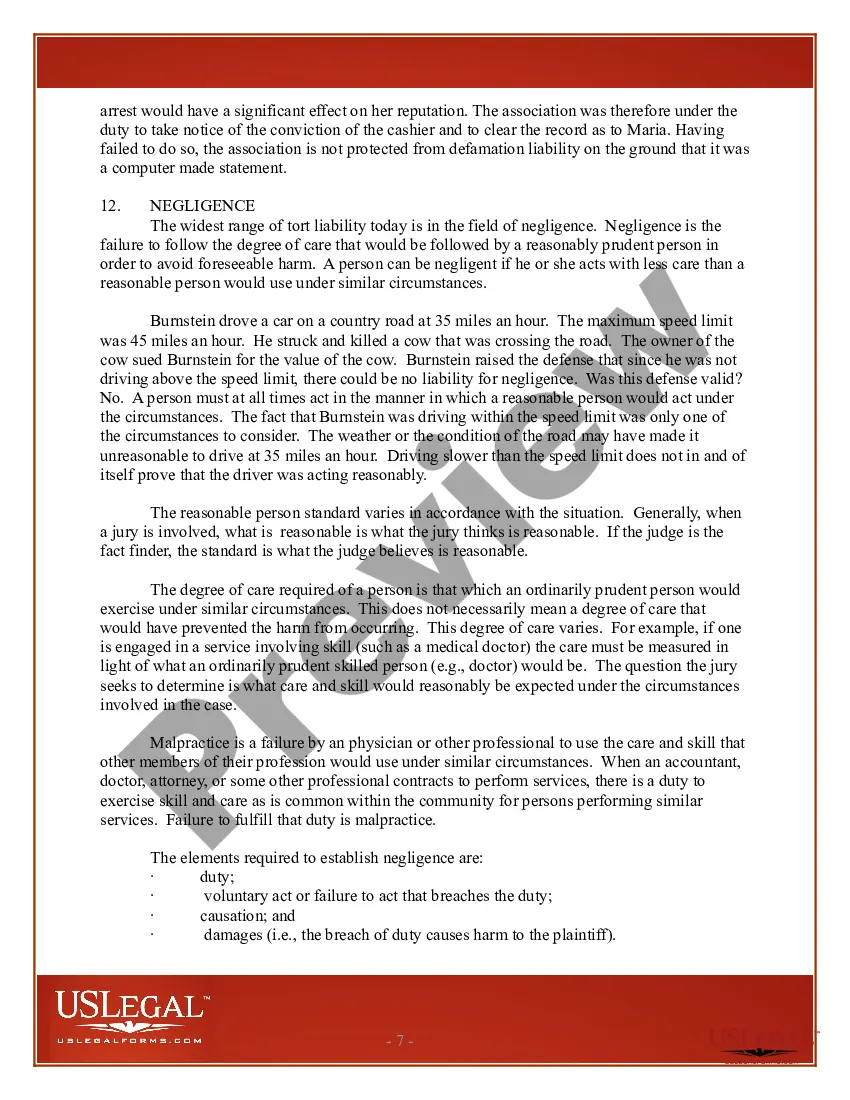
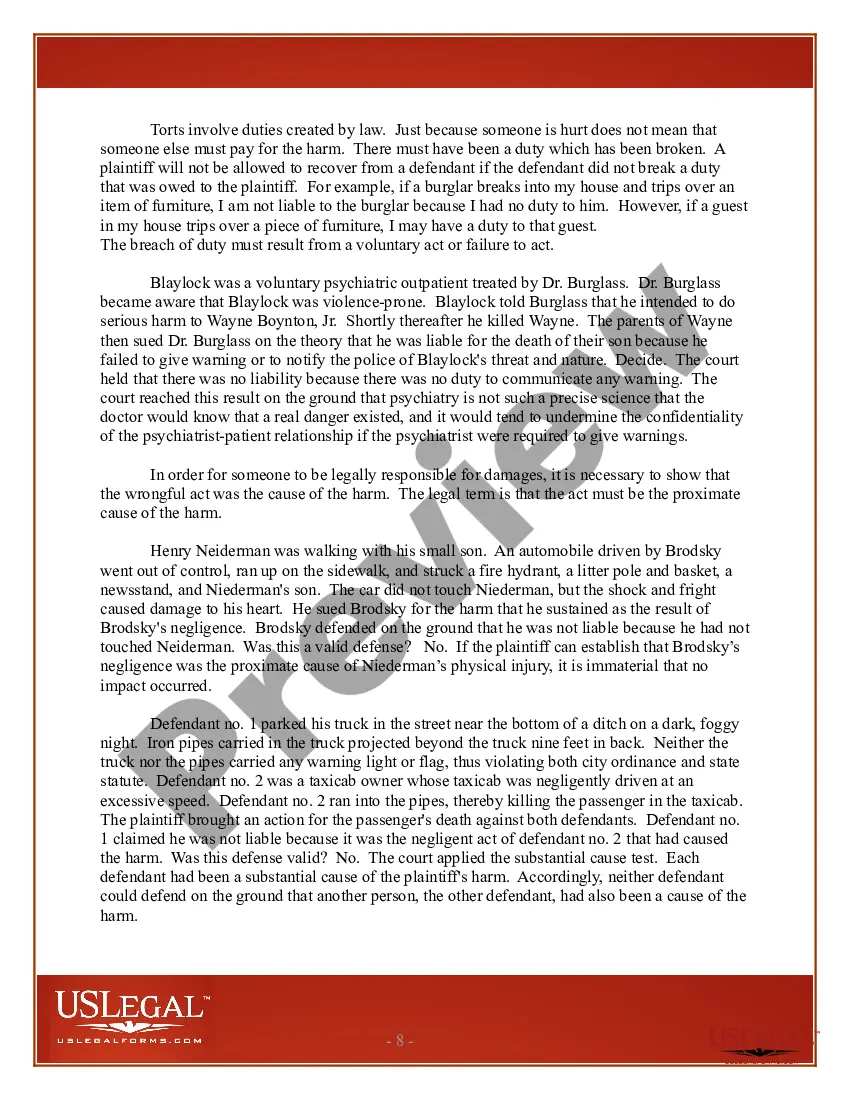
Identifying the Four Tort Elements The accused had a duty, in most personal injury cases, to act in a way that did not cause you to become injured. The accused committed a breach of that duty. An injury occurred to you. The breach of duty was the proximate cause of your injury.
An intentional tort is a deliberate act of misconduct that harms someone, either physically, emotionally, or financially. Although a tort is not the same as a crime, many intentional torts are also crimes. The victim of an intentional tort can file a claim against the perpetrator seeking monetary damages.
Negligent torts include harm brought on by a failure to exercise reasonable care or a standard of care. In contrast, intentional torts involve harm brought on by a conscious purpose to do harm or a deliberate act.
This chapter addresses the four intentional torts, assault, battery, false imprisonment, and intentional infliction of emotional distress, that involve injury to persons—what some call the “dignitary” torts.
Four of them are personal: assault, battery, intentional infliction of emotional distress, and false imprisonment. The other three are trespass to chattels, trespass to property, and conversion.
Torts fall into three general categories: Intentional torts (e.g., intentionally hitting a person); Negligent torts (e.g., causing an accident by failing to obey traffic rules); and. Strict liability torts (e.g., liability for making and selling defective products - see Products Liability).
