Tort Negligence Liability For Psychiatric Damage In Los Angeles
Description




Get your form ready online
Our built-in tools help you complete, sign, share, and store your documents in one place.
Make edits, fill in missing information, and update formatting in US Legal Forms—just like you would in MS Word.
Download a copy, print it, send it by email, or mail it via USPS—whatever works best for your next step.
Sign and collect signatures with our SignNow integration. Send to multiple recipients, set reminders, and more. Go Premium to unlock E-Sign.
If this form requires notarization, complete it online through a secure video call—no need to meet a notary in person or wait for an appointment.
We protect your documents and personal data by following strict security and privacy standards.

Make edits, fill in missing information, and update formatting in US Legal Forms—just like you would in MS Word.

Download a copy, print it, send it by email, or mail it via USPS—whatever works best for your next step.

Sign and collect signatures with our SignNow integration. Send to multiple recipients, set reminders, and more. Go Premium to unlock E-Sign.

If this form requires notarization, complete it online through a secure video call—no need to meet a notary in person or wait for an appointment.

We protect your documents and personal data by following strict security and privacy standards.
Looking for another form?

Form popularity
FAQ
A defendant who is found guilty but mentally ill may be sentenced to mental health treatment, at the conclusion of which the defendant will serve the remainder of their sentence in the same manner as any other defendant.
Kids under the age of 6 cannot legally be negligent. This is simply in recognition of the fact that a child of that age, isn't capable of forming the capacity to act, or of evaluating his or her own actions for reasonableness. However, their caretakers can be liable.
Insane persons are commonly held liable for their intentional torts. While there are very few cases, the same rule has been applied to their negligence.
Intent (defn.): intent to act + P or K that act will result in the harm defined in the tort. Mentally Ill: Can be liable for intentional torts.
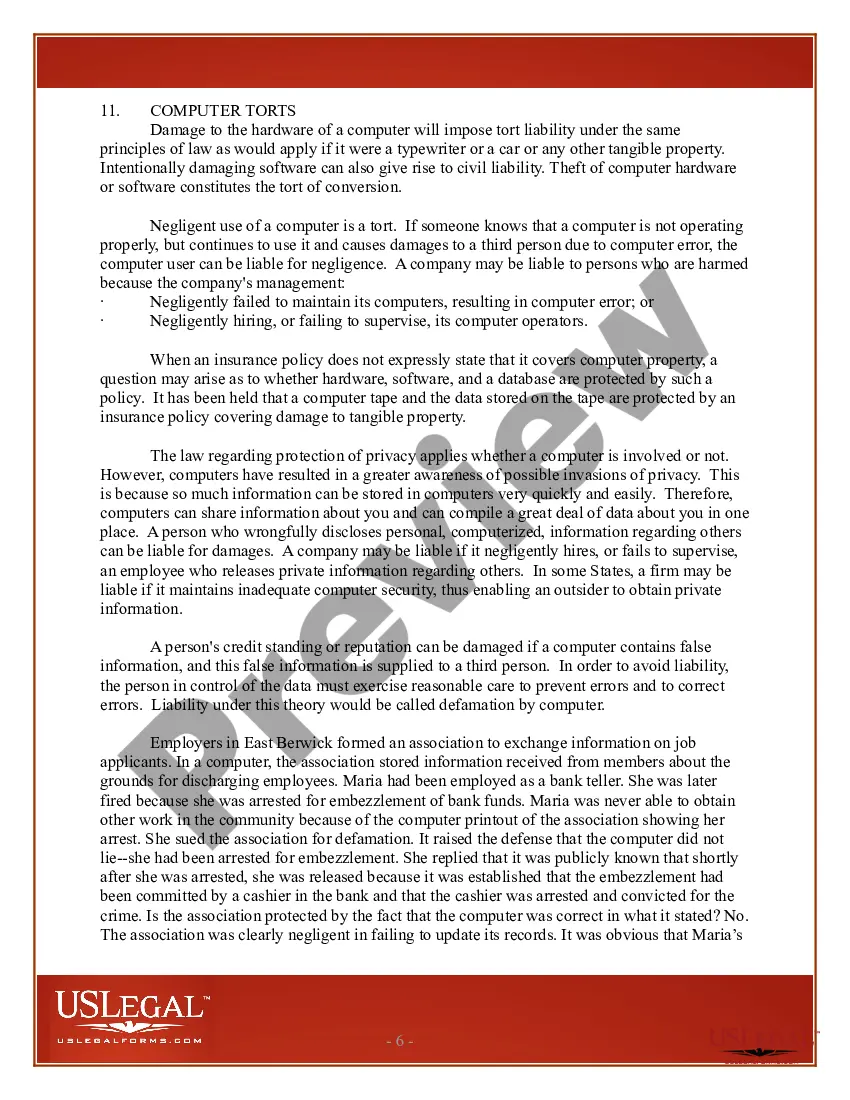
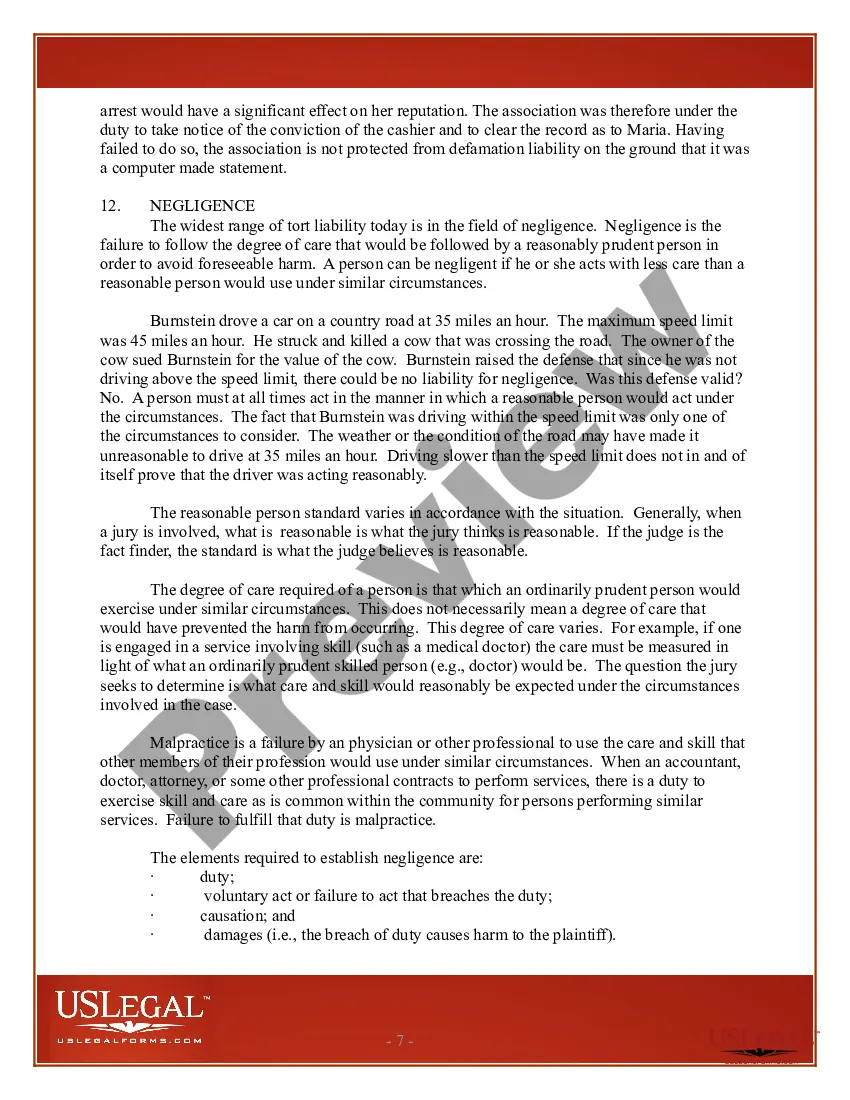
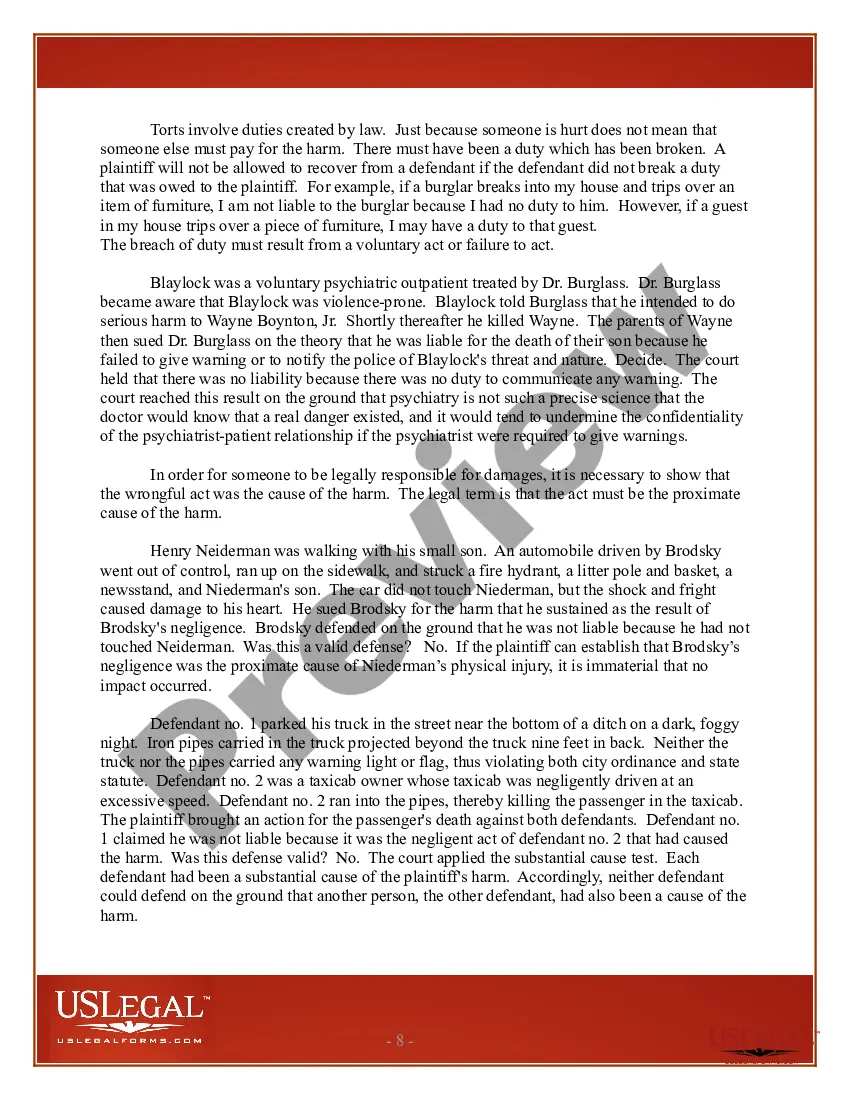
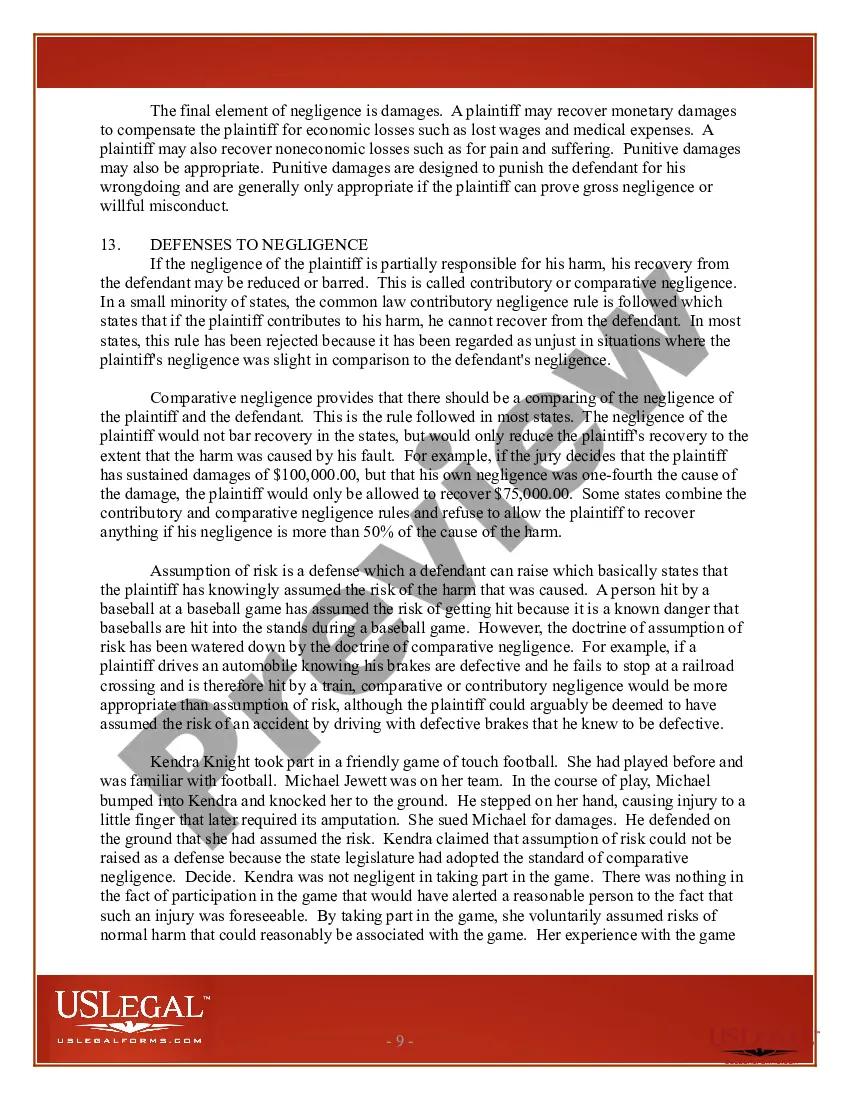
In claims of negligently inflicted psychiatric illness, the plaintiff's reaction to a traumatic event is usually measured against a standard of normal susceptibility and disposition. This measurement is used to determine the question of whether the defendant should have reasonably foreseen the plaintiff's injury.
The distinction between the liability of a lunatic or insane person in civil actions for torts committed by him, and in crimi- nal prosecutions, is well defined, and it has always been held, and upon sound reason, that though not punishable criminally, he is liable to a civil action for any tort he may commit."
However, California law recognizes the seriousness of emotional injuries, even if they lack physical symptoms. “You can't prove it.” Despite its intangibility, you can prove emotional distress in court. You can provide evidence through medical records, journal entries, and expert testimonies.
Thankfully, in order to prove negligence and claim damages, a claimant has to prove a number of elements to the court. These are: the defendant owed them a duty of care. the defendant breached that duty of care, and.
To win a tort case, three elements that must be established in a claim include: That the defendant had a legal duty to act in a certain way. That the defendant breached this duty by failing to act appropriately. That the plaintiff suffered injury or loss as a direct result of the defendant's breach.
The claim form that you submit must contain the following information (1) the name and address of the claimant, (2) the date, place, and circumstances of the occurrence which gave rise to the claim, (3) a general description of the injury and damages to date, (4) the names of the public employee or employees that ...
