Tort Negligence Liability For Mental Harm In Florida
Description




Get your form ready online
Our built-in tools help you complete, sign, share, and store your documents in one place.
Make edits, fill in missing information, and update formatting in US Legal Forms—just like you would in MS Word.
Download a copy, print it, send it by email, or mail it via USPS—whatever works best for your next step.
Sign and collect signatures with our SignNow integration. Send to multiple recipients, set reminders, and more. Go Premium to unlock E-Sign.
If this form requires notarization, complete it online through a secure video call—no need to meet a notary in person or wait for an appointment.
We protect your documents and personal data by following strict security and privacy standards.

Make edits, fill in missing information, and update formatting in US Legal Forms—just like you would in MS Word.

Download a copy, print it, send it by email, or mail it via USPS—whatever works best for your next step.

Sign and collect signatures with our SignNow integration. Send to multiple recipients, set reminders, and more. Go Premium to unlock E-Sign.

If this form requires notarization, complete it online through a secure video call—no need to meet a notary in person or wait for an appointment.

We protect your documents and personal data by following strict security and privacy standards.
Looking for another form?







Form popularity
FAQ
Emotional Distress, Negligent Infliction The plaintiff must suffer a discernible physical injury; The physical injury must be caused by the psychological trauma; The plaintiff must be involved in the event causing the negligent injury to another; and.
The tort of intentional infliction of mental suffering goes by many names - intentional infliction of emotional harm, intentional infliction of emotional distress and so forth. Basically, this tort involves intentionally causing severe emotional harm to another individual.
You can sue for emotional distress in Florida, so long as your circumstances meet the legal conditions for a lawsuit. For example, if you suffered a physical injury or lost a loved one, these are grounds for seeking compensation for emotional distress.
Intentional infliction of emotional distress (IIED) is a tort that occurs when one acts in a manner that intentionally or recklessly causes another to suffer severe emotional distress, such as issuing the threat of future harm.
First, there exists a garden variety emotional distress claim where you assert the claim but do not need to find and obtain a medical opinion by a therapist or psychiatrist. Generally, these claims are worth $30,000-$50,000.
Overview. Intentional infliction of emotional distress (IIED) is a tort that occurs when one acts in a manner that intentionally or recklessly causes another to suffer severe emotional distress, such as issuing the threat of future harm.
Intentional infliction of emotional distress (IIED; sometimes called the tort of outrage) is a common law tort that allows individuals to recover for severe emotional distress caused by another individual who intentionally or recklessly inflicted emotional distress by behaving in an "extreme and outrageous" way.
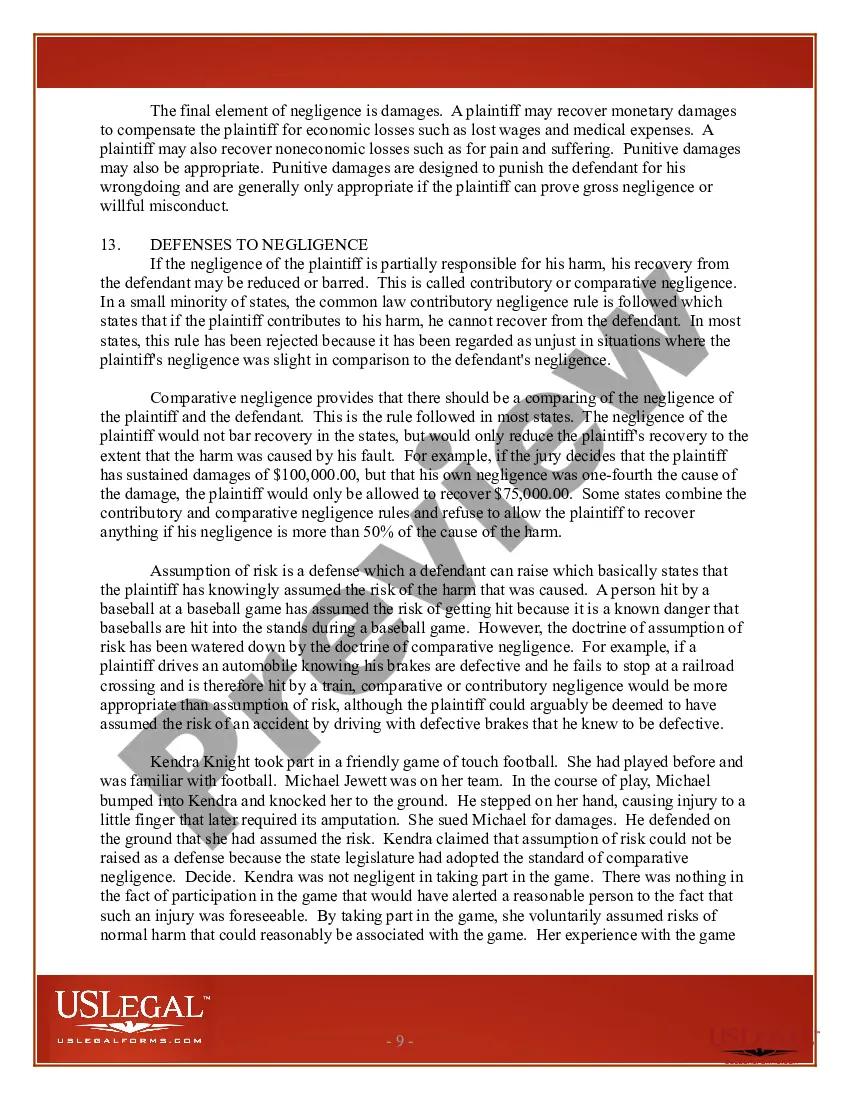
In claims of negligently inflicted psychiatric illness, the plaintiff's reaction to a traumatic event is usually measured against a standard of normal susceptibility and disposition. This measurement is used to determine the question of whether the defendant should have reasonably foreseen the plaintiff's injury.
Thankfully, in order to prove negligence and claim damages, a claimant has to prove a number of elements to the court. These are: the defendant owed them a duty of care. the defendant breached that duty of care, and.