Tort Negligence Liability For Mental Harm In Collin
Description

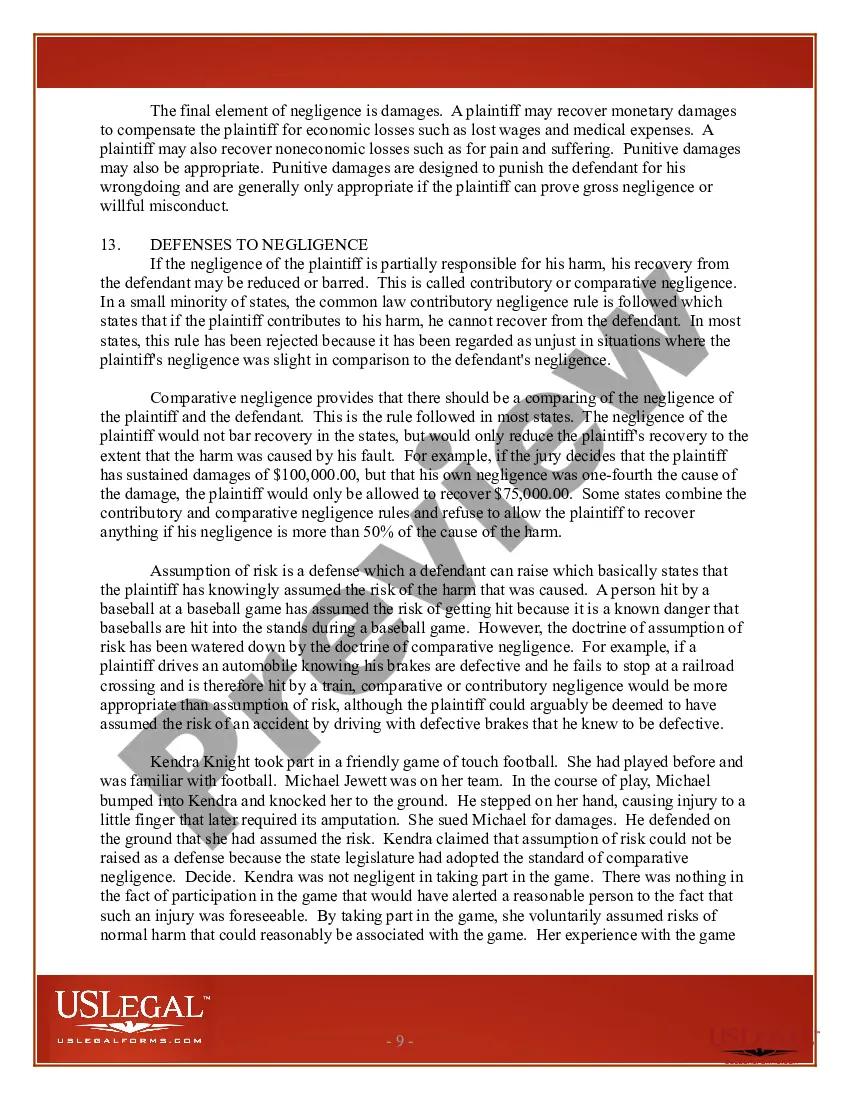
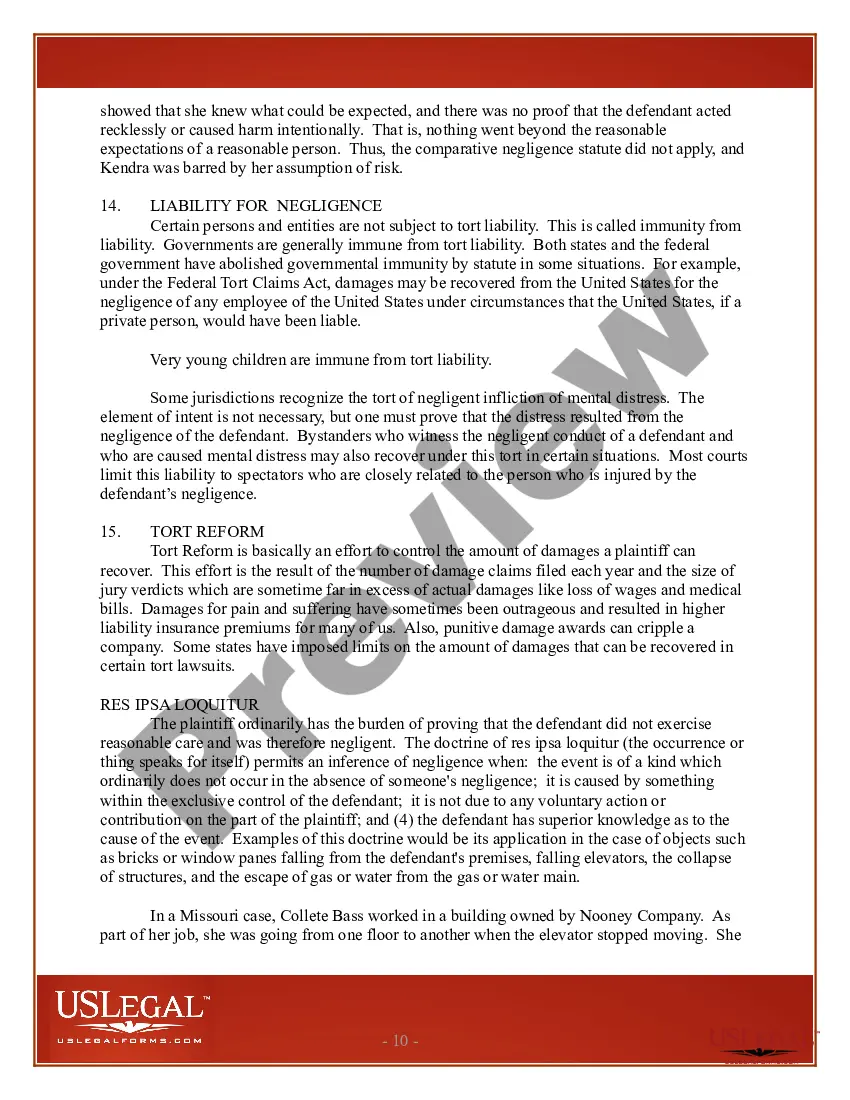



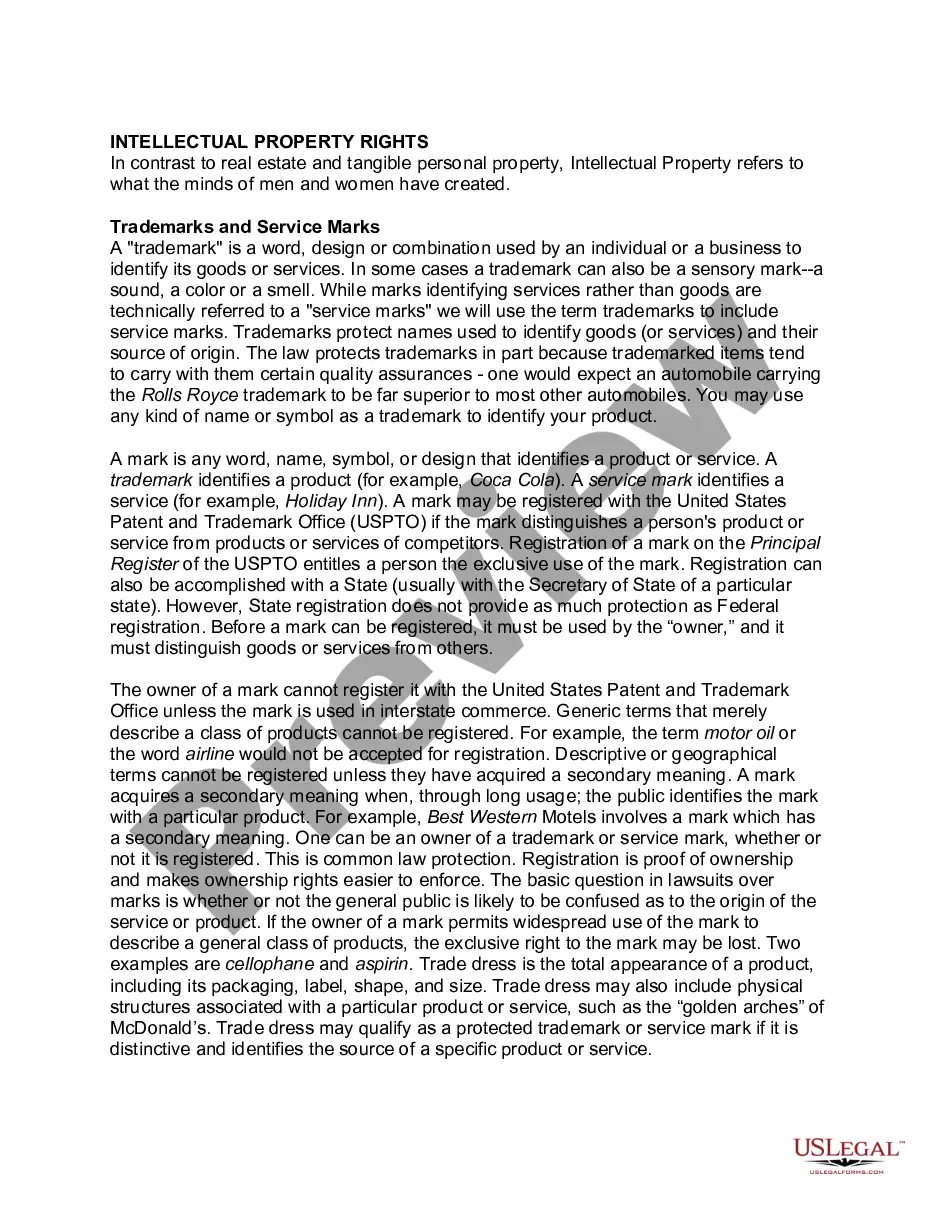
Get your form ready online
Our built-in tools help you complete, sign, share, and store your documents in one place.
Make edits, fill in missing information, and update formatting in US Legal Forms—just like you would in MS Word.
Download a copy, print it, send it by email, or mail it via USPS—whatever works best for your next step.
Sign and collect signatures with our SignNow integration. Send to multiple recipients, set reminders, and more. Go Premium to unlock E-Sign.
If this form requires notarization, complete it online through a secure video call—no need to meet a notary in person or wait for an appointment.
We protect your documents and personal data by following strict security and privacy standards.

Make edits, fill in missing information, and update formatting in US Legal Forms—just like you would in MS Word.

Download a copy, print it, send it by email, or mail it via USPS—whatever works best for your next step.

Sign and collect signatures with our SignNow integration. Send to multiple recipients, set reminders, and more. Go Premium to unlock E-Sign.

If this form requires notarization, complete it online through a secure video call—no need to meet a notary in person or wait for an appointment.

We protect your documents and personal data by following strict security and privacy standards.
Looking for another form?








Form popularity
FAQ
The distinction between the liability of a lunatic or insane person in civil actions for torts committed by him, and in crimi- nal prosecutions, is well defined, and it has always been held, and upon sound reason, that though not punishable criminally, he is liable to a civil action for any tort he may commit."
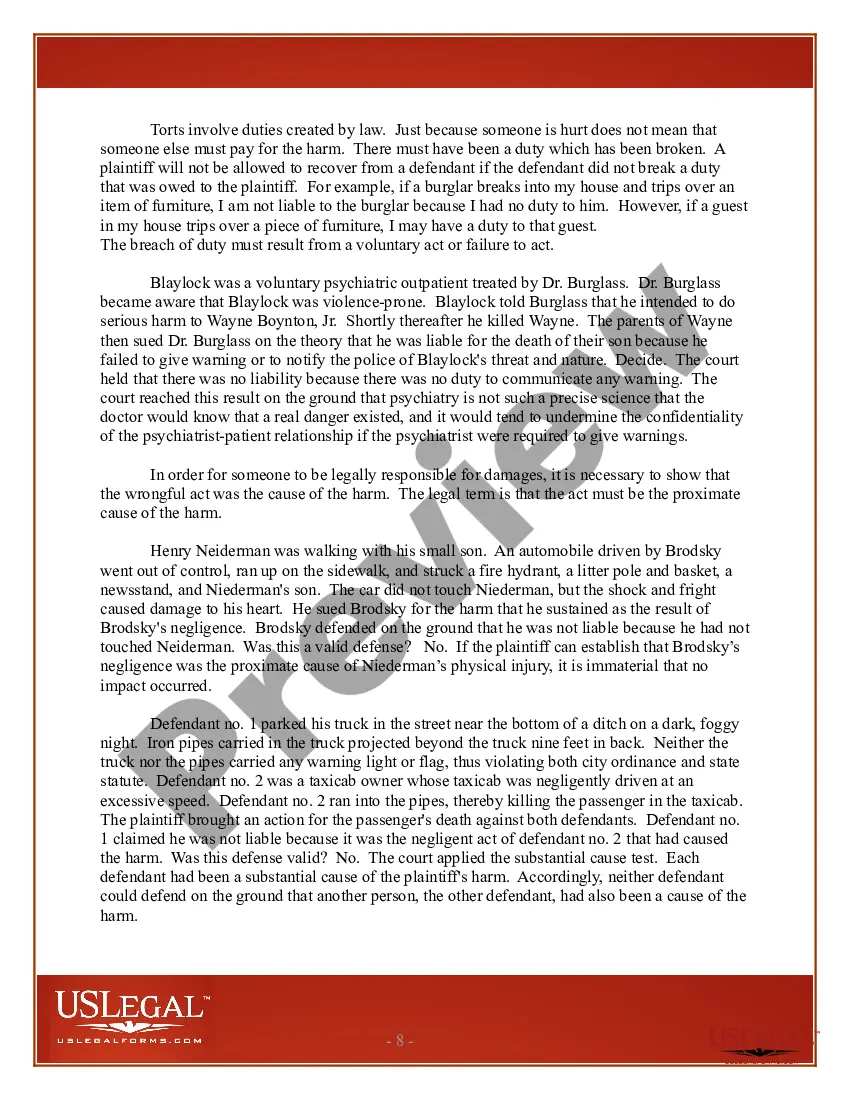
These legal elements include a professional duty owed to a patient, breach of duty, proximate cause or causal con- nection elicited by a breach of duty, and resulting in- juries or damages suffered. 1 These 4 elements apply to all cases of negligence regardless of specialty or clin- ician level.
The tort of intentional infliction of mental suffering goes by many names - intentional infliction of emotional harm, intentional infliction of emotional distress and so forth. Basically, this tort involves intentionally causing severe emotional harm to another individual.
In claims of negligently inflicted psychiatric illness, the plaintiff's reaction to a traumatic event is usually measured against a standard of normal susceptibility and disposition. This measurement is used to determine the question of whether the defendant should have reasonably foreseen the plaintiff's injury.
So you should say something like: “In order to sue B in negligence for compensation for injury to his leg, A will have to show that: (1) B owed him a duty of care; (2) B breached that duty of care; (3) B's breach caused A to suffer the leg injury for which he wants compensation; and (4) that loss is actionable (that is ...
In order to win your negligence claim, and obtain one or more of the types of damages available to you as an injured victim, your personal injury lawyer will have to prove four things: (1) duty; (2) breach; (3) causation; and (4) damages. More specifically, your attorney will have to prove the following: Duty.
The Court again outlined the elements required to allege negligent infliction of emotional distress: (1) the plaintiff must suffer a physical injury; (2) the plaintiff's physical injury must be caused by the psychological trauma ; (3) the plaintiff must be involved in some way in the event which caused the negligent ...
There must be evidence of the nature, severity, or duration of the plaintiff's anguish substantially disrupting the injured party's daily routine, or such a high degree of mental pain that is more than anger, embarrassment, vexation, anxiety, or worry for mental anguish damages.