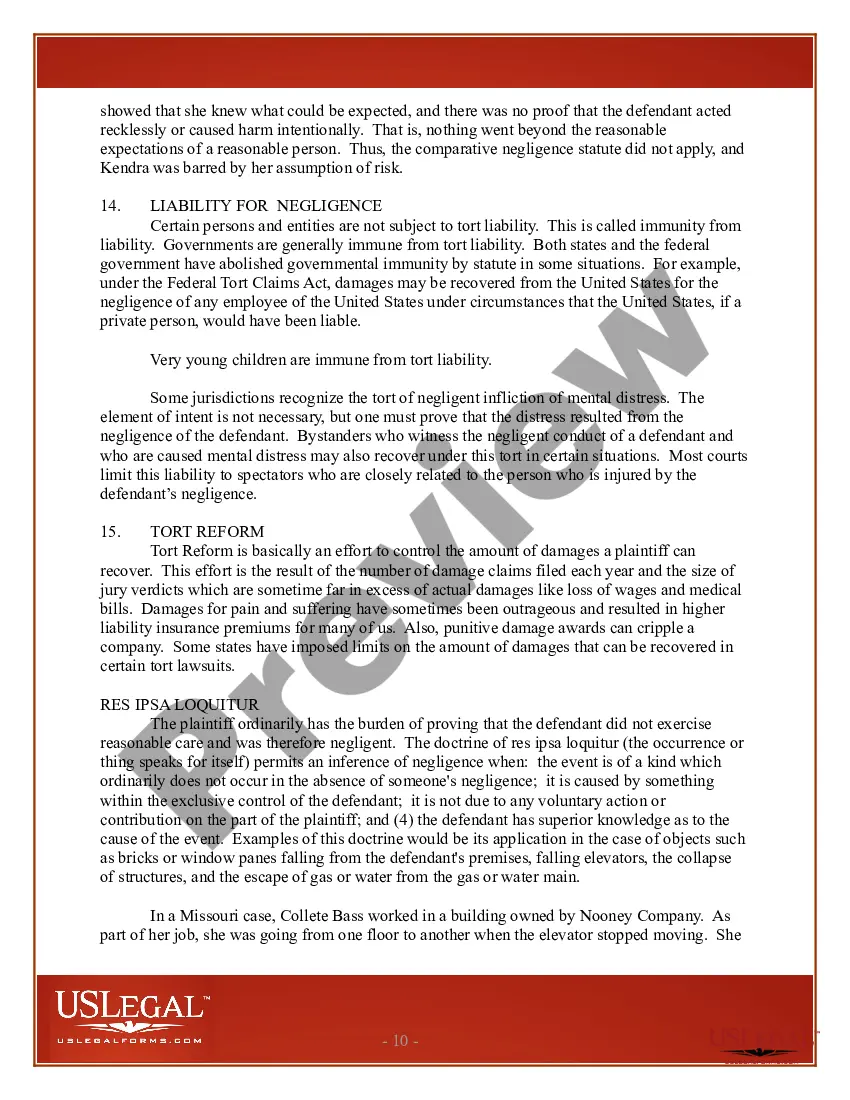
Tort Negligence Liability For Employers In Bronx
Description




Get your form ready online
Our built-in tools help you complete, sign, share, and store your documents in one place.
Make edits, fill in missing information, and update formatting in US Legal Forms—just like you would in MS Word.
Download a copy, print it, send it by email, or mail it via USPS—whatever works best for your next step.
Sign and collect signatures with our SignNow integration. Send to multiple recipients, set reminders, and more. Go Premium to unlock E-Sign.
If this form requires notarization, complete it online through a secure video call—no need to meet a notary in person or wait for an appointment.
We protect your documents and personal data by following strict security and privacy standards.

Make edits, fill in missing information, and update formatting in US Legal Forms—just like you would in MS Word.

Download a copy, print it, send it by email, or mail it via USPS—whatever works best for your next step.

Sign and collect signatures with our SignNow integration. Send to multiple recipients, set reminders, and more. Go Premium to unlock E-Sign.

If this form requires notarization, complete it online through a secure video call—no need to meet a notary in person or wait for an appointment.

We protect your documents and personal data by following strict security and privacy standards.
Looking for another form?






Form popularity
FAQ
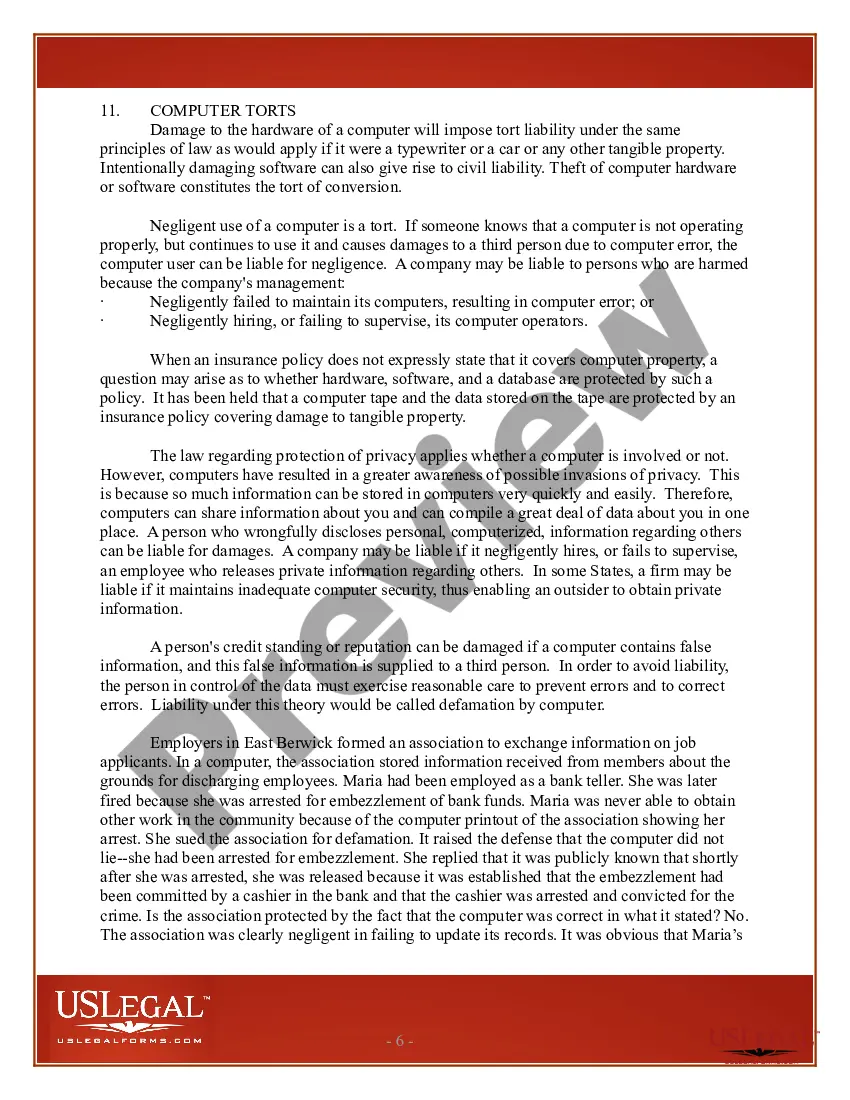
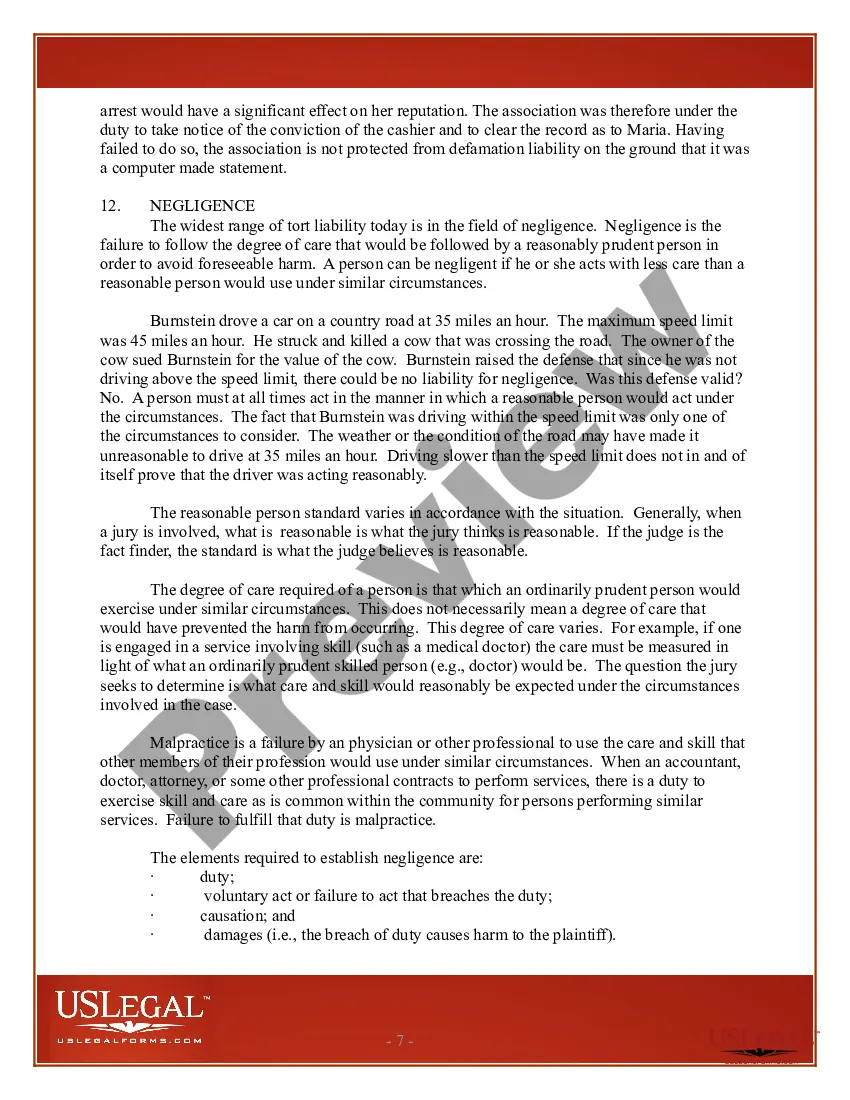
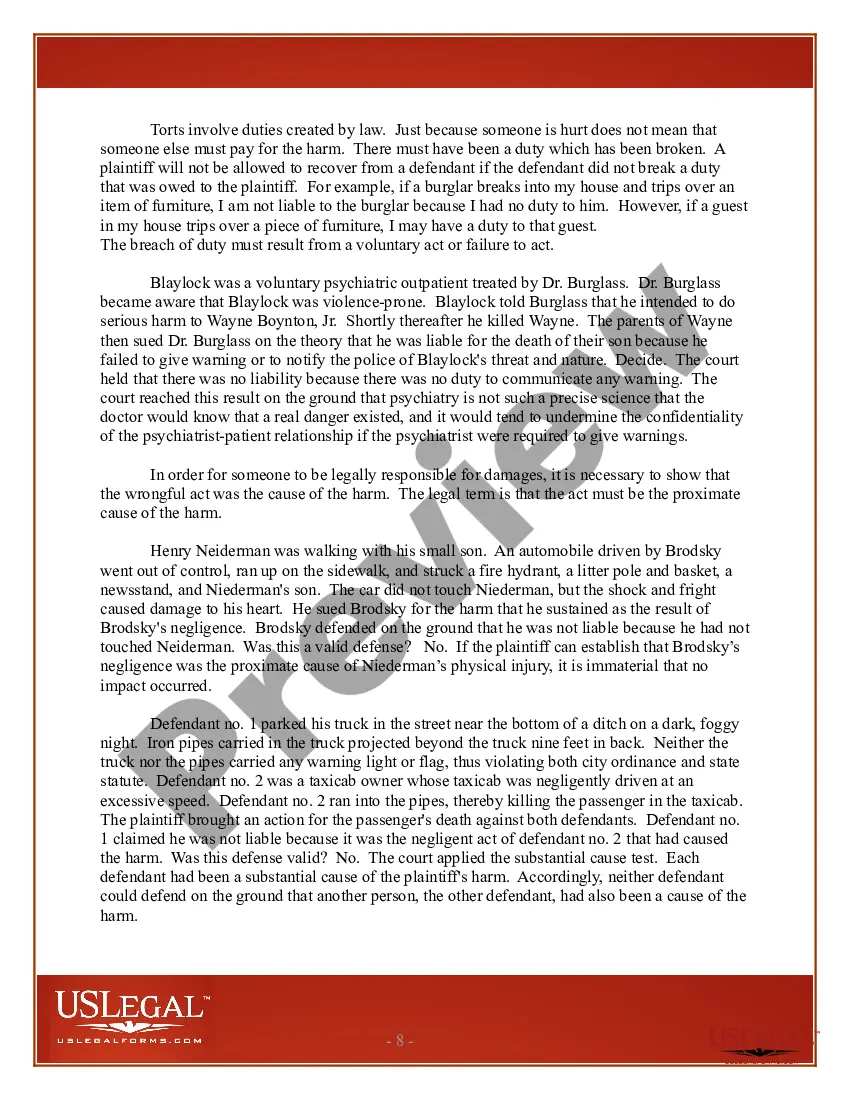
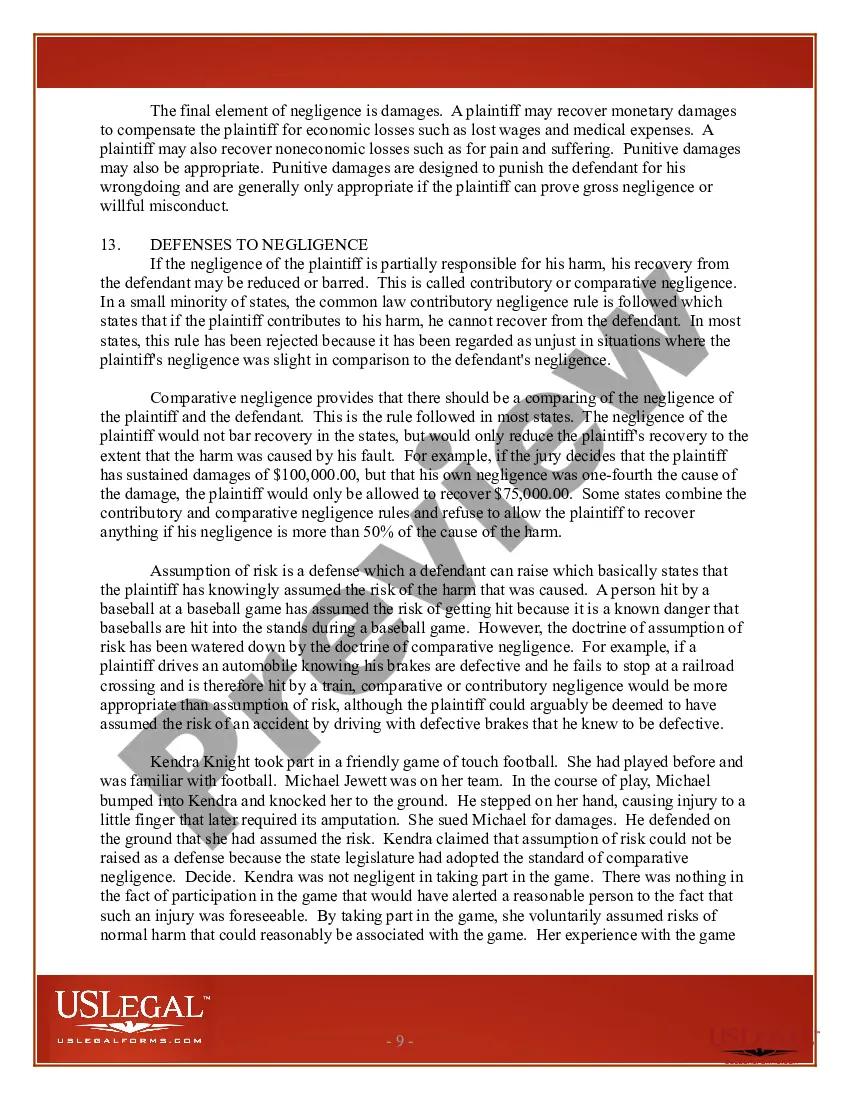
The New York negligence law allows personal injury victims to hold those accountable who injure them by failing to exercise reasonable care. Meirowitz & Wasserberg, LLP helps clients recover compensation when these injuries impair their quality of life and reduce their financial security.
You cannot sue your employer or a co-worker for an on-the-job injury that was caused by their negligence – you can only file a claim for workers' compensation benefits. However, if a third party – somebody other than your employer or a co-worker – was at fault, you can sue them.
Under the doctrine of respondeat superior, employers can be found to bear vicarious liability for any torts committed by their employees that took place within the scope of employment.
Tort liability is predicated on the existence of proximate cause, which consists of both: (1) causation in fact, and (2) foreseeability. A plaintiff must prove that his or her injuries were the actual or factual result of the defendant's actions.
Discrimination at work is more than just an annoyance. It can disrupt your entire life. In New York, employees who face ongoing workplace harassment often wonder if they can sue their employers for the emotional distress and anxiety it causes. The good news is that you can, in most cases.
The answer depends on your claims and willingness to pursue litigation. If your claims are strong and you are invested in the litigation process, it can be very “worth it” to feel you are standing up for accountability, getting compensation for your injuries, and incentivizing the company to change its ways.
An example: An employer would be considered negligent if he failed to do a background check on a new hire to later find out that this employee was fired from a previous job for assaulting a co-worker.
Generally, intentional torts are harder to prove than negligence, since a plaintiff must show that the defendant did something on purpose.
Filing Claims Online You can only file a tort claim using the eClaim system. A tort claim is a personal injury claim due to alleged negligence on the part of the City or a City employee or involves property damage as a result of the alleged reckless behavior of a City employee in the course of that employee's work.
