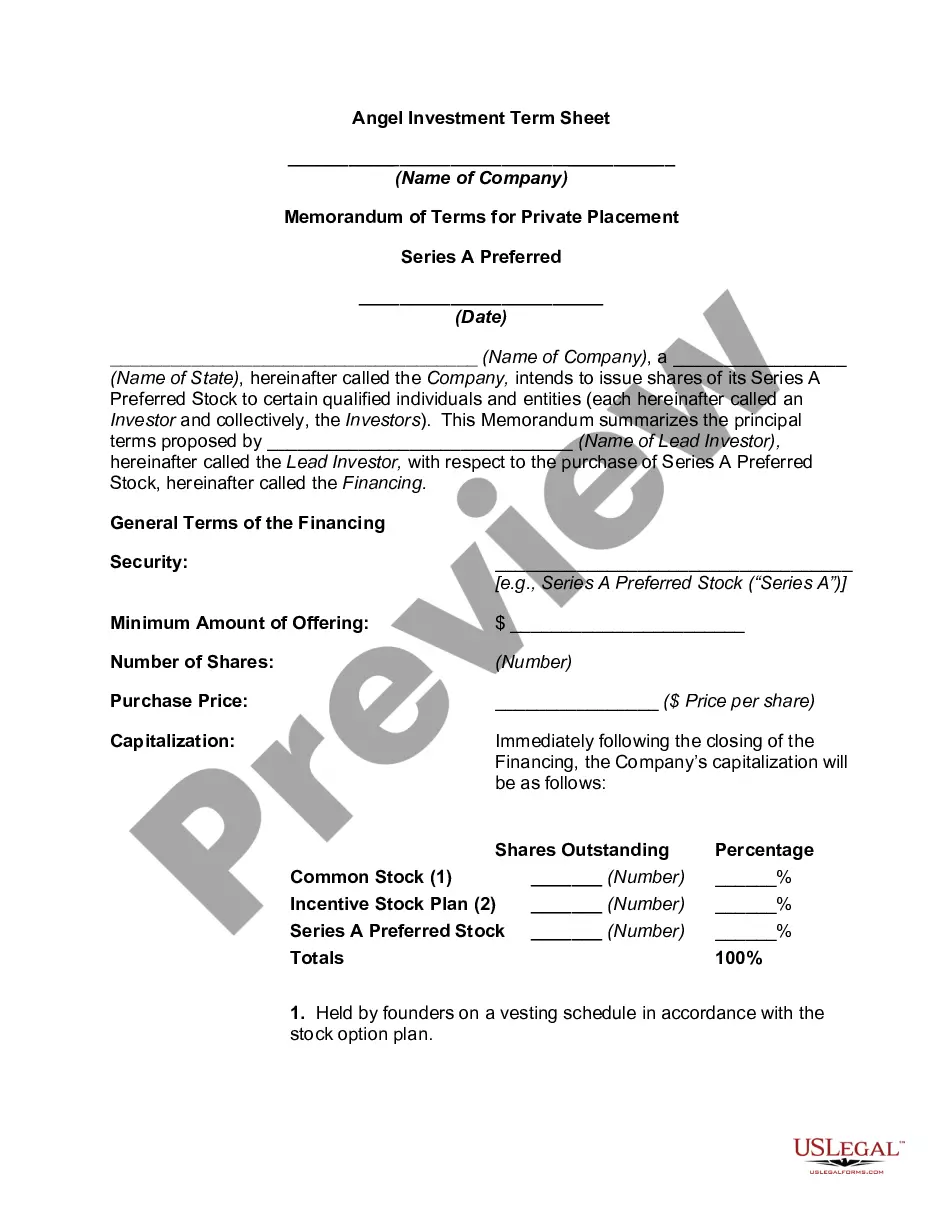
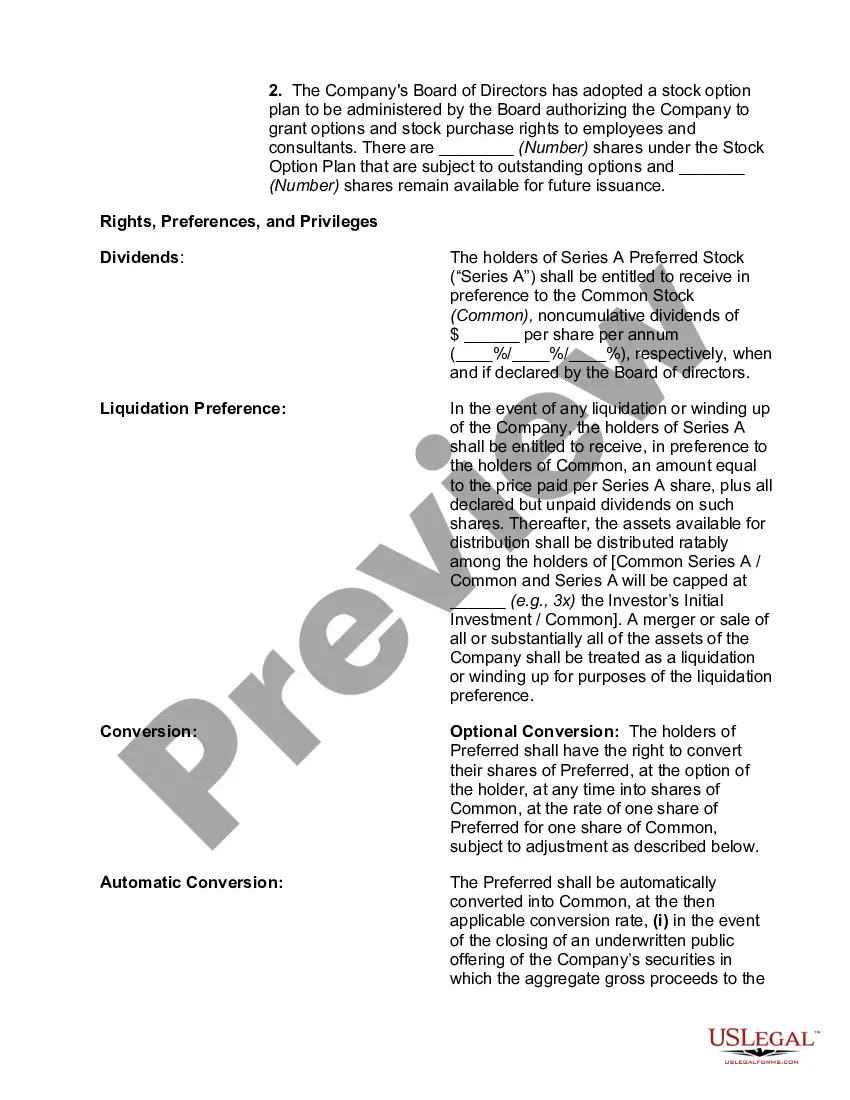
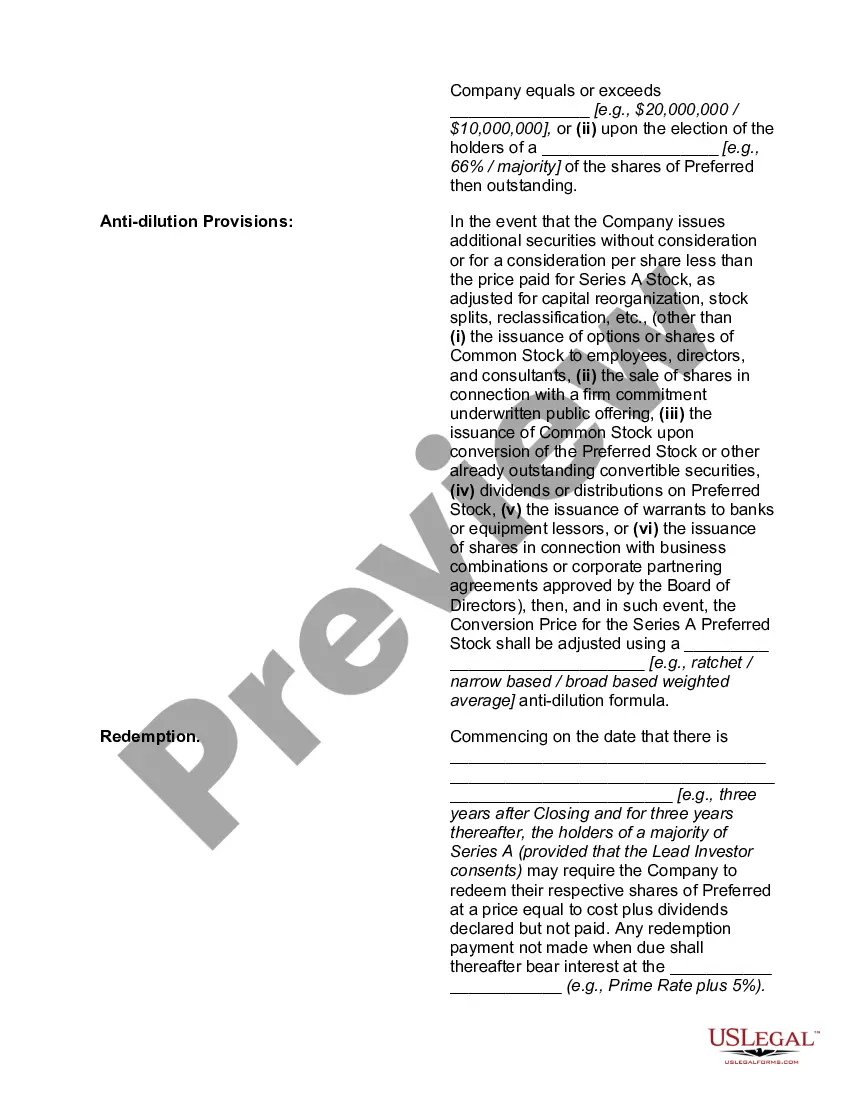
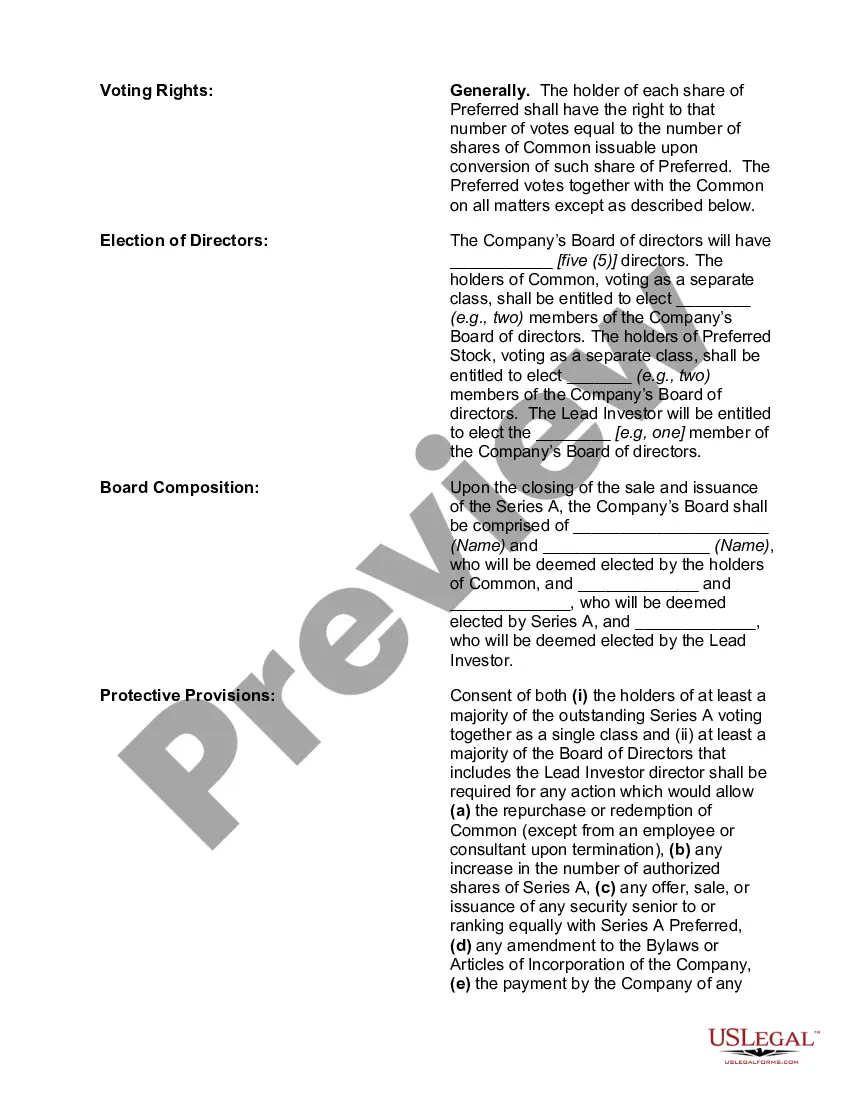
Angel Investment Form For Individual In Maryland
Description
Get your form ready online
Our built-in tools help you complete, sign, share, and store your documents in one place.
Make edits, fill in missing information, and update formatting in US Legal Forms—just like you would in MS Word.
Download a copy, print it, send it by email, or mail it via USPS—whatever works best for your next step.
Sign and collect signatures with our SignNow integration. Send to multiple recipients, set reminders, and more. Go Premium to unlock E-Sign.
If this form requires notarization, complete it online through a secure video call—no need to meet a notary in person or wait for an appointment.
We protect your documents and personal data by following strict security and privacy standards.

Make edits, fill in missing information, and update formatting in US Legal Forms—just like you would in MS Word.

Download a copy, print it, send it by email, or mail it via USPS—whatever works best for your next step.

Sign and collect signatures with our SignNow integration. Send to multiple recipients, set reminders, and more. Go Premium to unlock E-Sign.

If this form requires notarization, complete it online through a secure video call—no need to meet a notary in person or wait for an appointment.

We protect your documents and personal data by following strict security and privacy standards.
Looking for another form?





Form popularity
FAQ
1099 forms As an investor, you might receive these forms: 1099-B, which reports capital gains and losses. 1099-DIV, which reports dividend income and capital gains distributions. 1099-INT, which reports interest income.
To be an angel, you need to qualify as an accredited investor, defined by the SEC as $1 million of net worth or annual income over $200,000. (I'm simplifying – the real definition is a bit more complex – but it gives you the idea.) You don't have to own a professional sports team, or pass an exam.
Corporate Bodies: Corporates interested in investing in startups as angel investors must demonstrate a minimum net worth of INR 10 crore. This requirement ensures that only entities with substantial resources are involved in the early stages of business development.
Angel investing is only suitable for those with stable income streams and minimum investable assets of $1 million — $2 million. Consider if: You have at least six months of living expenses set aside in savings as an emergency cushion. Investing surplus minimizes financial disruption if some startups fail.
Angel investors typically seek a 10%-30% equity stake in a company. This percentage is negotiated based on your startup's valuation, the funding amount and the perceived risk. It's essential to strike a balance that reflects your company's current value and future potential.
Individual Investors: To qualify as an angel investor, an individual must possess net tangible assets of at least INR 2 crore, excluding their principal residence. Additionally, they should have experience in early-stage investments, be a serial entrepreneur, or have a minimum of 10 years in a senior management role.
Before you meet investors Sometimes, your character and ambition alone can convince business angels, but it's better to come in with a solid business plan and financial projections: Document financial situation. Present financial documents and realistic financial projections for your startup.
Angel investment can give your business credibility for later rounds of investment (from venture capitalists, for example). When a business receives backing from an angel investor, it gains more than just financial support.
Hi There - If completely worthless, then you can write off stocks as if sold by completing IRS form Schedule D, calculating loss (Cost less Sales Price $0) and deducting a capital loss of up to $3000 per year and carrying over any remainder of loss (if applicable).