Investor Term Sheet Template With Confidentiality Statement In Chicago
Description

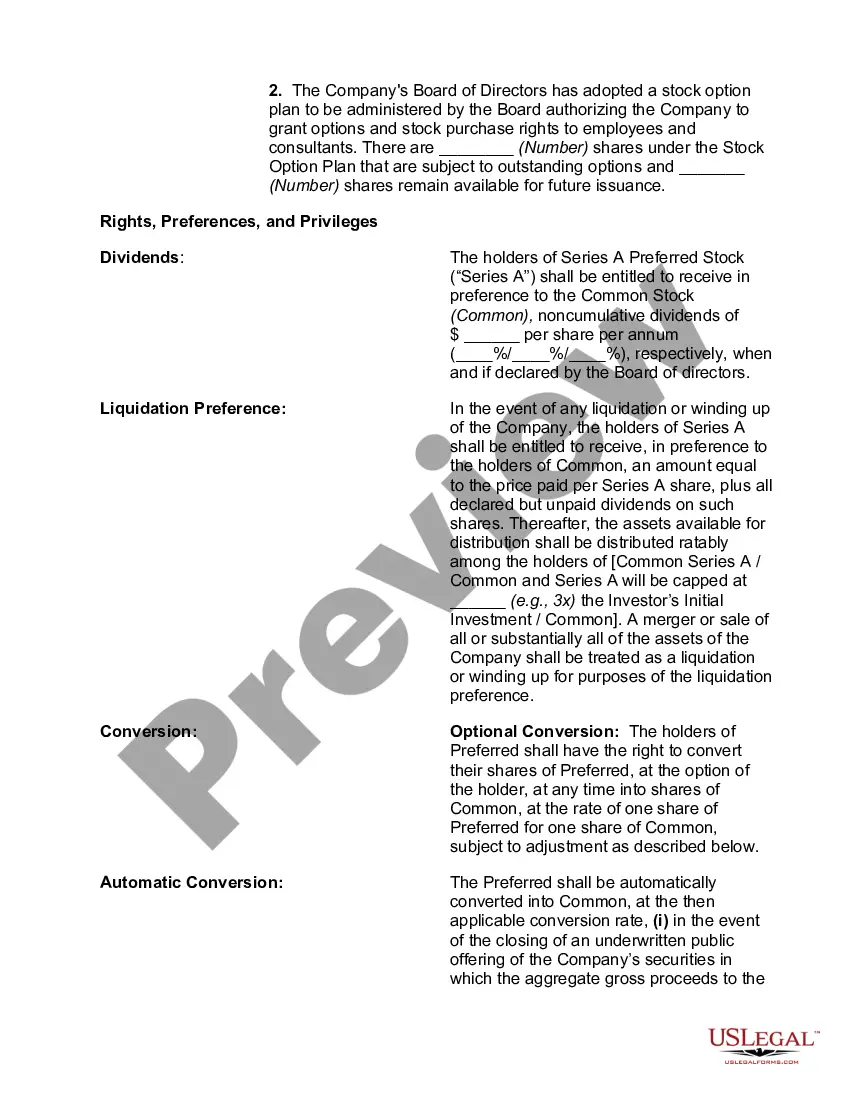
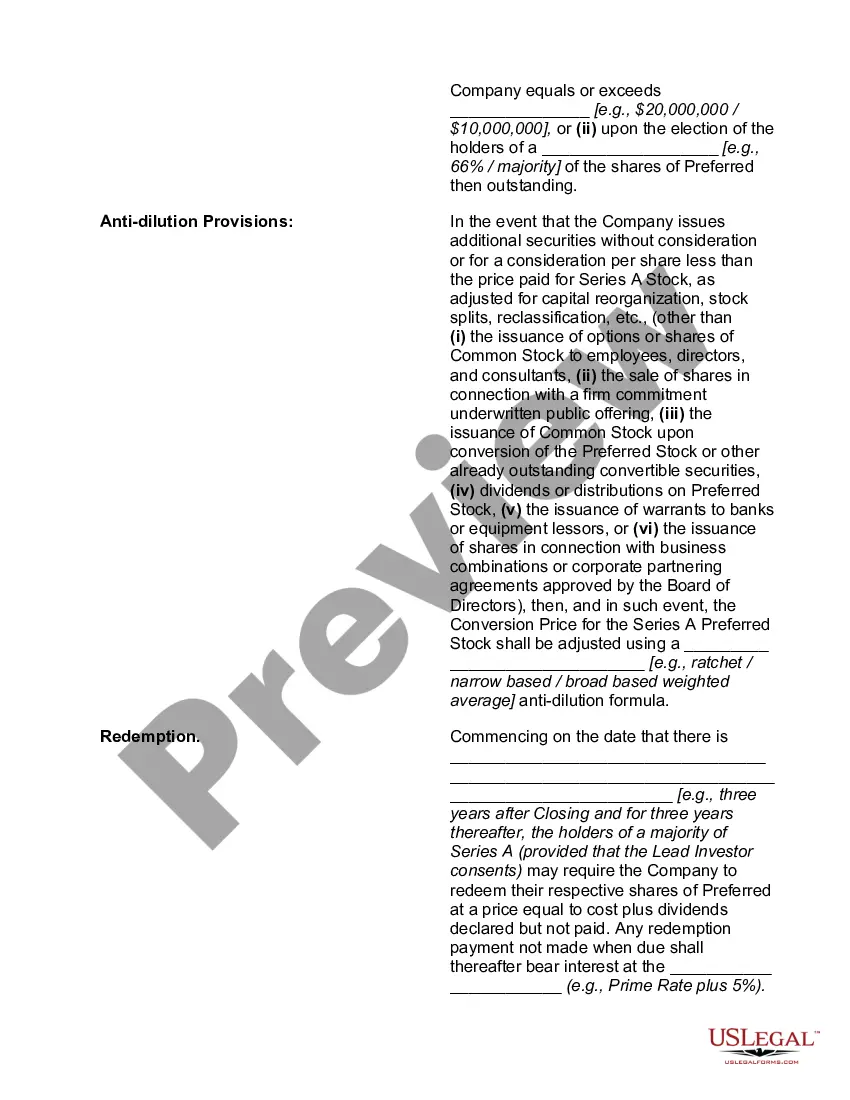
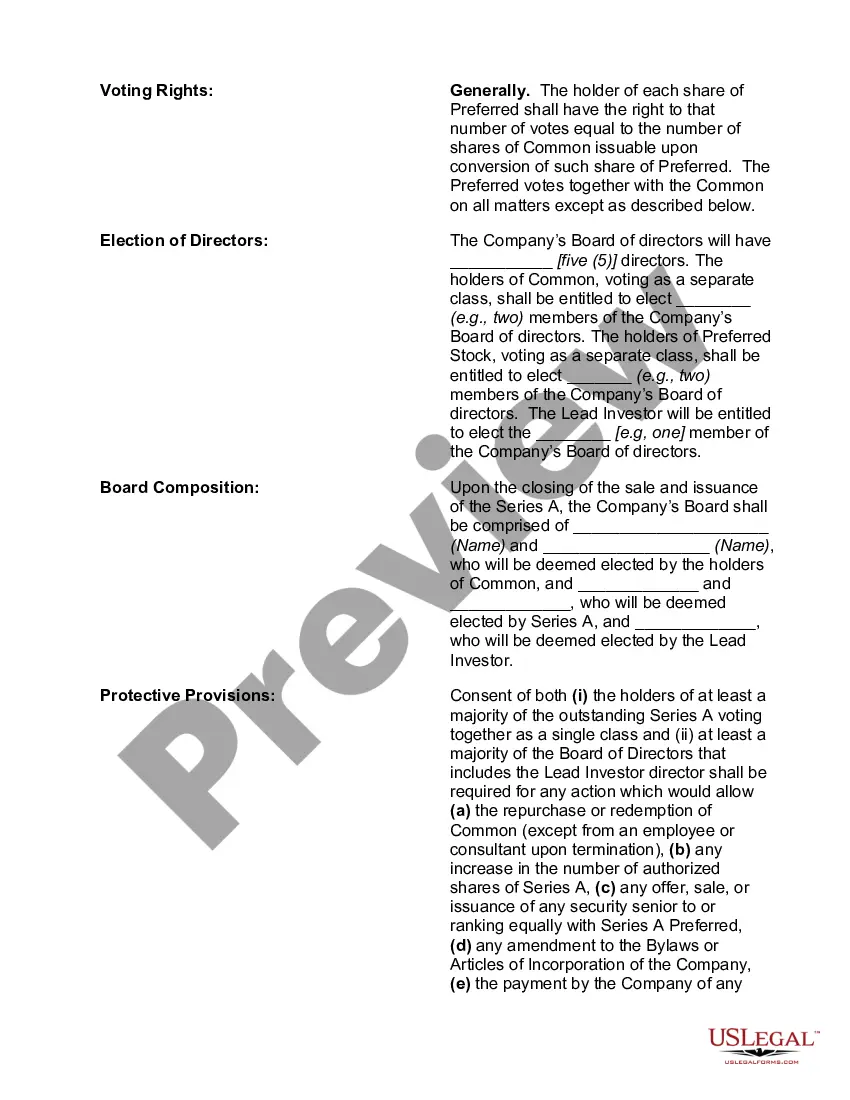
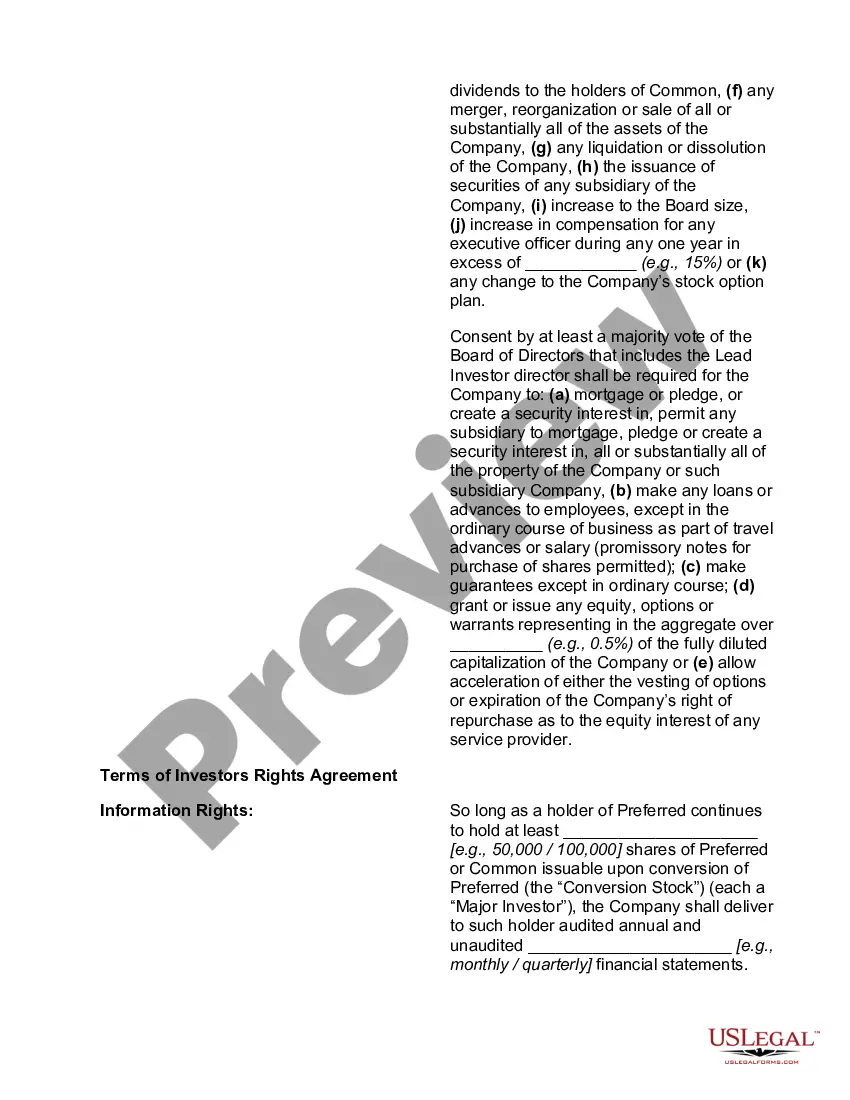
Get your form ready online
Our built-in tools help you complete, sign, share, and store your documents in one place.
Make edits, fill in missing information, and update formatting in US Legal Forms—just like you would in MS Word.
Download a copy, print it, send it by email, or mail it via USPS—whatever works best for your next step.
Sign and collect signatures with our SignNow integration. Send to multiple recipients, set reminders, and more. Go Premium to unlock E-Sign.
If this form requires notarization, complete it online through a secure video call—no need to meet a notary in person or wait for an appointment.
We protect your documents and personal data by following strict security and privacy standards.

Make edits, fill in missing information, and update formatting in US Legal Forms—just like you would in MS Word.

Download a copy, print it, send it by email, or mail it via USPS—whatever works best for your next step.

Sign and collect signatures with our SignNow integration. Send to multiple recipients, set reminders, and more. Go Premium to unlock E-Sign.

If this form requires notarization, complete it online through a secure video call—no need to meet a notary in person or wait for an appointment.

We protect your documents and personal data by following strict security and privacy standards.
Looking for another form?




Form popularity
FAQ
How to Prepare a Term Sheet Identify the Purpose of the Term Sheet Agreements. Briefly Summarize the Terms and Conditions. List the Offering Terms. Include Dividends, Liquidation Preference, and Provisions. Identify the Participation Rights. Create a Board of Directors. End with the Voting Agreement and Other Matters.
A term sheet is a nonbinding bullet-point document that outlines the material terms and conditions of a potential business agreement. The purpose of a term sheet is to outline the terms upon which the venture debt provider is willing to make the investment. It's important to note that these terms are negotiable.
CohnReznick's Beth Mullen looks at several important points in a deal term sheet. Credit delivery amount and timing. Guarantees. Reserves. Year 15 exit options. Implied costs for third-party reports.
In as little as 500 words, a VC's term sheet lays out the financial terms of the investment, how much your startup will be worth, who will control it and who will profit the most if the company is sold or goes public. The term sheet is akin to a letter of intent.
Although the term sheet itself is not typically legally binding, some term sheets contain certain legally binding provisions (for example, confidentiality or exclusivity).
Under a standard four-year time-based vesting schedule with a one-year cliff, 1/4 of your shares vest after one year. After the cliff, 1/36 of the remaining granted shares (or 1/48 of the original grant) vest each month until the four-year vesting period is over.
Confidentiality agreements typically represent the first step in conversations with the other side. Once a confidentiality agreement is signed, the parties often turn to the negotiation of a term sheet or letter of intent, which outlines the terms and conditions of the arrangement.
