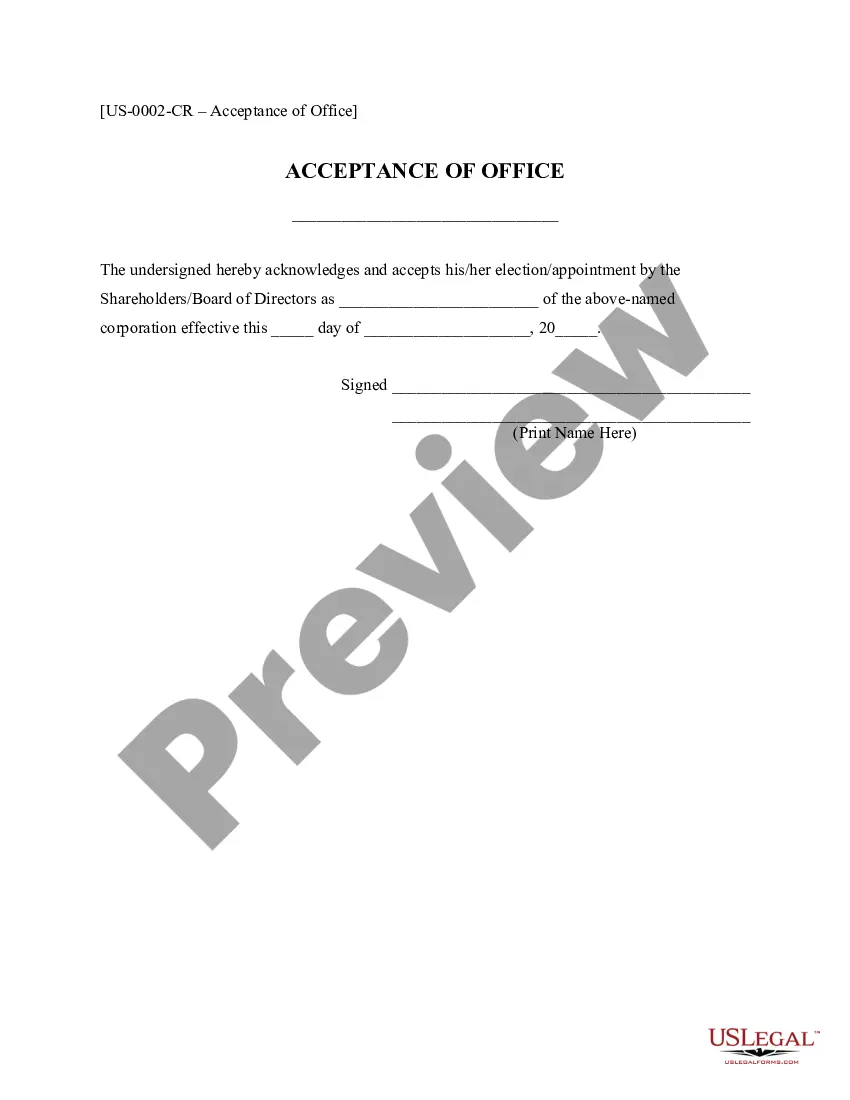
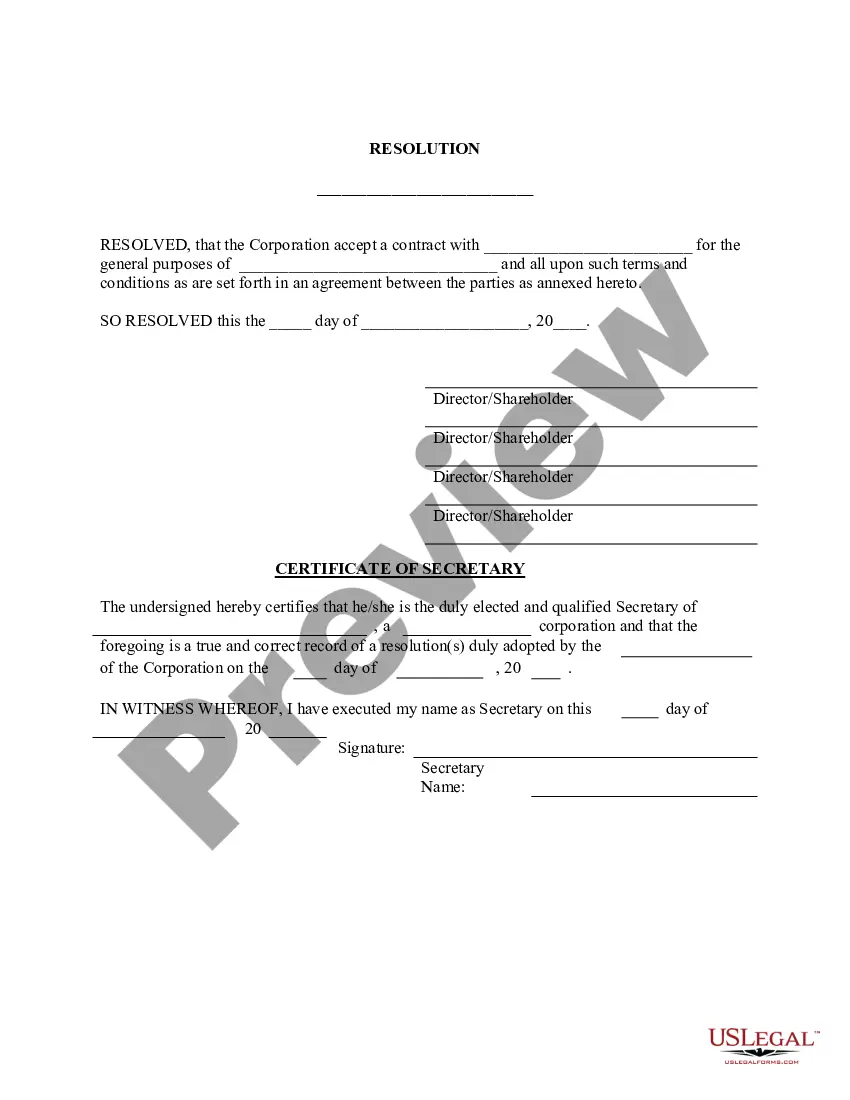
Director Appointment Resolution Format In Phoenix
Description

Get your form ready online
Our built-in tools help you complete, sign, share, and store your documents in one place.
Make edits, fill in missing information, and update formatting in US Legal Forms—just like you would in MS Word.
Download a copy, print it, send it by email, or mail it via USPS—whatever works best for your next step.
Sign and collect signatures with our SignNow integration. Send to multiple recipients, set reminders, and more. Go Premium to unlock E-Sign.
If this form requires notarization, complete it online through a secure video call—no need to meet a notary in person or wait for an appointment.
We protect your documents and personal data by following strict security and privacy standards.

Make edits, fill in missing information, and update formatting in US Legal Forms—just like you would in MS Word.

Download a copy, print it, send it by email, or mail it via USPS—whatever works best for your next step.

Sign and collect signatures with our SignNow integration. Send to multiple recipients, set reminders, and more. Go Premium to unlock E-Sign.

If this form requires notarization, complete it online through a secure video call—no need to meet a notary in person or wait for an appointment.

We protect your documents and personal data by following strict security and privacy standards.
Looking for another form?





Form popularity
FAQ
How to write a board resolution Put the date and resolution number at the top. Give the resolution a title that relates to the decision. Use formal language. Continue writing out each critical statement. Wrap up the heart of the resolution in the last statement.
Article 17 of the model articles for private limited companies allows for appointment either by the board of directors or by ordinary resolution of the shareholders.
A Directors' Resolution to Appoint Director(s) and/or Acknowledge Resignation of Director(s) is a resolution passed by the directors of a company to appoint a new director, typically to fill a casual vacancy on the board after a resignation. Once appointed, the board will send a Director's Appointment Letter.
Passing ordinary resolutions within a company is governed by the Companies Act, of 2013. Section 114 of the Act specifies the matters requiring ordinary resolutions and include the appointment of directors, approval of financial statements, declaration of dividends, and so on.
A company must file the following forms with the ROC to add a new director: MGT-14 – Resolution passed in the general meeting regarding the appointment of the director. DIR-2 – Consent received by the proposed director to hold the position of a director in the company.
“RESOLVED THAT pursuant to the provisions of section 161(4) of the Companies Act, 2013, read with Articles of Association of the Company, Mr. _______ be and is hereby appointed as Director of the Company in order to fill the casual vacancy caused by the death/removal/resignation of Mr. _______, Director of the Company.
Resolved that: The shareholders appoint insert name as a director of the Company with effect from the date of this resolutioninsert date. Signed for and on behalf of the shareholders of name of Company: User note: Use the following signature block for each shareholder that is an individual.
Procedure for Director Appointment or Addition in a Company Step 1: Reviewing the Articles of Association (AOA) ... Step 2: Resolution at a General Meeting. Step 3: Application for DIN and DSC. Step 4: Obtaining Director's Consent (Form DIR-2) ... Step 5: Issuing the Letter of Appointment. Step 6: Regulatory Filings with the ROC.
Here is an example of a conclusion versus a resolution: Resolution: The team happily celebrated their victory after a challenging face-off with their rival. Here, the resolution marks the end of a story.
Written Directors' Resolution to Appoint New Directors This approval can either be sought at a routine board meeting or alternatively via a written directors' resolution sent to and signed by each of the existing directors.

