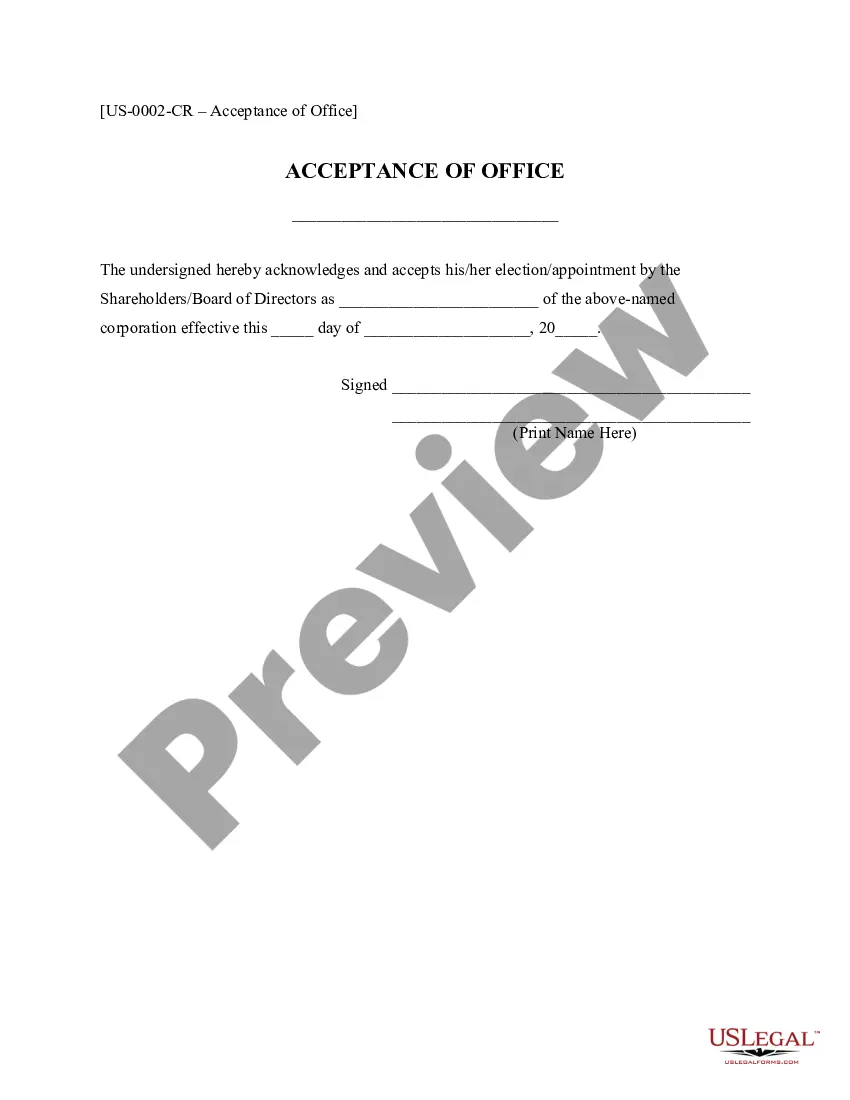
Acceptance On Appointment In Maricopa
Description

Get your form ready online
Our built-in tools help you complete, sign, share, and store your documents in one place.
Make edits, fill in missing information, and update formatting in US Legal Forms—just like you would in MS Word.
Download a copy, print it, send it by email, or mail it via USPS—whatever works best for your next step.
Sign and collect signatures with our SignNow integration. Send to multiple recipients, set reminders, and more. Go Premium to unlock E-Sign.
If this form requires notarization, complete it online through a secure video call—no need to meet a notary in person or wait for an appointment.
We protect your documents and personal data by following strict security and privacy standards.

Make edits, fill in missing information, and update formatting in US Legal Forms—just like you would in MS Word.

Download a copy, print it, send it by email, or mail it via USPS—whatever works best for your next step.

Sign and collect signatures with our SignNow integration. Send to multiple recipients, set reminders, and more. Go Premium to unlock E-Sign.

If this form requires notarization, complete it online through a secure video call—no need to meet a notary in person or wait for an appointment.

We protect your documents and personal data by following strict security and privacy standards.
Looking for another form?



Form popularity
FAQ
Over 18 years of age and • The surviving spouse of the decedent, • An adult child of the decedent, • A parent of the decedent, • A brother or sister of the decedent, • A person entitled to property of the decedent, • A person who was named as personal representative by will, or • You are a creditor and 45 days have ...
That is accomplished by filing with the local Probate Court a pleading called an Application for Informal Probate of Will and Appointment of Personal Representative. Alternatively, in the case of an intestate decedent, the pleading is called an Application for Informal Appointment of Personal Representative.
"Letters of appointment" is a document the clerk issues, pursuant to a court order, that authorizes a personal representative, guardian, or conservator to act for the estate or subject person.
Whether you have been named the executor or you're petitioning to be the administrator, the path to becoming a personal representative is the same—you'll need to submit a petition with the county court. A hearing will be scheduled to validate the will (if the decedent has one) and appoint the personal representative.
Steps to Become a Personal Representative of an Estate Understand Your Priority for Appointment. Determine the Proper Probate Court. Research the County's Filing Requirements. File the Petition for Administration. Notice of Petition to Administer Estate. File a Bond. Attend the Probate Hearing.
Rule 11 allows lawyers, without the need for court intervention, to enter into agreements, memorialize them in writing, sign them, and then file them with the Court. Once those steps are met, the Rule 11 Agreement can be enforced by the Court if one party decides to stop living up to their end of the bargain.
Rule 11. The Forensics Services Division evaluates defendants for competency in criminal cases. If found competent, they return to trial court; if found incompetent but restorable, they receive treatment in a Restoration to Competency (RTC) program or an Outpatient Treatment Program.
A Rule 11 hearing may be held when a defendant is suspected of being mentally incompetent. This hearing is granted when there is substantial evidence of mental incompetence. Doctors will determine the mental competency of the defendant at the hearing.
Every pleading, written motion, and other document filed with the court or served must be signed by at least one attorney of record in the attorney's name- or by a party personally if the party is unrepresented.
