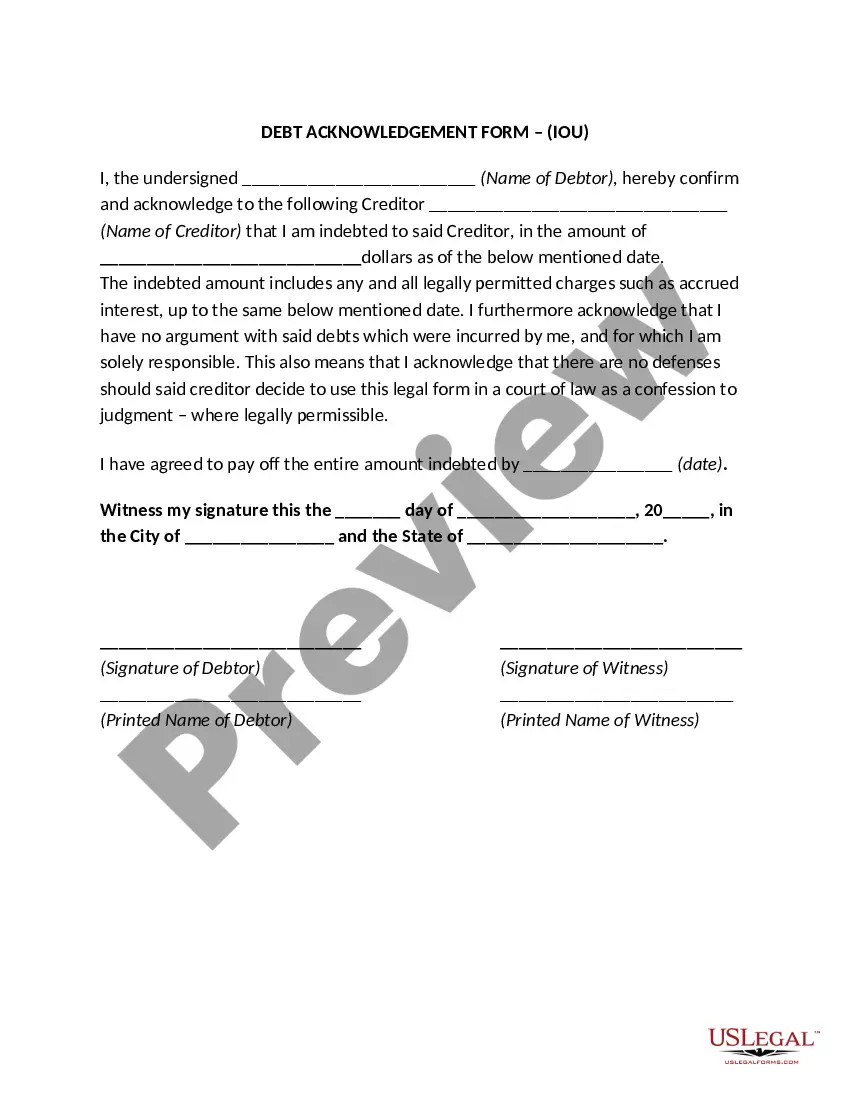
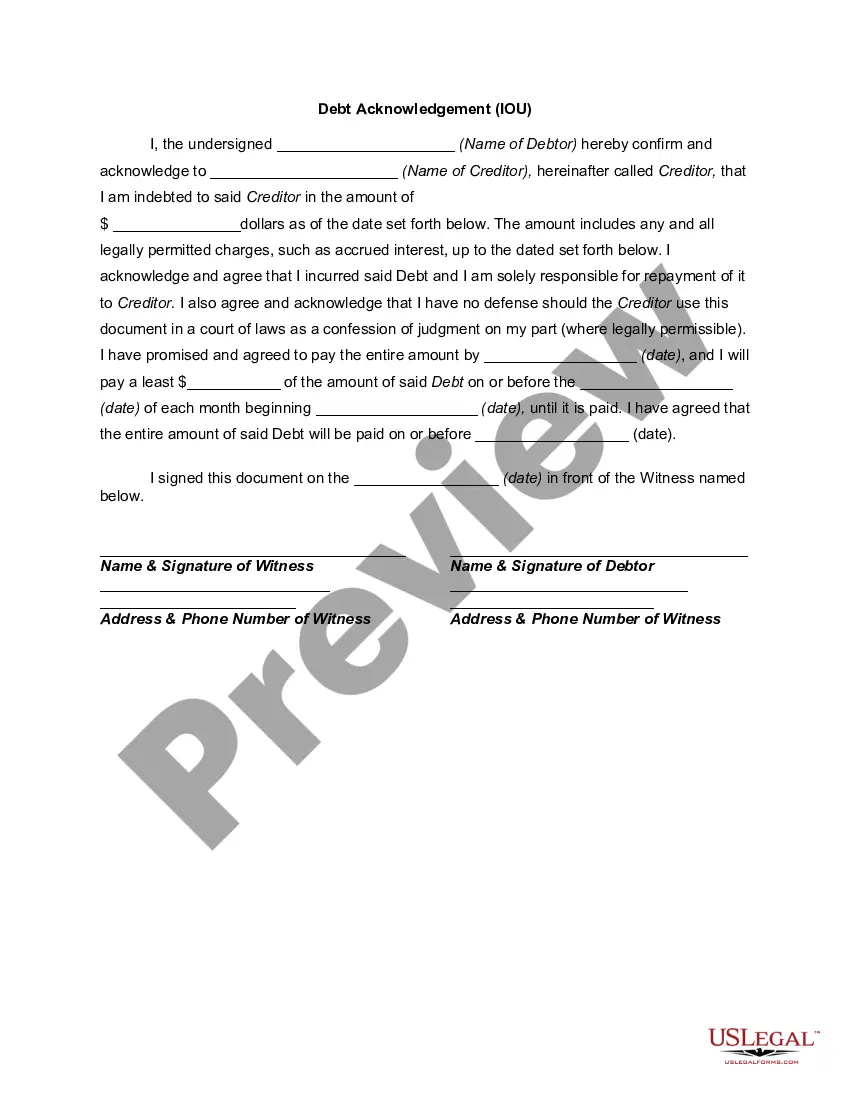
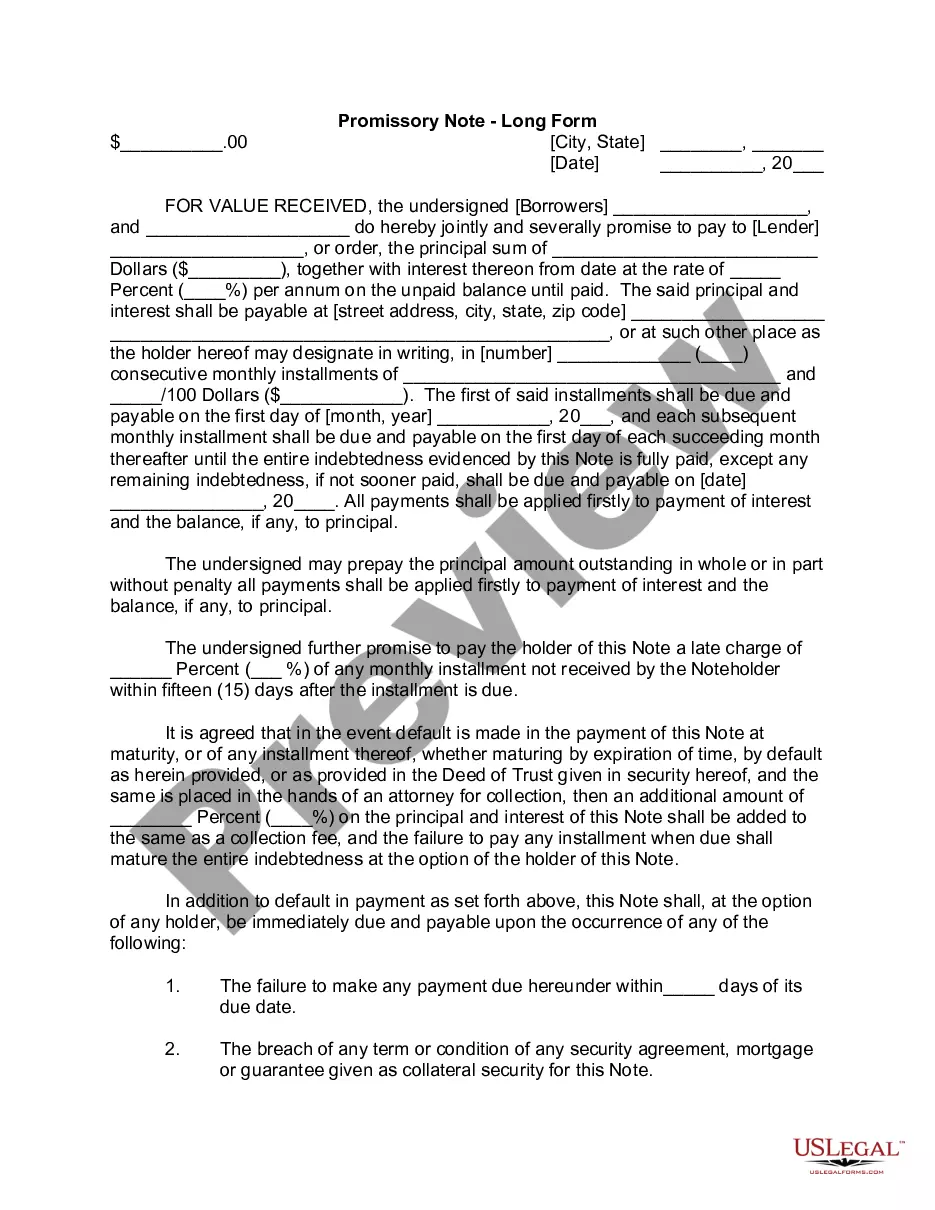
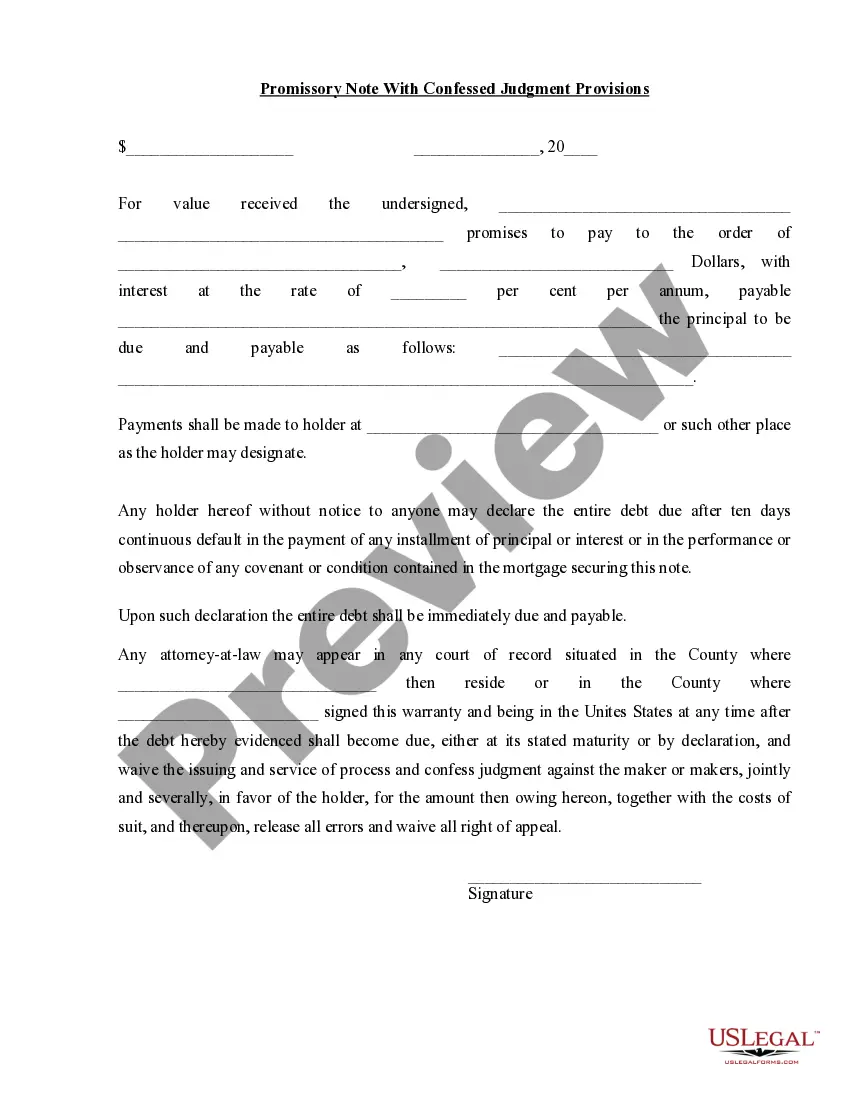
I Debt With You In Texas
Description
Get your form ready online
Our built-in tools help you complete, sign, share, and store your documents in one place.
Make edits, fill in missing information, and update formatting in US Legal Forms—just like you would in MS Word.
Download a copy, print it, send it by email, or mail it via USPS—whatever works best for your next step.
Sign and collect signatures with our SignNow integration. Send to multiple recipients, set reminders, and more. Go Premium to unlock E-Sign.
If this form requires notarization, complete it online through a secure video call—no need to meet a notary in person or wait for an appointment.
We protect your documents and personal data by following strict security and privacy standards.

Make edits, fill in missing information, and update formatting in US Legal Forms—just like you would in MS Word.

Download a copy, print it, send it by email, or mail it via USPS—whatever works best for your next step.

Sign and collect signatures with our SignNow integration. Send to multiple recipients, set reminders, and more. Go Premium to unlock E-Sign.

If this form requires notarization, complete it online through a secure video call—no need to meet a notary in person or wait for an appointment.

We protect your documents and personal data by following strict security and privacy standards.
Looking for another form?






Form popularity
FAQ
Texas Laws on Community Debt In many community property jurisdictions, debts incurred during the marriage are presumed to be the joint responsibility of both spouses.
The statute of limitations on debt in Texas is four years.
It quiets things temporarily, but the problem remains. Ignoring them often escalates collection attempts. They may contact you more frequently, file a lawsuit, garnish wages, or put liens on assets.
Under the Texas Family Code, a person is personally liable for the acts of the person's spouse only if: (1) the spouse acts as an agent for the person; or (2) the spouse incurs a debt for necessaries. A spouse does not act as an agent for the other spouse solely because of the marriage relationship.
Separate your debt. Apply for credit in your name only. Establish your own credit record. Open an individual savings and checking account. Contribute to your 401K at work. Open an IRA and have deposits made automatically.
Debts either spouse incurred during marriage Property acquired during marriage is liable for the debts of either spouse. So, a creditor whose claim arose during the marriage can collect your spouse's unpaid credit card debt from both halves of the community property, including your wages.
In Texas, debts incurred during the marriage are usually considered community property and can be divided between both spouses. Debts incurred before marriage are typically the responsibility of the individual.
Despite being a community property state, Texans are not liable for deceased spouses' debts.
Texas is a community property state, a person's spouse is responsible for any debt incurred during the marriage, including credit card debt.
Separate your debt. Apply for credit in your name only. Establish your own credit record. Open an individual savings and checking account. Contribute to your 401K at work. Open an IRA and have deposits made automatically.