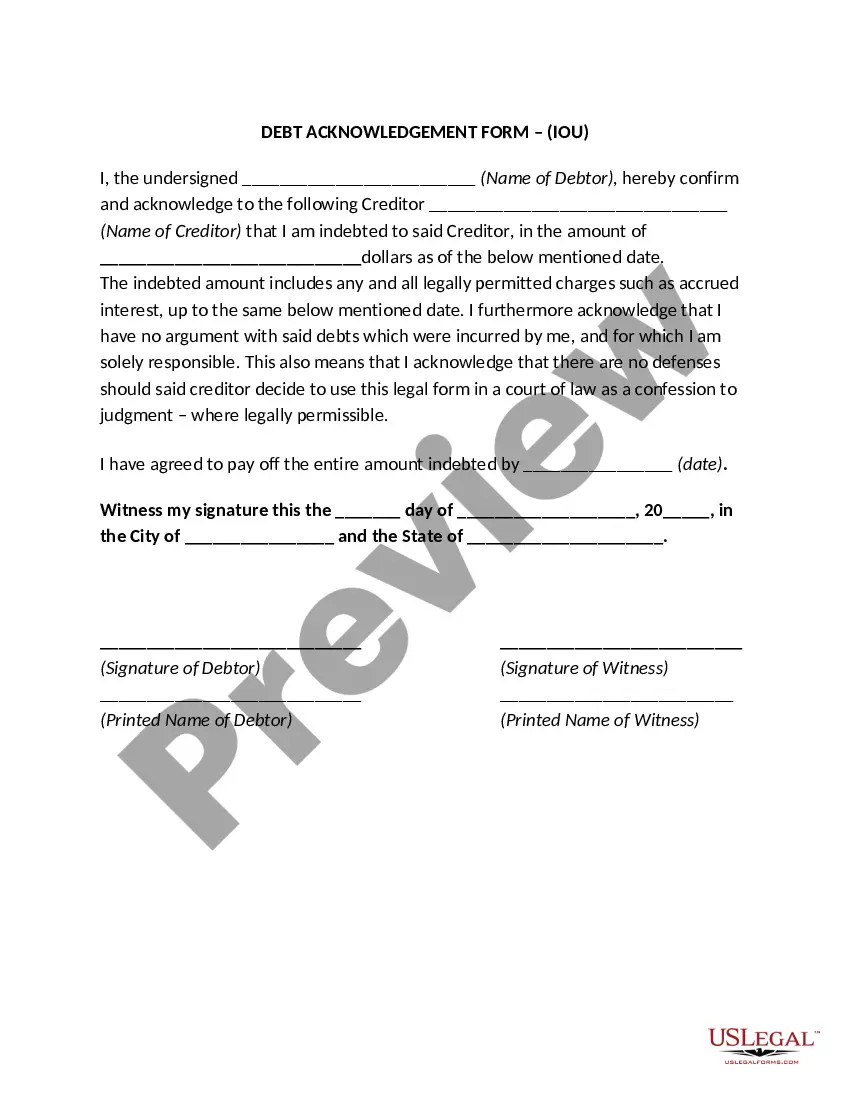
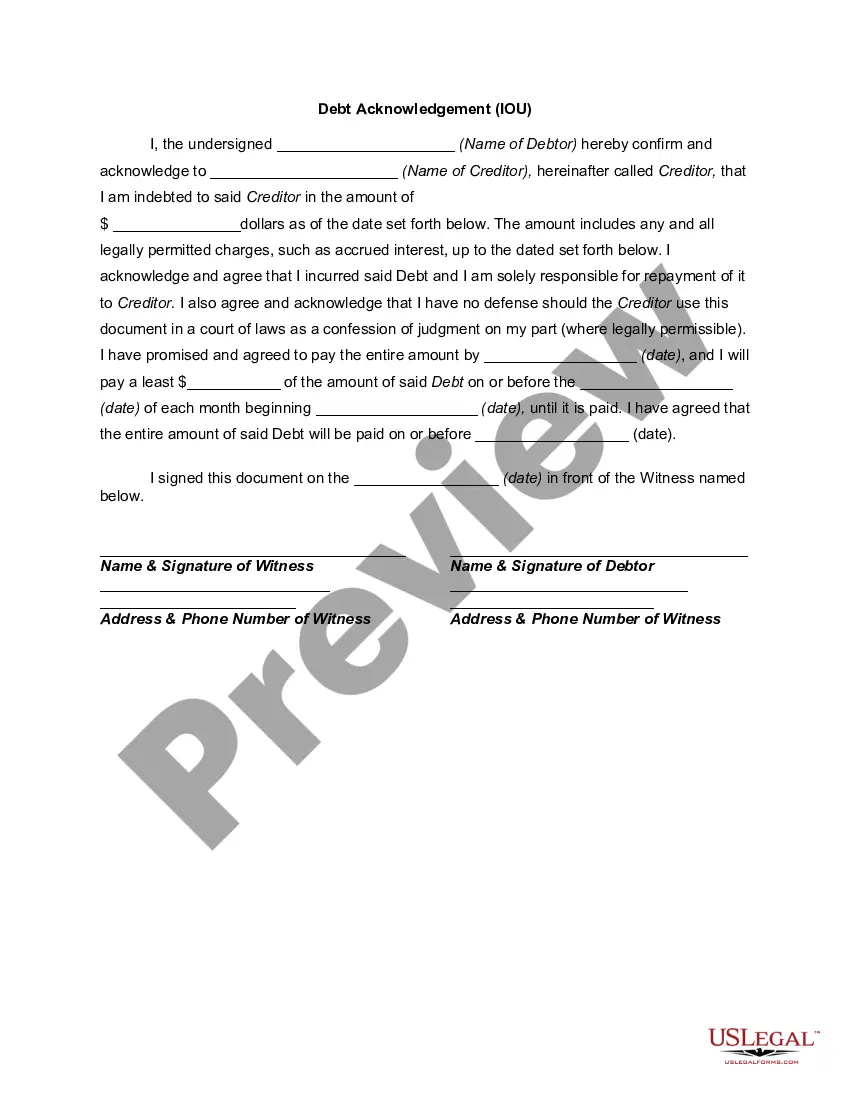
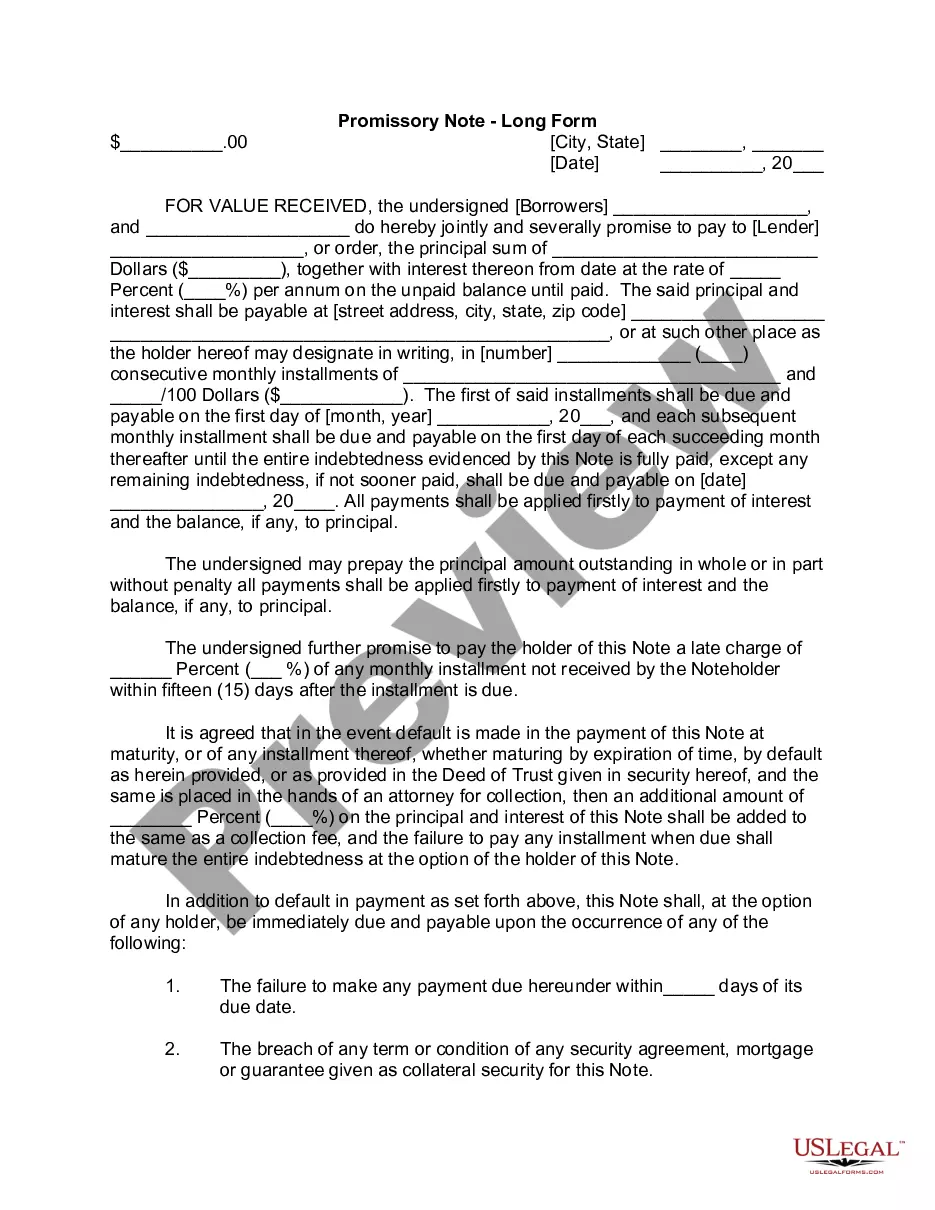
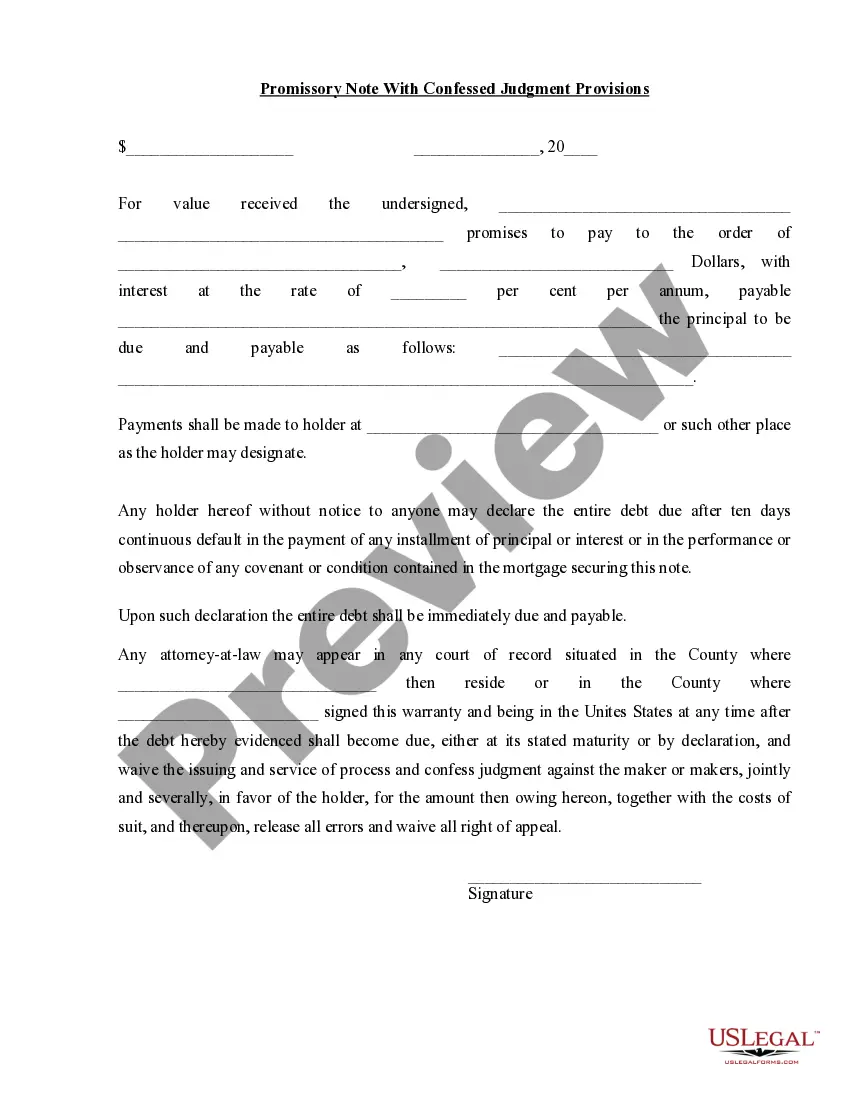
I Debt To You In San Jose
Description
Get your form ready online
Our built-in tools help you complete, sign, share, and store your documents in one place.
Make edits, fill in missing information, and update formatting in US Legal Forms—just like you would in MS Word.
Download a copy, print it, send it by email, or mail it via USPS—whatever works best for your next step.
Sign and collect signatures with our SignNow integration. Send to multiple recipients, set reminders, and more. Go Premium to unlock E-Sign.
If this form requires notarization, complete it online through a secure video call—no need to meet a notary in person or wait for an appointment.
We protect your documents and personal data by following strict security and privacy standards.

Make edits, fill in missing information, and update formatting in US Legal Forms—just like you would in MS Word.

Download a copy, print it, send it by email, or mail it via USPS—whatever works best for your next step.

Sign and collect signatures with our SignNow integration. Send to multiple recipients, set reminders, and more. Go Premium to unlock E-Sign.

If this form requires notarization, complete it online through a secure video call—no need to meet a notary in person or wait for an appointment.

We protect your documents and personal data by following strict security and privacy standards.
Looking for another form?




Form popularity
FAQ
These scammers can be very convincing, which is why you need to spot the signs of a debt collection: They Ask for Info They Should Already Have. They Won't Share Their Info with You. They Threaten or Lie to You. They Insist You Pay Right Now. They Ask You to Pay by Untraceable Methods.
Thanks to some recent changes, debt collectors are very much allowed to contact you by text message. Text messages, along with emailing and direct messages on social media, are allowed as part of a 2021 update to the Fair Debt Collection Practices Act (FDCPA).
Make sure the debt is valid, and that it's yours If you think the debt collector is in error, dispute it. Debt collectors are obligated to send you something called a “validation notice” within five days of contact you, which tells you the amount you may owe, the name of the creditor, and how to dispute the debt.
A debt collector may contact your employer, but only to verify your employment, locate you, find out if you have medical insurance (in the case of a medical debt), or garnish your wages after getting a judgment against you.
However, when contacting people who aren't you, debt collectors are limited in what they're able to say. Debt collectors can contact you through phone, email, or text messages.
Debt collectors may send you notices or letters, but the envelopes cannot contain information about your debt or any information that is intended to embarrass you. You may ask a debt collector to contact you only by mail, or through your attorney, or set other limitations.
You would respond to the court with a general denial of all of the allegations regarding you owing the debt and the actual amount of the debt. What you do is copy the heading on the top of the complaint and then under that you title your document Answer.
On a separate page or pages, write a short and plain statement of the answer to the allegations in the complaint. Number the paragraphs. The answer should correspond to each paragraph in the complaint, with paragraph 1 of the answer corresponding to paragraph 1 of the complaint, etc.
On a separate page or pages, write a short and plain statement of the answer to the allegations in the complaint. Number the paragraphs. The answer should correspond to each paragraph in the complaint, with paragraph 1 of the answer corresponding to paragraph 1 of the complaint, etc.
As a recipient of legal documents, you have the right to refuse service from a process server. However, it's important to understand that this doesn't necessarily make the legal matter go away. It's also crucial to note that refusing service does not mean you can avoid facing the legal matter altogether.