Entertainment Contract Form For Employee In Utah
Description


Get your form ready online
Our built-in tools help you complete, sign, share, and store your documents in one place.
Make edits, fill in missing information, and update formatting in US Legal Forms—just like you would in MS Word.
Download a copy, print it, send it by email, or mail it via USPS—whatever works best for your next step.
Sign and collect signatures with our SignNow integration. Send to multiple recipients, set reminders, and more. Go Premium to unlock E-Sign.
If this form requires notarization, complete it online through a secure video call—no need to meet a notary in person or wait for an appointment.
We protect your documents and personal data by following strict security and privacy standards.

Make edits, fill in missing information, and update formatting in US Legal Forms—just like you would in MS Word.

Download a copy, print it, send it by email, or mail it via USPS—whatever works best for your next step.

Sign and collect signatures with our SignNow integration. Send to multiple recipients, set reminders, and more. Go Premium to unlock E-Sign.

If this form requires notarization, complete it online through a secure video call—no need to meet a notary in person or wait for an appointment.

We protect your documents and personal data by following strict security and privacy standards.
Looking for another form?








Form popularity
FAQ
Fact #1: Oral contracts are still contracts A contract does not need to be in writing to be enforceable under the law. If you promise to buy something and someone else promises to sell it to you, you may have just made a contract. Your promise is the same as signing your name to a contract.
Our business clients often ask if all contracts under Utah law have to be in writing. From a legal perspective, a contract is made when one party makes a valid offer and another party accepts that offer, and that can often be done verbally. However, Utah law requires that some types of agreements must be in writing.
An oral contract is a type of contract that is agreed to via spoken communication, but not written down and signed. Oral contracts are legally binding but can be difficult to prove in a court of law. The enforceability of oral contracts depends on the jurisdiction as well as the type of deal.
The agreement must be in writing if the contract is for goods with a value over $500. Also, California state law dictates requirements for certain types of agreements.
An agreement between an employee and his employer may require the employee to assign or license, or to offer to assign or license, to his employer any or all of his rights and intellectual property in or to an employment invention. an agreement between an employee and his employer which is not an employment agreement.
Fact #1: Oral contracts are still contracts A contract does not need to be in writing to be enforceable under the law. If you promise to buy something and someone else promises to sell it to you, you may have just made a contract. Your promise is the same as signing your name to a contract.
For at-will employment relationships, the Utah Supreme Court found that continued employment or the promise of continued employment may be sufficient consideration to support a covenant not to compete (Sys. Concepts, 669 P.
In most jurisdictions, employment at will, or continued employment is sufficient consideration to support the covenant. But some states require an employer to offer additional consideration. Some ways to satisfy the consideration requirement is to offer a candidate a signing bonus, or severance.
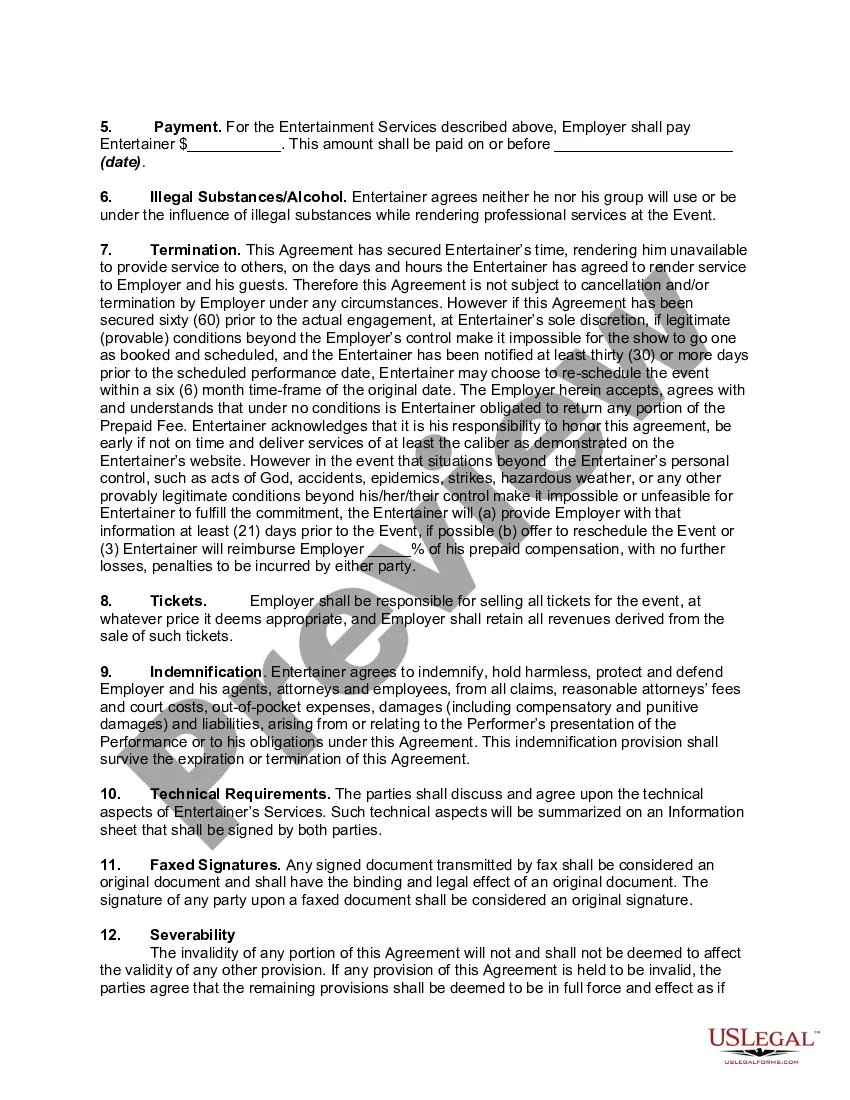
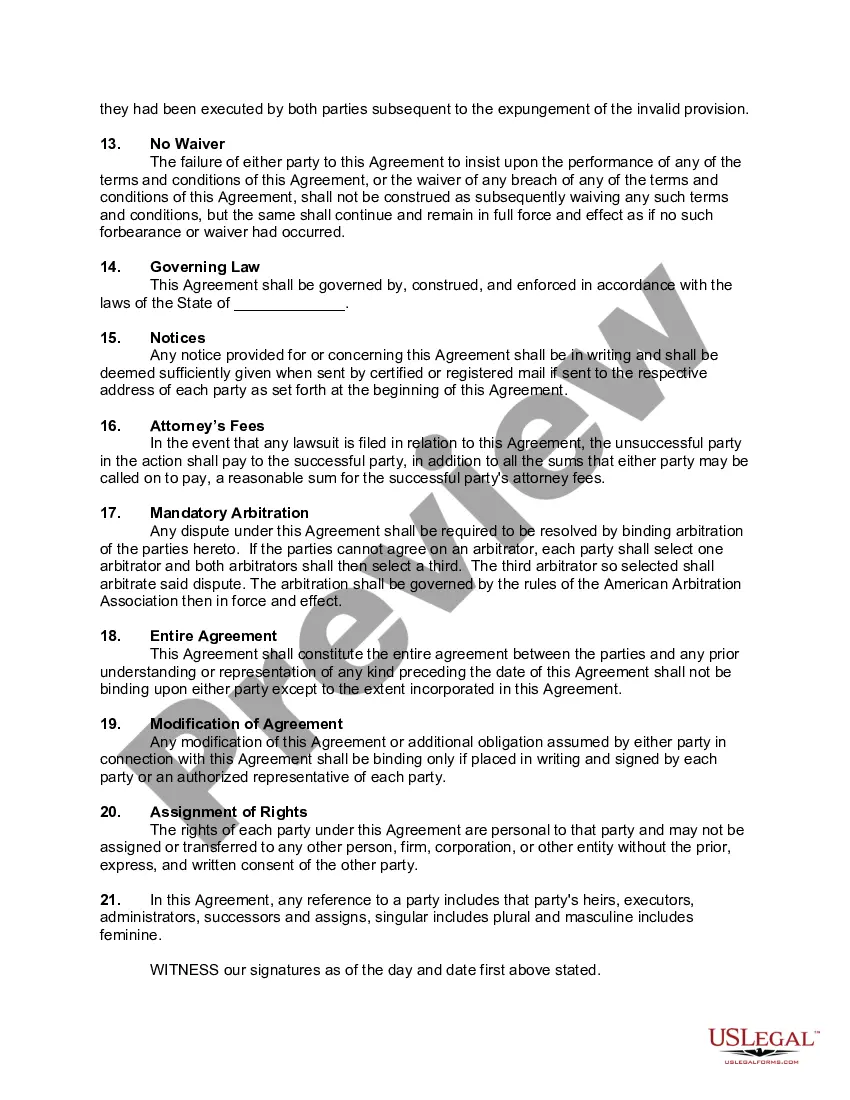
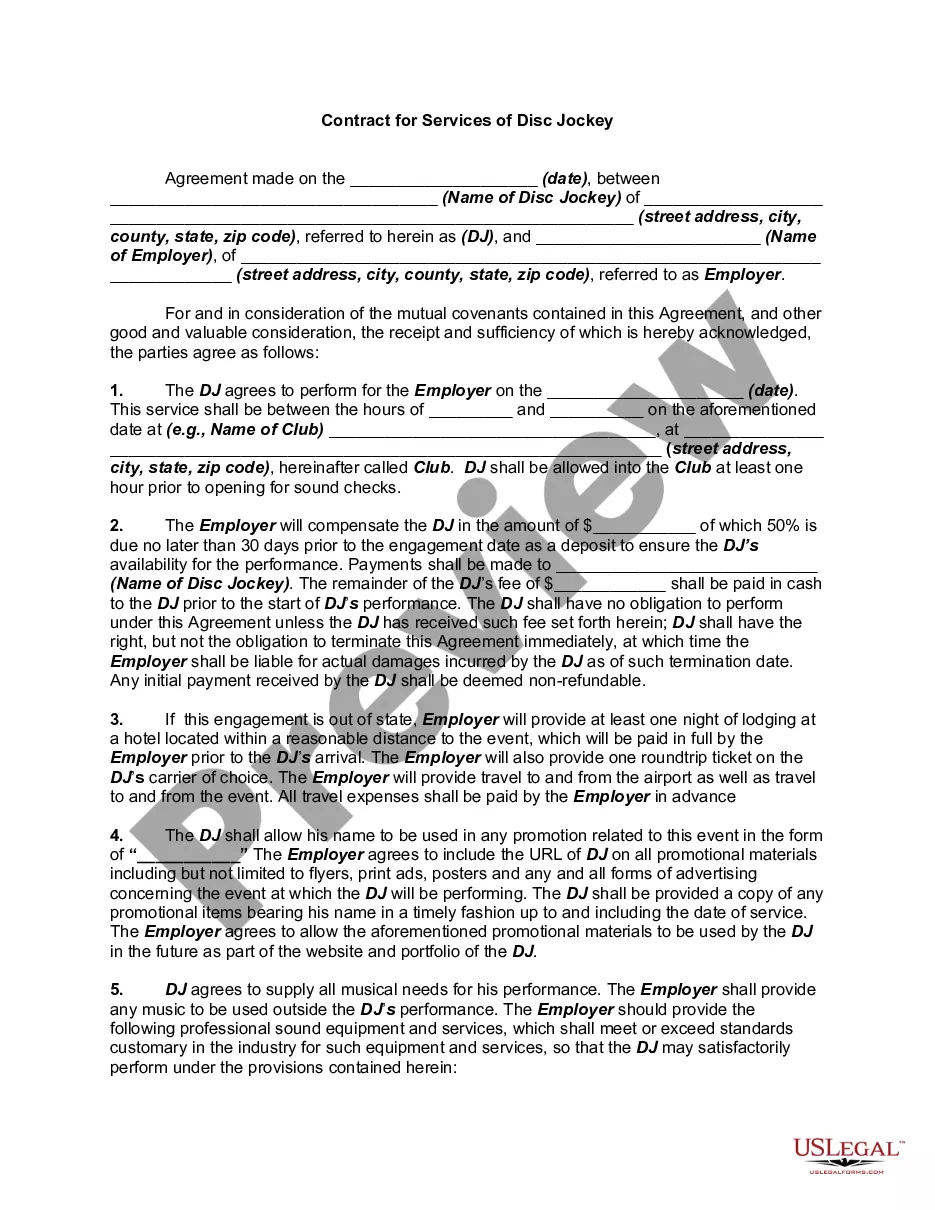
Entertainment industry agreements This provides standard services to performers and fees that can be charged under this agreement are capped. This type of agreement can be verbal agreement or in writing.
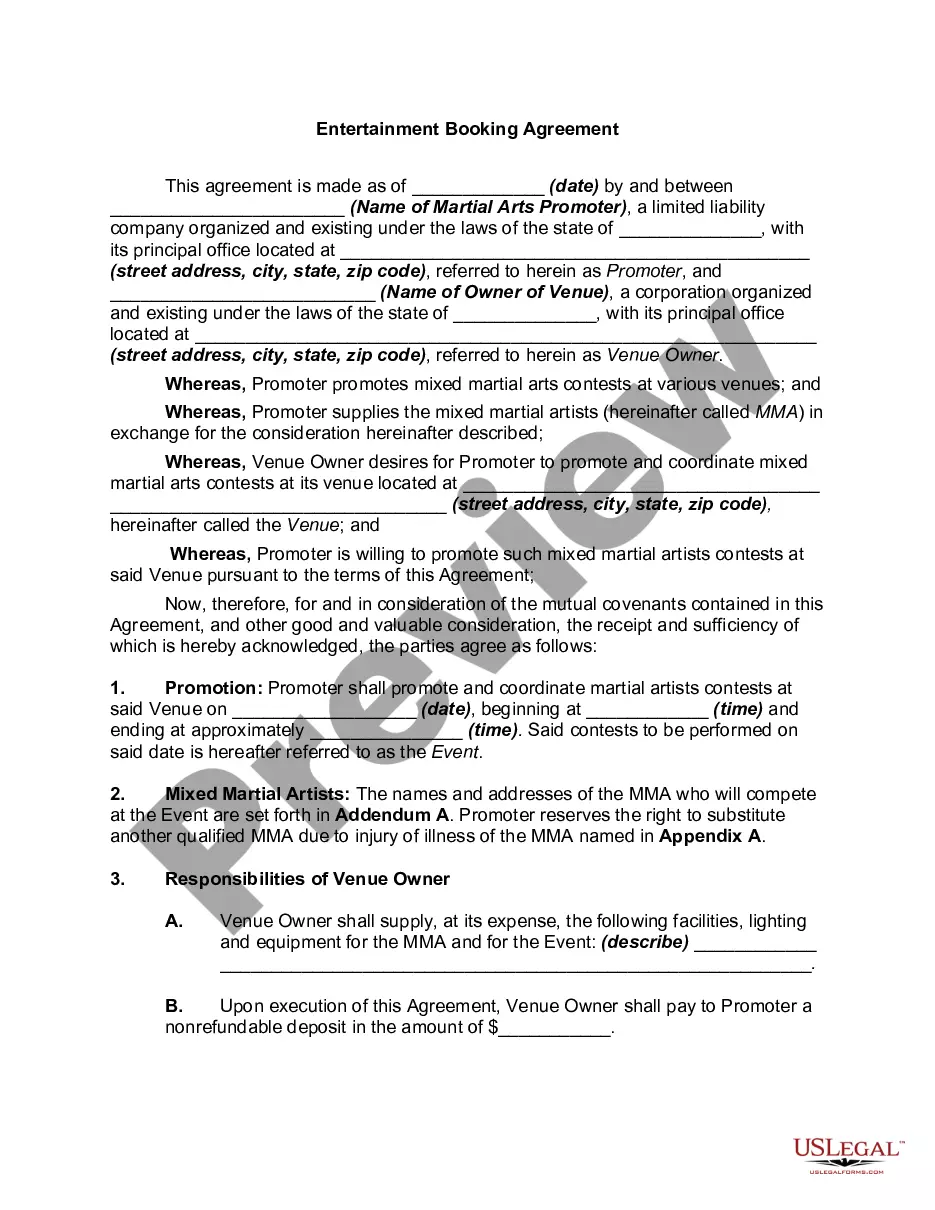
Key elements of an entertainment contract Parties involved. Clearly identify all parties involved in the contract. Scope of work. Detail the specific services or performances expected. Compensation. Duration of contract. Intellectual property rights. Confidentiality. Termination clauses. Indemnity and liability.
